
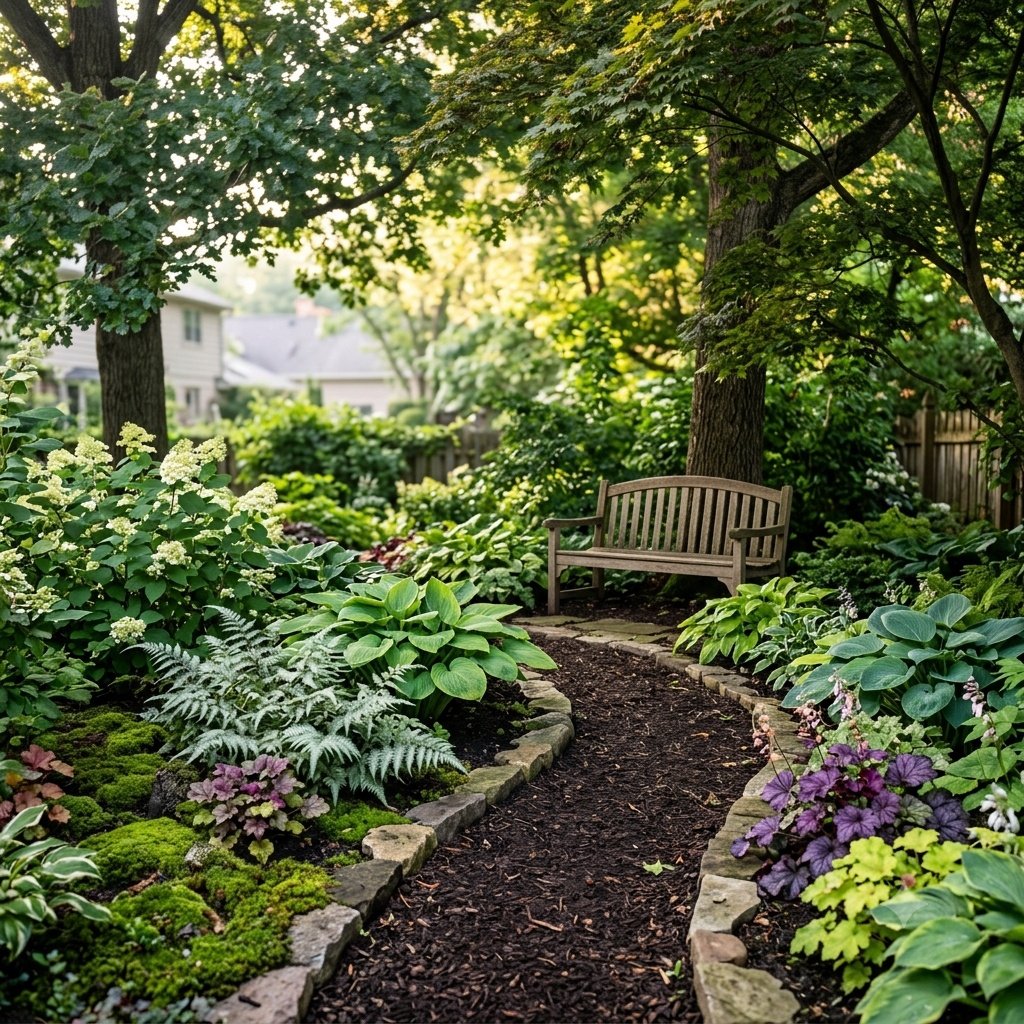
Dark corners in the yard often become forgotten spaces. Grass struggles to grow, flowers fade, and the area slowly turns into a patch of bare soil or fallen leaves. Many homeowners assume every beautiful garden needs six or more hours of direct sunlight.
That simply isn’t true.
Some of the most peaceful landscapes are created in shade. Mature trees, fences, walls, and buildings can provide cool conditions that support lush foliage, colorful blooms, and quiet seating areas. These spaces often stay comfortable during summer while sunny beds become hot and dry.
Shade Garden Ideas can help transform these neglected areas into attractive outdoor retreats. From woodland-inspired planting to colorful foliage and winding pathways, shady locations offer plenty of design opportunities.
Whether you have a backyard beneath large trees, a narrow side yard, or a small patio that receives little sunlight, the right plants and landscaping choices can completely change the look of your garden.
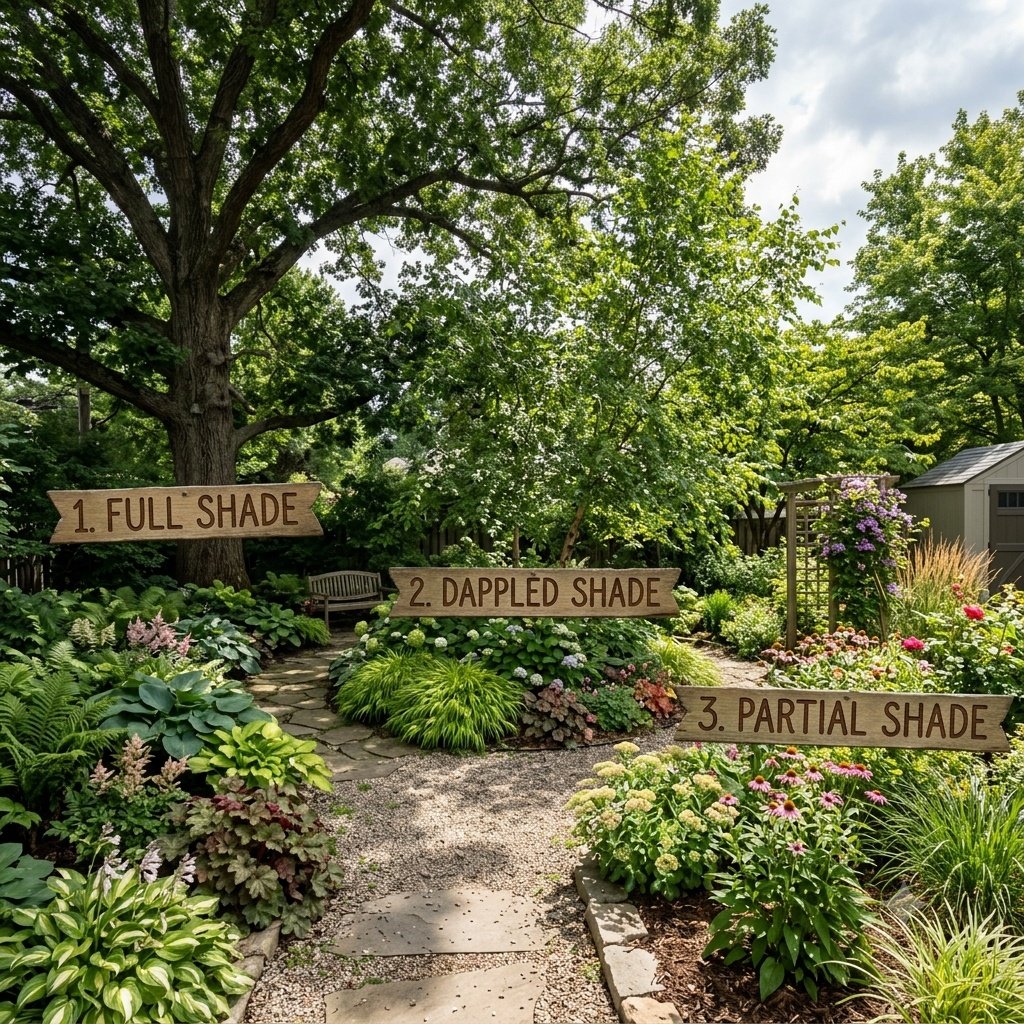
Understanding Different Types of Garden Shade
Before choosing plants, it’s important to understand the kind of shade your garden receives.
Full Shade
Areas receiving less than three hours of direct sunlight each day are considered full shade. Spaces beneath dense trees or along north-facing walls usually fall into this category.
Partial Shade
Partial shade means plants receive three to six hours of sunlight. Morning sun with afternoon shade is often ideal for many shade-loving plants.
Dappled Shade
Dappled shade occurs beneath trees where sunlight filters through branches. This resembles woodland conditions and supports a wide range of plants.
Morning Sun and Afternoon Shade
Many flowering plants prefer gentle morning light while remaining protected during the hottest part of the day.
Observing sunlight patterns for several days helps determine which plants will thrive and allows you to create a successful backyard shade garden.
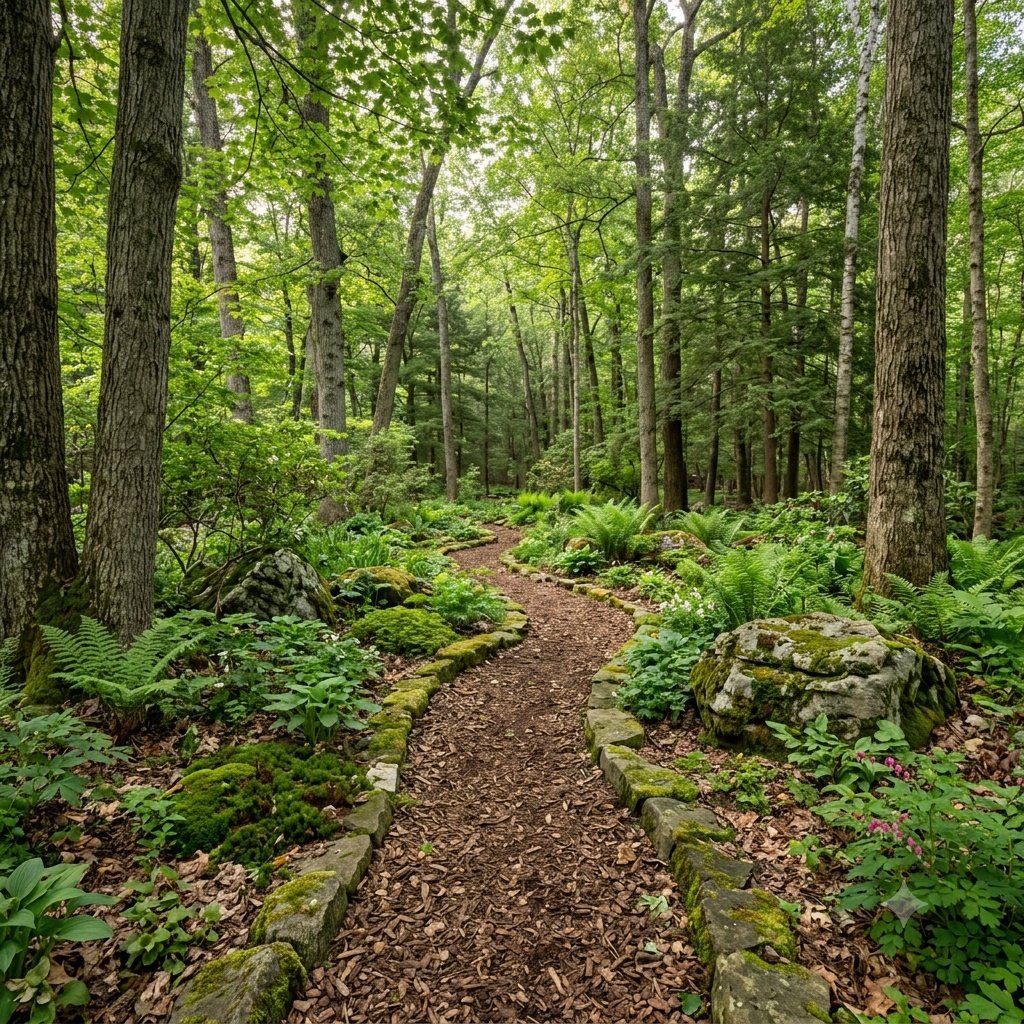
1. Create a Woodland-Inspired Garden
Woodland garden ideas work naturally in shady spaces. Mimicking a forest floor creates a relaxed and established appearance.
Use ferns, moss, native shrubs, and shade-tolerant perennials to build layers of greenery. Natural stone edging and bark mulch pathways add texture while helping retain moisture.
Allow leaves to remain in some areas to create a woodland feel. Fallen leaves improve soil quality and support beneficial insects.
Large rocks, tree stumps, and weathered logs can become attractive garden features. The goal is to create a landscape that feels organic rather than highly structured.
A woodland garden offers year-round beauty and requires less maintenance than traditional flower beds.
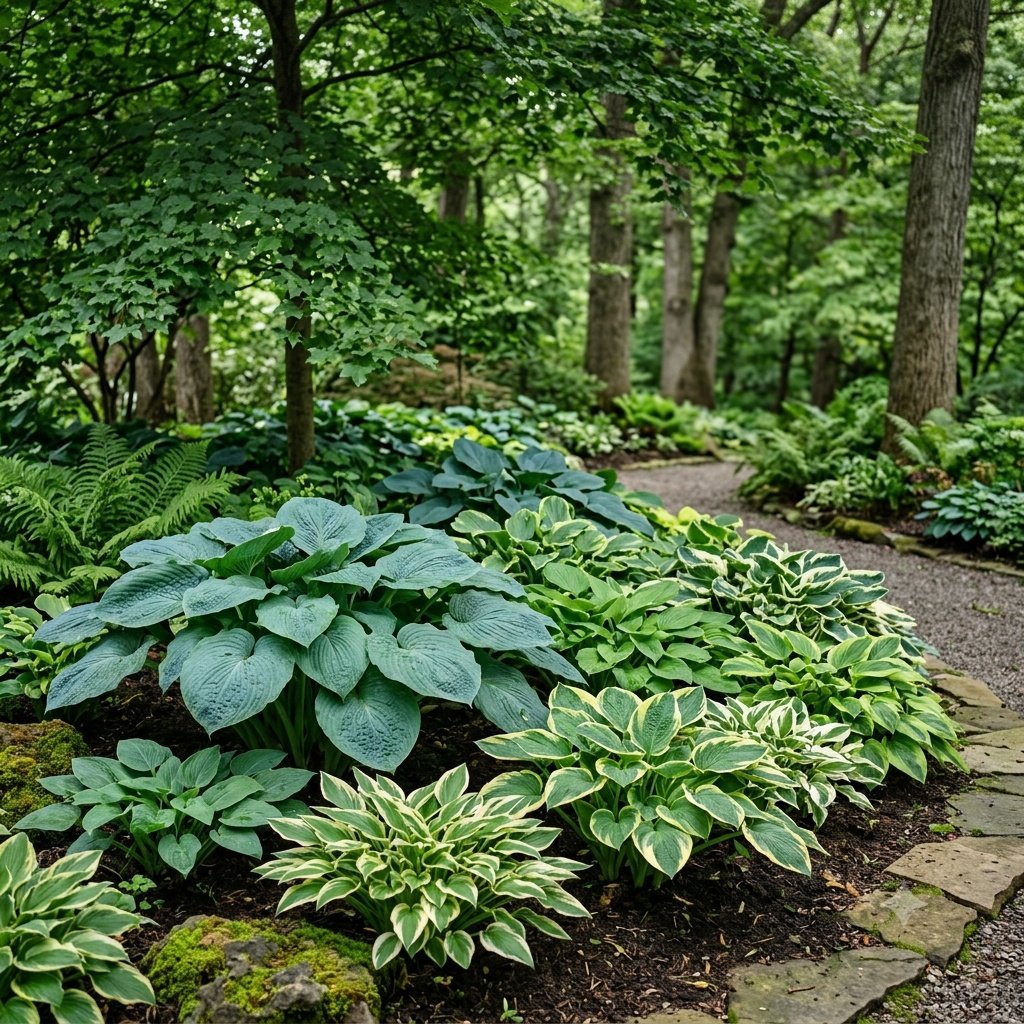
2. Plant Hostas for Bold Foliage
Hostas remain among the most popular shade garden plants for good reason.
Their leaves come in countless colors including blue-green, deep green, gold, and variegated patterns. Some varieties stay compact while others grow several feet wide.
Hostas provide strong texture that brightens dark areas. Large leaves also create contrast with delicate plants like ferns.
Most hostas need minimal care once established. Regular watering and occasional division every few years keep them healthy.
Plant several varieties together to create an attractive foliage display throughout the growing season.
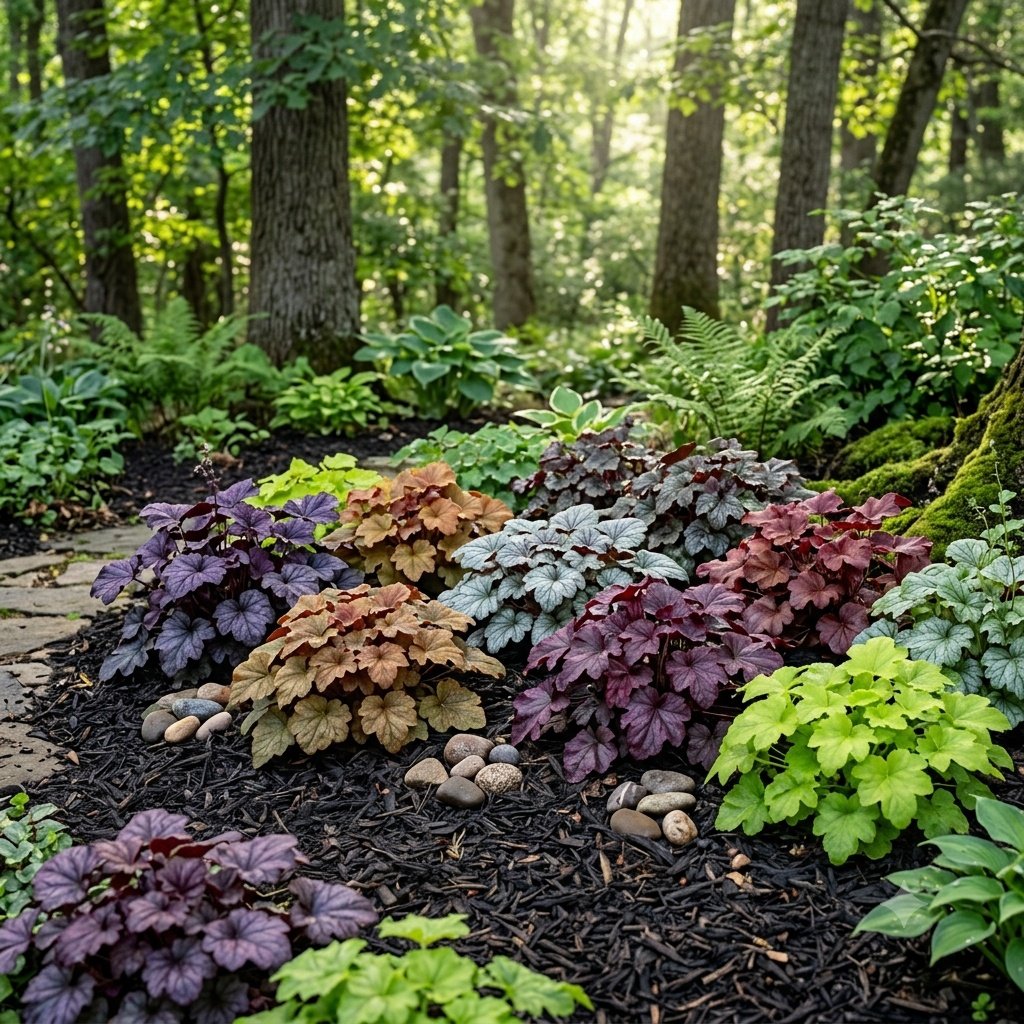
3. Add Color With Heucheras
Heucheras, often called coral bells, bring impressive color to low-light garden ideas.
Their leaves appear in shades of purple, bronze, silver, lime green, and deep burgundy. Even when flowers fade, the foliage remains attractive.
Heucheras work well along pathways, borders, and containers. Their compact size makes them useful for small shade garden ideas.
Combining different foliage colors creates visual interest in areas that receive little sunlight.
These plants also tolerate cooler temperatures and provide long-lasting appeal throughout much of the year.
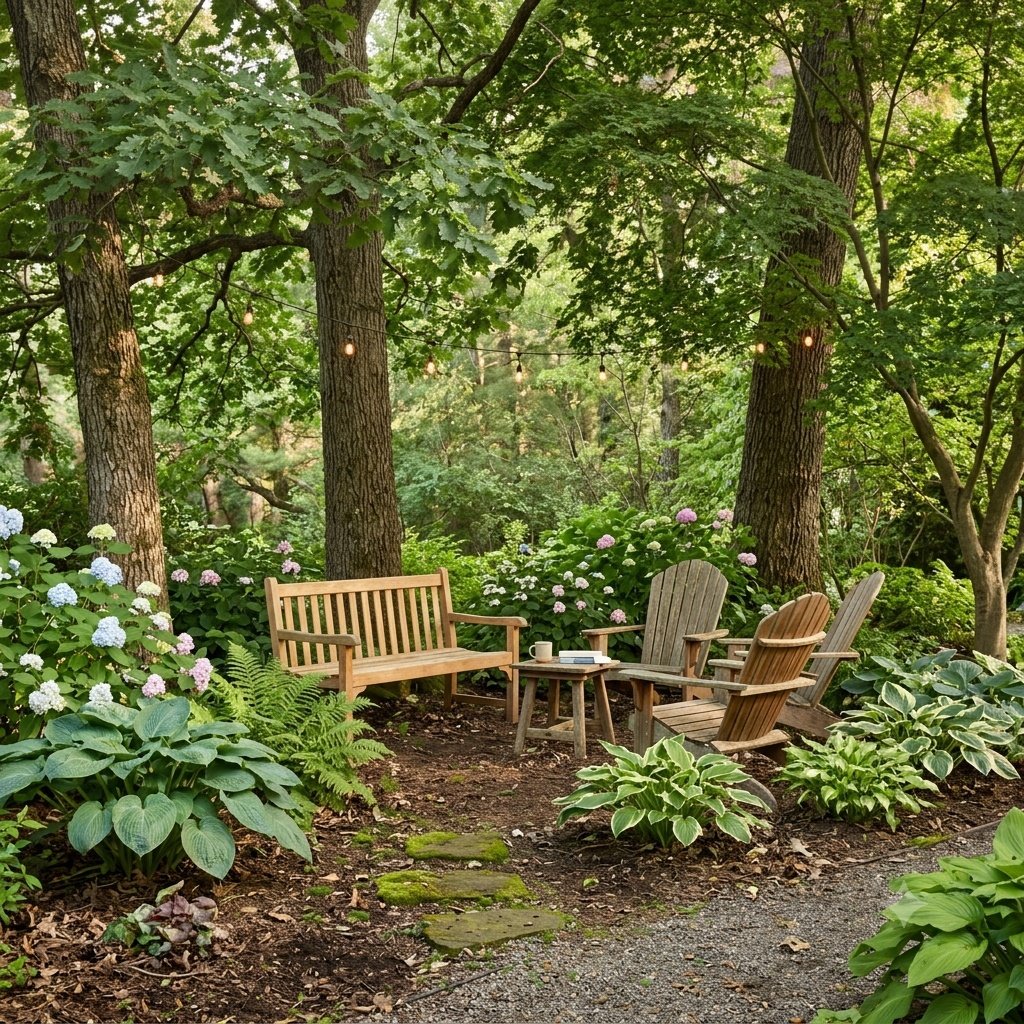
4. Build a Shade Garden Seating Area
One advantage of shade gardens is comfort.
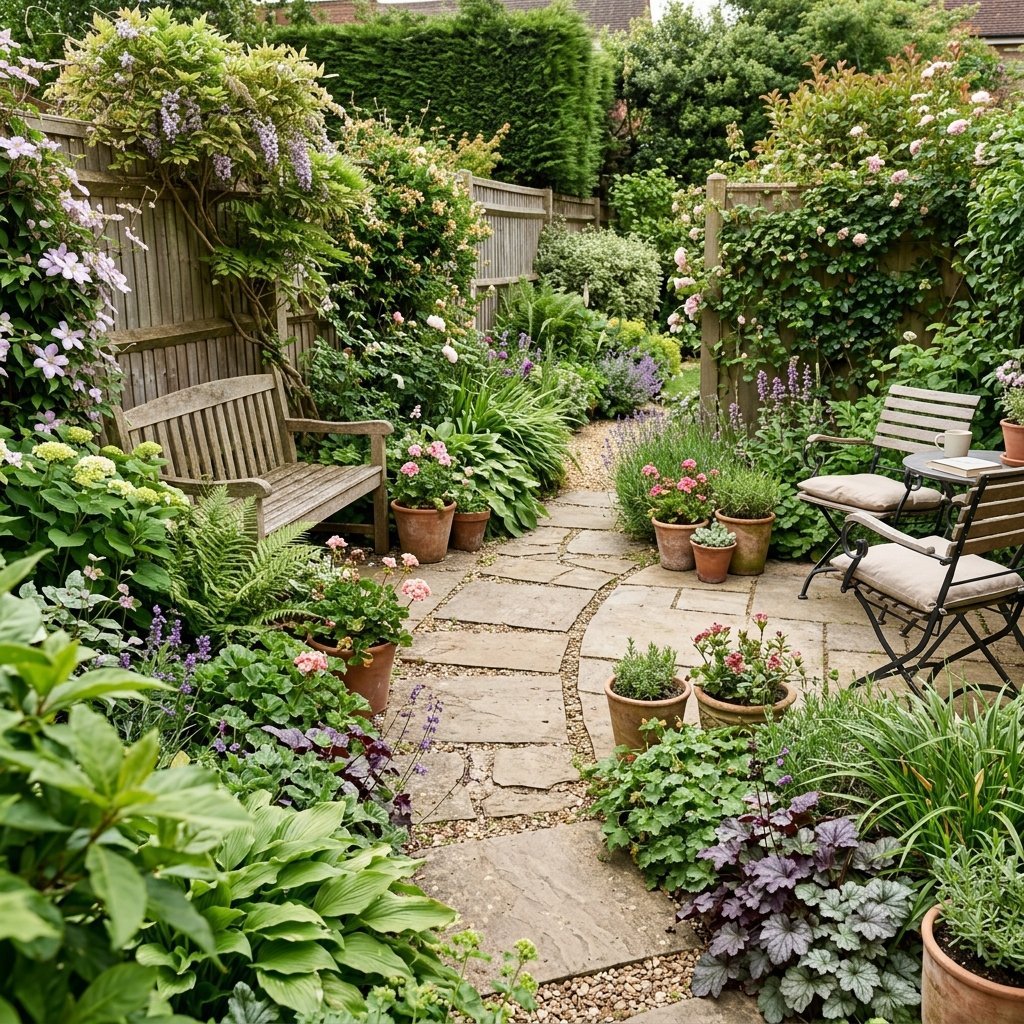
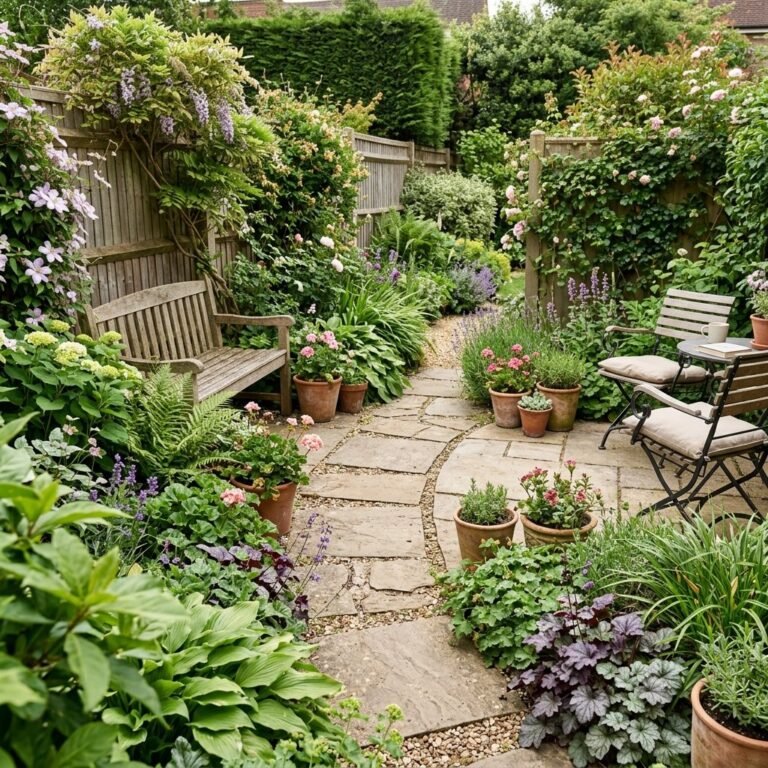
A bench beneath mature trees creates a peaceful place to read, relax, or enjoy morning coffee. Adirondack chairs, wooden benches, and small bistro sets work especially well.
Surround the seating area with ferns, hostas, and flowering plants to create a private retreat.
Adding decorative pots, outdoor cushions, and lanterns makes the space feel inviting.
During summer, these cool corners often become the most enjoyable areas of the entire yard.
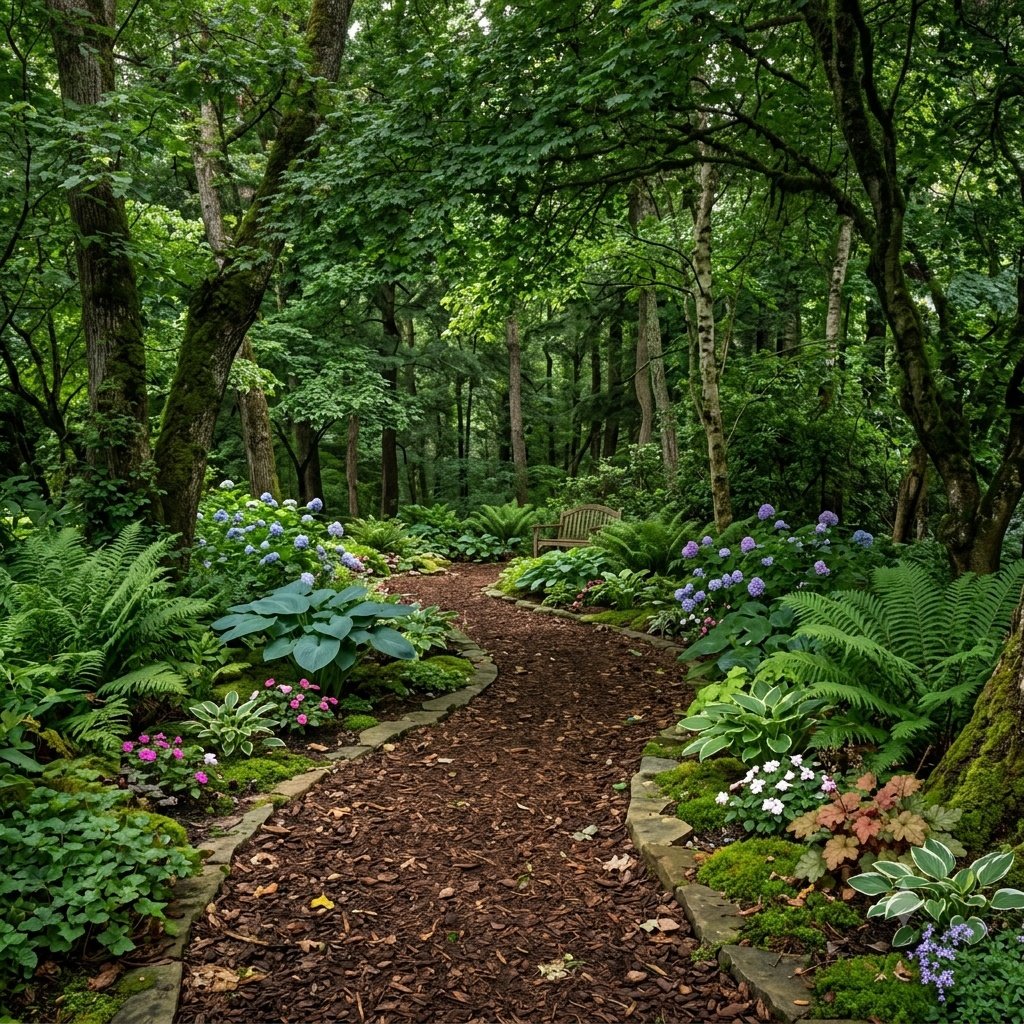
5. Install a Curved Mulch Path
Pathways add structure to shady backyard ideas.
Curved paths encourage exploration and make gardens feel larger than they actually are. Bark mulch is affordable and blends naturally into woodland settings.
Gravel paths provide excellent drainage, while stepping stones create a more formal appearance.
Bordering pathways with ferns, hostas, or low-growing ground covers softens the edges.
A winding path also directs visitors through the garden and highlights different planting areas.
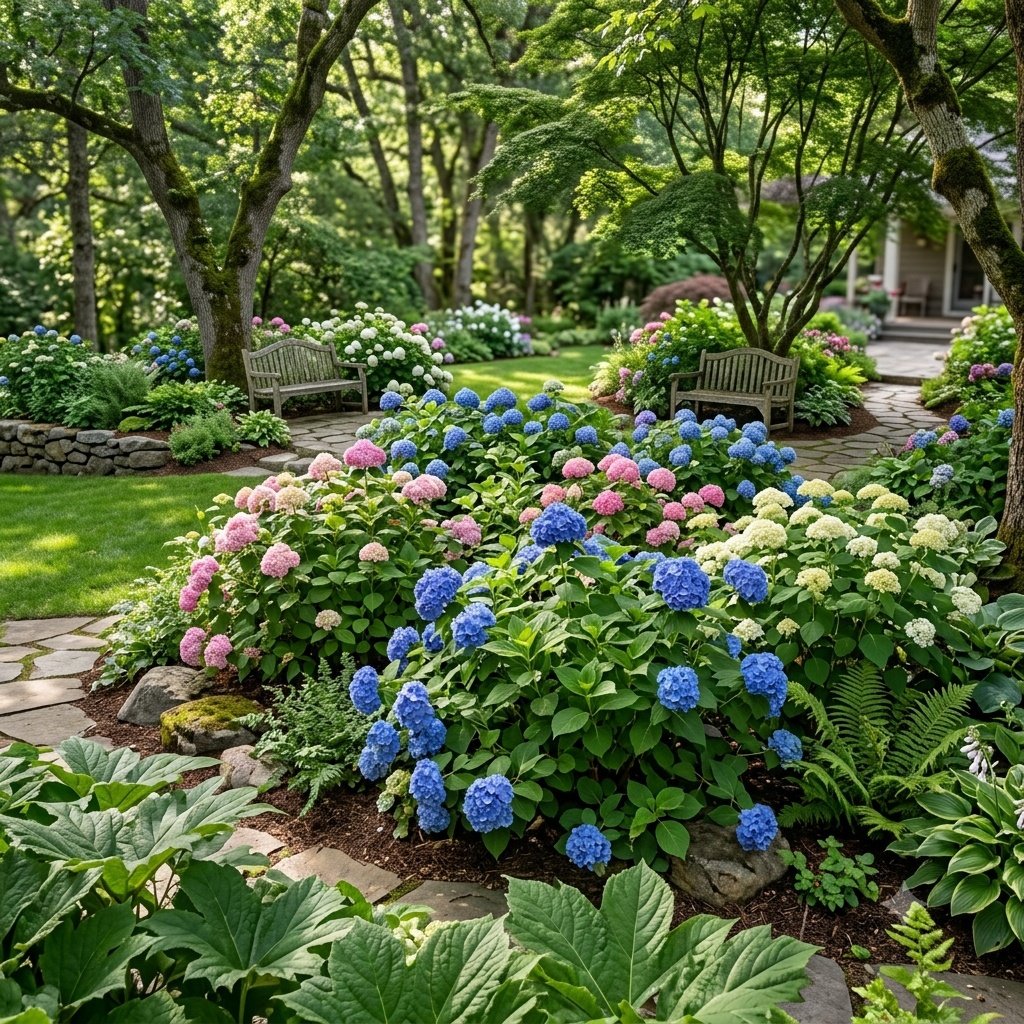
6. Grow Hydrangeas for Summer Color
Hydrangeas thrive in partial shade and deliver large, colorful blooms.
Blue, pink, white, and purple flowers brighten shaded gardens throughout summer. Many varieties prefer protection from intense afternoon sun.
Consistent watering helps maintain healthy blooms, especially during dry periods.
Hydrangeas pair beautifully with hostas, ferns, and shade-loving perennials.
Their large flowers create strong focal points and add height to backyard landscaping for shade.
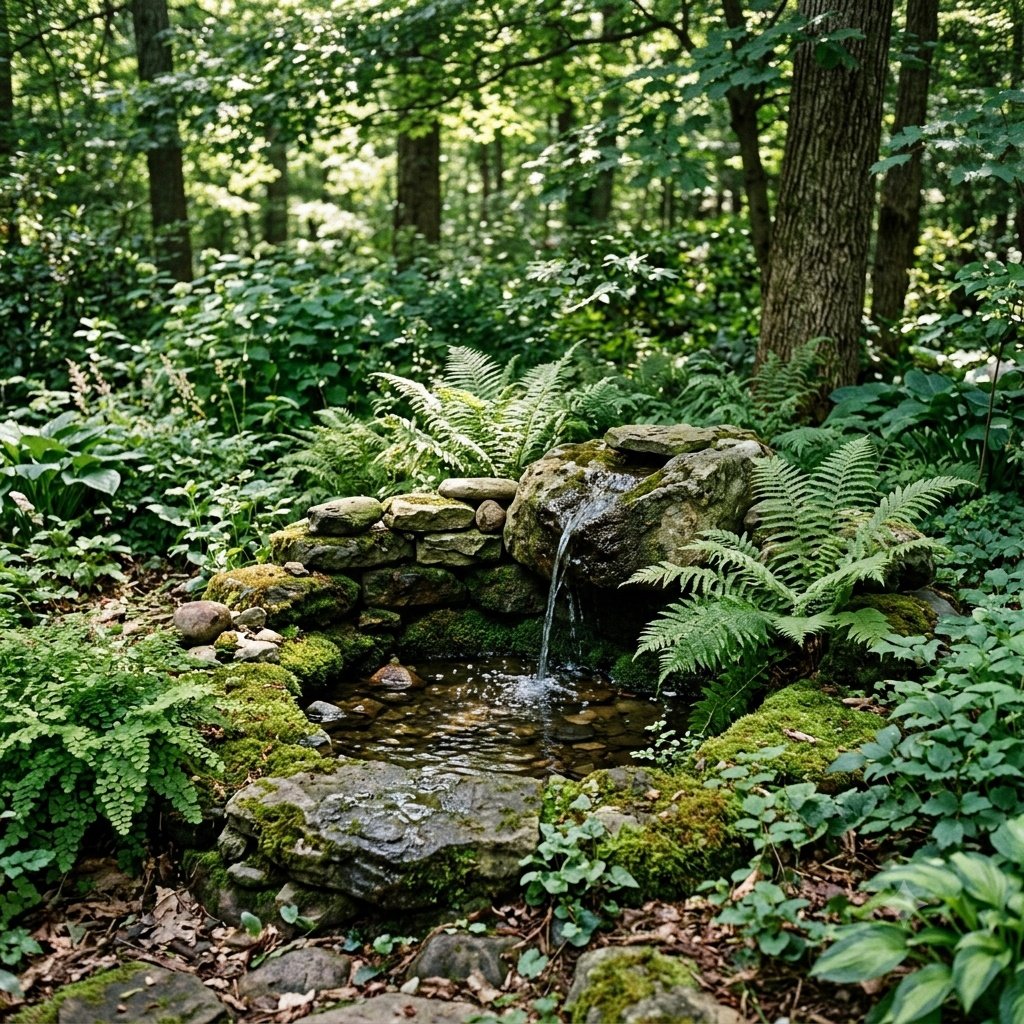
7. Add a Small Water Feature
Water features bring movement and sound into shaded landscapes.
A simple bird bath can attract birds and butterflies, while a small fountain adds relaxing background noise.
Mini ponds and bubbling urns create cooling effects during warm weather.
Placing water features near seating areas enhances the overall experience of the garden.
Natural stone and surrounding ferns help the feature blend into the landscape.
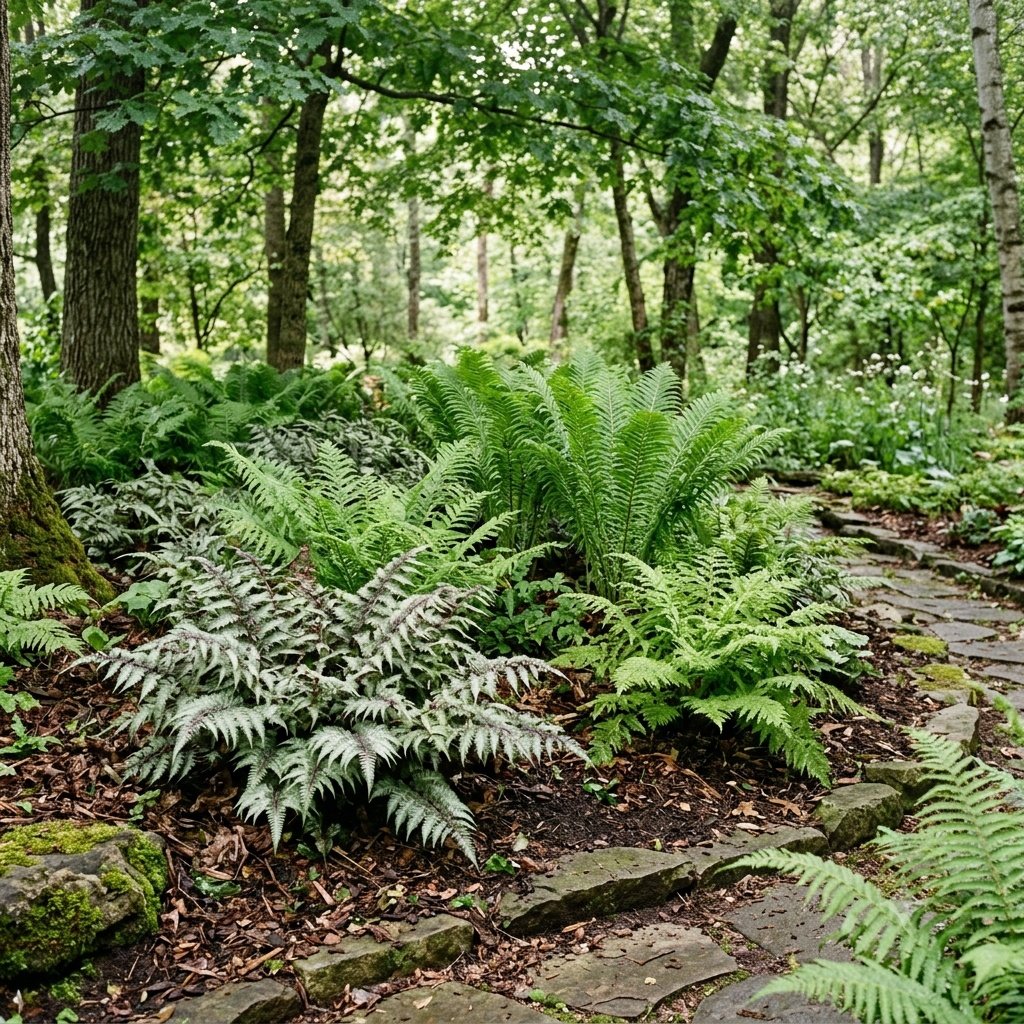
8. Create a Fern Garden
Ferns are among the best plants for shady gardens.
Japanese painted fern offers silver foliage, while ostrich fern provides dramatic height. Lady fern adds fine texture and graceful movement.
Combining several varieties creates layers of green with different leaf shapes and sizes.
Ferns prefer moist, rich soil and generally require little maintenance.
A dedicated fern garden can turn an otherwise difficult area into a lush landscape.
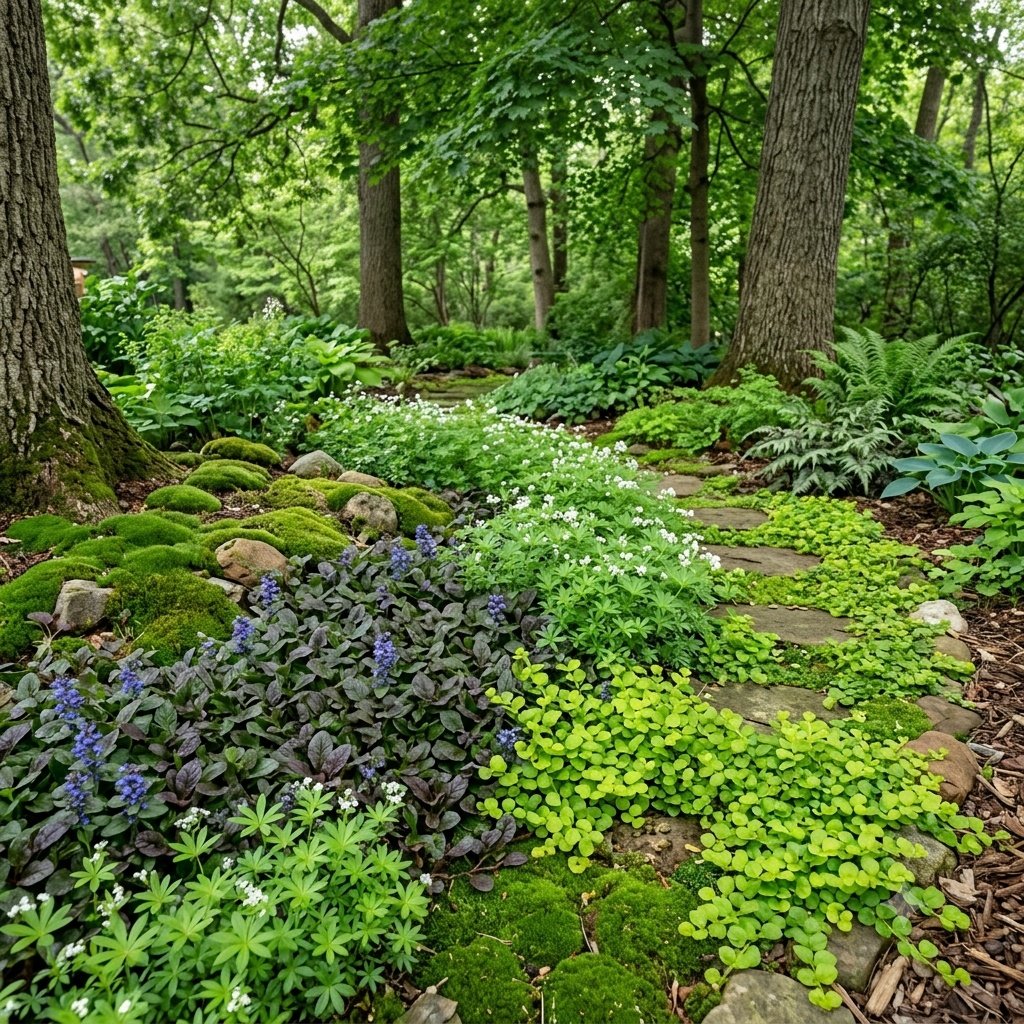
9. Use Ground Covers Instead of Grass
Grass often struggles beneath trees and in dense shade.
Ground covers provide an attractive alternative while reducing maintenance.
Ajuga produces colorful foliage and blue flowers. Sweet woodruff creates delicate greenery. Creeping Jenny spreads quickly and brightens dark areas.
Moss can also thrive in consistently moist locations.
These plants suppress weeds and eliminate the need for mowing.
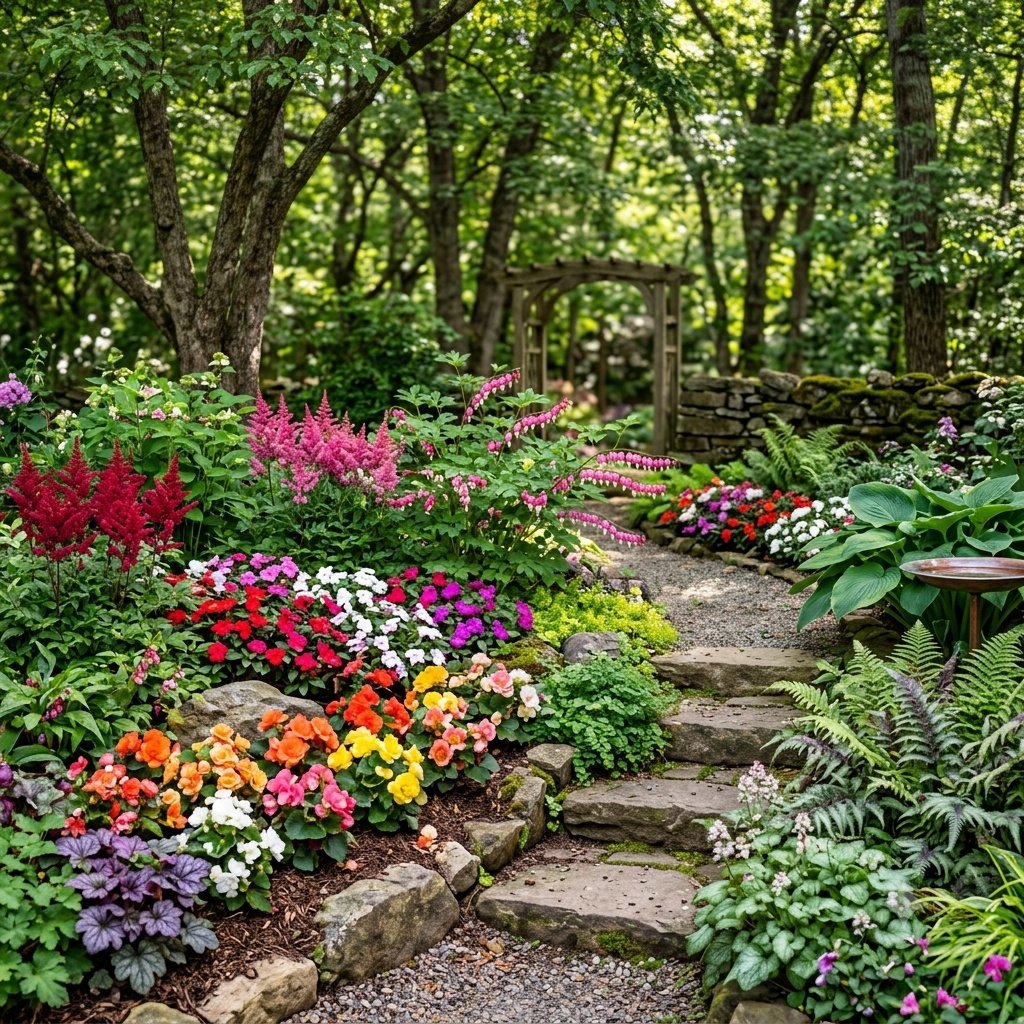
10. Add Shade-Loving Flowers
Shade gardens do not have to rely entirely on foliage.
Astilbe produces feathery blooms in pink, white, and red. Bleeding hearts offer unique heart-shaped flowers in spring.
Impatiens and begonias add season-long color to containers and borders.
Mixing flowering plants with foliage creates contrast and keeps the garden visually interesting.
These colorful plants for shade gardens prove that low-light spaces can still produce impressive blooms.
11. Incorporate Containers in Shady Areas
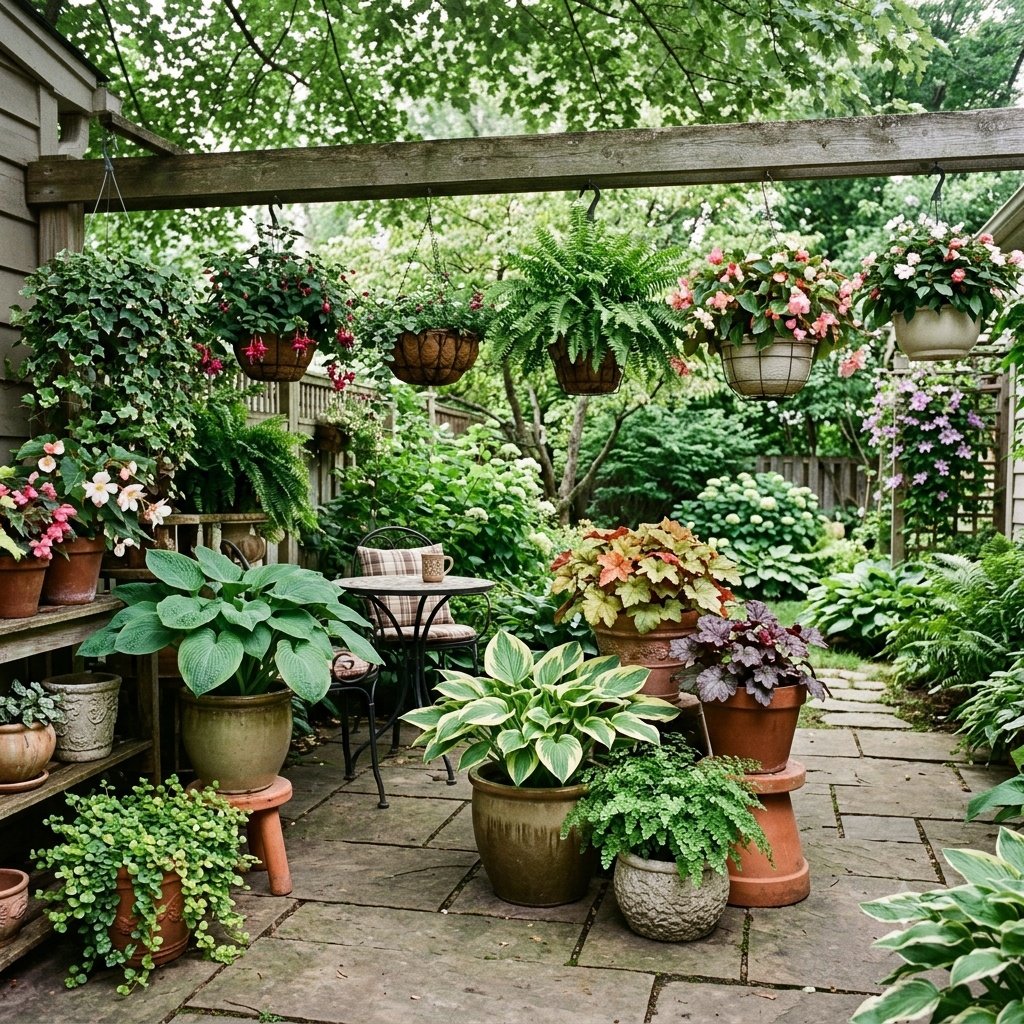
Containers add flexibility to shade landscaping ideas.
Large pots filled with ferns, hostas, and heucheras can brighten patios, porches, and garden entrances.
Hanging baskets filled with begonias or trailing plants add height and interest.
Decorative containers also allow gardeners to experiment with color combinations and plant arrangements.
Changing seasonal displays keeps the garden fresh throughout the year.
12. Use Light-Colored Plants to Brighten Dark Spaces
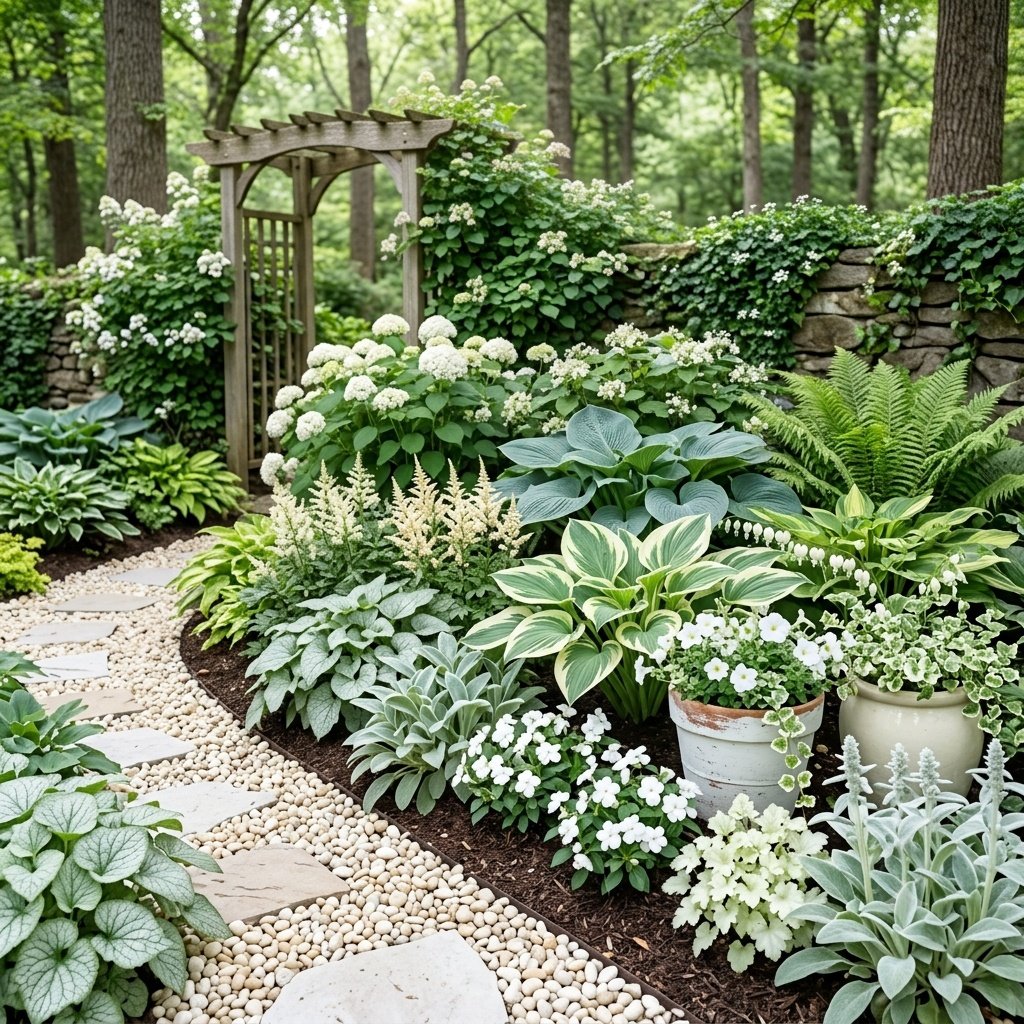
Dark foliage can sometimes make shade gardens feel even darker.
Plants with silver leaves, white flowers, or variegated foliage reflect available light and brighten the space.
Japanese painted fern, variegated hostas, and white astilbe work particularly well.
Light-colored mulch and decorative stones can also improve visibility.
Combining dark and light foliage creates stronger visual contrast.
13. Create a Secret Garden Corner
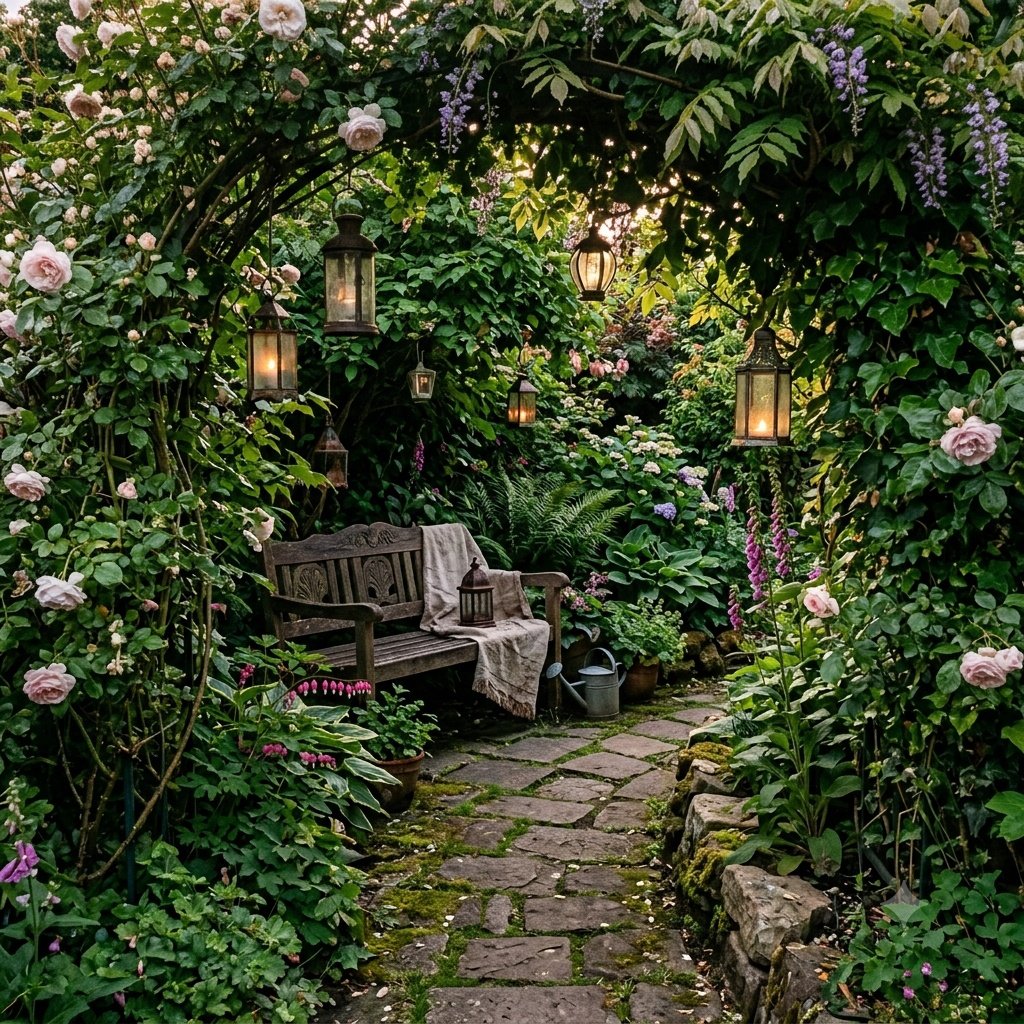
A hidden garden space adds charm and mystery.
Place a bench behind shrubs, install a simple archway, or add climbing plants to create a secluded retreat.
Lanterns, decorative containers, and small ornaments make the space feel personal.
This approach works especially well in larger yards where unused corners exist beneath mature trees.
For additional inspiration, readers can explore Secret Garden Ideas to expand this concept.
14. Add Decorative Garden Lighting
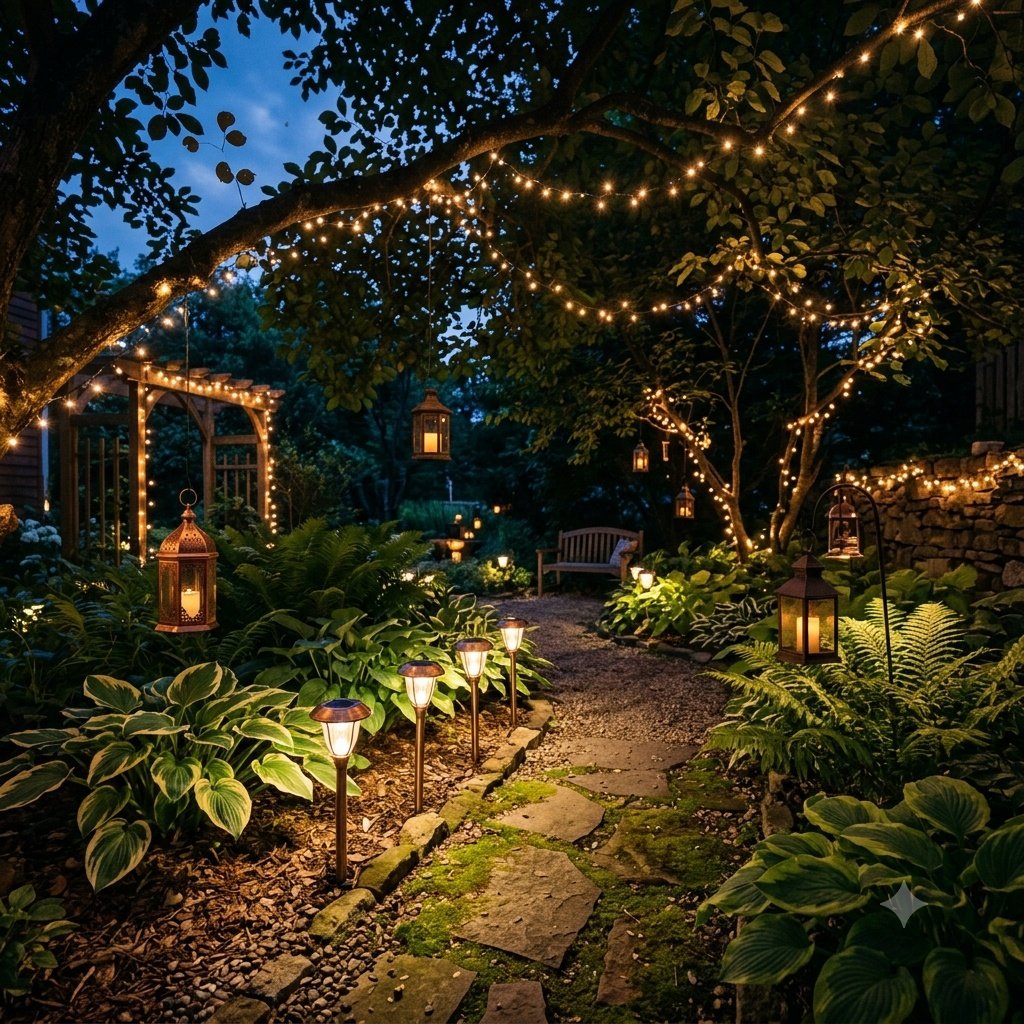
Shade gardens often become especially beautiful during evening hours.
Solar path lights illuminate walkways, while lanterns create a warm atmosphere.
String lights hung from tree branches add soft illumination.
Lighting extends the use of outdoor spaces and highlights plants after sunset.
Energy-efficient solar fixtures make installation simple and affordable.
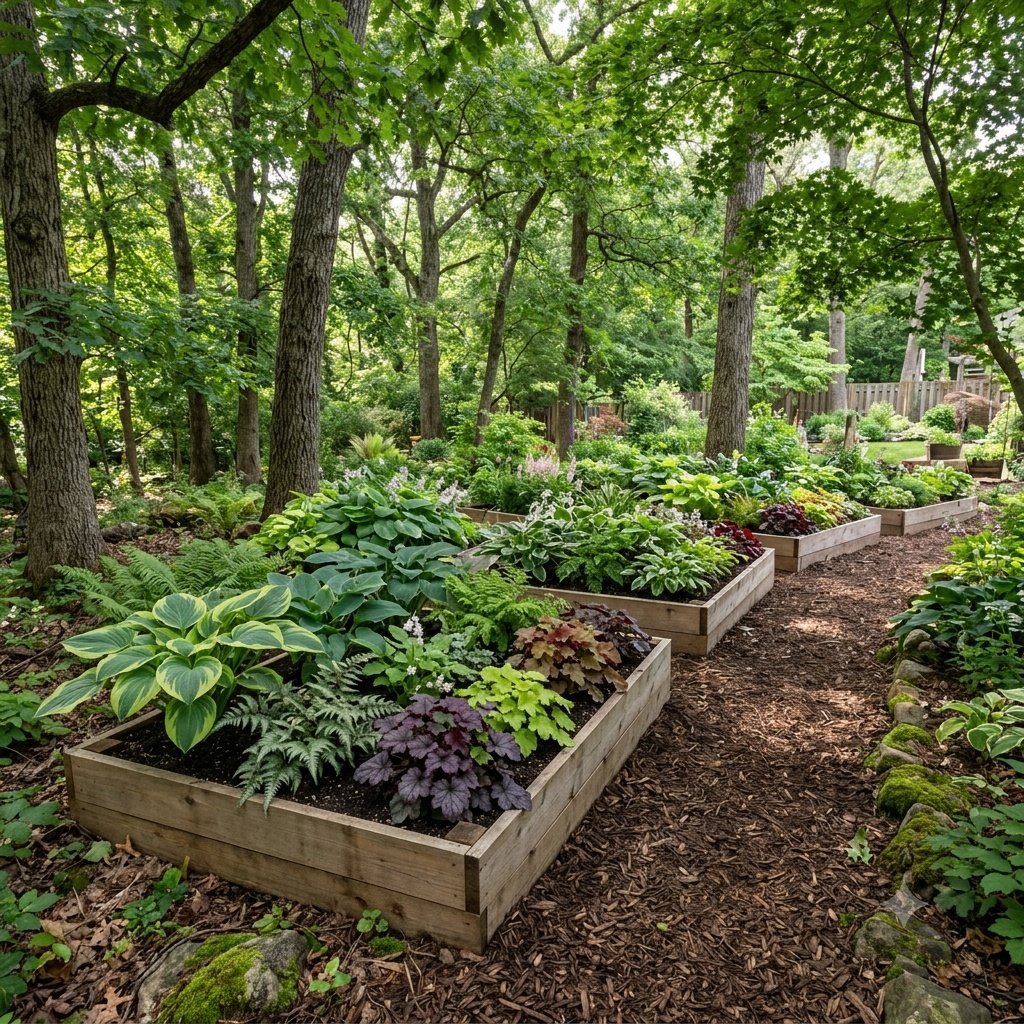
15. Build Raised Beds Under Trees
Tree roots often compete with garden plants for water and nutrients.
Raised beds help solve this problem by improving soil depth and drainage.
Wood, stone, or metal edging can define planting areas while protecting delicate roots.
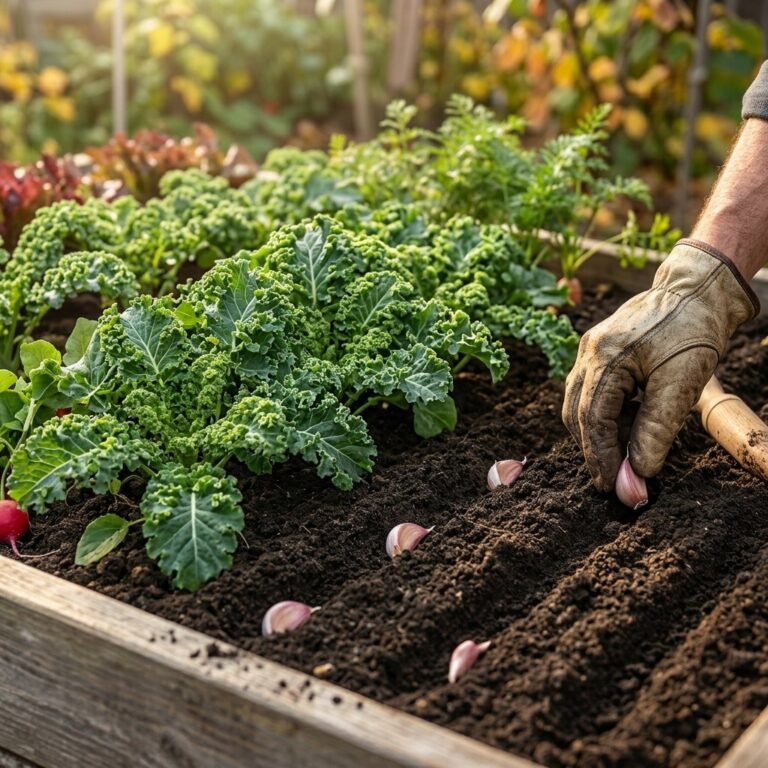
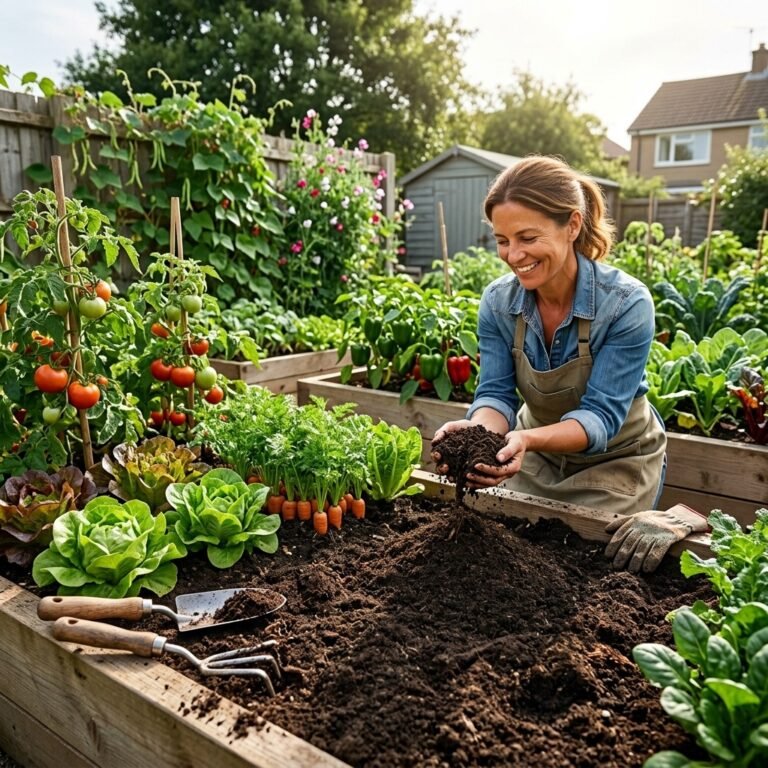
Adding compost and organic matter improves growing conditions.
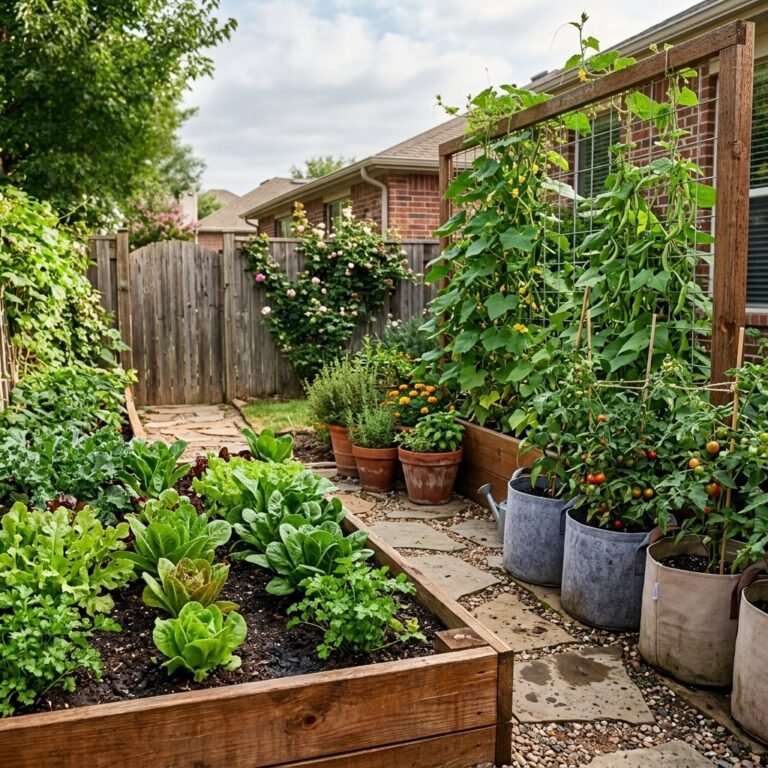
Raised beds also make planting and maintenance easier, particularly beneath mature trees.
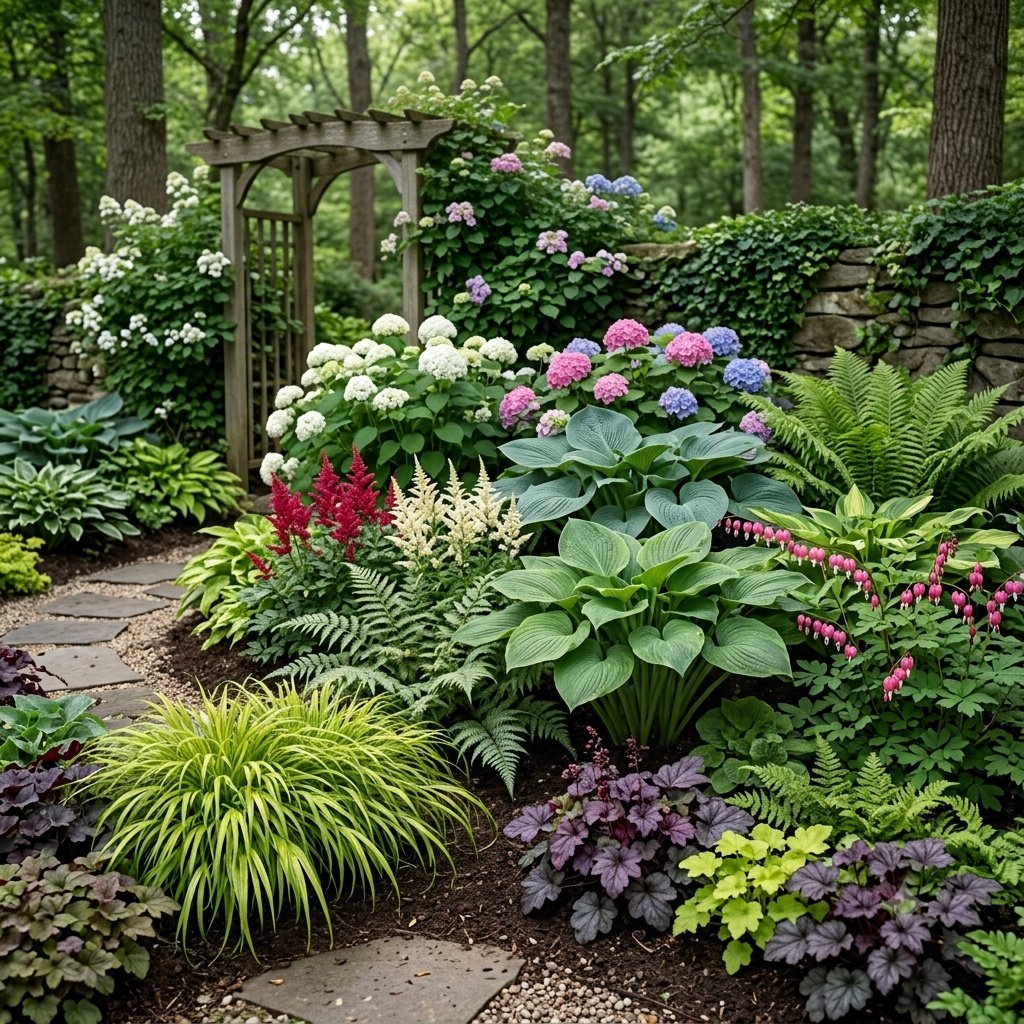
Best Plants for Shade Gardens
| Plant | Shade Type | Height | Color |
|---|---|---|---|
| Hosta | Full/Partial | Medium | Green/Blue |
| Fern | Full Shade | Medium | Green |
| Heuchera | Partial | Low | Purple/Bronze |
| Astilbe | Partial | Medium | Pink/White |
| Hydrangea | Partial | Tall | Blue/Pink |
| Bleeding Heart | Partial | Medium | Pink |
| Japanese Forest Grass | Partial | Low | Gold |
Hostas remain one of the easiest plants for shady areas because they offer attractive foliage with little maintenance.
Ferns provide texture and fit naturally into woodland garden ideas. Japanese painted fern adds silver tones that brighten dark locations.
Heucheras supply year-round color through their foliage, while astilbe contributes soft flower plumes during summer.
Hydrangeas introduce height and dramatic blooms, making them valuable focal points.
Bleeding hearts provide spring flowers that attract pollinators, and Japanese forest grass creates movement with its flowing leaves.
Combining plants with different heights, textures, and colors produces a layered appearance that feels natural and balanced.
How to Make a Shade Garden Look Bright
Shaded areas can sometimes appear dark and enclosed. Several design choices help increase brightness.
White flowers reflect available light and stand out against green foliage. Silver leaves and variegated plants also create contrast.
Light-colored mulch or decorative gravel brightens pathways and planting beds.
Reflective garden ornaments, mirrors, and glazed containers can increase visual light.
Layering plants by height improves depth and prevents the garden from looking flat.
Containers in soft colors such as cream, gray, or pale blue contribute to a brighter appearance.
Adding small lighting fixtures allows the garden to remain attractive after sunset.
With thoughtful plant selection and design, even the darkest spaces can feel open and inviting.
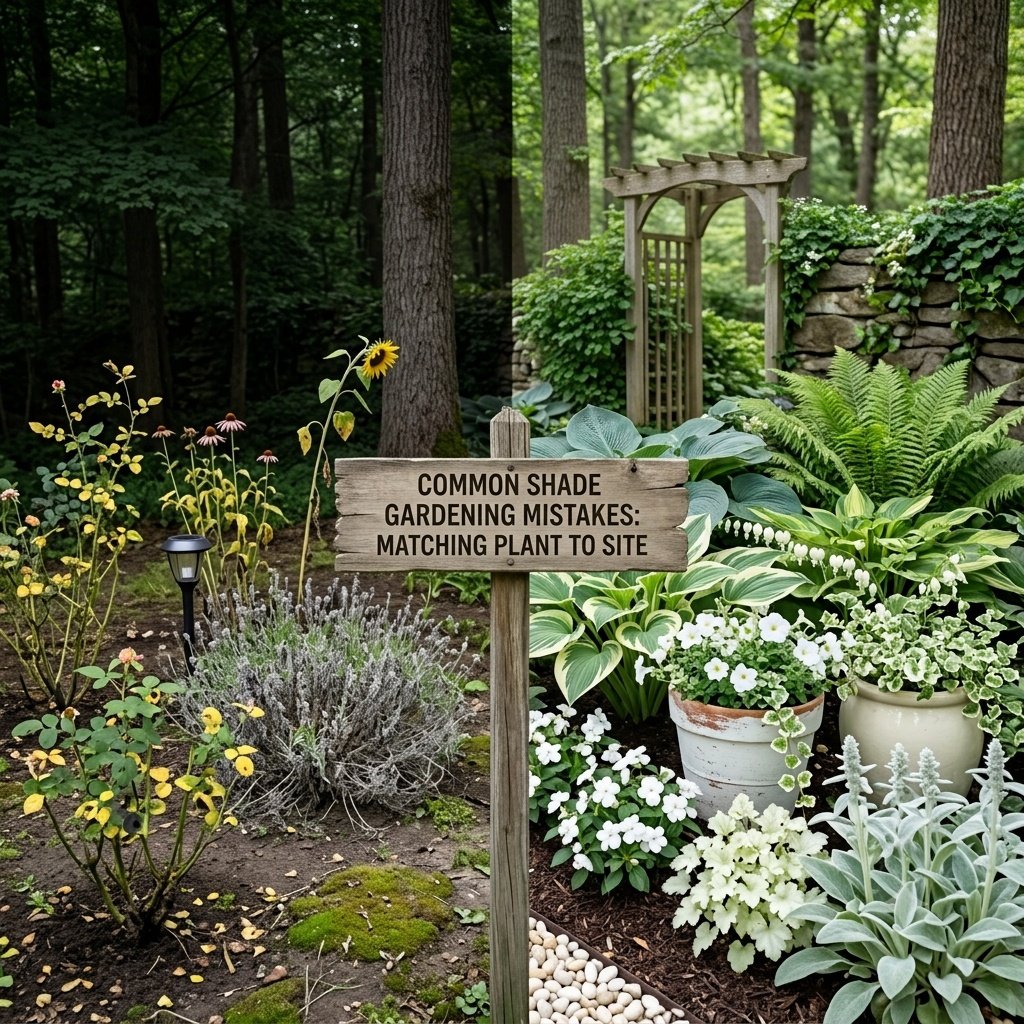
Common Shade Gardening Mistakes
Many gardeners struggle with shade because of a few common mistakes.
Planting sun-loving flowers in full shade often leads to poor growth and disappointing blooms.
Overwatering is another issue. Shade slows evaporation, meaning soil remains moist longer.
Ignoring soil quality can also limit plant growth. Adding compost improves drainage and nutrients.
Poor air circulation may encourage disease, particularly when plants become overcrowded.
Using only dark green foliage sometimes makes the garden appear dull.
Balancing textures, colors, and plant heights creates a healthier and more attractive landscape.
Related Reads
You might find these helpful as you keep going:
7 Best Fertilizers for Raised Beds (Top Picks + Feeding Guide)
7 Best Self-Watering Systems for Balcony Vegetable Gardens (That Actually Work)
7 July Tasks for the Midsummer Garden
FAQ
What grows best in full shade?
Ferns, hostas, moss, sweet woodruff, and certain varieties of heuchera perform very well in full shade conditions.
Can flowers bloom in shade?
Yes. Astilbe, begonias, impatiens, bleeding hearts, and hydrangeas all produce attractive blooms in partial shade.
How do I brighten a shady garden?
Choose white flowers, silver foliage, light mulch, decorative containers, and solar lighting to increase brightness.
Are shade gardens low maintenance?
Many shade gardens require less watering and mowing than sunny landscapes. Ground covers and mulch also reduce weeds.
What plants grow under trees?
Hostas, ferns, heucheras, Japanese forest grass, and sweet woodruff often succeed beneath mature trees where root competition exists.
Final Thoughts
Shady spaces do not have to remain empty or neglected. They can become some of the most attractive parts of the landscape.
The right combination of plants, pathways, seating areas, lighting, and decorative features allows homeowners to create cool, relaxing retreats that thrive with limited sunlight.
Whether you choose woodland garden ideas, colorful foliage, or a simple bench beneath a tree, small improvements can make a major difference.
Some of the most peaceful and enchanting gardens are found where the sunlight barely reaches.