
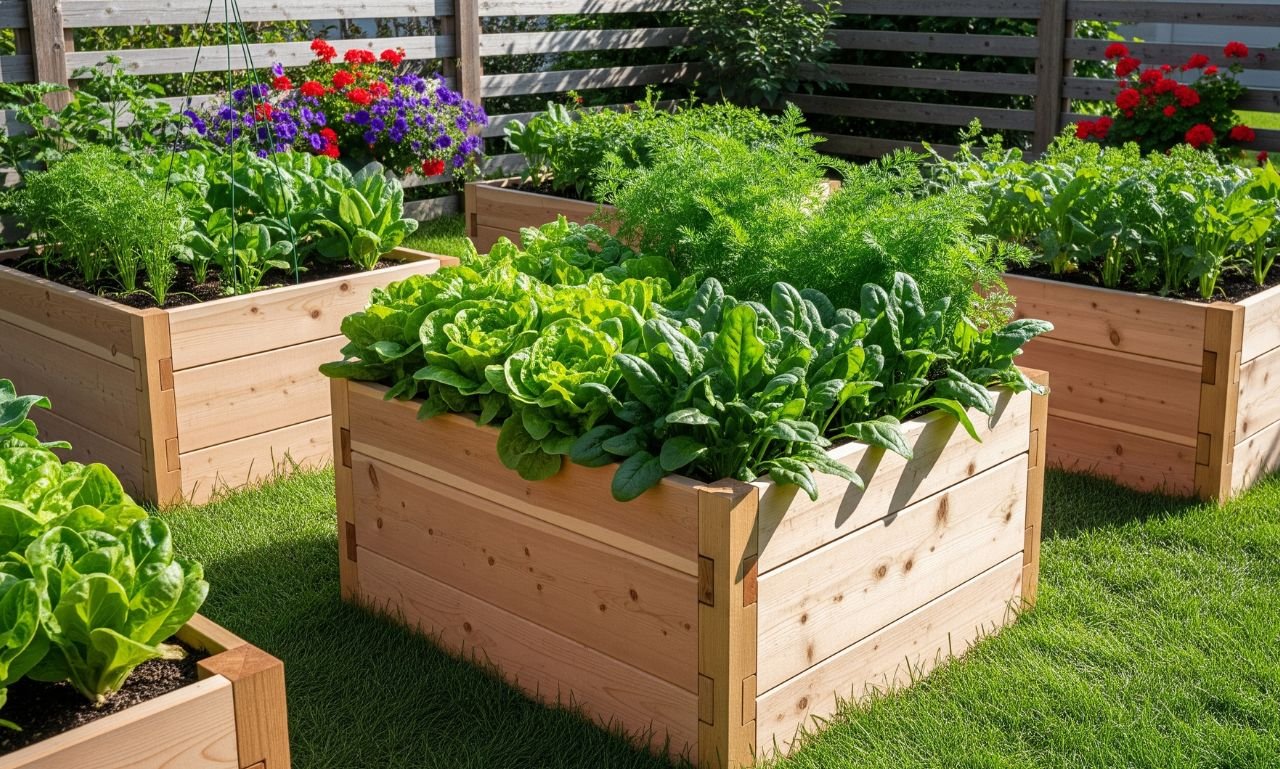
If you’ve ever struggled with weeds, bad soil, or bending over until your back screams, raised bed gardening might be your new best friend. These neat, elevated boxes aren’t just trendy—they make gardening easier, more productive, and, let’s be honest, way prettier.
In this guide, we’ll cover:
- What raised bed gardening is and why it’s trending
- The benefits for beginners and experienced gardeners
- Choosing the right materials (and buying options)
- How to build and maintain the perfect soil mix
- Best vegetables, herbs, and companion planting tips
- Common mistakes and how to fix them
- Design ideas for a beautiful and functional garden
- FAQs to get you started confidently
By the end, you’ll be ready to transform your backyard into a thriving raised bed paradise.
What is Raised Bed Gardening?
A raised garden bed is a contained growing area elevated above ground, usually framed with wood, metal, or composite materials. This method dates back centuries but has surged in popularity due to its practical benefits.
Instead of planting directly into the ground, you can create a controlled environment for your plants, which is particularly helpful if you have:
- Poor or compacted soil
- Sloped yards or uneven terrain
- Limited space like patios or rooftops
Raised beds are ideal for vegetables, herbs, and flowers, offering an organized and visually appealing garden that’s easier to maintain. Imagine neat rows of carrots, tomatoes, and herbs thriving in rich, healthy soil—without bending over endlessly or dealing with muddy patches.
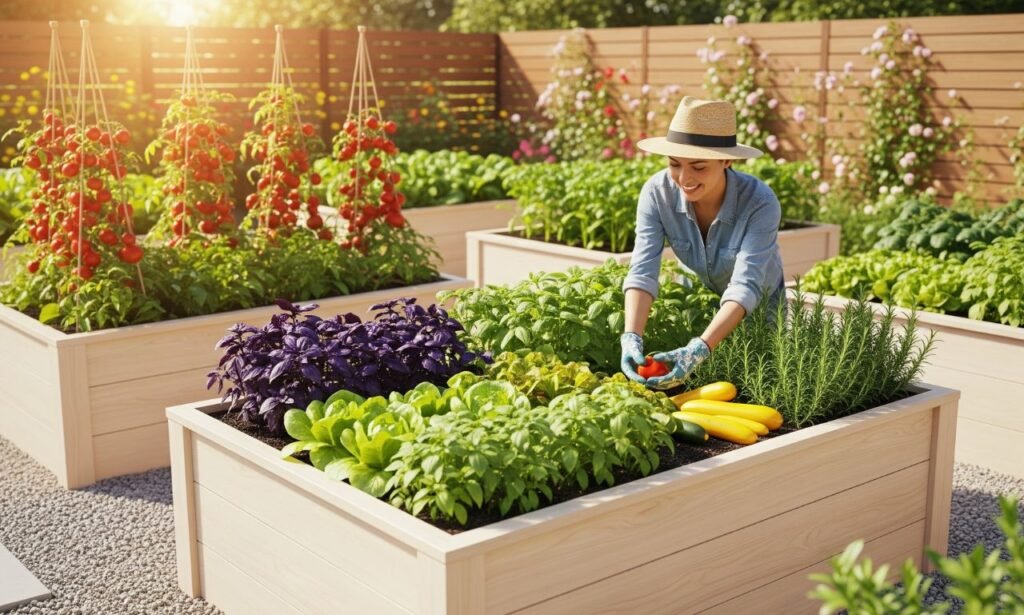
A beautiful backyard featuring multiple cedar raised beds filled with lush vegetables
Benefits of Raised Bed Gardening
1. Better Soil Control
You can fill your beds with a custom soil mix, perfect for your plant’s needs. This is especially valuable if your garden soil is sandy, clay-heavy, or nutrient-poor.
2. Fewer Weeds
Weeds find it harder to invade raised beds, especially if you use mulch and weed barriers. Less time weeding means more time enjoying your garden.
3. Improved Drainage
Raised beds drain faster than traditional plots, preventing root rot and soggy soil. They’re ideal for areas with heavy rainfall or clay soils.
4. Extended Growing Season
Soil in raised beds warms faster in the spring, allowing you to plant earlier and harvest later.
5. Accessibility and Comfort
Elevated beds are easier on your back and knees, which is especially helpful for older gardeners or anyone with mobility issues.
6. Higher Yields
Plants thrive in well-draining, nutrient-rich soil, often producing more than in-ground gardens.
7. Pest Control
Raised beds can be fitted with fencing or netting, protecting plants from rabbits, deer, and other critters.
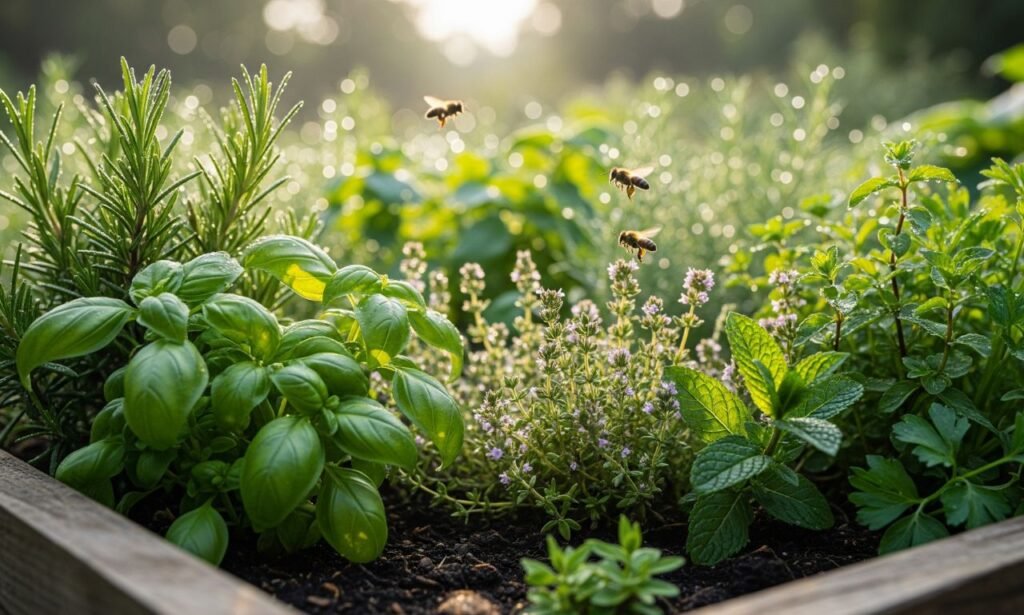
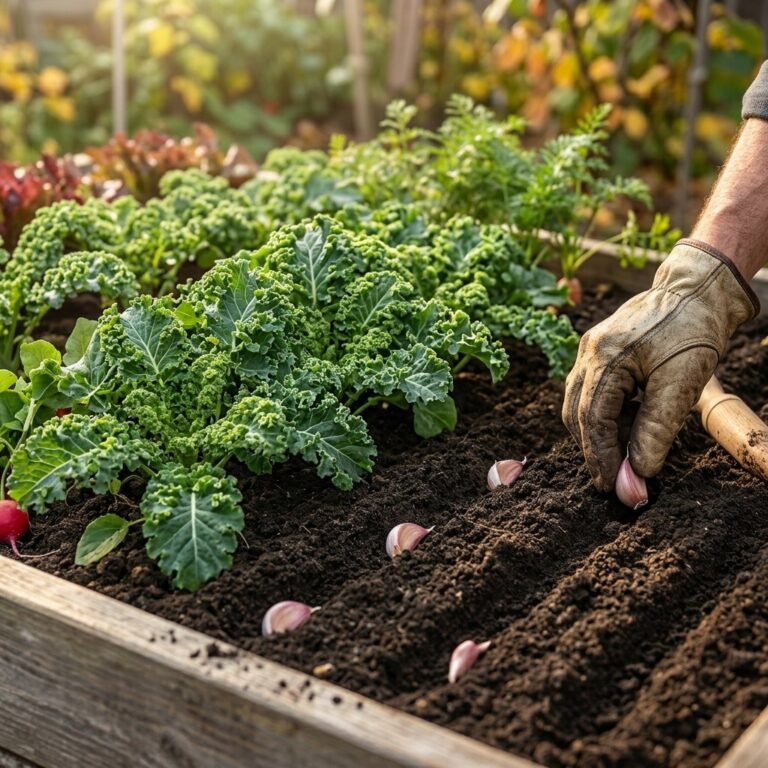
A raised bed garden with a mix of leafy greens and herbs.
Choosing the Right Materials for Raised Beds
| Material | Pros | Cons |
|---|---|---|
| Cedar / Redwood | Rot-resistant, natural look, long-lasting | Higher cost |
| Pressure-Treated Wood | Affordable, durable, garden-safe options | Less attractive |
| Composite Boards | Eco-friendly, very durable, low maintenance | Expensive upfront |
| Galvanized Metal | Modern look, strong, weather-resistant | Can overheat in sun |
| Bricks / Concrete | Permanent, sturdy, stylish | Labor-intensive |
Buying Pre-Made Raised Beds
You don’t need to DIY everything—ready-made kits are available online.
- Amazon: Huge selection, including cedar and metal beds.
- eBay: Affordable kits with free shipping
- Walmart / Home Depot: Quick delivery and in-store pickup
Pro Tips:
- Choose beds 12–18 inches deep for most vegetables.
- If using metal in hot climates, pick lighter colors to prevent soil overheating.
- Mix wooden beds for rustic charm and metal beds for a modern look.
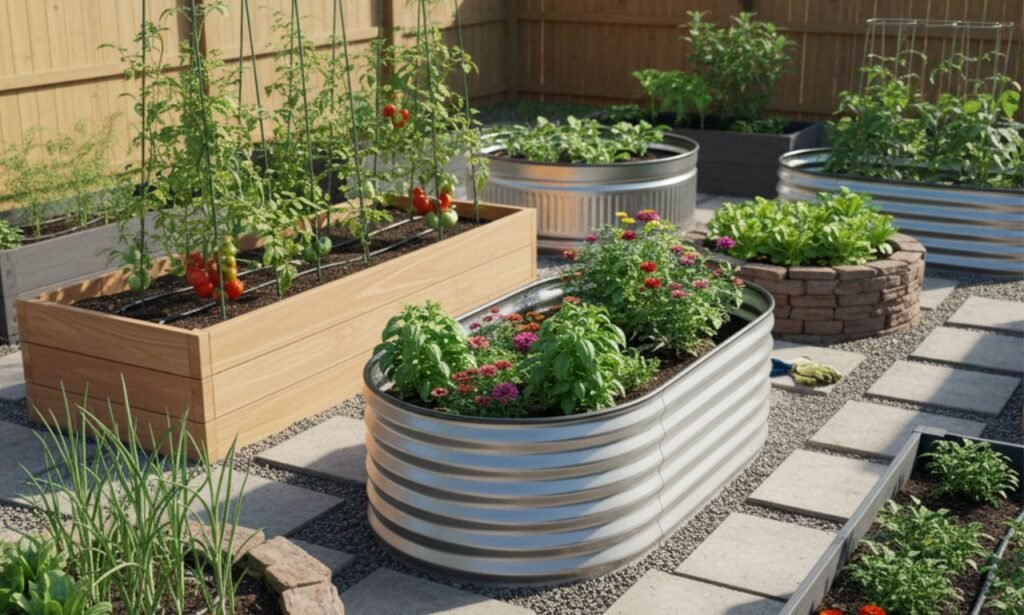
A backyard with mixed wood and metal raised beds.
Building the Perfect Soil Mix
Layering Your Bed
- Bottom Layer: Twigs, branches, cardboard, or small logs for drainage.
- Middle Layer: Compost, shredded leaves, grass clippings for nutrients.
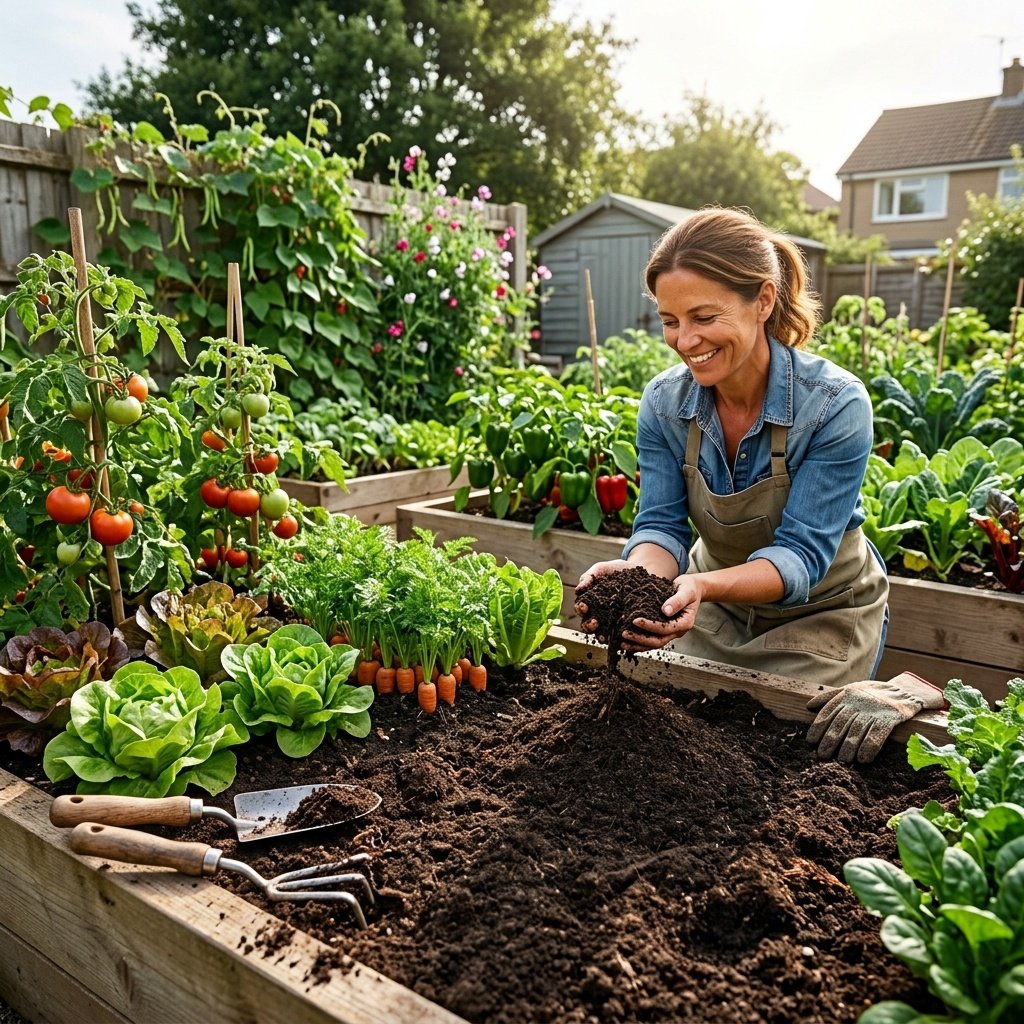
- Top Layer: High-quality soil mix (garden soil + compost + organic matter).
DIY Soil Mix Formula (Epic Gardening Approved)
- 40% Topsoil
- 40% Compost
- 20% Organic material (peat moss or coconut coir)
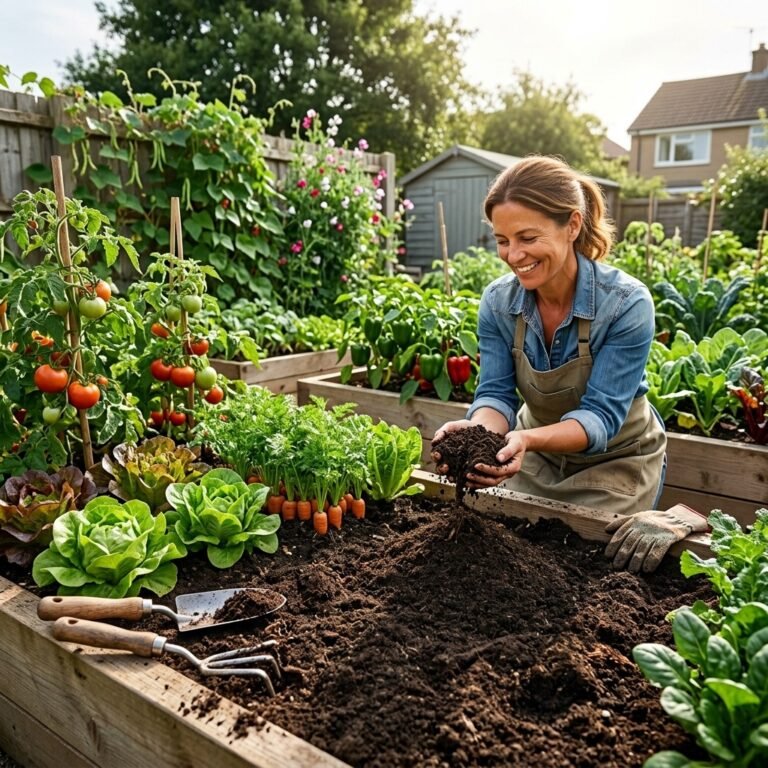
Maintenance Tip: Refresh soil every year with a 2-inch layer of compost to keep it fertile and healthy.
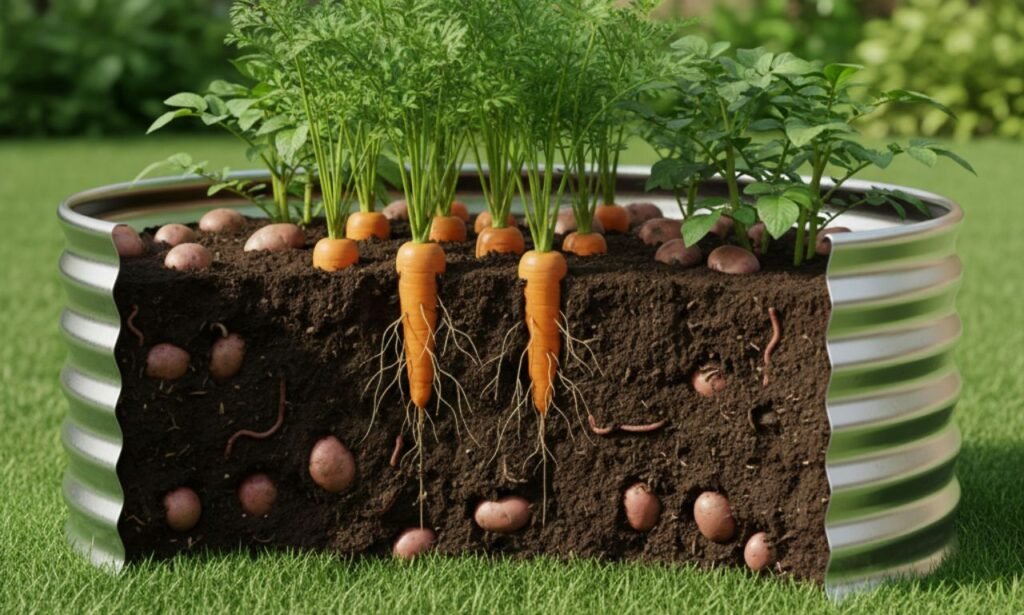
Compost and soil into a raised bed.
What to Plant in Raised Beds
Vegetables
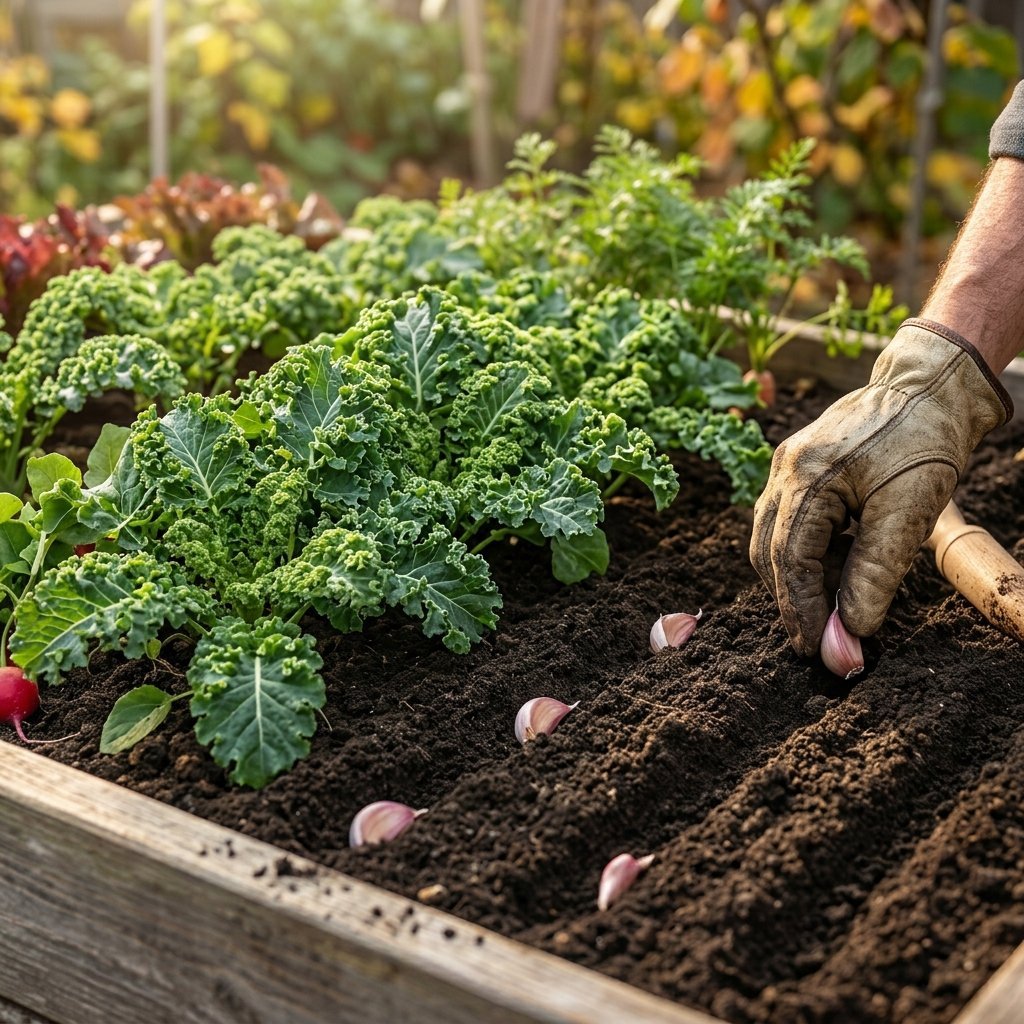
- Leafy greens: Lettuce, kale, spinach
- Root crops: Carrots, beets, radishes
- Tomatoes, peppers, cucumbers (with cages or trellis)
Herbs
- Basil, parsley, thyme, cilantro, oregano
Fruits
- Strawberries, bush blueberries, dwarf fruit trees
Companion Planting Ideas
- Marigolds and nasturtiums deter pests
- Basil near tomatoes improves flavor and growth
- Lettuce or spinach around taller plants utilizes space efficiently
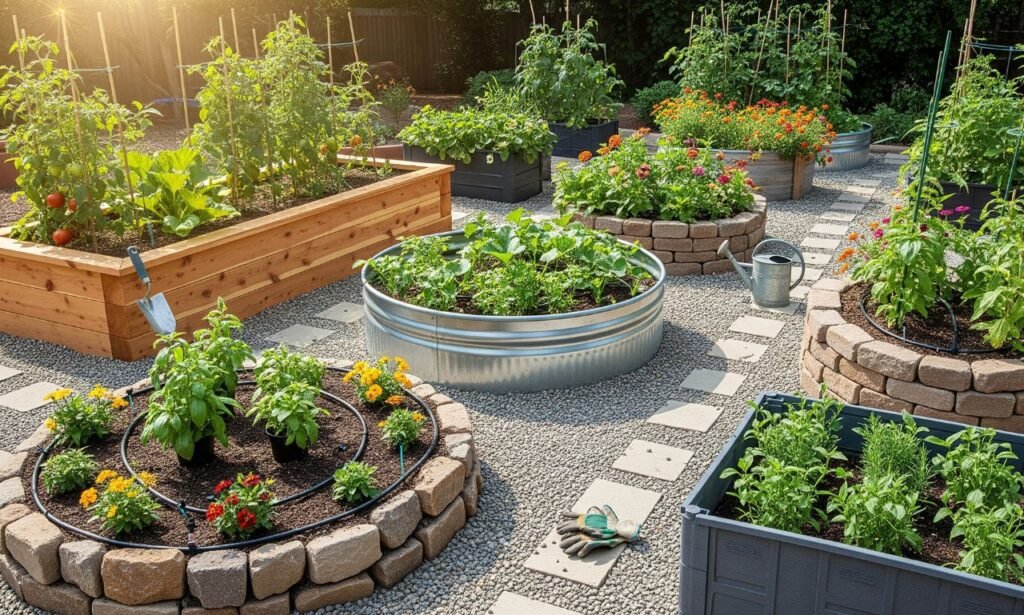
Raised bed overflowing with vegetables, herbs, and flowers.
Watering and Irrigation Tips
- Drip Irrigation: Efficient, conserves water, reduces disease.
- Soaker Hoses: Affordable and easy to install.
- Mulch: Retains soil moisture, keeps roots cool.
- Wicking Beds: Self-watering beds are ideal for dry climates.
Pro Tip: Water deeply and less often to encourage strong root systems.
Design Ideas for Raised Beds
- Multi-Level Beds: Stack beds or create tiered designs for visual interest.
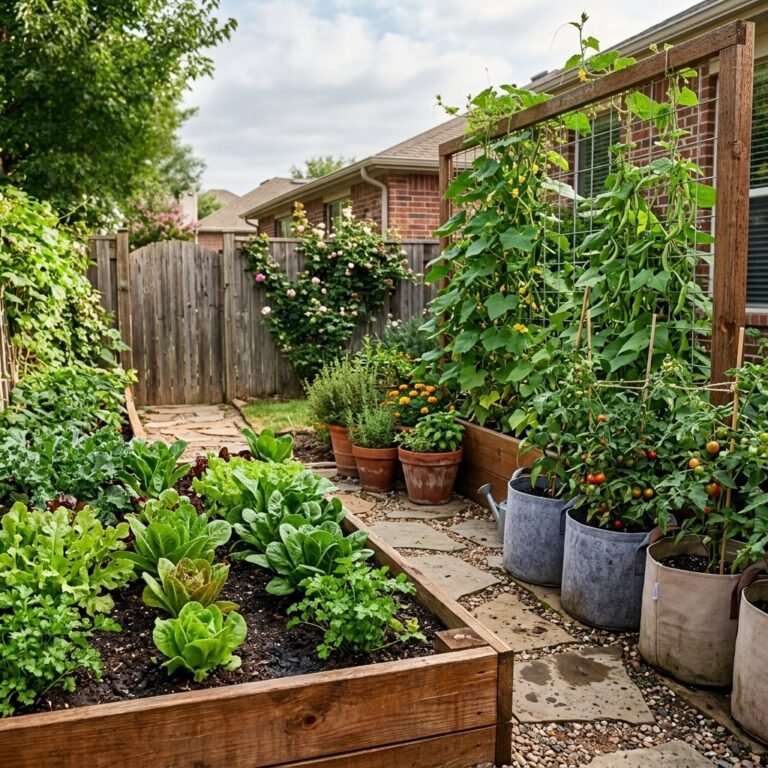
- Vertical Gardening: Use trellises for beans, cucumbers, and peas.
- Pathways: Gravel or stone paths prevent soil compaction.
- Mixed Materials: Combine wood, metal, or stone for a modern aesthetic.
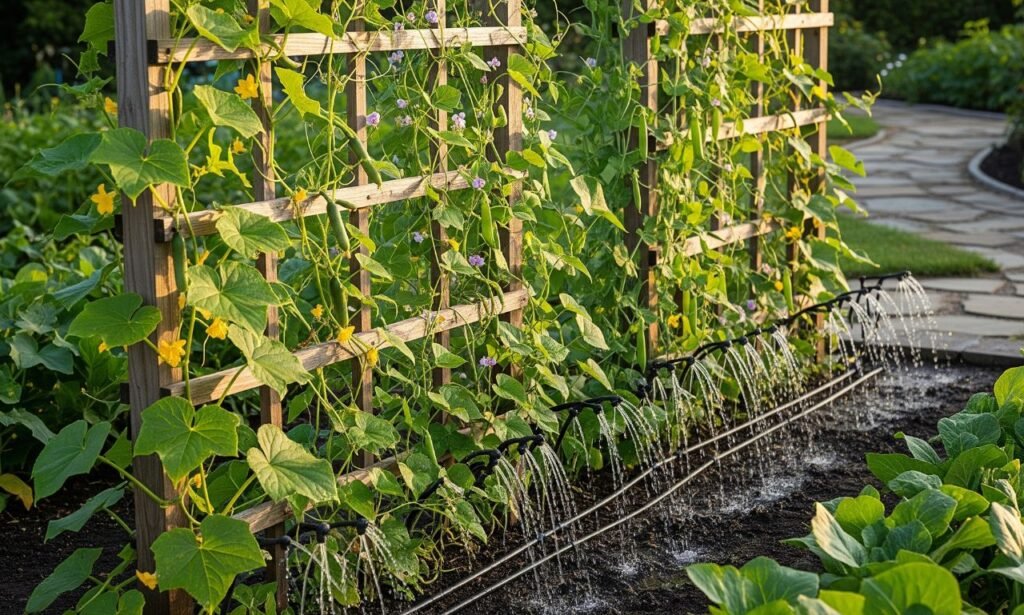
Raised beds with trellis climbing Beans and Cucumbers
Common Mistakes and How to Avoid Them
- Beds too wide – Stick to 3–4 feet for easy access.
- Poor soil quality – Use rich, well-draining soil.
- Overcrowding – Follow spacing charts for each plant.
- Skipping mulch – Prevents moisture loss and weed growth.
- Neglecting crop rotation – Helps prevent disease and soil depletion.
- Ignoring pests – Use fencing, netting, or companion planting.
YouTube Video: 9 Beginner Raised Bed Gardening Mistakes to Avoid
FAQs About Raised Bed Gardening
Q: How deep should a raised bed be? 12–18 inches for most vegetables; deeper for root crops.
Q: Can I grow tomatoes in raised beds? Yes, with cages or stakes. Ensure full sun and rich soil.
Q: Do I need a weed barrier? Optional, but recommended if you want fewer weeds and better drainage.
Q: How often should I water raised beds? Generally 1–2 inches per week, more in hot weather.
References and Resources
- Epic Gardening – Raised Bed vs In-Ground Gardening
- Gardenary – Complete Guide to Raised Beds
- Savvy Gardening – Best Vegetables for Raised Beds
Conclusion
Raised bed gardening is more than a trend—it’s a game-changer for productivity, ease, and aesthetics. Whether you buy a kit from Amazon or build your own, you’ll enjoy better yields, healthier plants, and a beautiful edible backyard. Start small or go all-in with multiple beds, and soon your garden will be the envy of your neighborhood!

Pingback: Edible Garden Design Ideas: Tips, Plants, and Layouts
Pingback: How to Extend Edible Garden Through Winter
Pingback: 15 Common Raised Bed Gardening Mistakes & to Fix Them Fast
Pingback: Metal vs Wood Raised Garden Beds: Which Is Better?
Pingback: Best Beginner Raised Bed Garden Layout Ideas 2026 - RaisedGardenbed Zone