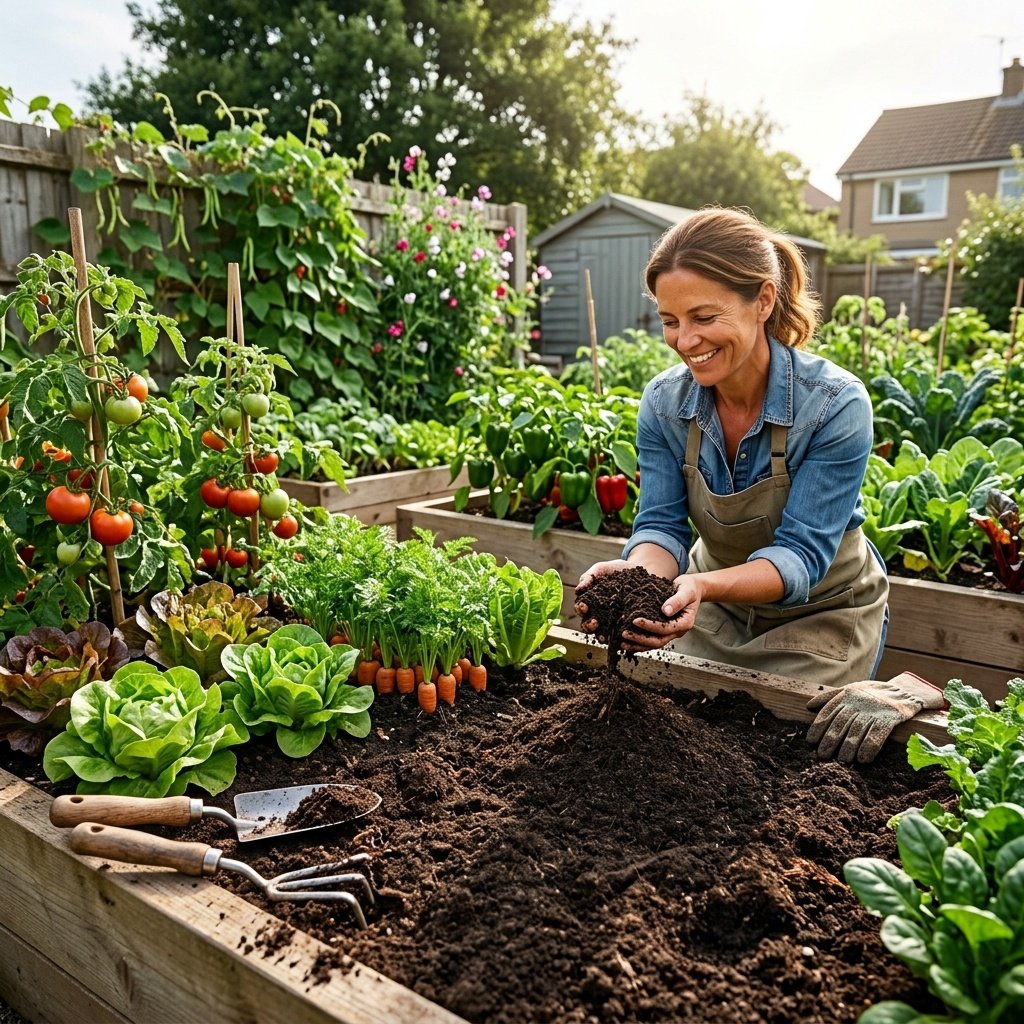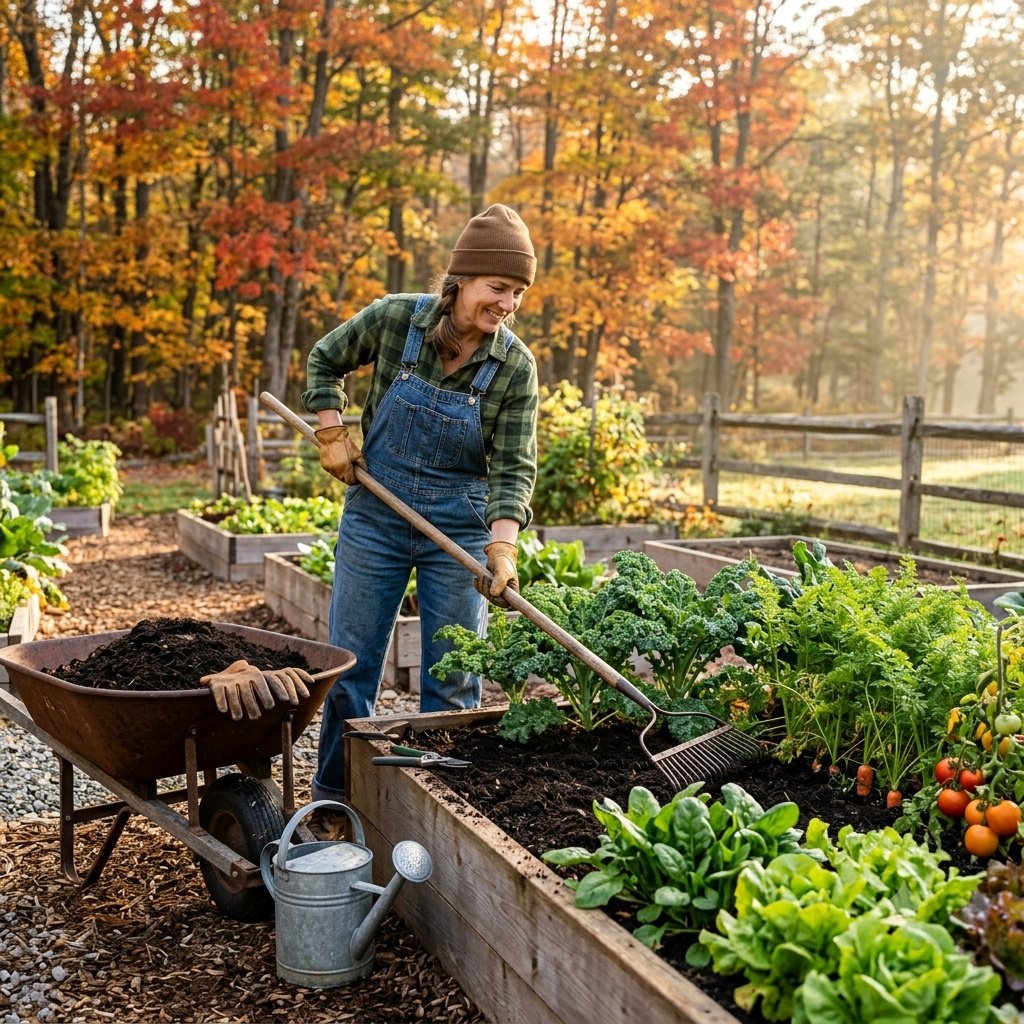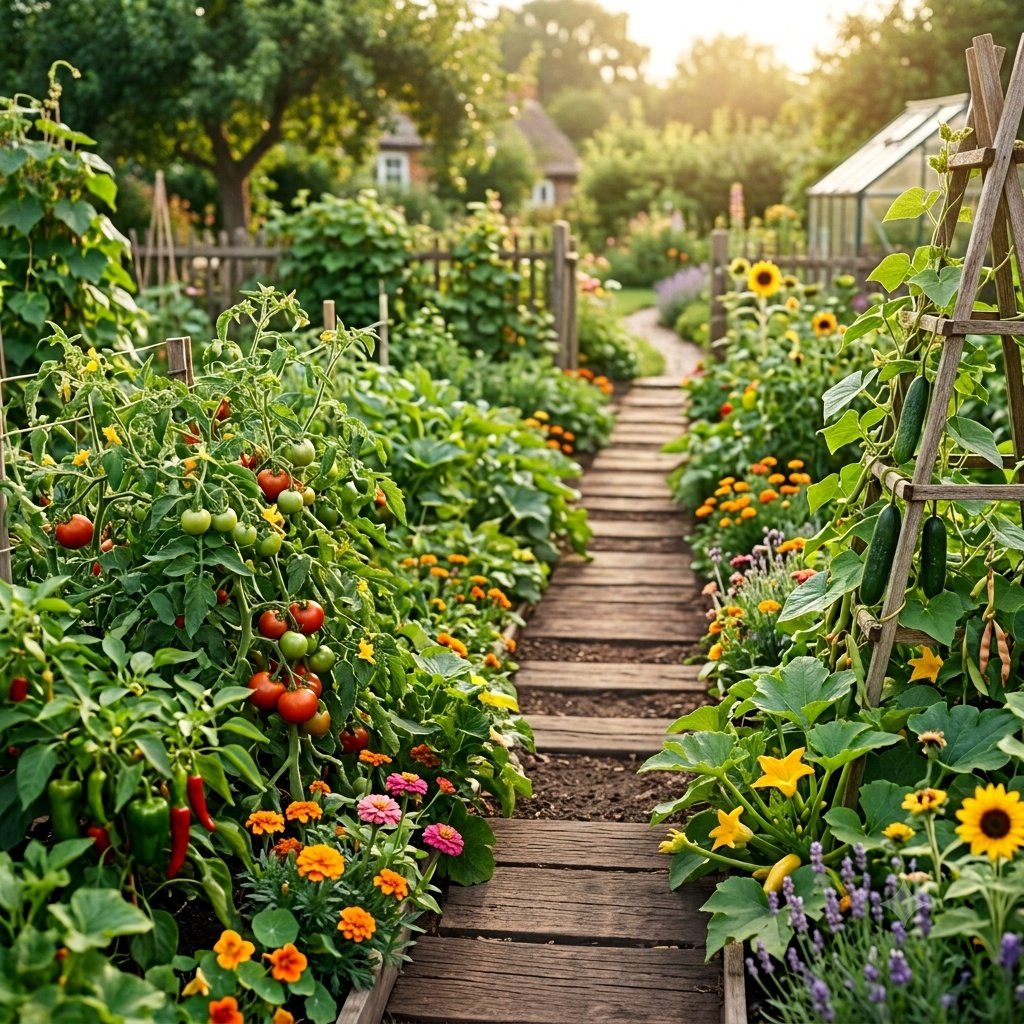

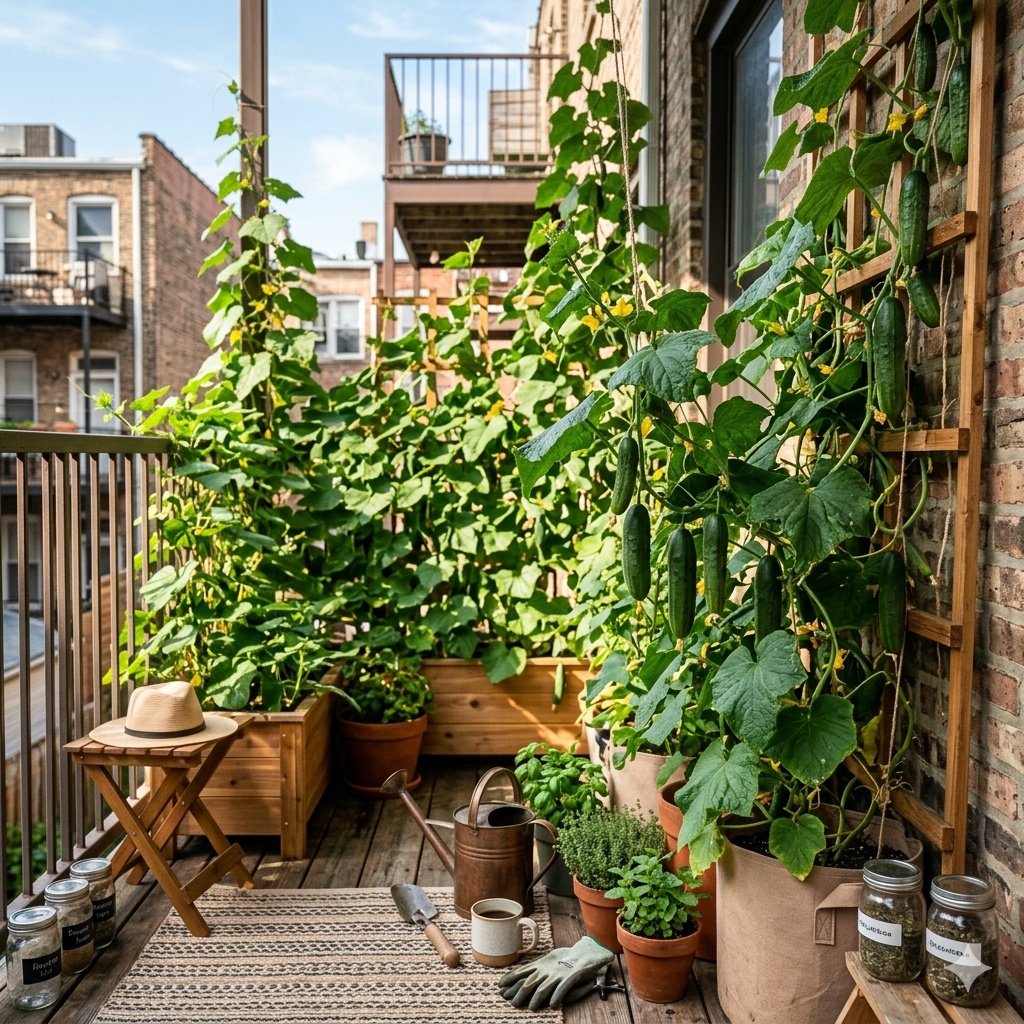
You don’t need a backyard to harvest crunchy cucumbers all summer. A sunny balcony, a few containers, and the right setup can give you a steady supply of fresh cucumbers right outside your door.
More people are turning balconies into mini food gardens because they’re easy to manage and surprisingly productive. And cucumbers are one of the best crops to start with. They grow fast, climb upward instead of spreading everywhere, and produce heavily when cared for properly.
If your goal is to Grow Crispy Cucumbers on a Balcony Garden, the good news is that you can do it even in a small apartment space. One healthy plant can give you dozens of cucumbers during the season.
The secret comes down to a few basics: sunlight, water, container size, and support. Get those right, and your balcony can turn into a green wall of hanging cucumbers before you know it.
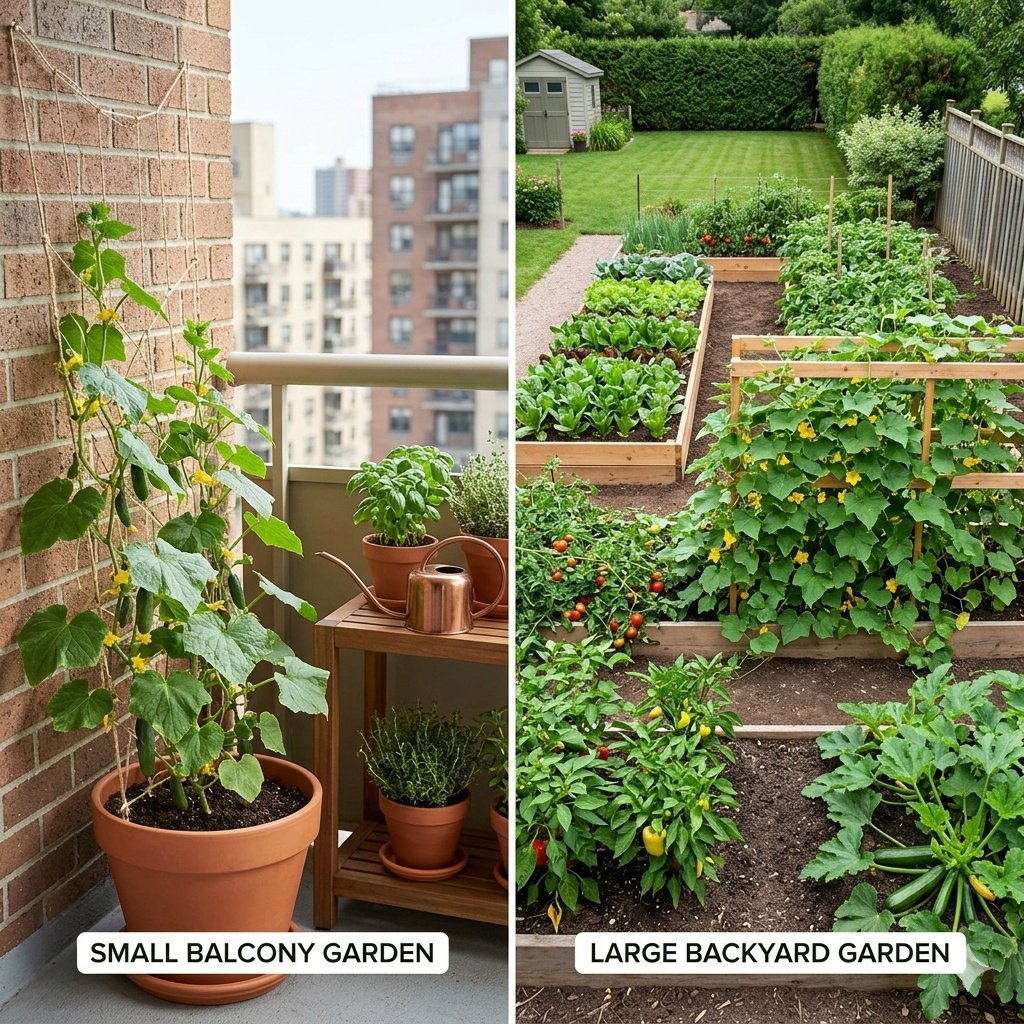
Why Cucumbers Are Perfect for Balcony Gardens
Cucumbers are almost made for balcony gardening. They grow quickly, don’t need deep raised beds, and thrive in containers when given enough sun and water.
Unlike larger crops that spread across the ground, cucumber vines naturally climb. That means you can grow upward instead of outward, which matters in small spaces.
Here’s how balcony cucumber gardening compares to traditional gardening:
| Balcony Gardening | Traditional Garden |
|---|---|
| Saves space | Needs more land |
| Easier to maintain | More weeds |
| Pots can move easily | Fixed location |
| Better for apartments | Better for large harvests |
Balcony gardens also give you more control over soil quality and watering. You’re not dealing with compacted ground or aggressive weeds.
And for renters? It’s one of the easiest ways to grow fresh food without needing a yard.
A few containers near a sunny railing can produce enough cucumbers for salads, sandwiches, and pickling jars all season long.
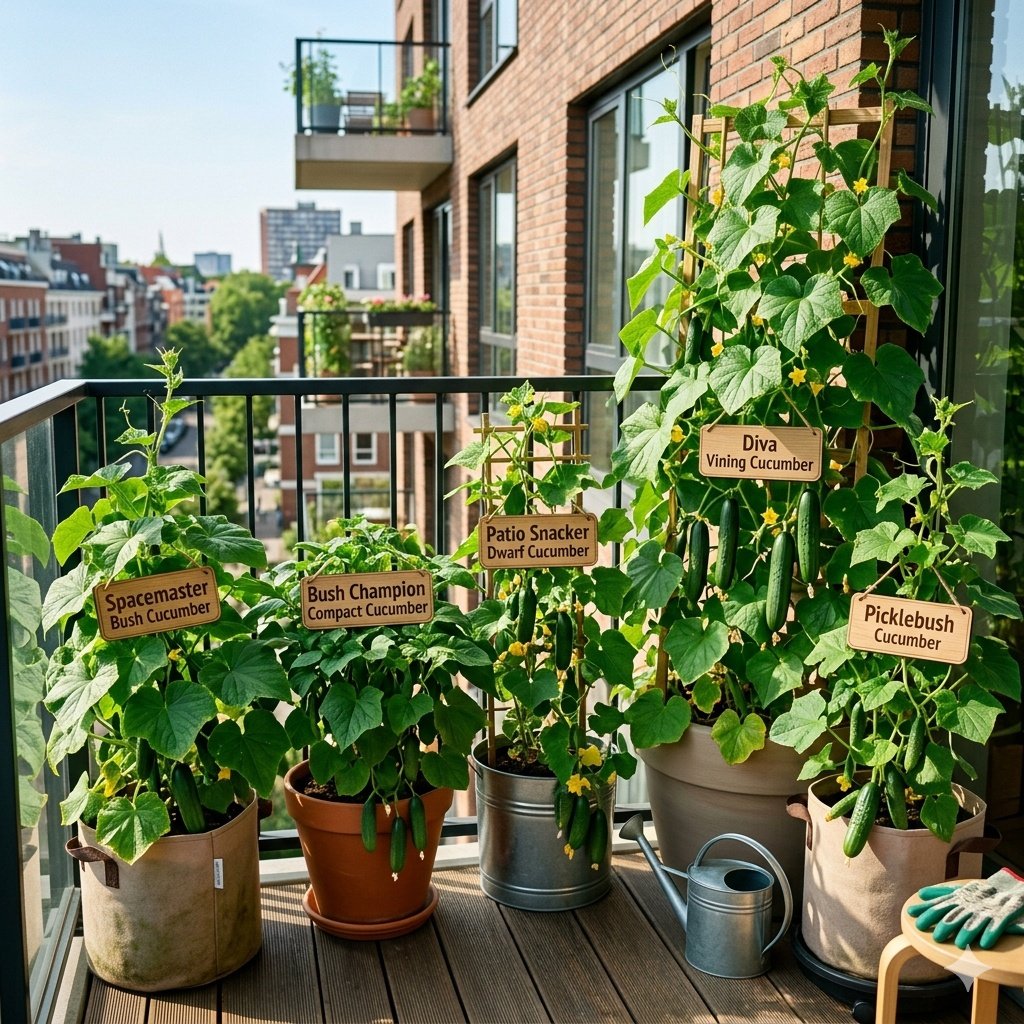
Way #1 – Choose Compact or Container-Friendly Cucumber Varieties
Not all cucumber plants behave the same way. Some spread aggressively and take over huge spaces, while others stay compact and manageable.
For balconies, compact or bush varieties usually work best.
| Variety | Type | Best For |
|---|---|---|
| Spacemaster | Bush | Small balconies |
| Bush Champion | Compact | Beginners |
| Patio Snacker | Dwarf | Containers |
| Diva | Vining | Crisp texture |
| Picklebush | Bush | Pickling |
Bush cucumbers stay shorter and don’t need massive trellises. They’re easier to manage in pots and tend to produce quickly.
Vining types can still work well if you grow vertically. In fact, many gardeners prefer them because the hanging cucumbers stay straighter and cleaner.
If you’re new to growing cucumbers on a balcony, start with one or two plants first. Cucumbers can become surprisingly productive once summer heat kicks in.
Good seed quality matters too. Cheap seeds sometimes struggle in containers because balcony conditions can already be stressful with heat and wind.
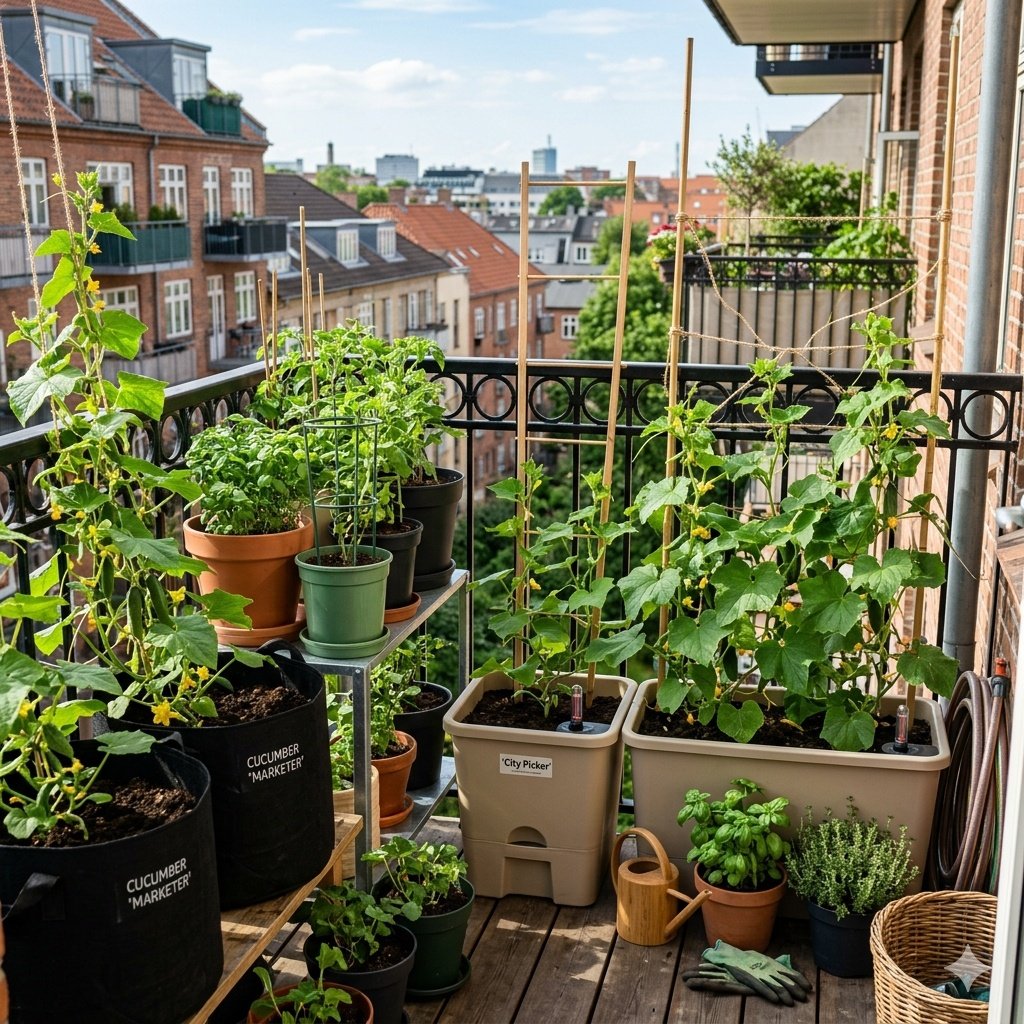
Way #2 – Use Large Containers With Good Drainage
Small pots lead to stressed cucumber plants. And stressed cucumber plants give small, bitter fruit.
Cucumbers have thirsty roots that need room to spread.
A 5-gallon container is the minimum, but 10 gallons or larger works much better for healthy growth.
| Container | Benefits | Drawbacks |
|---|---|---|
| Fabric Grow Bags | Excellent drainage | Dry out faster |
| Plastic Pots | Lightweight | Can overheat |
| Self-Watering Pots | Easier moisture control | More expensive |
Drainage holes are non-negotiable. Without them, roots sit in water and quickly rot.
If your balcony gets intense afternoon sun, lighter-colored containers help keep roots cooler. Dark pots heat up fast during summer.
Another helpful trick? Put containers on rolling stands. Cucumbers sometimes need repositioning during heat waves or storms, and moving large pots becomes much easier.
Bigger containers also hold moisture longer, which reduces watering stress during hot days.
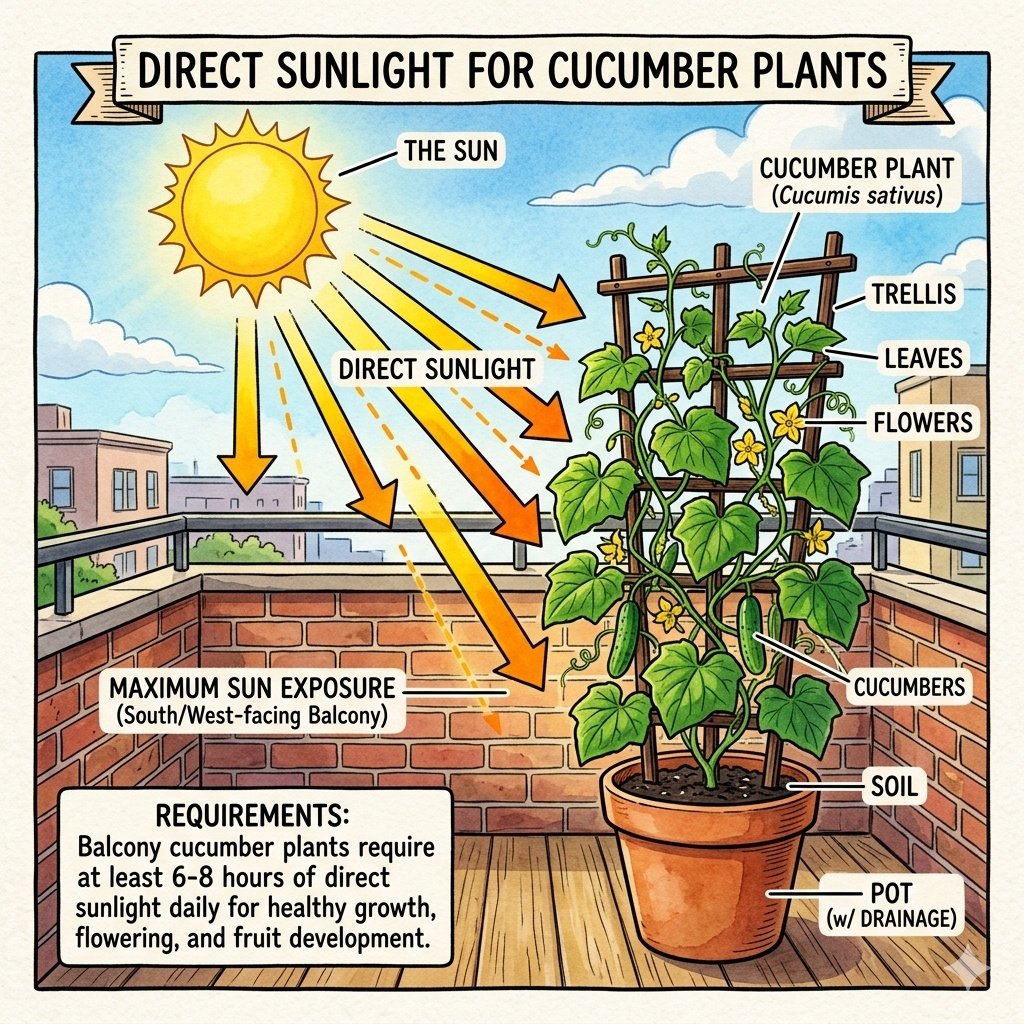
Way #3 – Give Cucumbers Plenty of Sunlight
Cucumbers love heat and sunlight. Without enough of it, plants become weak and unproductive.
Aim for at least 6 to 8 hours of direct sunlight daily.
South-facing balconies usually perform best, though west-facing spaces can also work well if temperatures don’t become extreme.
Signs your plants need more light include:
- Slow growth
- Pale leaves
- Fewer flowers
- Bitter cucumbers
- Thin vines
If nearby buildings block sunlight, try using reflective surfaces like light-colored walls or mirrors positioned safely behind plants.
Rotating pots every week also helps vines grow evenly instead of leaning toward one side.
Morning sun is especially helpful because it dries moisture from leaves early in the day, reducing mildew problems later.
Even the best cucumber variety struggles in heavy shade. Sunlight drives everything from flowering to fruit sweetness.
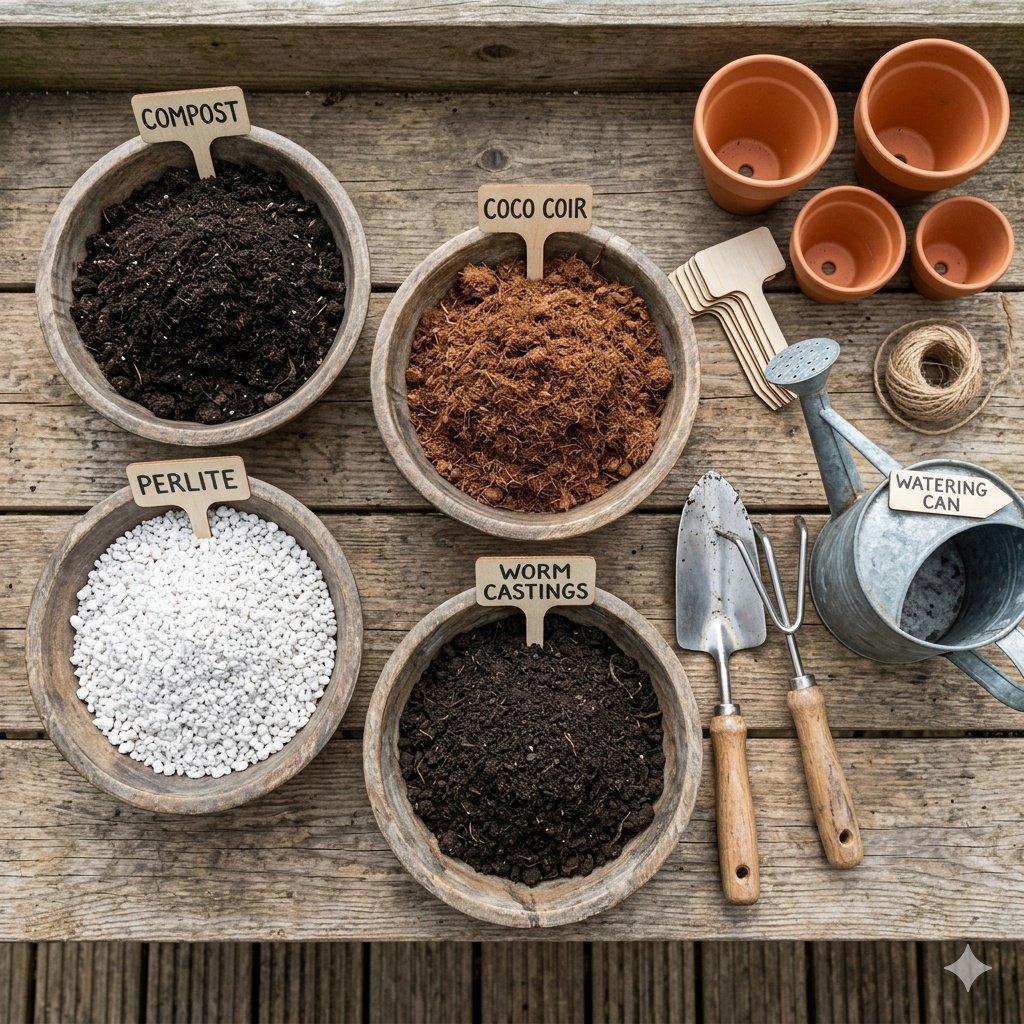
Way #4 – Use Rich, Well-Draining Potting Soil
Garden soil rarely works well in containers. It becomes dense, drains poorly, and limits root growth.
Container cucumber plants need loose, airy soil that holds moisture without becoming soggy.
A simple DIY potting mix works great:
- Compost
- Coco coir or peat moss
- Perlite
- Worm castings
This blend gives roots oxygen while still keeping enough moisture available during hot weather.
Organic matter matters more than many beginners realize. It improves water retention and slowly feeds plants over time.
Cheap potting soil often dries too fast or compacts after repeated watering. Spending a little more on quality mix usually pays off with healthier plants and larger harvests.
You can also mix slow-release organic fertilizer into the soil before planting. That gives cucumber seedlings a stronger start.
And don’t reuse old soil season after season without refreshing it. Container nutrients disappear quickly once heavy-feeding plants like cucumbers move in.
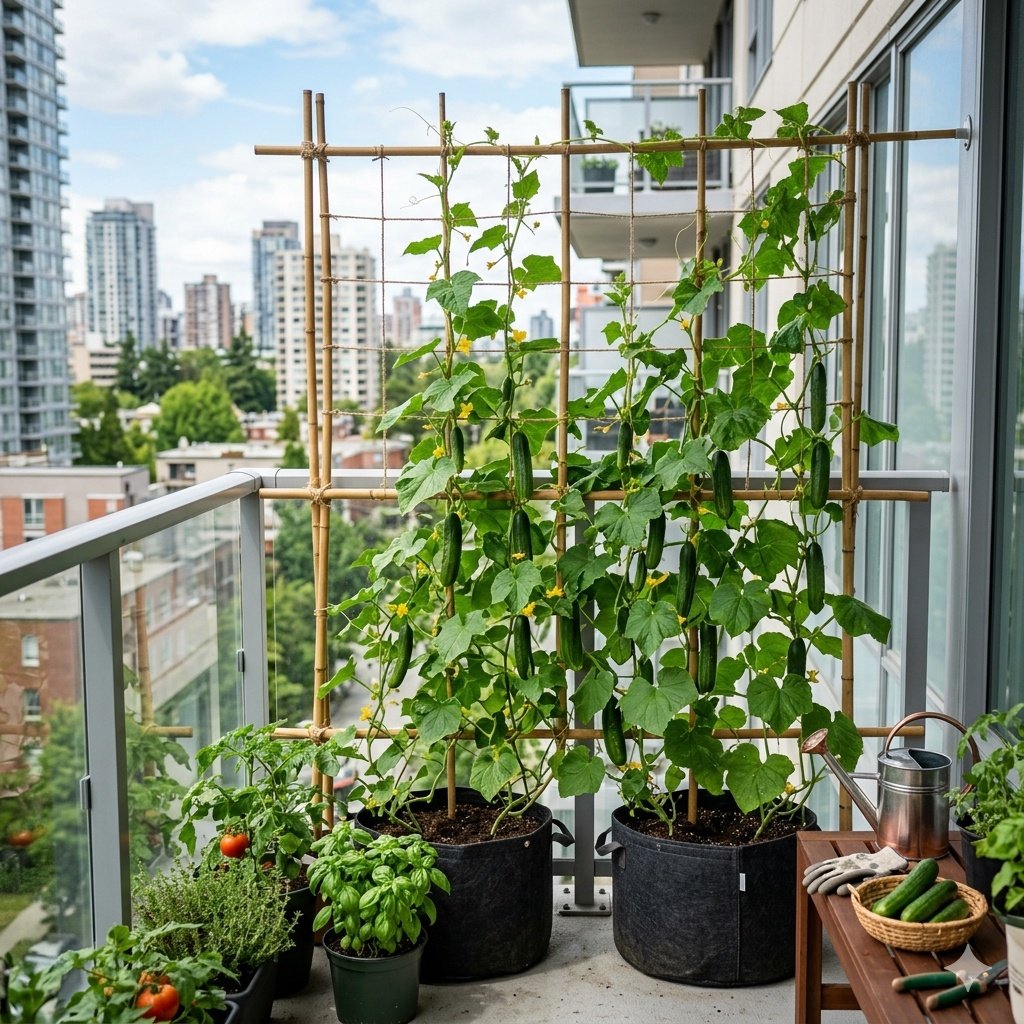
Way #5 – Install a Vertical Trellis to Save Space
Vertical cucumber gardening changes everything on a balcony.
Instead of sprawling across the floor, vines climb upward and free up valuable space for other plants.
A trellis also improves airflow, which helps reduce fungal issues and keeps leaves dry after watering.
| Trellis Type | Best For |
|---|---|
| Bamboo teepee | Budget setups |
| String trellis | Tiny balconies |
| Metal cage | Heavy vines |
| Wall-mounted trellis | Vertical gardening |
Wall-mounted systems work especially well in apartments because they turn blank walls into growing space.
As vines grow taller, gently guide them onto supports using soft plant ties or clips. Don’t force thick stems sharply in one direction or they may snap.
Growing vertically also produces straighter cucumbers since fruit hangs naturally instead of resting on soil.
And harvesting becomes much easier. No digging through tangled leaves trying to spot hidden cucumbers.
A healthy vertical setup can turn one balcony corner into a dense curtain of green within weeks.
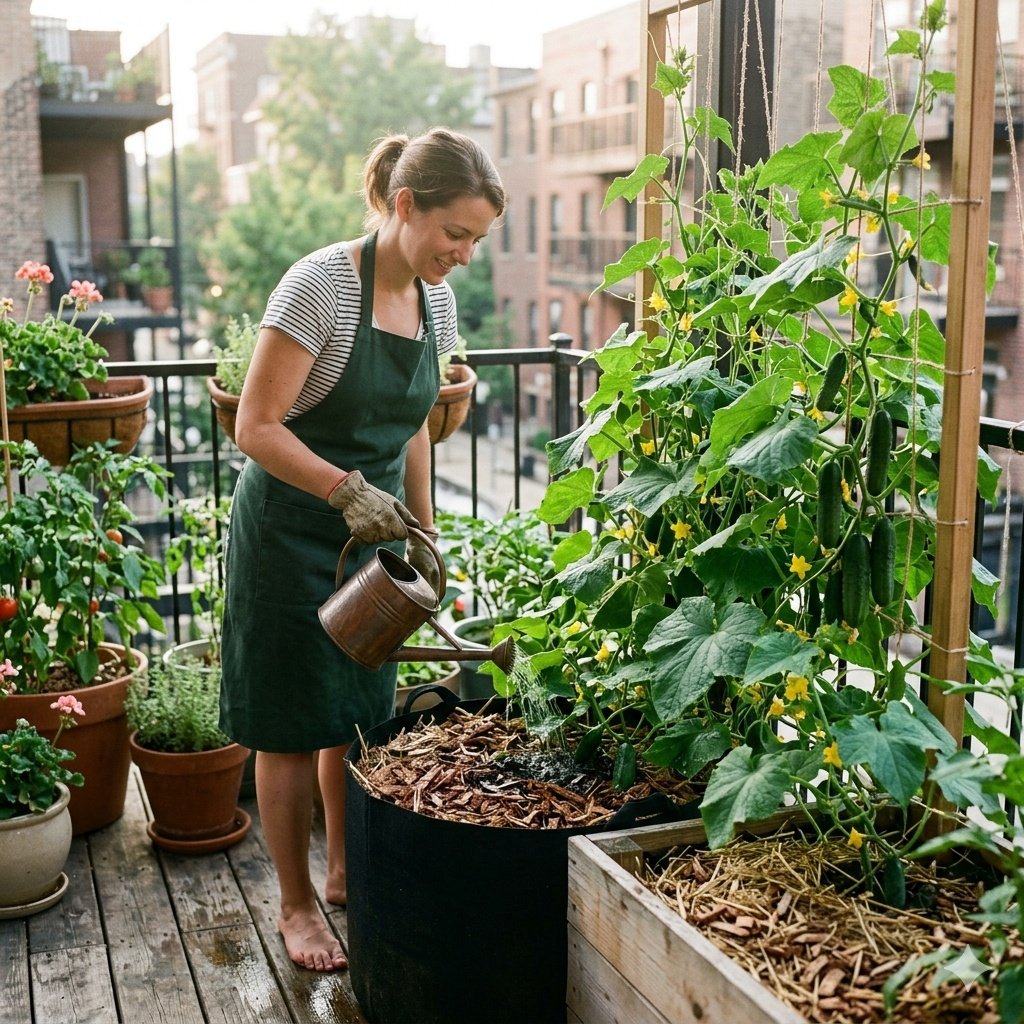
Way #6 – Water Consistently for Crispy Cucumbers
This is where many balcony gardeners struggle.
Cucumbers need consistent moisture. Let the soil swing from bone dry to soaking wet and the fruit often turns bitter.
Hot balconies dry containers quickly, especially during midsummer.
| Weather | Watering Frequency |
|---|---|
| Mild weather | Every 2 days |
| Hot weather | Daily |
| Heat waves | Twice daily |
Morning watering works best because plants absorb moisture before temperatures climb.
If possible, water deeply instead of giving quick shallow splashes. Deep watering encourages stronger root systems.
Mulch helps a lot too. A thin layer of straw, shredded leaves, or coco chips slows evaporation and keeps roots cooler.
Watch for drooping leaves during afternoon heat. Sometimes plants recover naturally by evening, but repeated wilting stresses cucumber vines badly.
Self-watering planters and drip systems can make balcony cucumber gardening much easier, especially if you work long hours or travel often.
The reward for steady watering? Crunchy cucumbers with better flavor and texture.
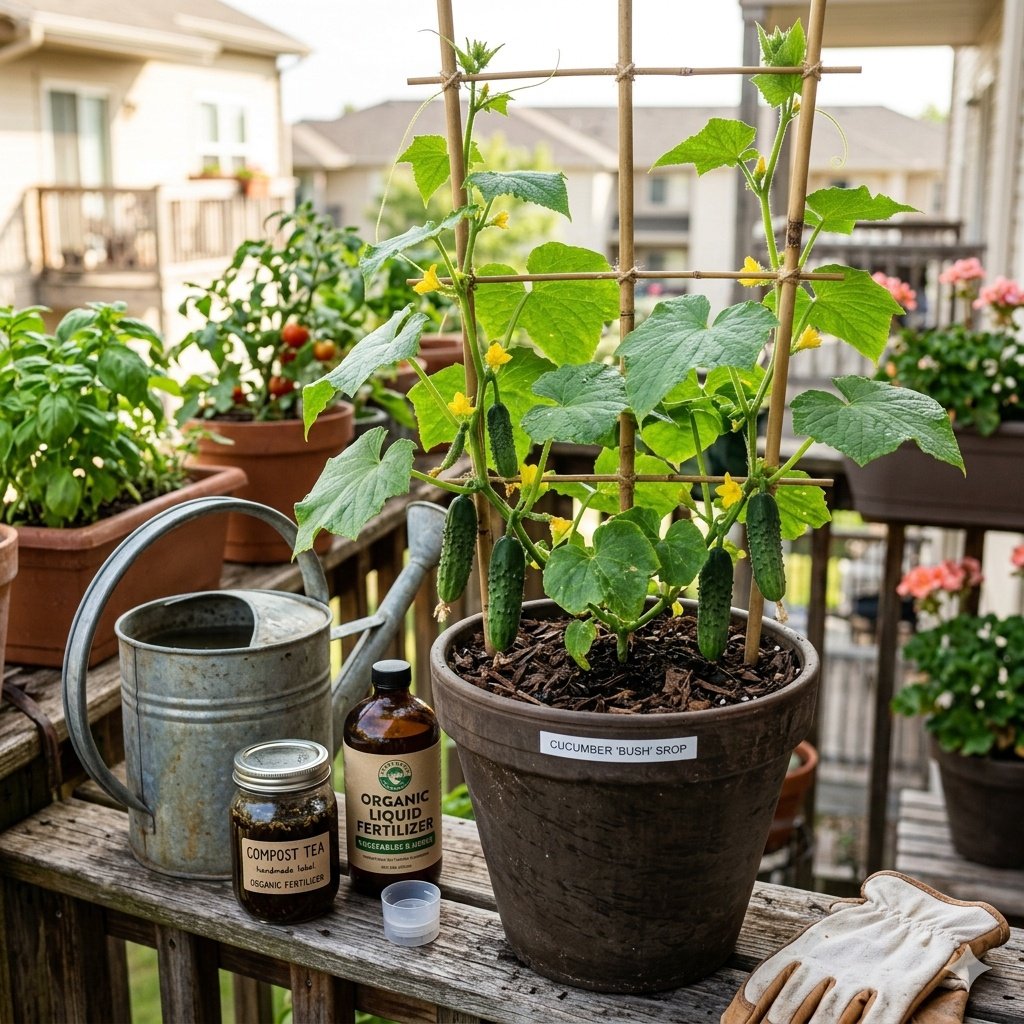
Way #7 – Feed Plants Regularly for Bigger Harvests
Cucumbers grow fast, flower heavily, and produce a lot of fruit in a short time. That takes nutrients.
Without regular feeding, plants slow down quickly.
| Growth Stage | Fertilizer Type |
|---|---|
| Early growth | Nitrogen-rich |
| Flowering | Balanced fertilizer |
| Fruiting | Potassium-rich |
Early nitrogen supports leaf and vine growth. Once flowers appear, switch to balanced feeding so plants focus on fruit production instead of endless leaves.
Potassium becomes especially important during fruiting because it supports healthy cucumber development.
Many balcony gardeners use:
- Compost tea
- Fish emulsion
- Organic liquid fertilizers
Liquid feeding every 10 to 14 days usually works well for container cucumber plants.
But don’t overfeed. Too much fertilizer can create huge leafy vines with very little fruit.
A healthy cucumber plant should look vigorous without becoming wildly overgrown.
Way #8 – Encourage Pollination for More Cucumbers
Flowers don’t automatically mean cucumbers.
Pollination matters.
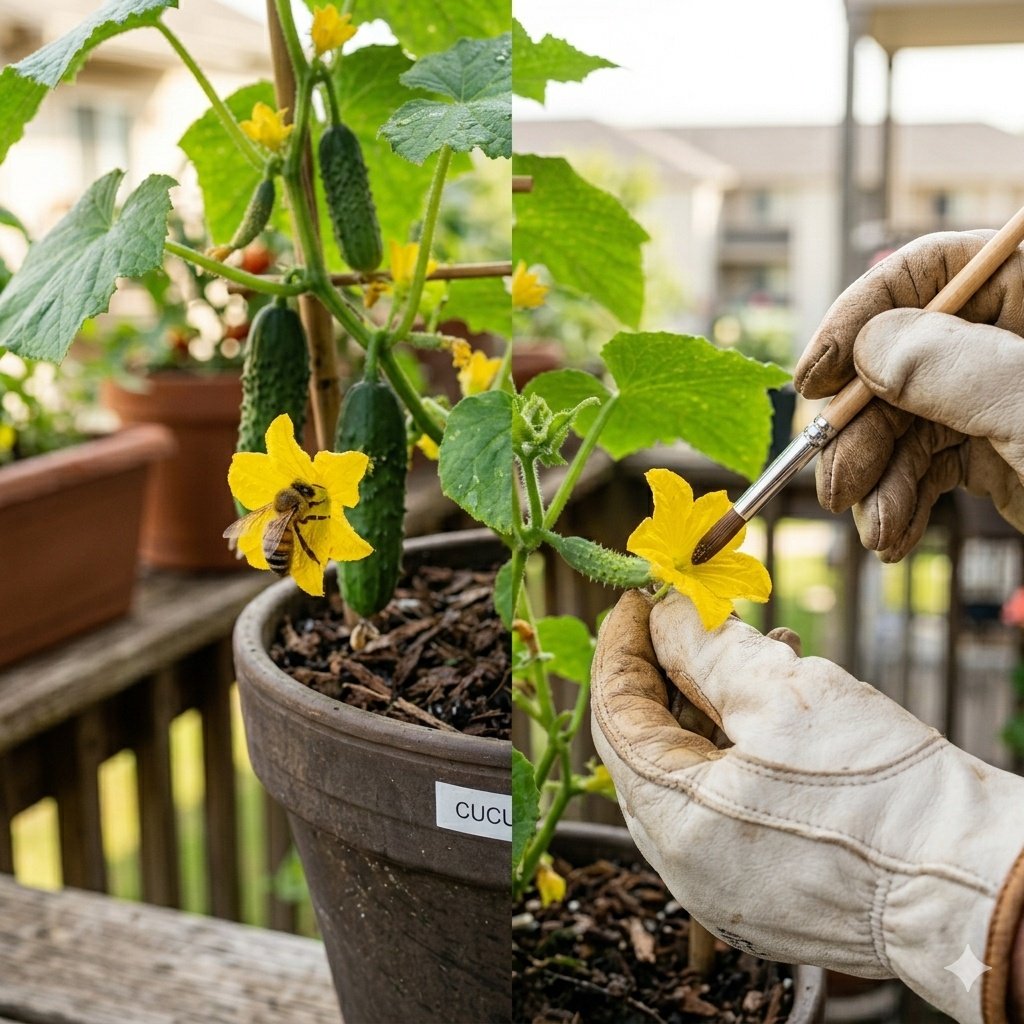
Cucumber plants produce male and female flowers, and pollen needs to move between them for fruit to develop properly.
On balconies high above ground level, pollinators may not visit as often.
You can improve pollination by planting companion flowers nearby such as:
- Marigolds
- Nasturtiums
- Lavender
These attract bees and other helpful insects naturally.
Hand pollination also works surprisingly well. Use a small paintbrush or cotton swab to transfer pollen from male flowers to female flowers.
Female flowers usually have a tiny cucumber shape behind the bloom.
If flowers appear but tiny cucumbers shrivel and fall off, poor pollination is often the reason.
Even a few minutes of hand pollination every couple of days can noticeably increase production.
Way #9 – Prevent Common Cucumber Problems Early
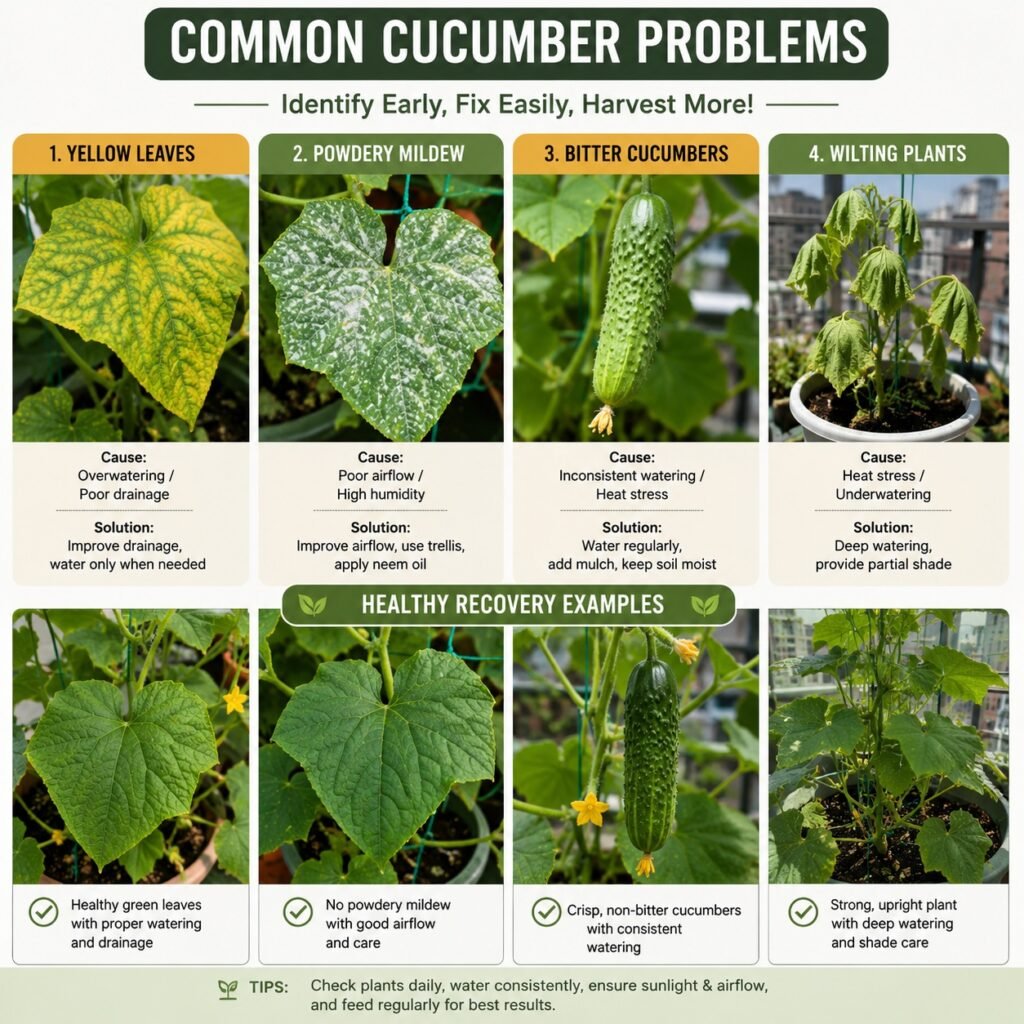
Balcony cucumbers are easier to manage than garden-grown plants, but problems still happen.
The key is catching issues early.
| Problem | Cause | Solution |
|---|---|---|
| Yellow leaves | Overwatering | Improve drainage |
| Bitter cucumbers | Irregular watering | Water consistently |
| Powdery mildew | Poor airflow | Use trellis |
| Wilting | Heat stress | Deep watering |
Aphids and spider mites sometimes appear during hot weather. Check the undersides of leaves regularly.
Neem oil sprays can help manage pests without harsh chemicals.
Good airflow is another huge factor. Crowded balconies trap humidity, which encourages mildew growth. Vertical growing and proper spacing reduce this risk significantly.
Remove damaged leaves quickly so problems don’t spread through the plant.
And don’t panic over every yellow leaf. Older leaves naturally fade over time. Widespread yellowing usually signals watering or nutrient problems instead.
Healthy cucumber plants grow aggressively. Once they stall, it’s usually a sign something needs adjusting.
Way #10 – Harvest Frequently for Continuous Production
The more you harvest, the more cucumbers your plant usually produces.
Large overripe cucumbers tell the plant to slow down because it thinks reproduction is finished.
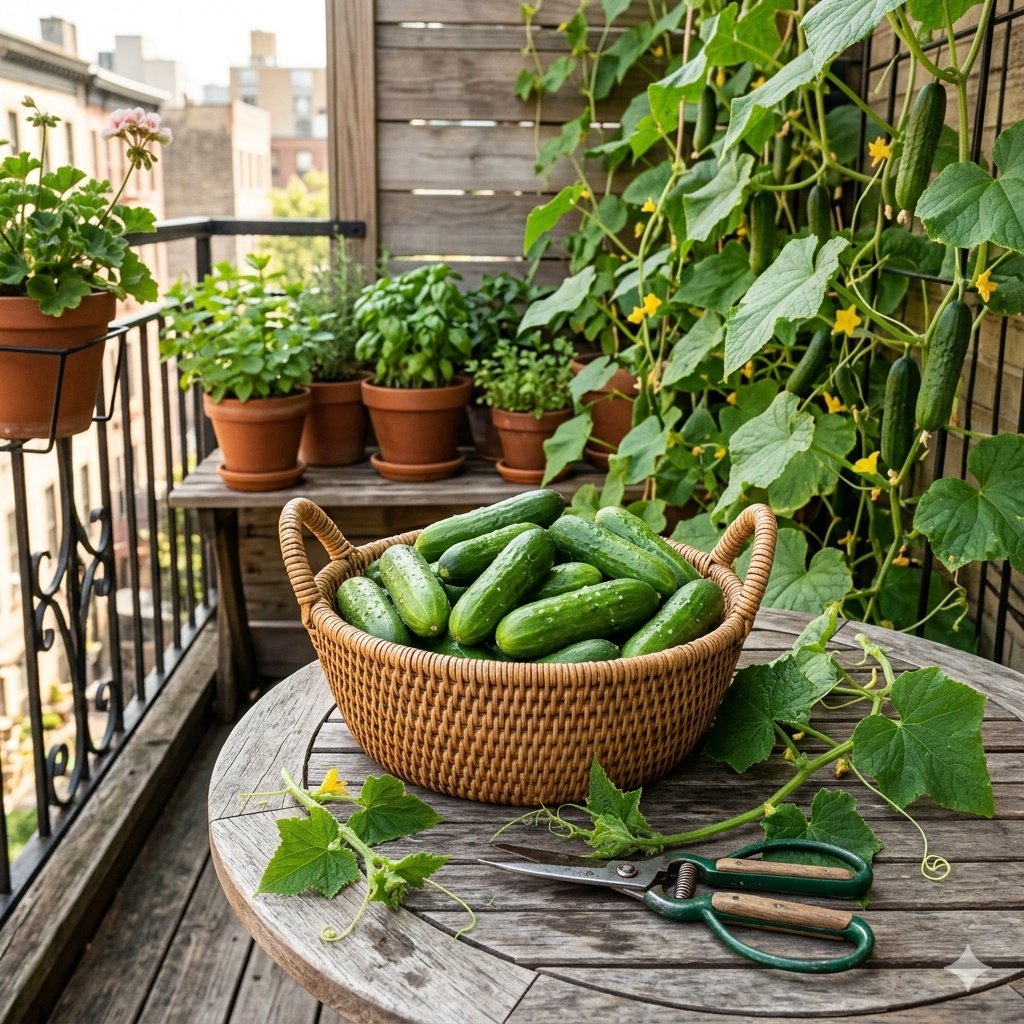
Pick cucumbers while they’re still young, firm, and glossy.
Helpful harvesting tips:
- Harvest in the morning
- Use clean pruners or scissors
- Check plants daily during peak season
- Don’t yank fruit from vines
Different varieties reach ideal harvest size at different lengths, so check seed packets for guidance.
Some pickling cucumbers taste best at 3 to 4 inches long, while slicing types may grow much larger.
Regular harvesting keeps vines productive and prevents giant seedy cucumbers from draining plant energy.
And honestly, smaller cucumbers usually taste better anyway.
Best Companion Plants for Balcony Cucumbers
Companion planting helps balcony gardens feel more productive without needing extra space.
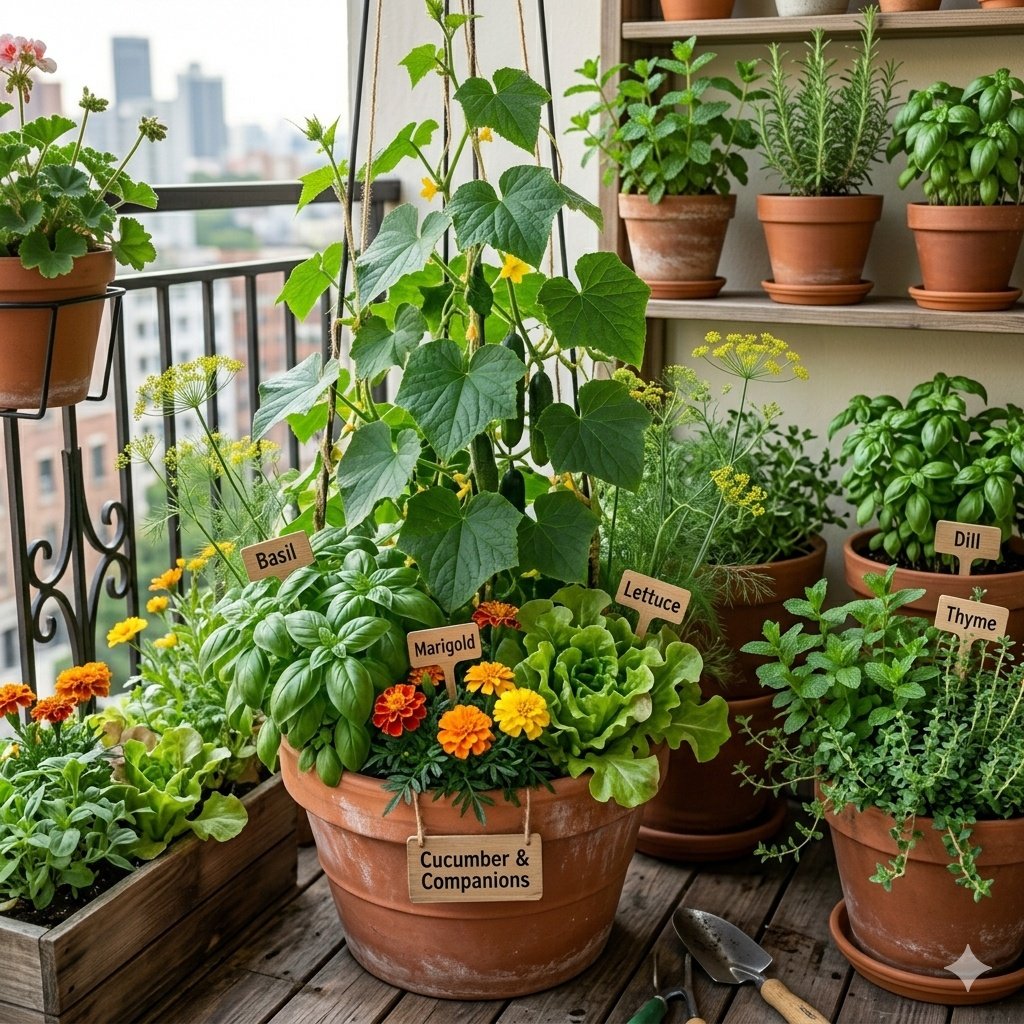
Good cucumber companions include:
- Basil
- Lettuce
- Radishes
- Dill
- Marigolds
Basil and dill may help attract pollinators, while marigolds can discourage certain pests.
Lettuce and radishes also make smart use of lower container space before cucumber vines fully spread.
Mixing crops creates a healthier balcony ecosystem overall. Instead of one container holding only cucumbers, you create layers of growth that work together.
It also looks better visually. A balcony filled with vines, herbs, and flowers feels more alive than rows of identical pots.
Even tiny apartment balconies can support several companion plants around one cucumber container.
Related Reads
You might find these helpful as you keep going:
- Metal vs Wood Raised Garden Beds: Which Is Better?
- 17 Full Sun Plants to Grow in May
- 7 Best Fertilizers for Raised Beds (Top Picks + Feeding Guide)
FAQ
Can cucumbers really grow on a balcony?
Yes. Cucumbers grow very well in containers as long as they receive enough sunlight, water, and vertical support.
What size pot is best for cucumbers?
A 5-gallon pot is the minimum, though 10-gallon containers usually produce healthier plants and larger harvests.
How much sunlight do balcony cucumbers need?
Most cucumber varieties need at least 6 to 8 hours of direct sunlight daily for strong growth and fruit production.
Why are my cucumbers bitter?
Bitter cucumbers usually happen because of inconsistent watering, heat stress, or lack of sunlight.
How often should I water cucumbers in pots?
During warm weather, daily watering is often necessary. During heat waves, some balcony plants may need watering twice a day.
Do cucumbers need a trellis?
Bush types can grow without one, but trellises improve airflow, save space, and make harvesting easier.
How long does it take cucumbers to grow?
Most cucumber varieties begin producing fruit about 50 to 70 days after planting, depending on weather and variety.
Final Thoughts
Growing cucumbers on a balcony is easier than most people expect.
You don’t need raised beds, expensive equipment, or a giant outdoor space. One sunny corner and a few containers can produce a steady supply of crisp cucumbers throughout the season.
Start simple. Pick one reliable variety, use a large pot, water consistently, and give vines something to climb.
That’s enough to get going.
Once your first cucumbers start hanging from the vines, balcony gardening becomes hard to stop. Suddenly you start looking for room to grow herbs, tomatoes, peppers, and flowers too.
A small balcony can become a surprisingly productive food garden faster than you think.
Start with one cucumber plant this weekend and see where it leads.
Readability: ~8 Gunning Fog Index. Adjustments available on request.