
Dark & Moody Houseplants: Discover easy ways to style dark houseplants so interiors feel rich, balanced, and visually calm, not heavy or crowded.
So this article naturally follows the last one, and that is that once people know which dark and moody houseplants to buy, the next question usually becomes how to actually use them in a space without things feeling heavy or cluttered.
Styling dark houseplants, in a way, feels less about stuffing corners with greenery and more about letting shadows, contrast, and spacing do some of the work.
This guide leans into that idea and shows how dark-leaf plants can shape a luxe indoor look using pots, placement, light, and surrounding décor, especially in homes that already lean modern, minimalist, or slightly gothic in tone.
Why Dark & Moody Plant Styling Works So Well Indoors
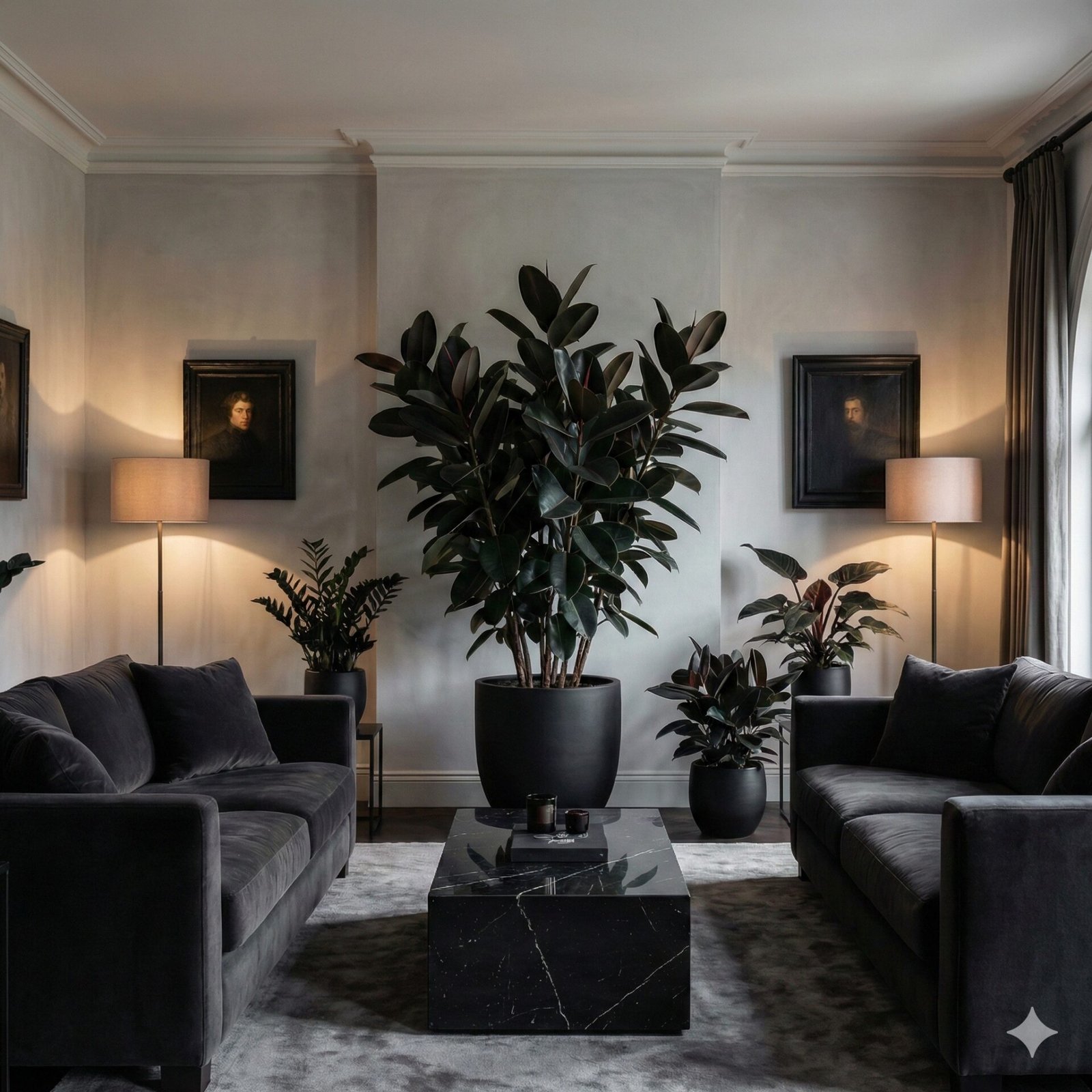
So, dark plants work indoors since they behave almost like furniture or artwork, and that is that they hold visual weight even when the room stays simple.
Unlike bright green plants that often fade into the background, darker leaves create contrast against walls, floors, and fabrics, which naturally draws the eye without needing extra décor.
This styling approach fits particularly well with modern apartments, European-style interiors, and homes that use soft lighting rather than bright overhead bulbs.
In short, dark plants don’t fill space — they shape it.
Ok, so I feel that knowing different houseplants first really helps before stepping into luxury décor, and that is that plant choice shapes the whole look from the start.
That’s why I’ve written another informative piece on dark foliage plants titled Dark & Moody Houseplants: 7 Dramatic Indoor Plants That Are Trending Right Now, which, in a way, sets the foundation before styling comes in.
I hope you enjoy reading it as well.
Recommended Houseplants & Indoor Plant Supplies
| PRODUCT | WHY IT HELPS | LINKS |
|---|---|---|
| Raven ZZ Plant (Zamioculcas zamiifolia) | One of the most popular dark houseplants, with deep purple-black leaves that thrive even in low light and require very little care. | Check Price on Amazon |
| Ficus Elastica ‘Burgundy’ (Rubber Plant) | Its glossy, dark green to burgundy leaves create an instant statement and work beautifully in modern or moody interiors. | Check Price on Amazon |
| Alocasia ‘Black Velvet’ | Known for its velvety, near-black foliage, this plant adds dramatic texture and is perfect for curated indoor plant displays. | Check Price on Amazon |
| Philodendron ‘Black Cardinal’ | A bold indoor plant with dark, reddish-black leaves that deepen in color as they mature, ideal for collectors and design lovers. | Check Price on Amazon |
| Calathea ‘Dottie’ | Features dark purple leaves with bright pink patterns, making it a striking choice for moody, artistic plant styling. | Check Price on Amazon |
| Matte Black or Dark Ceramic Plant Pots | Dark planters enhance the dramatic foliage of moody houseplants and complement modern, minimalist interiors. | Check Price on Amazon |
| Indoor Grow Light for Houseplants | Helps dark-leaved plants maintain rich color and healthy growth, especially in apartments or low-light rooms. | Check Price on Amazon |
| Humidity Tray for Indoor Plants | Supports tropical dark-foliage plants by maintaining moisture levels, reducing leaf stress and browning. | Check Price on Amazon |
| Well-Draining Indoor Plant Potting Mix | Prevents root rot and supports healthy growth for plants like ZZ, philodendrons, and alocasias. | Check Price on Amazon |

Start With the Right Base: Black and Neutral Planters
Ok, so black planters play a big role here, and that is that they ground the plant visually and stop the look from feeling scattered.
Matte black, charcoal, deep brown, and even rough stone planters tend to work better than glossy finishes, since shine can steal attention from the leaves themselves.
For smaller plants like Philodendron ‘Black Cardinal’ or Begonia Rex, simple cylindrical pots keep things calm.
For taller plants like Rubber Plant ‘Burgundy’, heavier floor planters give stability and help the plant feel intentional rather than temporary.
Neutral planters, in a way, allow leaf texture and color to do the talking, especially when placed against light walls.

Use Light Walls to Create Contrast
So, one of the easiest styling tricks involves contrast, and that is that dark plants stand out best against lighter backgrounds.
White, cream, pale grey, and soft beige walls allow dark leaves to read clearly from across the room.
This contrast creates a gallery-like effect, where the plant becomes a focal point without needing extra accessories.
In rooms with darker walls, spacing matters more, since crowding multiple dark plants together can flatten the look rather than deepen it.
Work With Shadowy Corners, Not Against Them
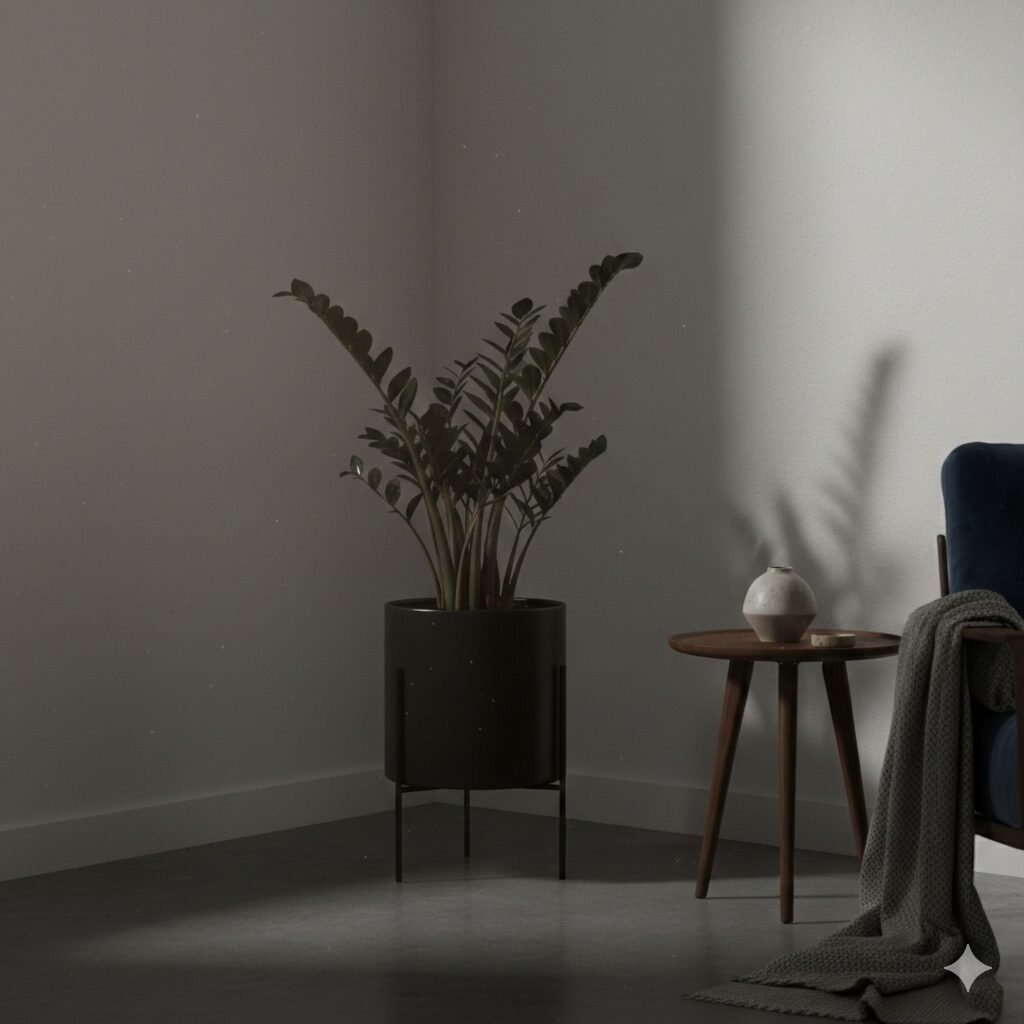
Ok, so shadowy corners often get ignored, and that is that they usually feel awkward or unfinished.
Dark houseplants naturally belong there, since they don’t demand bright sun and often look better in softer light anyway.
Raven ZZ, Rubber Plant ‘Burgundy’, and Philodendron ‘Black Cardinal’ tend to thrive visually in corners where light falls indirectly.
Instead of trying to brighten these areas artificially, letting them stay moody helps reinforce the overall aesthetic.
Floor lamps placed nearby add depth by casting gentle shadows across leaves rather than washing them out.
Layer Heights for a Luxe, Collected Feel
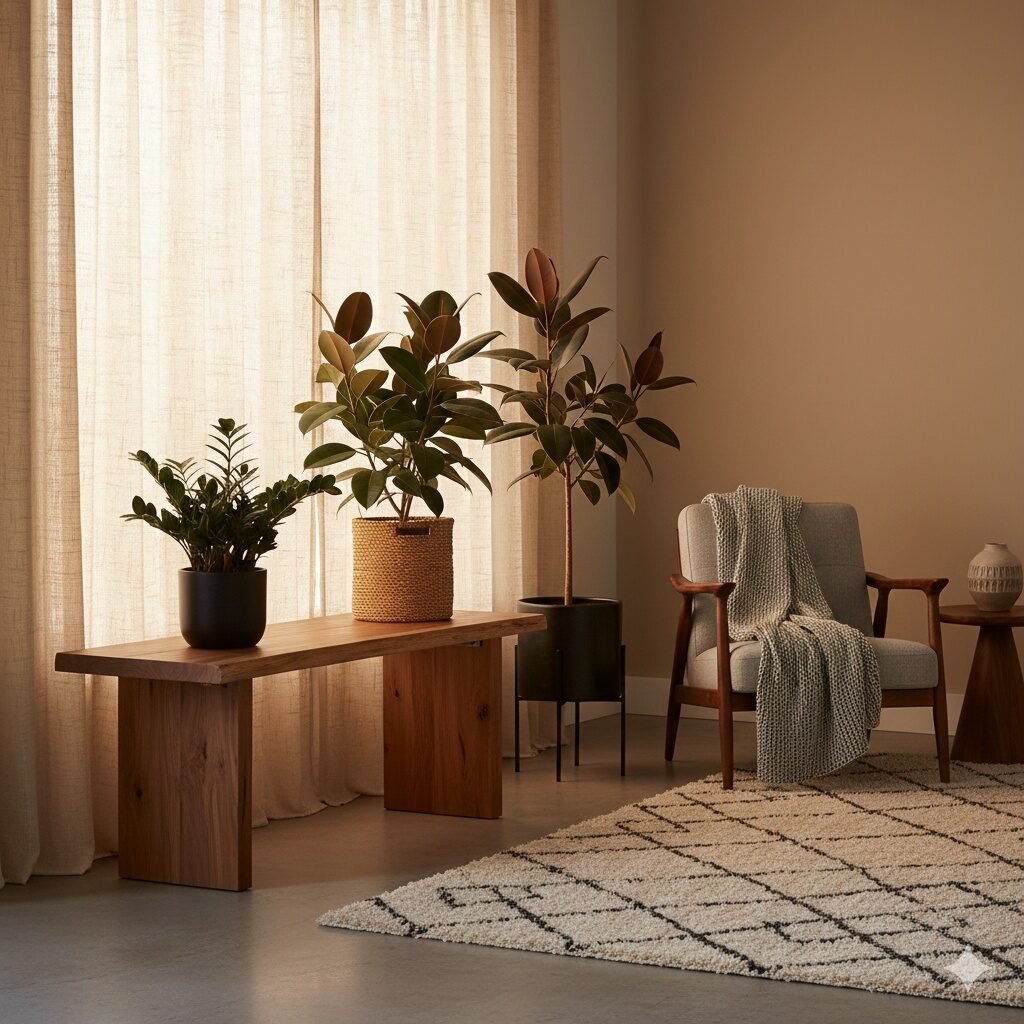
So, styling dark plants works best when heights vary, and that is that a mix of tall, mid-height, and tabletop plants keeps the room feeling balanced.
A tall Rubber Plant anchors the space.
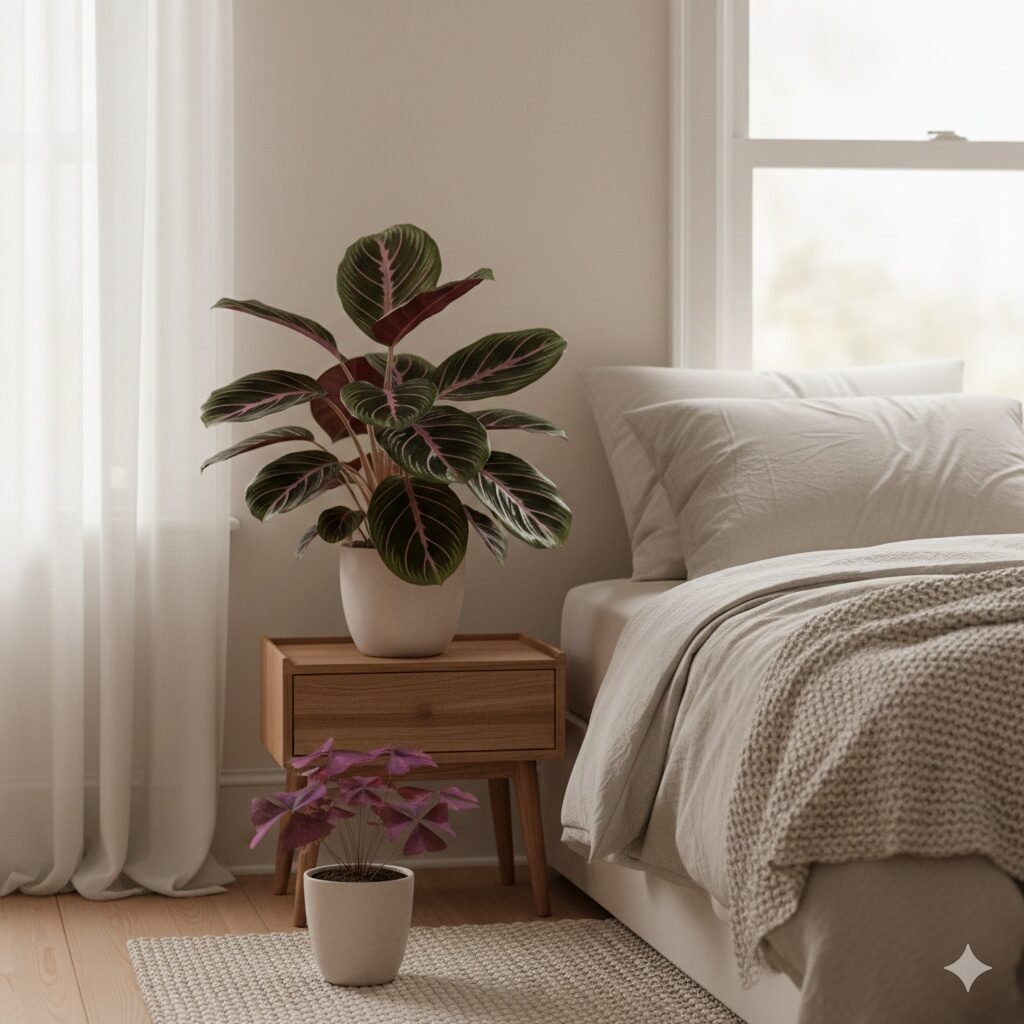
Mid-height plants like Calathea ‘Dottie’ or Begonia Rex fill shelves or side tables.
Smaller plants like Oxalis triangularis add movement closer to eye level or windowsills.
This layering mimics how plants grow in nature, which makes interiors feel relaxed rather than staged.

Pair Dark Plants With Soft Textures
Ok, so texture plays a quiet role here, and that is that dark leaves can feel heavy if surrounded only by hard surfaces.
Soft fabrics like linen curtains, wool throws, or textured rugs help balance the weight of dark foliage.
Velvet cushions or upholstered chairs, in a way, echo the leaf texture of plants like Alocasia ‘Black Velvet’, creating subtle harmony.
Wood furniture, especially in warm tones, adds contrast that keeps rooms from feeling cold or stark.

Keep Décor Minimal Around Dark Plants
So, less really helps here, and that is that clutter steals attention from plant shapes and shadows.
When styling shelves, allowing one dark plant per section often works better than grouping several together.
Empty space becomes part of the design, giving leaves room to breathe visually.
Books with neutral covers, simple ceramics, or a single framed print nearby tend to complement dark plants rather than compete with them.
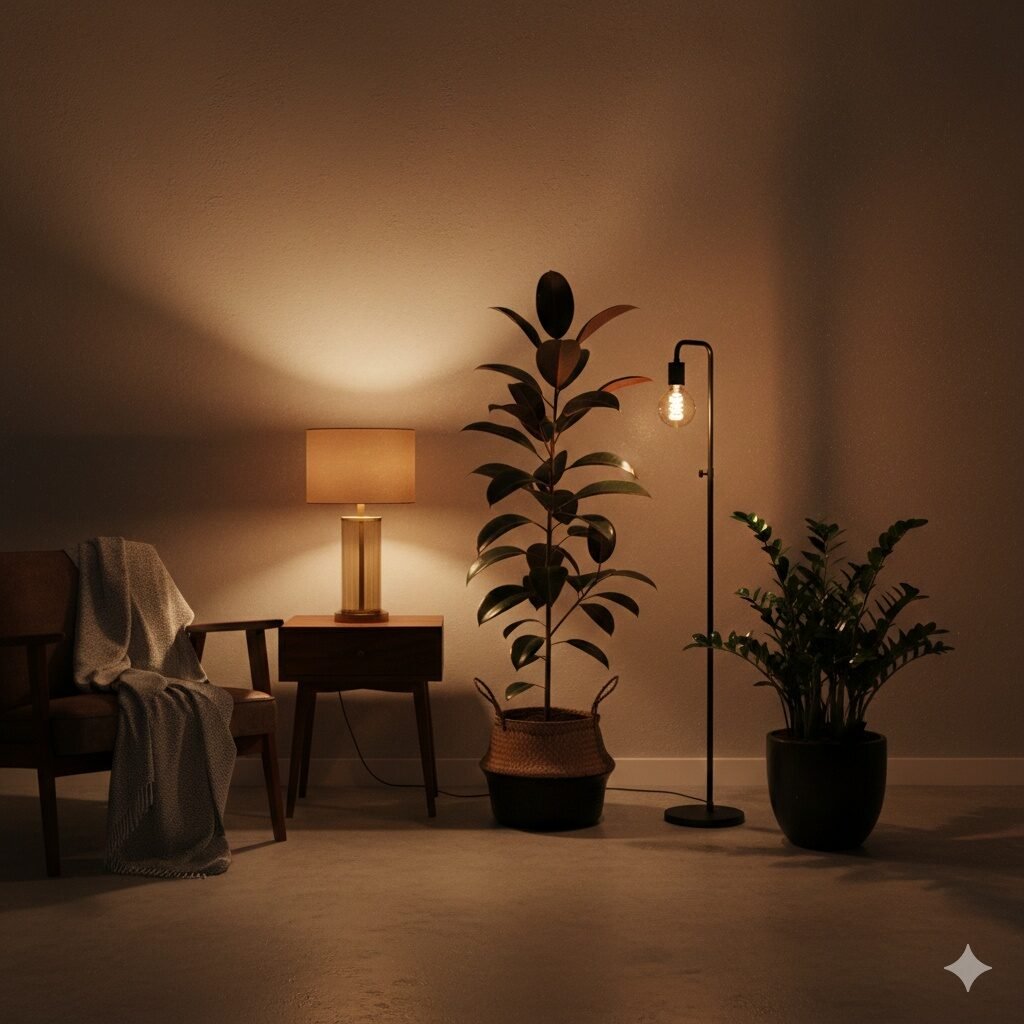
Use Indirect Lighting to Enhance Mood
Ok, so lighting might be the most overlooked part of styling dark houseplants, and that is that harsh light flattens leaf color.
Warm, indirect lighting brings out subtle purples, reds, and silvery veins that would otherwise disappear.
Table lamps, wall sconces, and floor lamps placed slightly off to the side create depth by casting shadows across leaves.
Grow lights, when needed, work best when hidden or diffused, so the room doesn’t feel overly technical.
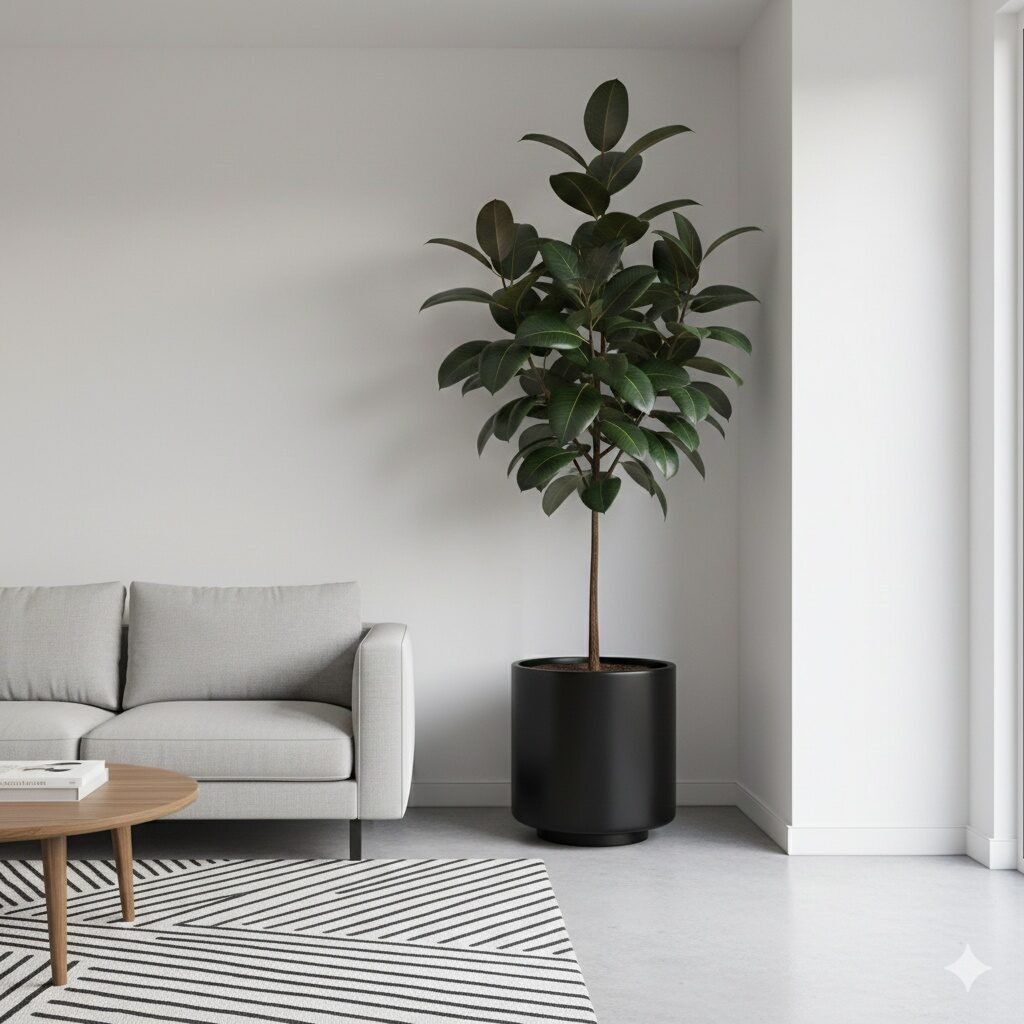
Let One Statement Plant Lead the Room
So, instead of spreading plants evenly everywhere, choosing one statement plant often feels more refined.
A large Rubber Plant in the living room or a dramatic Alocasia near a reading chair gives the eye a clear resting point.
Supporting plants should feel secondary, reinforcing the mood rather than competing for attention.
This approach works especially well in smaller spaces where visual clarity matters.
Styling Dark Plants in Different Rooms
Living Room
Ok, so living rooms usually handle taller plants best, and that is that floor space allows for scale.
Rubber Plants, Raven ZZs, and larger Philodendrons work well near sofas, windows, or empty corners.
Pair them with low furniture to keep proportions balanced.
Bedroom
So, bedrooms benefit from softer, calmer plants, and that is that Calathea ‘Dottie’ and Oxalis triangularis feel gentle and rhythmic.
Placing them near nightstands or windows adds life without overstimulation.
Low light and consistent watering keep these plants looking relaxed rather than stressed.

Home Office
Ok, so home offices need structure, and that is that plants with clean lines work best here.
Raven ZZ and Philodendron ‘Black Cardinal’ fit desks, shelves, and corners without feeling distracting.
Their steady growth and tidy shapes support focus rather than pulling attention away.
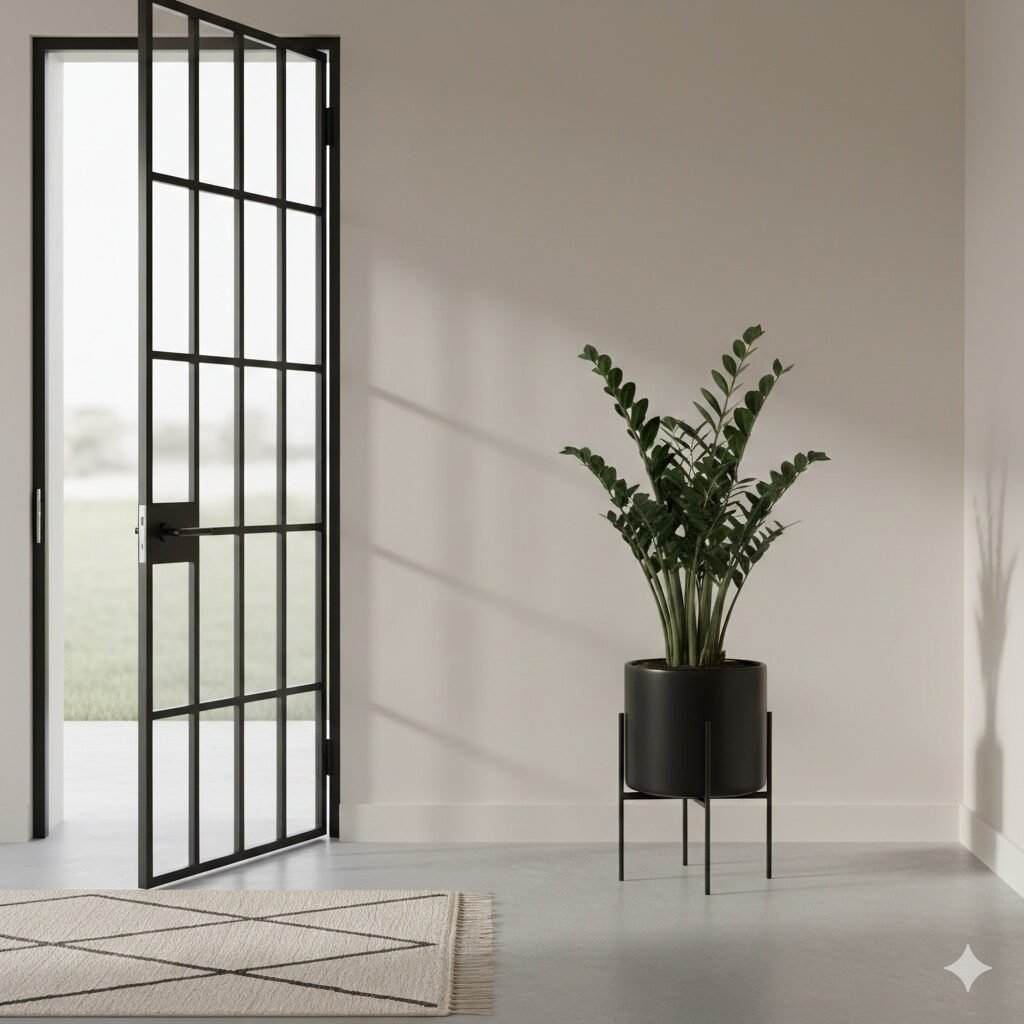
Entryway
So, entryways set the tone, and that is that a single dark plant near the door makes a strong first impression.
A tall Rubber Plant or a sculptural Alocasia introduces mood immediately without clutter.
Simple planters and minimal décor keep the space welcoming rather than crowded.
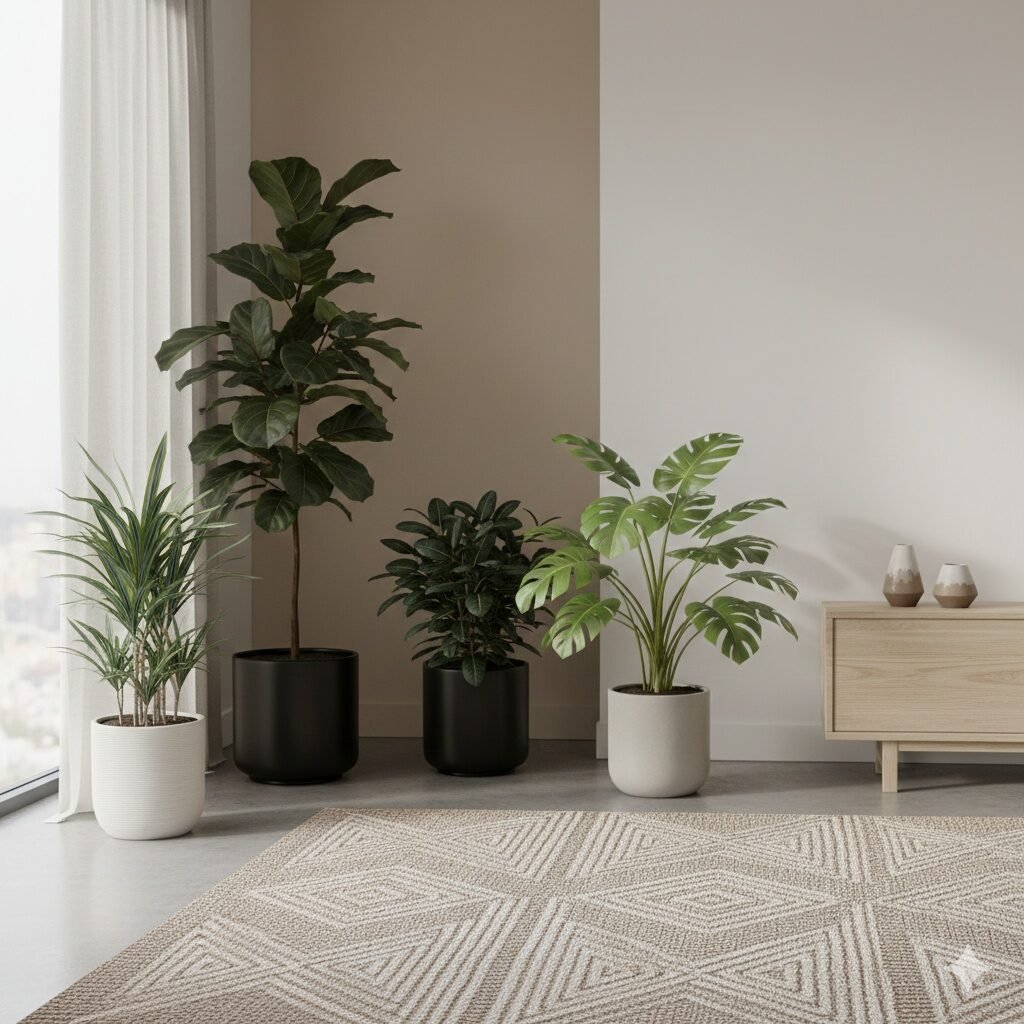
Mixing Dark Plants With Lighter Green Ones
Ok, so dark plants don’t need to stand alone, and that is that pairing them with lighter green plants adds contrast and balance.
Light foliage helps reset the eye, making dark leaves feel intentional rather than overwhelming.
The key is spacing, allowing each plant its own visual role instead of blending them together.
Avoid These Common Styling Mistakes
So, placing dark plants in direct sun often leads to faded leaves and stress, and that is that indirect light keeps color richer.
Overcrowding plants makes rooms feel smaller, not moodier.
Using overly decorative pots distracts from leaf shape and texture, which are the main appeal here.
Keeping things simple almost always works better.
Frequently Asked Questions (FAQ)
Do dark houseplants make a room feel smaller?
So, actually, dark plants usually don’t shrink a room when they’re spaced well, and that is that they create contrast that adds depth rather than closing things in.
Are black planters always the best choice for dark plants?
Ok, so black planters work well most of the time, and that is that charcoal, deep brown, or stone finishes can feel just as refined depending on the room.
How many dark plants should I use in one room?
So, in a way, fewer plants usually look better, and that is that one statement plant with one or two supporting plants keeps the look intentional.
Can dark plants work in bright, modern interiors?
Ok, so yes, and that is that the contrast between dark foliage and clean, bright interiors often looks striking rather than out of place.
Do dark plants need special lighting to look good?
So, not really, since warm, indirect lighting tends to bring out color best, and that is that harsh overhead lights often dull the effect.
Is this styling approach beginner-friendly?
Ok, so it usually is, since many dark plants like Raven ZZ and Rubber Plant ‘Burgundy’ are forgiving and steady.
Final Thoughts on Styling Dark & Moody Houseplants
So, styling dark and moody houseplants feels less about filling space and more about shaping it with shadow, contrast, and calm.
These plants naturally slow rooms down, giving interiors a grounded, thoughtful feel without needing much extra décor.
When placed with care, dark foliage brings quiet drama that feels lived-in rather than styled for show.
And really, once you let a few statement plants lead the room, the rest of the space tends to fall into place on its own.
I always like sharing topic-related articles from other websites that are genuinely worth reading, and that is that they usually add a bit more perspective.
For example, Epic Gardening has a piece titled 31 Low Light Houseplants for Indoor Gardens, and in a way, it’s a helpful read if you want more options for rooms that don’t get much natural light.
Ok, so before you scroll further, this short video fits really well here, and that is that it shows how dark houseplants can shift a room’s mood with placement, light, and simple styling choices. Watching it, in a way, helps you see how shadowy corners, black planters, and contrast with light walls actually come together in real spaces, not just styled photos.