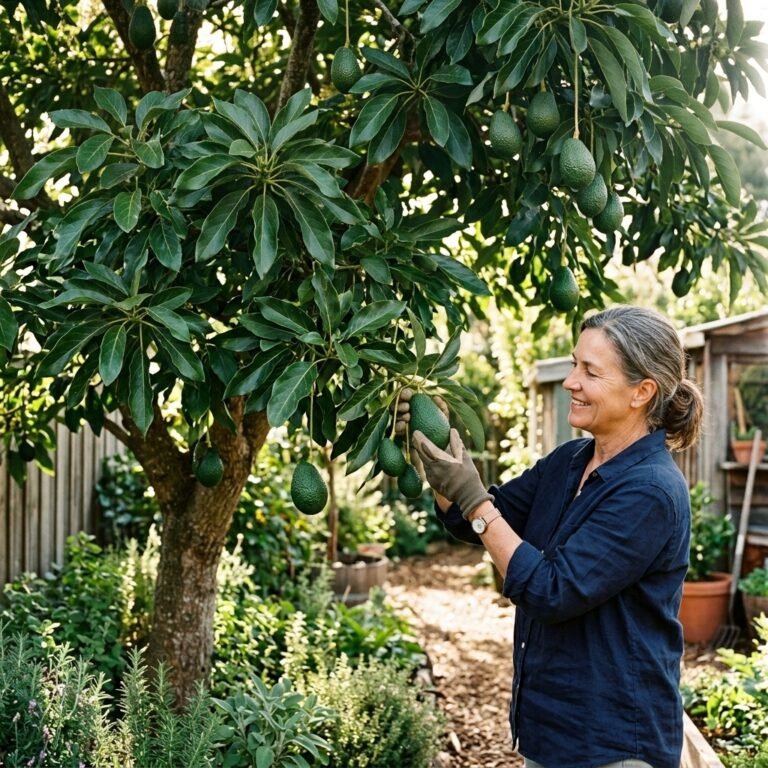

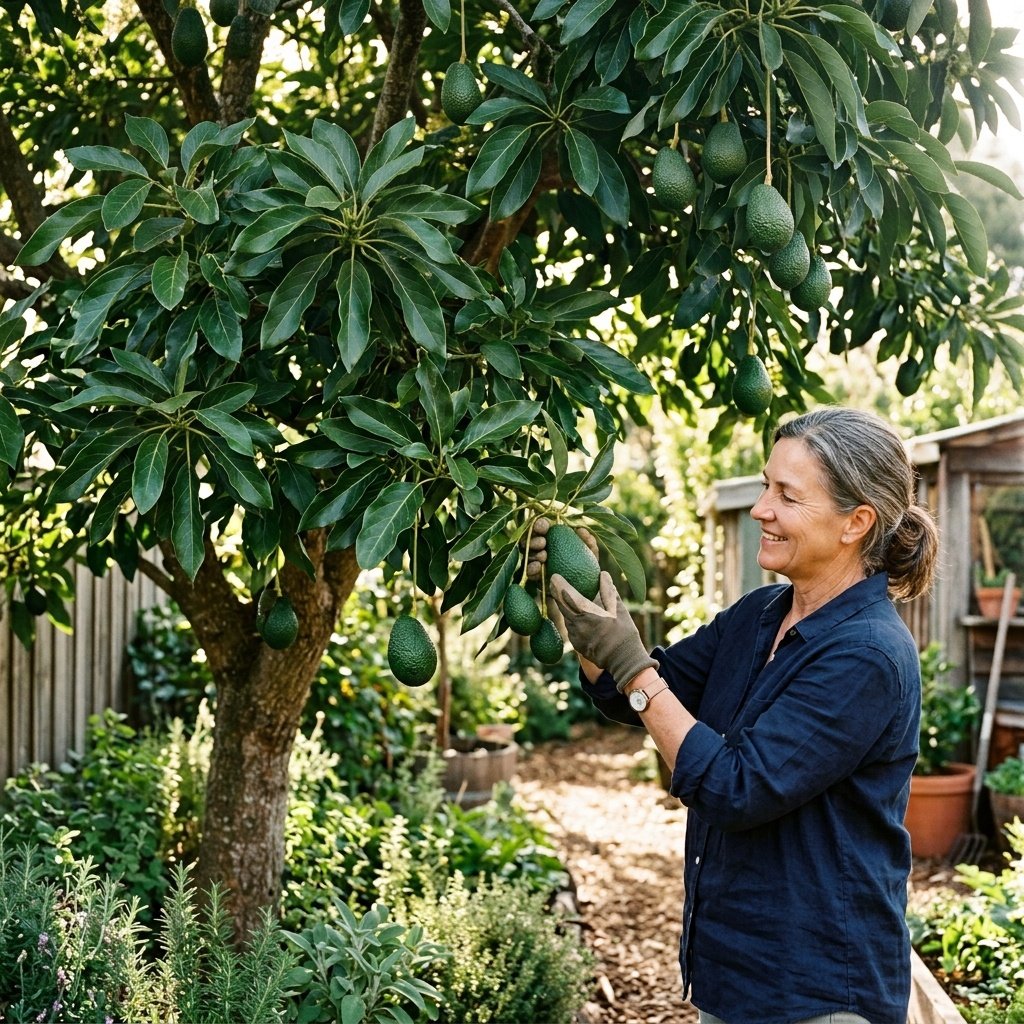
You’ve got an avocado tree. It’s growing, the leaves look healthy, and maybe you’ve even spotted plenty of flowers. But there’s one problem: where are the avocados?
This is a common frustration. An avocado tree can look perfectly healthy and still refuse to give you the fruit you’ve been waiting for. And if you’ve grown the tree from a pit, you may be wondering whether you’ll ever get an avocado from it at all.
The good news is that there are several things you can check before giving up.
Getting an avocado tree to produce fruit isn’t usually about one magic trick. The tree needs to be old enough, get enough sunlight, have healthy roots, receive the right amount of water and nutrients, and have a fair chance of successful pollination. Weather matters too.
So, before reaching for another bag of fertilizer, let’s look at nine things that can make a real difference.
7 Best Products to Help Your Avocado Fruit Plant Thrive and Produce Fruit
1. Make Sure Your Avocado Tree Is Old Enough
Sometimes, the best thing you can do for a young avocado tree is wait.
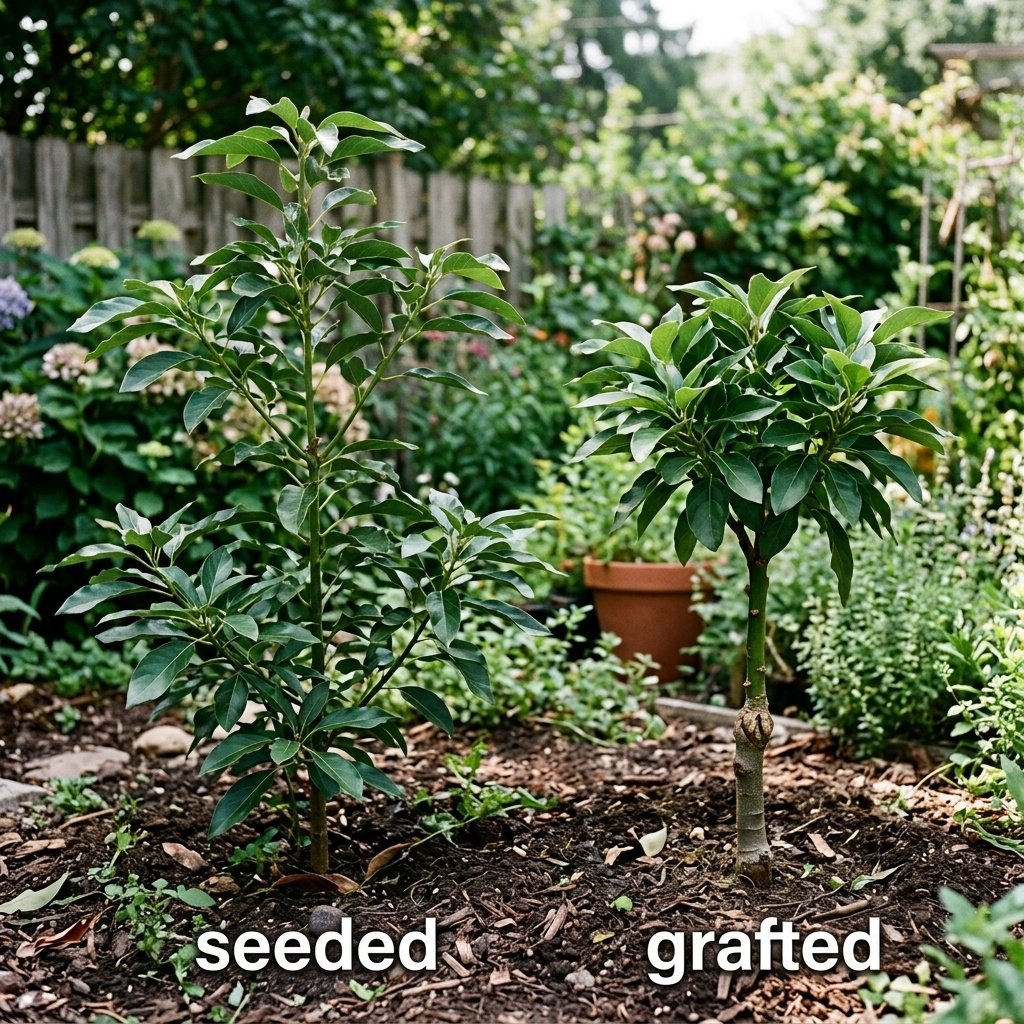
Avocado trees don’t all begin producing fruit at the same age. A grafted tree bought from a nursery can often produce fruit much sooner than one grown from an avocado pit. A seed-grown tree may spend years putting energy into roots, branches, and leaves before it starts flowering properly.
That’s why a young tree with lots of healthy green growth isn’t necessarily a problem.
Seed-grown vs. grafted avocado trees
If you planted a pit from an avocado you ate, you’ve started a fun project, but there’s no guarantee that the resulting tree will behave like the parent tree. Seed-grown avocado trees can take many years to fruit, and the fruit may not taste or look like the avocado you started with.
Grafted trees are different. A productive variety is attached to a suitable rootstock, giving you a tree with known characteristics. They generally reach fruit-bearing age sooner than trees grown from seed.
So, if your avocado tree is still young, don’t assume something is wrong simply because it isn’t fruiting.
First ask yourself: How old is the tree, and was it grown from a seed or bought as a grafted tree?
That answer may explain more than any fertilizer can.
2. Give Your Avocado Tree Plenty of Sun
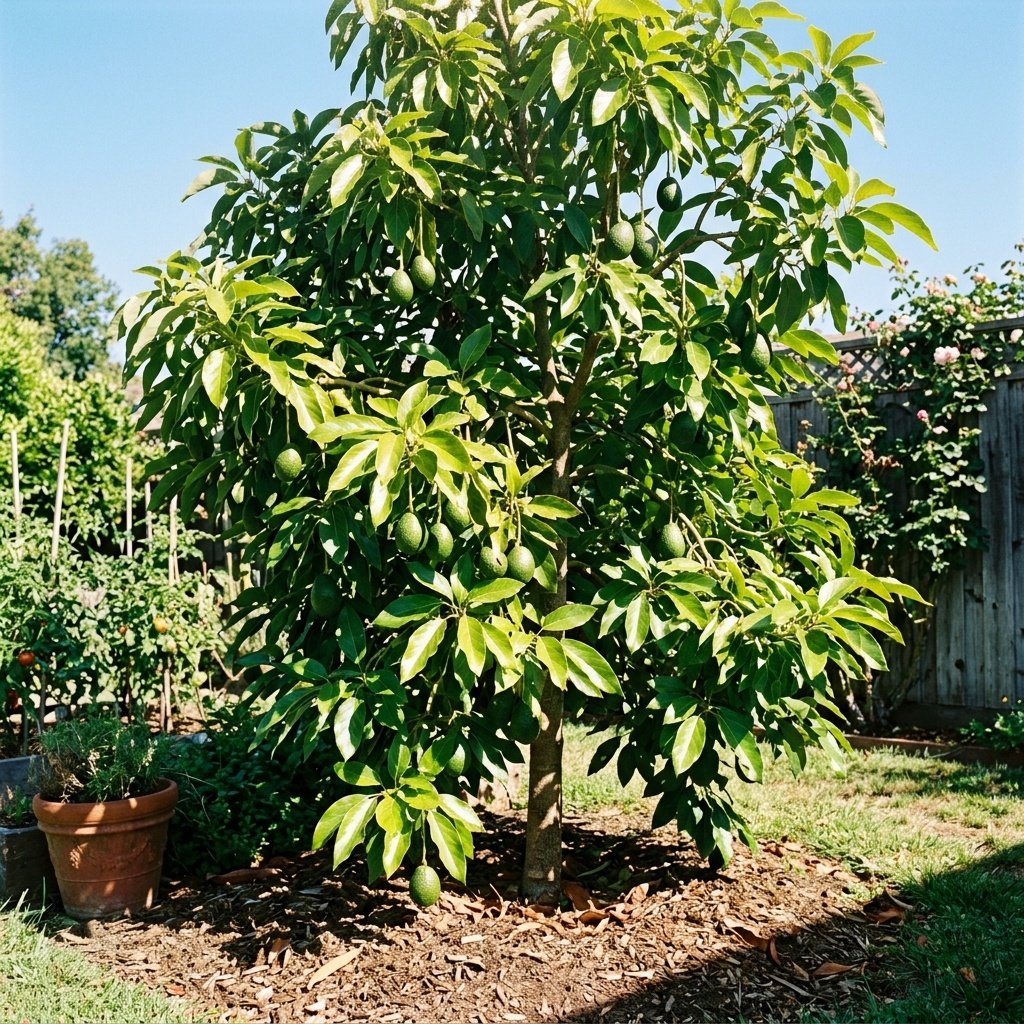
Avocados like light. A lot of it.
If your tree is tucked behind a wall, under taller trees, or in a spot that gets only a few hours of direct sun, it may grow, but it may not have the energy you want for flowering and fruit production.
Look at the tree’s location during the whole day. Morning sun may reach it, while the afternoon is shaded. Or perhaps the tree gets plenty of light in summer but very little during another part of the year.
A good sunny position helps support strong growth and flowering.
You may notice a tree growing toward the light, with long, thin branches and a fairly open canopy. That’s a sign that the tree may be reaching for more light.
Don’t move a large established tree simply because it hasn’t produced fruit yet. But if you’re choosing where to plant a new avocado tree, pick a spot with plenty of direct sunlight and enough room for the tree to grow.
Container-grown trees have an advantage here. You can move them if a particular spot turns out to be too shady.
Just remember that moving a large pot every few days isn’t practical. Choose a sunny position from the start.
3. Pay Attention to Pollination
This is where avocado trees get a little unusual.
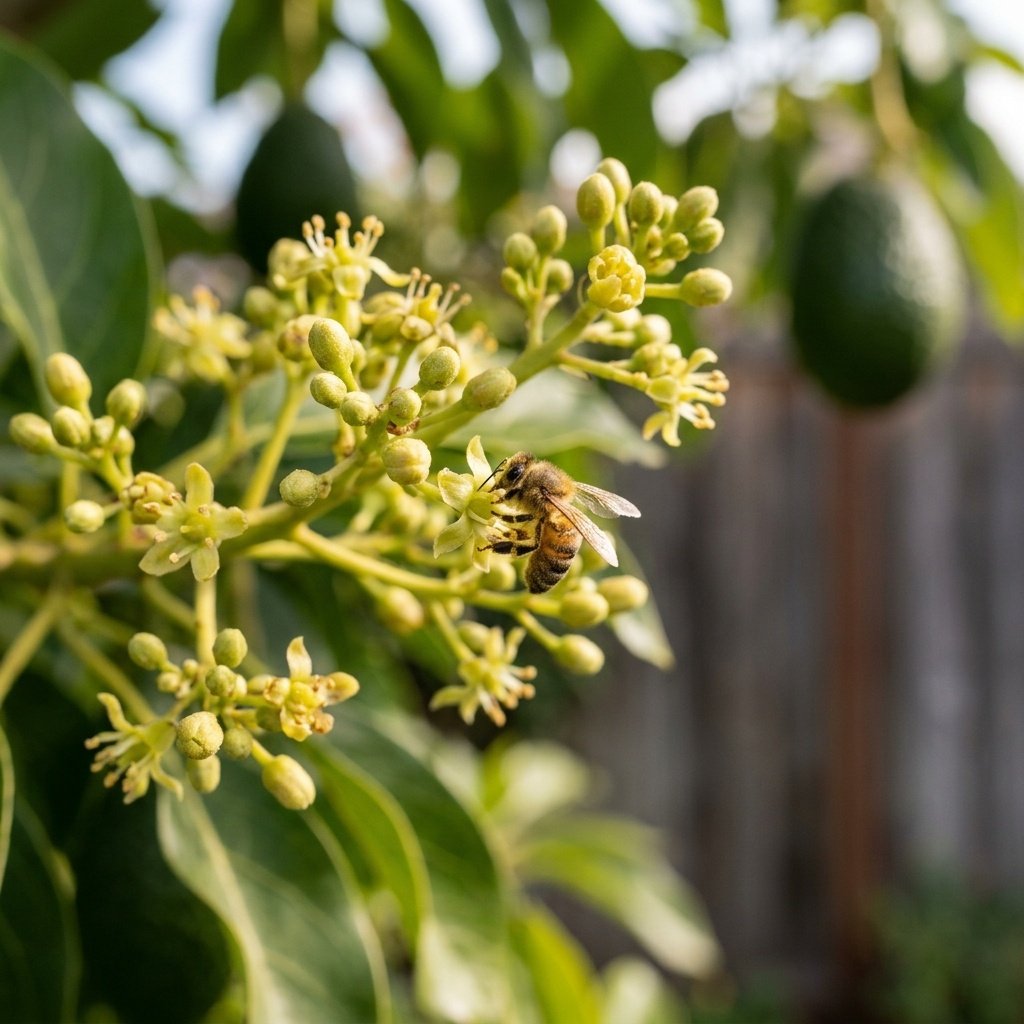
Avocado flowers contain both male and female parts, but those parts don’t always function at the same time. Avocado varieties are commonly grouped into Type A and Type B based on how their flowers open and change during the day.
That sounds complicated, but the practical point is fairly simple: having another compatible avocado variety nearby can sometimes improve pollination and fruit set.
Does that mean you absolutely need two avocado trees?
No.
Some avocado trees can produce fruit when grown alone. However, having suitable varieties flowering nearby can give pollination a better chance, particularly when bees and other pollinators are active.
Weather also plays a role. Cool, wet, windy, or unusually hot conditions during flowering can interfere with normal pollinator activity and fruit set.
How can you help?
Give bees a reason to visit your garden. Flowering plants can provide useful food for pollinators, and avoiding unnecessary pesticide use while your avocado is flowering can help protect visiting insects.
If you’re planning to plant more than one avocado tree, check the flowering type of the varieties you’re considering. A Type A and Type B combination may be useful where the local climate allows both trees to flower well.
And don’t panic if every flower doesn’t become an avocado. Avocado trees produce far more flowers than they can eventually carry as mature fruit.
4. Feed the Tree, But Don’t Overdo It
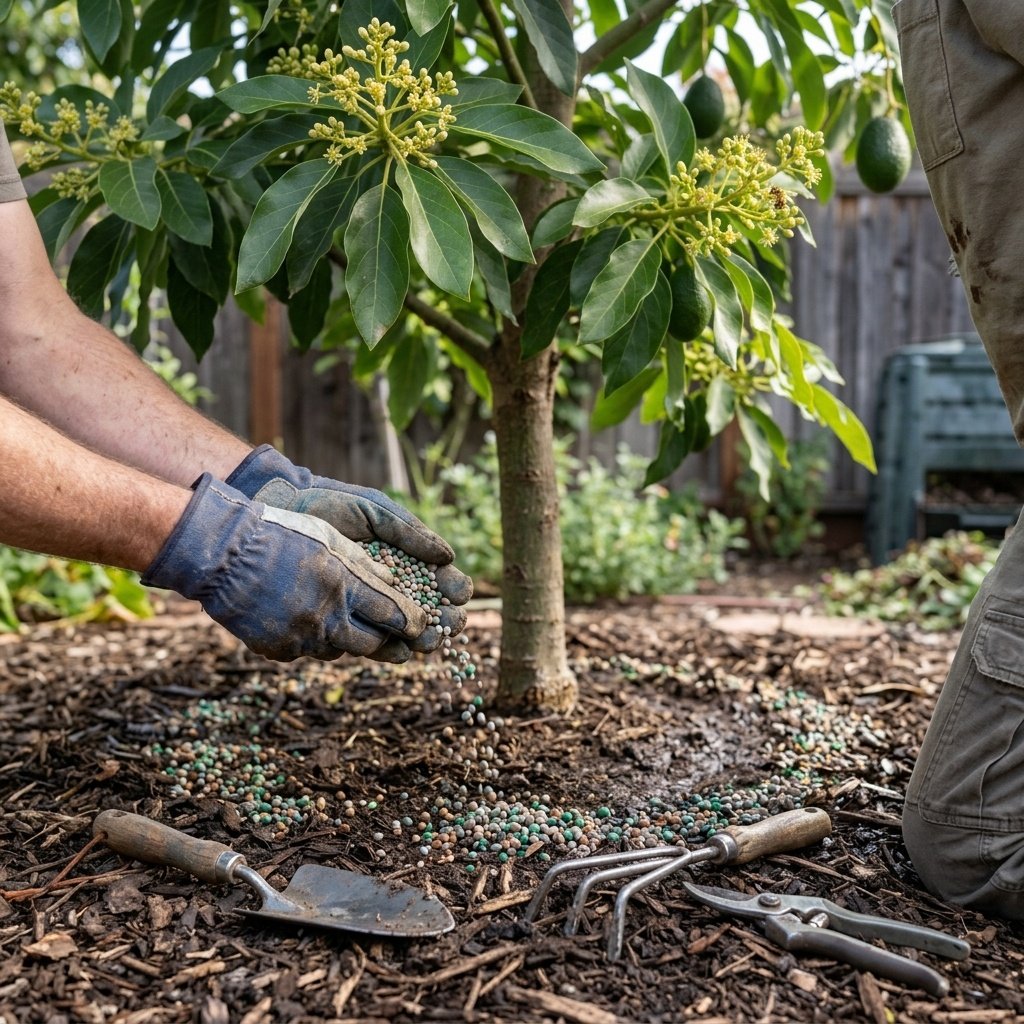
A hungry avocado tree may struggle, but throwing fertilizer at a non-fruiting tree isn’t the answer either.
Avocados need a range of nutrients for healthy growth. Nitrogen supports leaves and shoots, while potassium is involved in many plant processes, including those connected with flowering and fruit development. Calcium, magnesium, and smaller amounts of other nutrients matter too.
The trick is balance.
Too much nitrogen can push the tree toward lots of soft, leafy growth. You might end up with a beautiful tree that seems determined to grow leaves instead of avocados.
That’s why it’s better to follow the feeding directions for your particular fertilizer rather than assuming more will work faster.
A fertilizer made for avocado or citrus trees can be a practical choice, especially when used according to the label. Mature trees, young trees, container plants, and trees growing in poor soil can all have different needs.
If your soil has never been tested, a soil test can be more useful than guessing. It can tell you whether there is a genuine nutrient problem.
Organic matter can also help improve the soil around the tree. A layer of suitable mulch on the soil surface can add organic material over time while helping the soil hold moisture.
But don’t pile mulch against the trunk.
Give the tree what it needs. Don’t try to force it into fruiting with heavy doses of fertilizer.
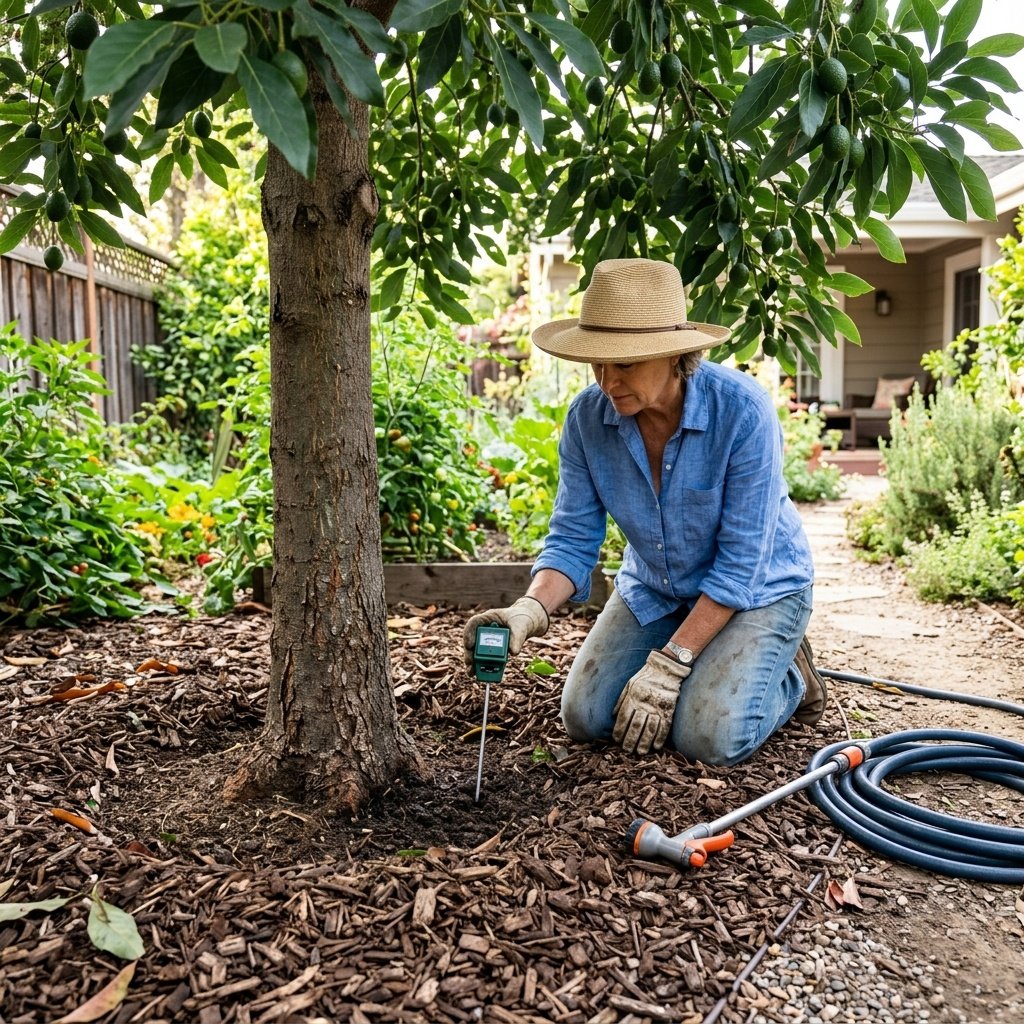
5. Water Consistently Without Keeping the Roots Wet
Avocado trees like water, but they don’t like sitting in soggy soil.
That’s an important difference.
A young avocado tree needs regular moisture while its root system is becoming established. An older tree may cope better with periods of dry weather, but prolonged drought can still cause stress, especially during flowering and fruit development.
At the same time, soil that stays wet for too long can create serious root problems.
So how often should you water an avocado tree?
There’s no useful answer that says, “Every three days,” for every garden. Soil type, temperature, rainfall, tree size, season, and whether the tree is in a pot all change the picture.
Instead, check the soil.
If the surface is dry, that doesn’t always mean the deeper soil is dry. Push a finger into the soil or use a moisture meter to get a better idea of what’s happening below the surface.
Container trees usually need closer attention because pots can dry out much faster than garden soil.
During hot weather, check more often. After heavy rain, you may not need to water at all.
The goal is steady moisture with good drainage—not a daily flood.
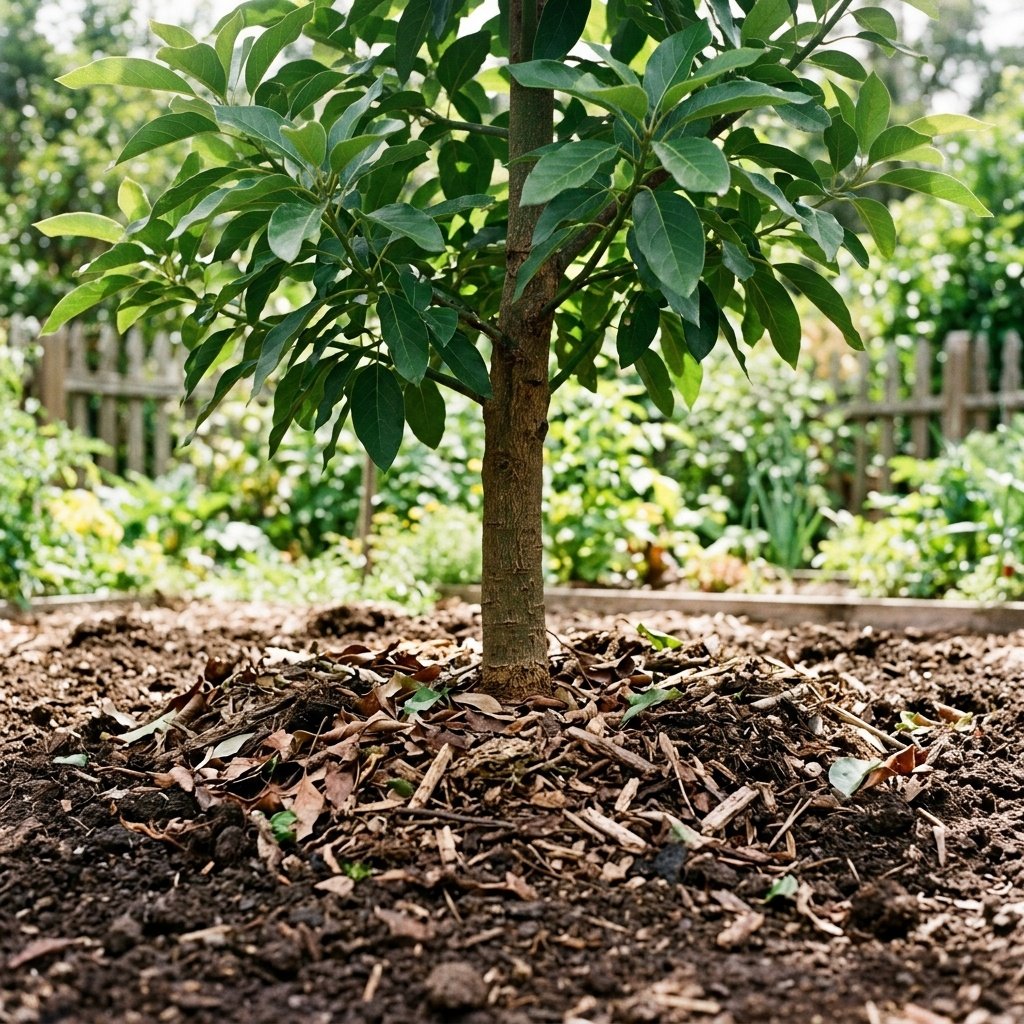
6. Give the Roots Good Soil and Drainage
A healthy canopy starts below the ground.
Avocado roots need access to air as well as water. Heavy, compacted soil that stays wet can leave the root system struggling, even when the leaves initially look fine.
Good drainage is especially important for avocado trees.
If water sits around the roots after rain, take that seriously. Constantly wet conditions can damage roots and leave the tree weaker over time. Yellowing leaves, poor growth, and general decline can sometimes point toward root or watering problems rather than a lack of fertilizer.
When planting an avocado tree, choose soil that drains well. If you’re growing one in a container, make sure the pot has proper drainage holes and use a suitable growing mix rather than ordinary garden soil packed into a pot.
Mulch can also help. A few inches of organic mulch around the tree can slow moisture loss and help keep soil temperatures steadier.
Keep the mulch away from the trunk, though. A small clear space around the base is better than having wet mulch pressed against the bark.
Before worrying about flowers and fruit, make sure the roots have a healthy place to grow.
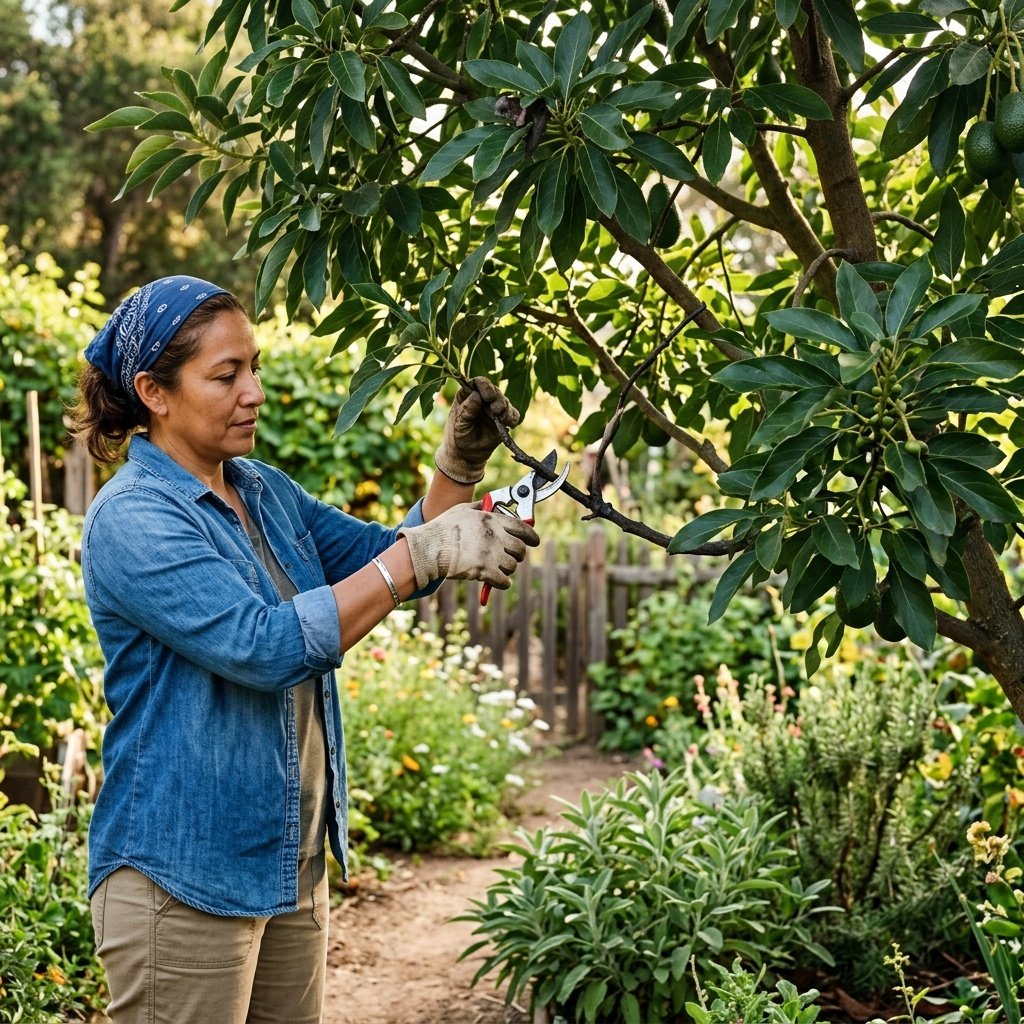
7. Prune for a Healthy, Manageable Tree
Pruning can help your avocado tree stay easier to manage, but don’t expect a pair of pruning shears to suddenly make it fruit.
The main reasons to prune are structure, light, airflow, and size.
Start by removing dead or damaged branches. You can also remove branches that rub against each other or create weak, crowded growth.
If your tree has become extremely tall, careful pruning can make harvesting easier and allow more light into parts of the canopy.
Avoid cutting large amounts of healthy growth simply because the tree hasn’t produced fruit yet. Heavy pruning can put the tree under additional stress and may remove branches that would otherwise contribute to future flowering.
When to prune depends partly on your climate and the growth pattern of the tree. In areas without harsh winters, pruning is often timed around periods of active growth and local weather conditions. In colder areas, avoid encouraging tender new growth just before a cold period.
Use clean, sharp pruning tools and make sensible cuts.
Think of pruning as housekeeping, not a fruiting button.
A well-shaped tree is easier to inspect, water, feed, protect, and harvest. That’s already a win.
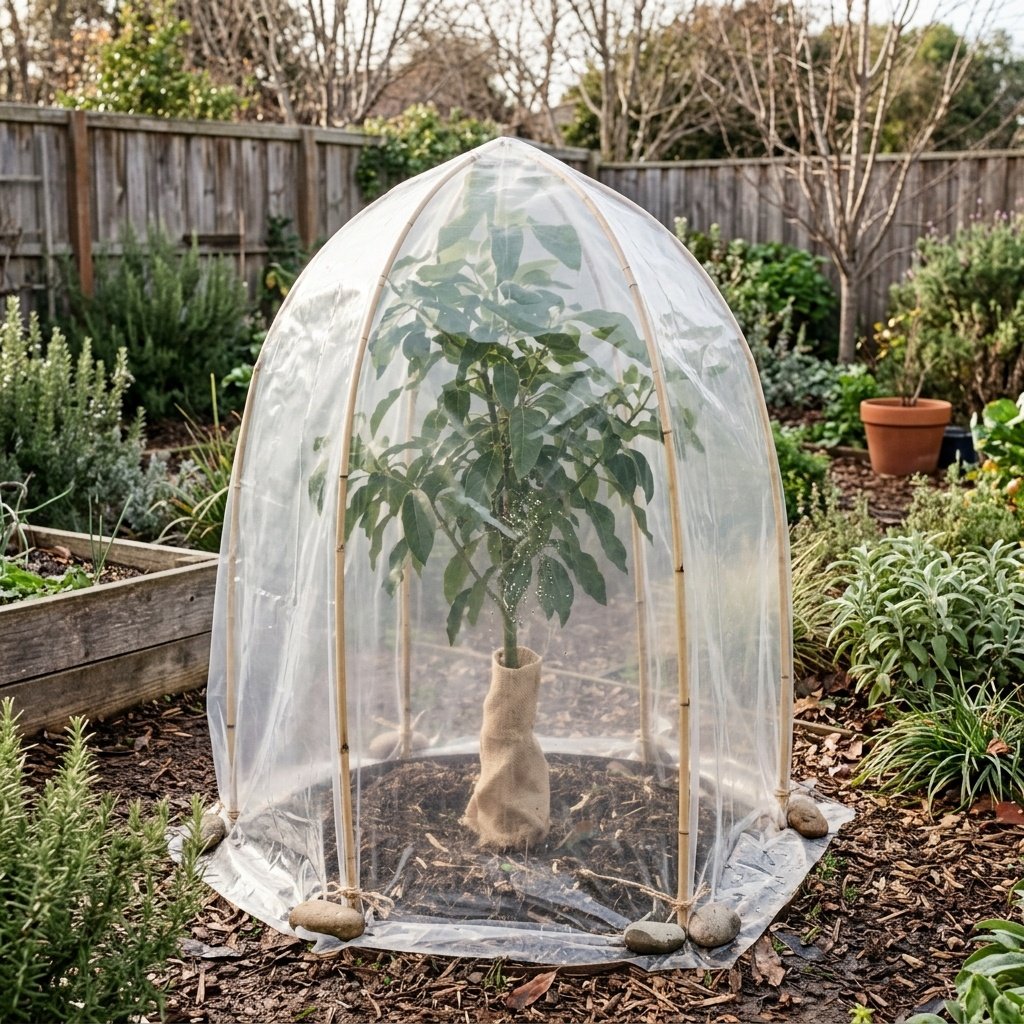
8. Protect It From Temperature Stress
Your avocado tree may be doing everything right and still struggle when the weather turns nasty.
Avocado varieties differ in their tolerance of cold, heat, and other weather conditions. A tree that handles mild winter weather well may have a much harder time when temperatures suddenly drop toward freezing.
Cold can damage flowers, young growth, and fruit. Frost is particularly troublesome.
Extreme heat can cause problems too. Hot, dry weather increases water loss and can put the tree under considerable stress. Flowers may fail to set fruit, and young fruit may drop when conditions become difficult.
This is one reason variety selection matters. Choose an avocado variety that has a reasonable chance of handling the conditions where you live.
Container-grown trees give gardeners in colder regions another option. A smaller tree can sometimes be moved to a protected location during a cold spell. Of course, a mature avocado can become far too large for this to remain practical.
During heat waves, keep an eye on soil moisture and don’t let a container dry out completely.
During cold snaps, protect young trees where possible and avoid planting them in exposed spots that collect cold air.
Sometimes the tree isn’t doing anything wrong. The weather is simply making fruit production harder.
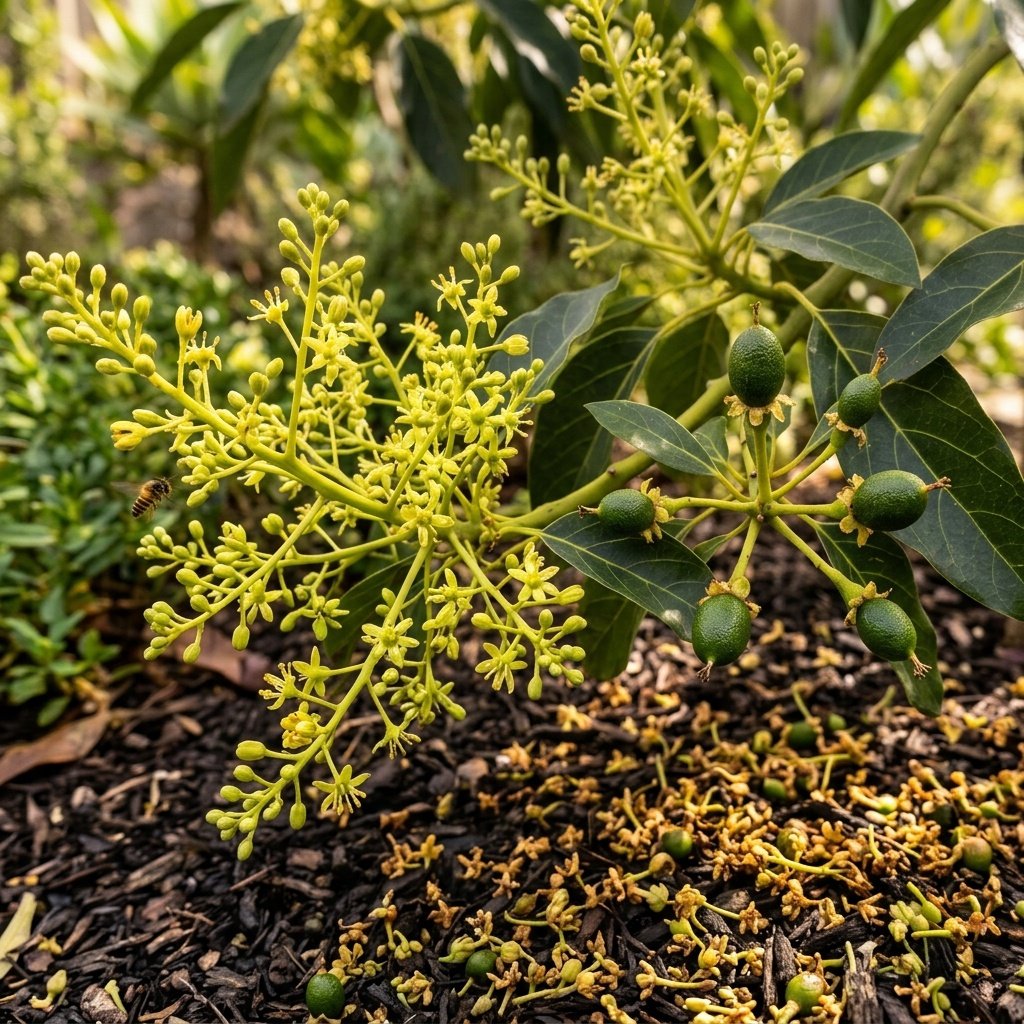
9. Understand Why Flowers Don’t Always Become Avocados
This is probably the most frustrating part for a new avocado grower.
You walk outside and see flowers covering the tree. You start imagining a basket full of avocados.
Then the flowers fall.
What happened?
First, don’t assume every fallen flower means failure.
An avocado tree can produce thousands of flowers, but only a small portion will eventually become mature fruit. The tree naturally sheds flowers and young fruit because it can’t support everything it produces.
The process looks roughly like this:
Flower → pollination → fruit set → young fruit → mature avocado
A problem at any stage can reduce the final crop.
Poor pollination can play a part. So can unsuitable weather during flowering. Water stress, extreme temperatures, nutritional problems, and an immature tree can also affect fruit set and fruit retention.
If your tree flowers heavily but produces almost nothing, look at the whole growing situation rather than focusing on one factor.
Is the tree old enough?
Does it get enough sunlight?
Are pollinators visiting?
Does the soil drain properly?
Has the tree been stressed by drought or extreme heat?
Are you feeding it sensibly?
Those questions will usually take you much closer to the answer than simply buying another fertilizer.
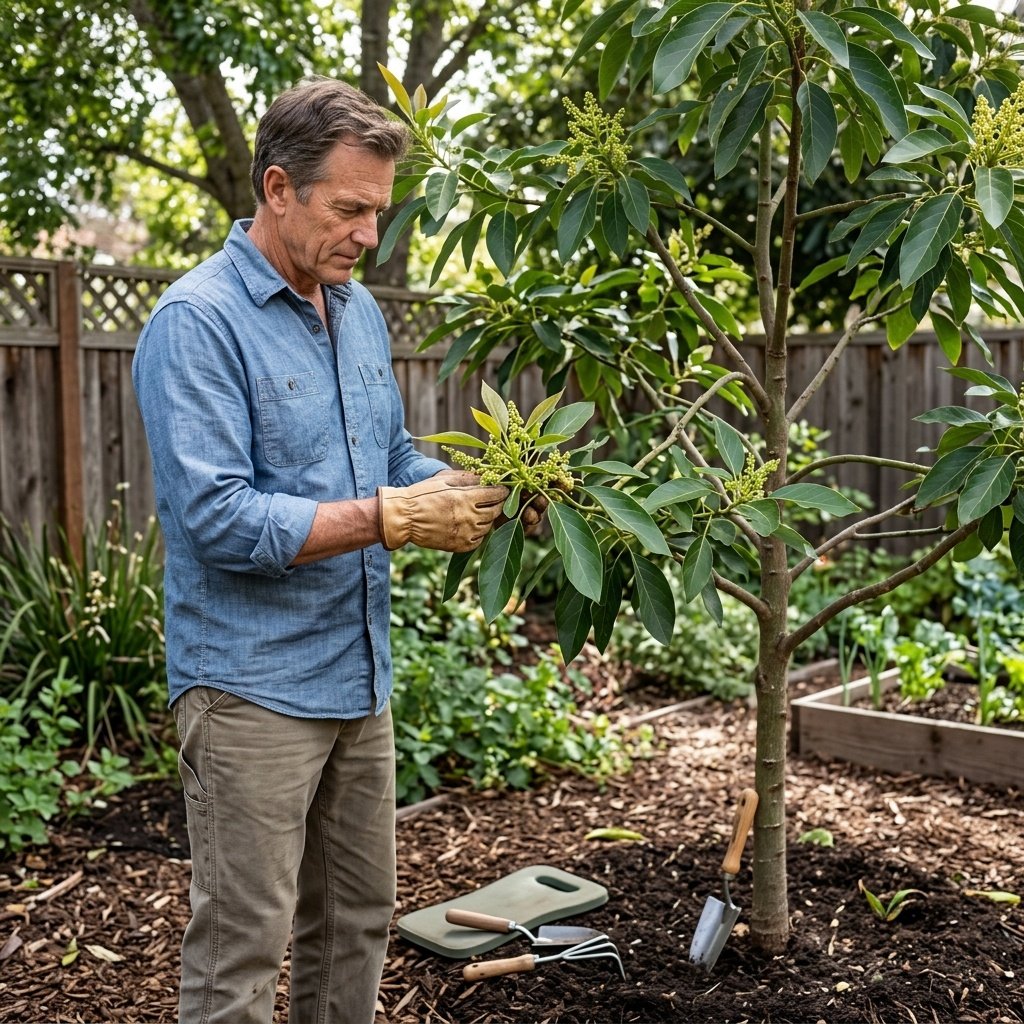
Why Is My Avocado Tree Not Producing Fruit?
If you’re standing in front of your tree wondering what’s going wrong, use the symptoms as clues.
| What you see | Possible reason | What to check |
|---|---|---|
| Lots of leaves but no flowers | Tree may be too young or conditions may be limiting flowering | Age, variety, sunlight |
| Plenty of flowers but no fruit | Pollination or weather may be involved | Pollinators, flowering period, weather |
| Flowers fall quickly | Natural flower drop or environmental stress | Temperature, water, tree health |
| Yellow leaves | Water or root problems may be involved | Drainage and soil moisture |
| Very weak growth | Poor light, nutrition, or root conditions | Sunlight, soil, feeding |
| Young fruit appears and then falls | Natural fruit drop or stress | Water, heat, nutrition |
| Tree barely grows | Root or environmental issue | Drainage, temperature, sunlight |
Don’t try to fix everything at once.
Pick the most obvious issue and address that first. Give the tree time to respond before making another major change.
How Long Does an Avocado Tree Take to Produce Fruit?
There isn’t one number that applies to every avocado tree.
A grafted avocado bought from a nursery can often begin fruiting much sooner than a tree grown from a pit. Seed-grown trees may take many years, and some can take considerably longer before they produce a worthwhile crop.
The variety matters. So does the climate.
Sunlight, temperature, water, soil conditions, nutrition, and general tree health all affect how well an avocado grows and flowers.
If your tree came from a pit, patience is especially important. You may eventually get fruit, but there’s no guarantee that it will be the same quality as the avocado that supplied the seed.
If your main goal is harvesting fruit rather than growing an experiment, starting with a healthy grafted tree of a suitable variety is usually the more sensible route.
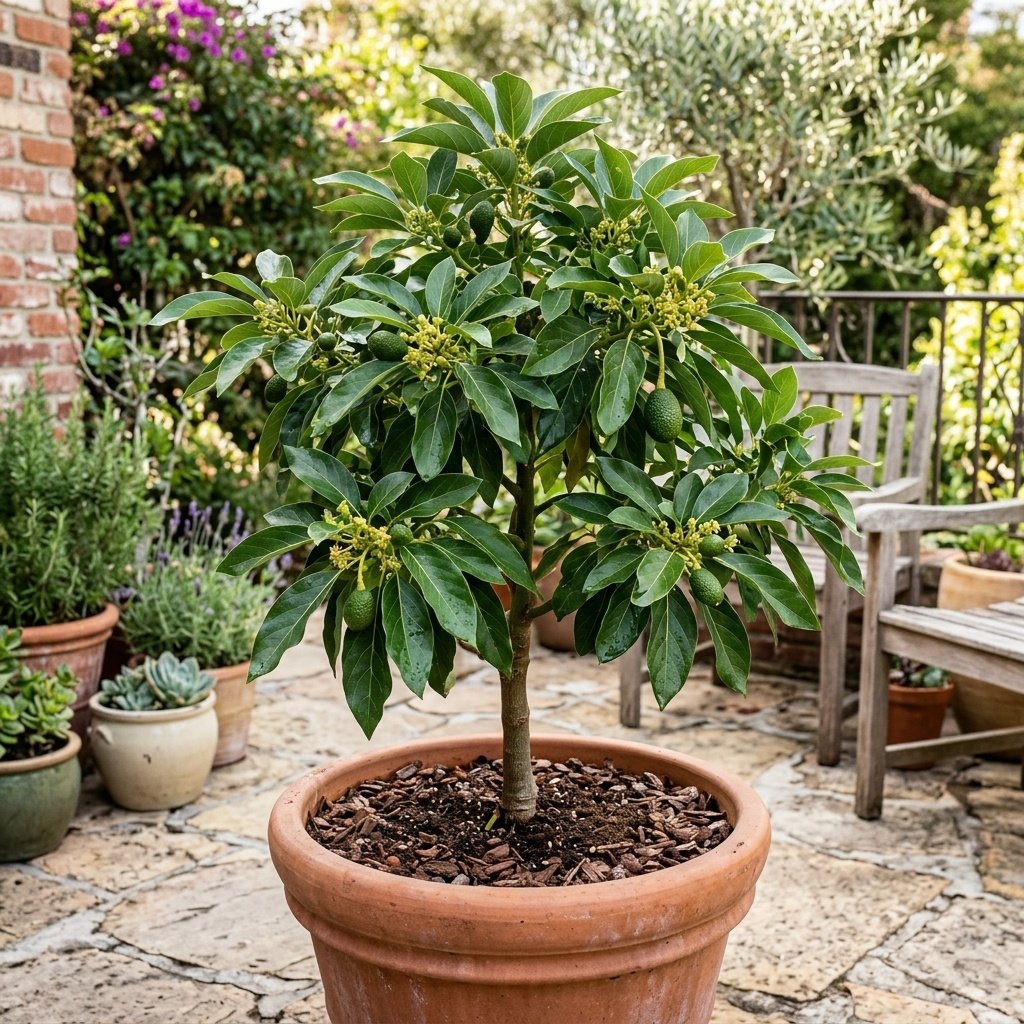
Can You Grow an Avocado Tree in a Pot and Still Get Fruit?
Yes, but there’s a big difference between growing an avocado pit in a pot and maintaining a productive container tree.
A small avocado seedling can look perfectly happy in a decorative pot for a while. Eventually, though, the tree needs enough room for its roots and canopy.
Choose a container with good drainage and enough space for the tree you’re growing. A suitable growing mix is important too.
Container-grown trees need regular attention to watering and feeding because their supply of soil is limited. They also benefit from plenty of sunlight.
Pruning can help keep a container tree at a manageable size, but don’t expect a large avocado variety to remain tiny forever.
If fruit is your goal, look for avocado varieties that are better suited to container growing. Even then, production may be more limited than it would be from a healthy tree planted in the ground under suitable conditions.
Growing an avocado pit is easy. Growing a productive avocado tree is a different game.
Related Reads
You might find these helpful as you keep going:
7 Best Fertilizers for Raised Beds (Top Picks + Feeding Guide)
7 Best Self-Watering Systems for Balcony Vegetable Gardens (That Actually Work)
7 July Tasks for the Midsummer Garden
FAQ
Why is my avocado tree flowering but not producing fruit?
Flowering is only the first step. Pollination, weather, tree maturity, water, nutrition, and fruit retention all affect whether flowers become fruit. Some flower drop is completely normal because the tree produces many more flowers than it can carry to harvest.
Do you need two avocado trees to get fruit?
Not necessarily. Some avocado trees can produce fruit on their own. However, having compatible Type A and Type B varieties nearby can sometimes improve pollination and fruit set. Local weather and pollinator activity also matter.
What is the best fertilizer for an avocado tree?
There isn’t one fertilizer that works perfectly for every tree. A fertilizer intended for avocado or citrus trees can be a practical choice when used according to its directions. Avoid assuming that more fertilizer will create more fruit, especially if the tree is already receiving plenty of nitrogen.
How much sunlight does an avocado tree need?
Avocado trees generally do best with plenty of direct sunlight. A shaded tree may still grow leaves, but limited light can reduce vigor and flowering. Check the planting spot throughout the day rather than judging it from one quick look.
How often should I water an avocado tree?
Watering depends on soil, weather, tree size, rainfall, season, and whether the tree is in a container. Check soil moisture rather than following a fixed calendar. Keep the roots supplied with moisture while avoiding soil that stays saturated.
Can an avocado tree grown from a pit produce fruit?
Yes, a seed-grown avocado tree can produce fruit, but it may take many years. The resulting fruit may also differ from the avocado that supplied the pit. If you want fruit sooner and more predictable results, a grafted tree is generally a better choice.
Can avocado trees grow in containers?
Yes. Choose a suitable variety, a container with good drainage, and a growing mix that doesn’t stay waterlogged. Container trees also need enough sunlight, regular watering, sensible feeding, and occasional pruning.
Why does my avocado fruit appear and then fall?
Some young fruit naturally drops, and that doesn’t always mean there’s a problem. Excessive fruit drop can be linked with water stress, extreme temperatures, poor tree health, or other growing conditions. Look at what was happening around the tree when the drop occurred.
Final Thoughts
Getting an avocado tree to produce fruit takes a little patience.
There isn’t a single fertilizer, watering trick, or pruning method that guarantees a crop. Fruiting depends on several pieces working together: the tree needs to be mature enough, receive good sunlight, have healthy roots, get steady moisture and suitable nutrition, and have a reasonable chance of successful pollination.
And remember that avocado trees naturally produce more flowers than they can turn into mature fruit.
So if your tree isn’t producing yet, don’t start cutting branches or pouring fertilizer around the roots in frustration. Step back and look at the basics first.
Check the tree’s age. Look at the light. Feel the soil. Watch the weather. Notice whether bees are visiting when the tree is flowering.
Once you find the weak link, you have something useful to work on. Sometimes, though, the answer is simply that your young tree needs more time.