
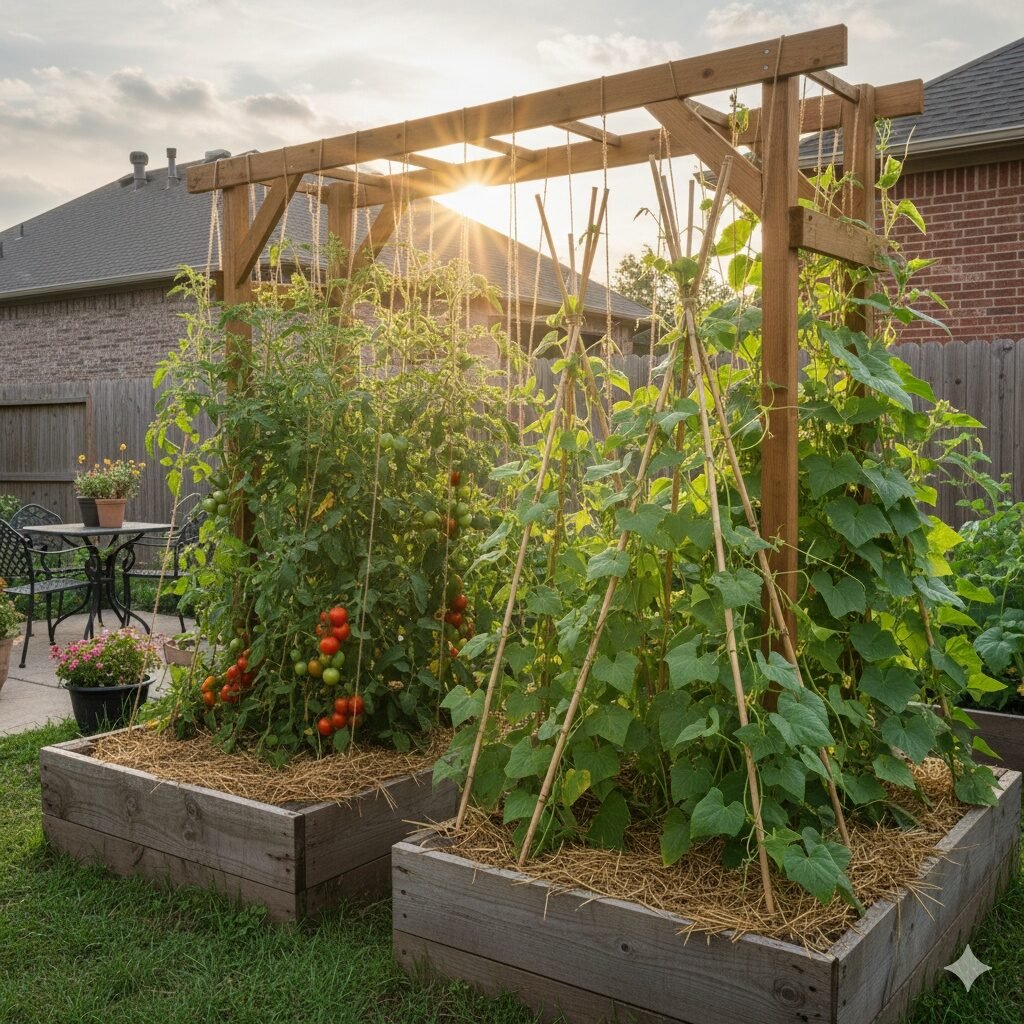
Vertical Gardening: If you’ve ever looked at your tiny balcony or narrow patio and thought, “There’s no way I can grow much here,” well, think again. Vertical gardening — or, as some folks like to call it, growing up instead of out — might just be your garden’s new best friend. It’s a clever, space-saving way to grow a bunch of fresh veggies even when your ground space is pretty limited.
Basically, it’s all about training certain plants to climb up — whether that’s a trellis, cage, wall planter, or even an upcycled pallet. And, honestly, the results are pretty amazing. You get more yield, cleaner produce, and a garden that looks kinda stylish too.
So, let’s talk about 9 vegetables that naturally love to grow upwards — the ones that’ll give you both beauty and bounty without hogging your floor space.
Why Go Vertical?
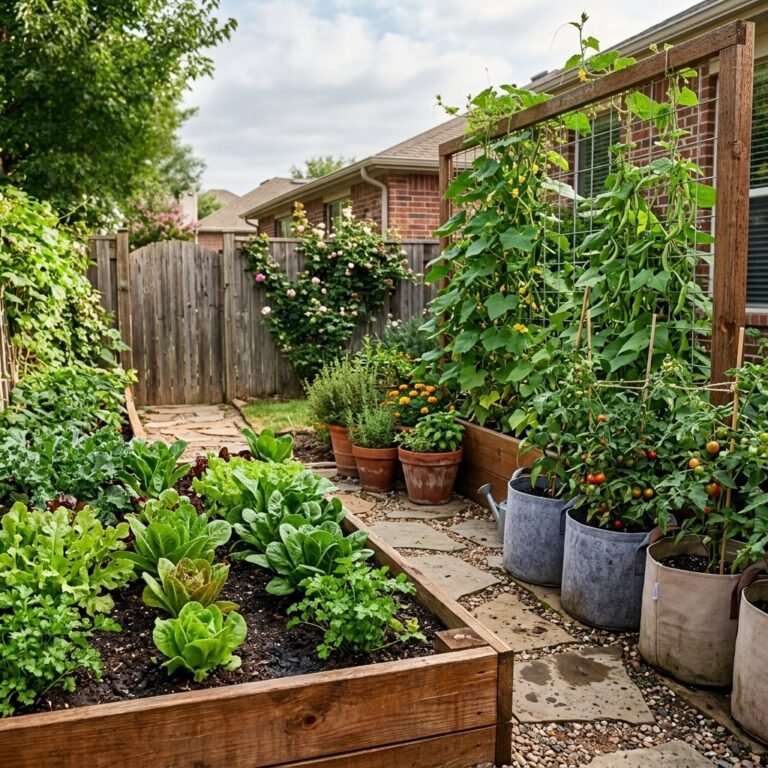
So, vertical gardening, in simple terms, is the idea of using your garden’s height to your advantage. Instead of spreading plants wide across your backyard (or balcony), you guide them upward using supports.
This method is, in many ways, perfect for people living in apartments or homes with tiny yards. It’s not only practical but also quite fun to set up.
A few solid perks include:
- Saving Space: It’s practically made for city gardeners or anyone with limited space.
- Better Airflow: Fewer pests, less mildew — plants stay healthier.
- Easier to Harvest: No bending or crawling through mud.
- Looks Great: Vertical gardens add depth, color, and structure to any small area.
In short, it’s smart gardening — simple, efficient, and really satisfying to look at. Get to know more about vertical gardening explore Here.
Getting Started: What You’ll Need
You don’t need fancy gear, honestly. A few basic tools and supports, and you’re good to go.
Here’s a quick list:
- Trellises or Stakes: Wooden, metal, or even bamboo ones work well.
- Cages or Netting: Ideal for tomatoes, cucumbers, and beans.
- Vertical Planters or Hanging Pots: Perfect for leafy greens.
- Lightweight Potting Mix: Keeps roots comfy and drains well.
- Watering Setup: Drip systems or self-watering pots make life easier.
👉 Pro Tip: Set up your trellis or support before you plant. It keeps roots undisturbed later on when your plants start to stretch up.
9 Vegetables That Thrive Upwards
Now we’re getting to the fun part — the actual veggies that love climbing! Each of these grows best when trained upwards, saving space and often boosting yield too.
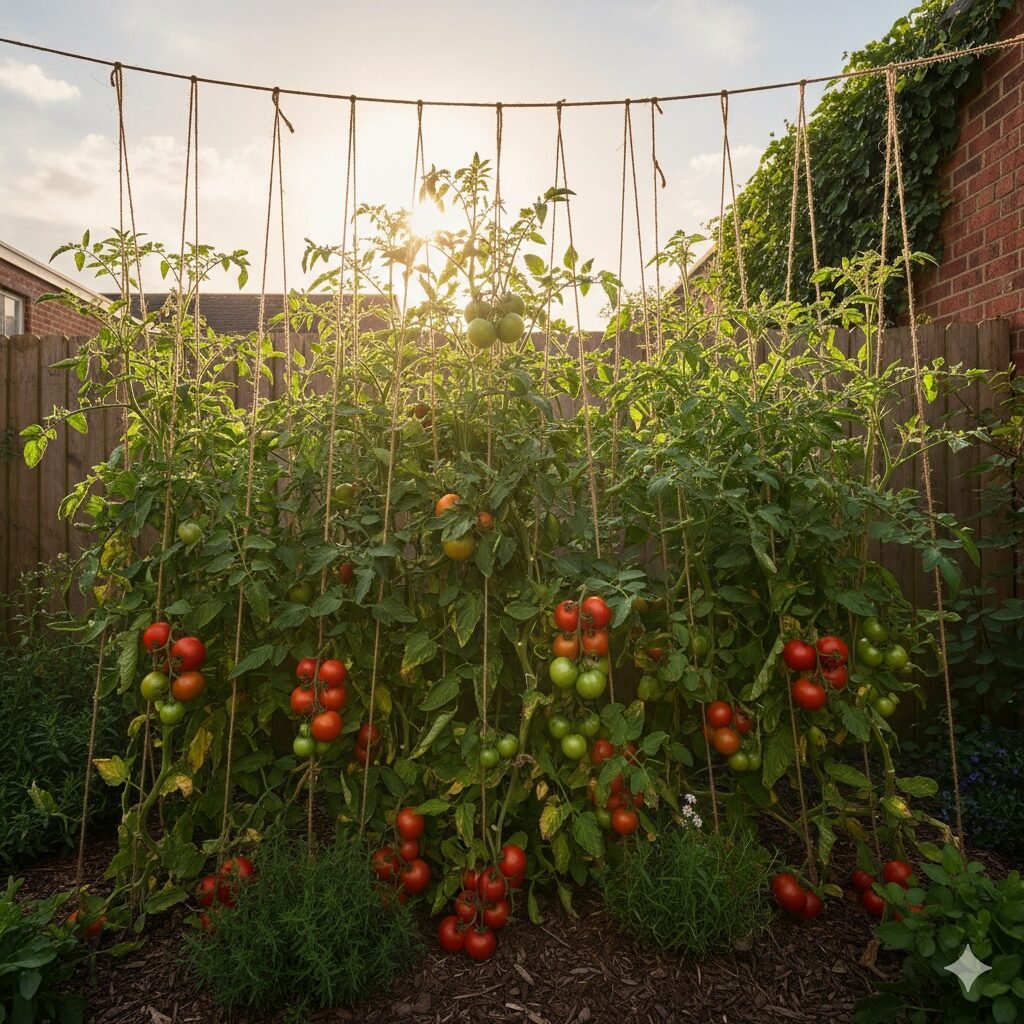
1️⃣ Tomatoes
Tomatoes are vertical garden classics. They grow fast, love warmth, and respond well to caging or string trellises.
- Soil: Loose, nutrient-rich soil with compost. Slightly acidic (pH 6–6.8).
- Sunlight: 6–8 hours of full sun daily.
- Watering: Deep watering 2–3 times weekly; avoid wetting the leaves.
- Support: Use tomato cages or hanging twine for vertical support.
- Harvest Tip: Pick when fruits turn bright red or orange and feel slightly firm.
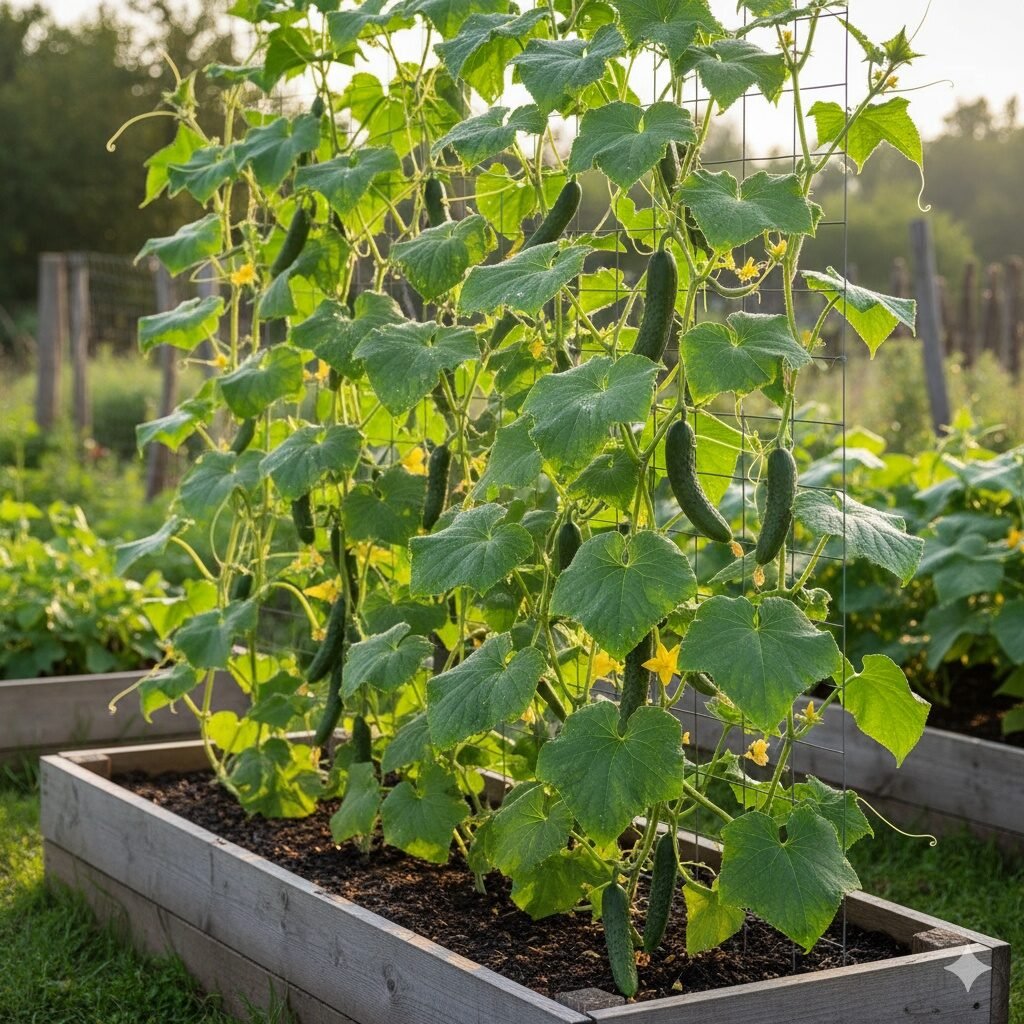
2️⃣ Cucumbers
Cucumbers are vigorous climbers that stay healthier when grown vertically — less soil contact means fewer pests and cleaner fruits.
- Soil: Moist, well-drained with compost and organic mulch.
- Sunlight: Minimum 6 hours of sunlight daily.
- Watering: Keep soil evenly moist; avoid drying between waterings.
- Support: Wire mesh or net trellis works best for training young vines.
- Harvest Tip: Pick cucumbers while firm and medium-sized; frequent picking promotes continuous fruiting.
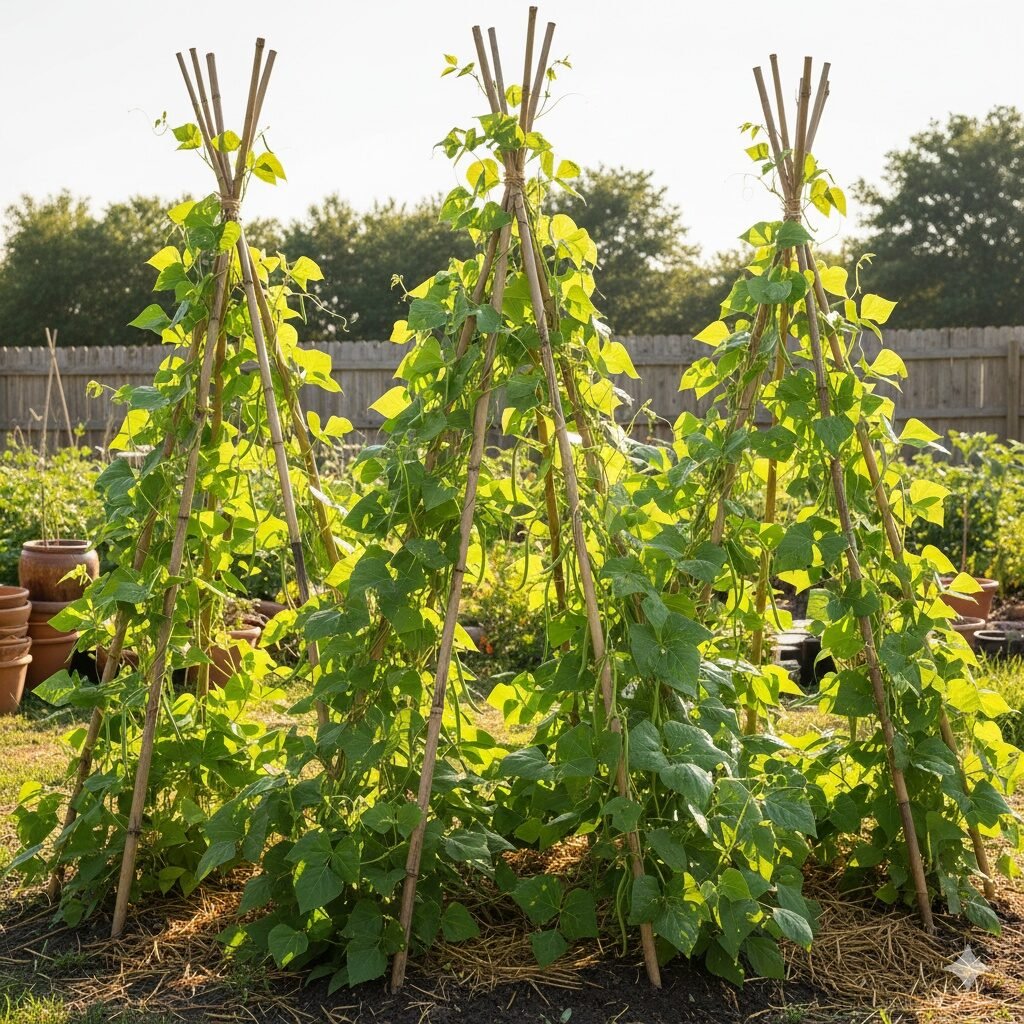
3️⃣ Pole Beans
Pole beans love to climb and yield generously when given vertical support. They’re light feeders and thrive in warm weather.
- Soil: Light, loamy soil with moderate fertility.
- Sunlight: 6–7 hours of direct sun.
- Watering: Regular but not excessive; beans don’t like soggy soil.
- Support: Bamboo poles or A-frame netting are ideal.
- Harvest Tip: Pick pods every few days to encourage new blooms and prevent seed bulging.
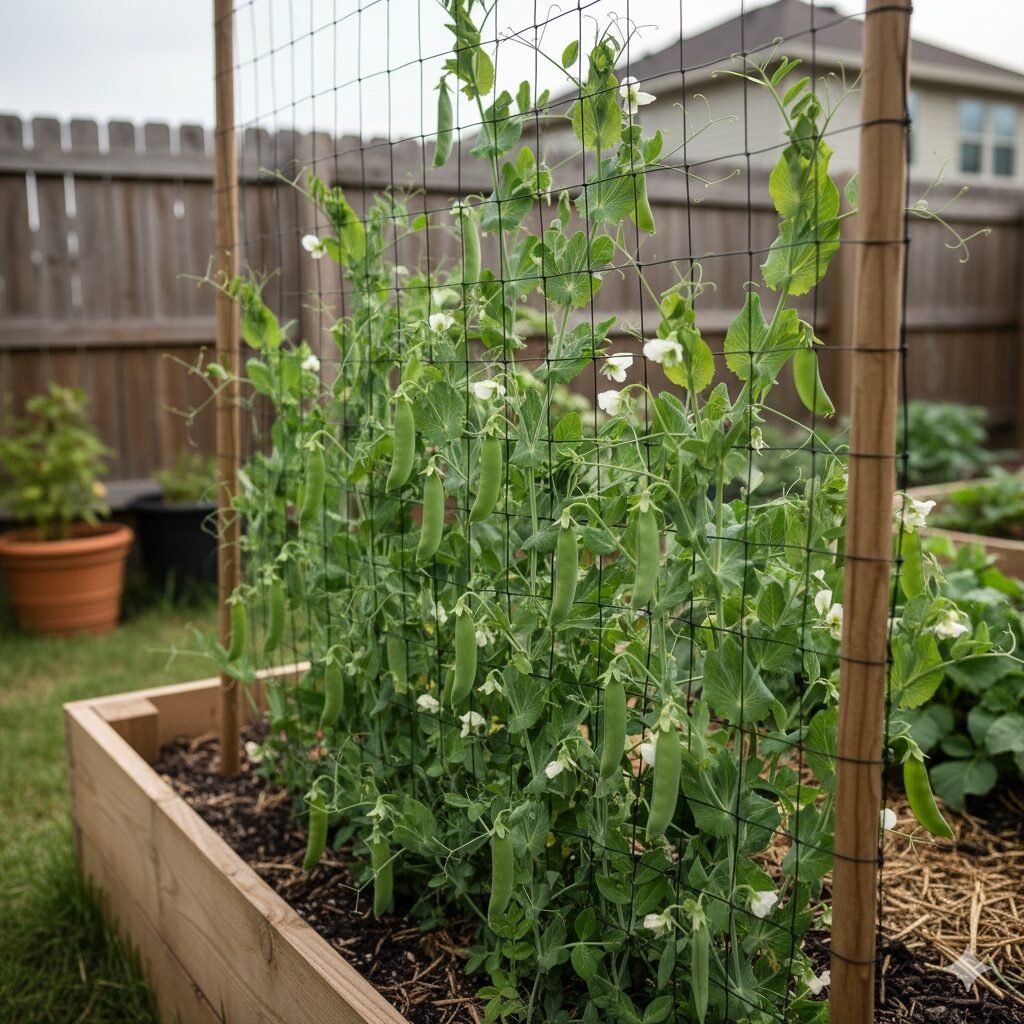
4️⃣ Peas
Peas are gentle climbers perfect for cooler seasons and small trellises. They enrich the soil naturally by fixing nitrogen.
- Soil: Light, rich, and well-draining with moderate moisture.
- Sunlight: 5–6 hours of mild sun; too much heat reduces yield.
- Watering: Regular shallow watering during flowering and pod growth.
- Support: Chicken wire, netting, or low bamboo stakes.
- Harvest Tip: Pick pods when plump but before they harden; frequent picking extends harvest.
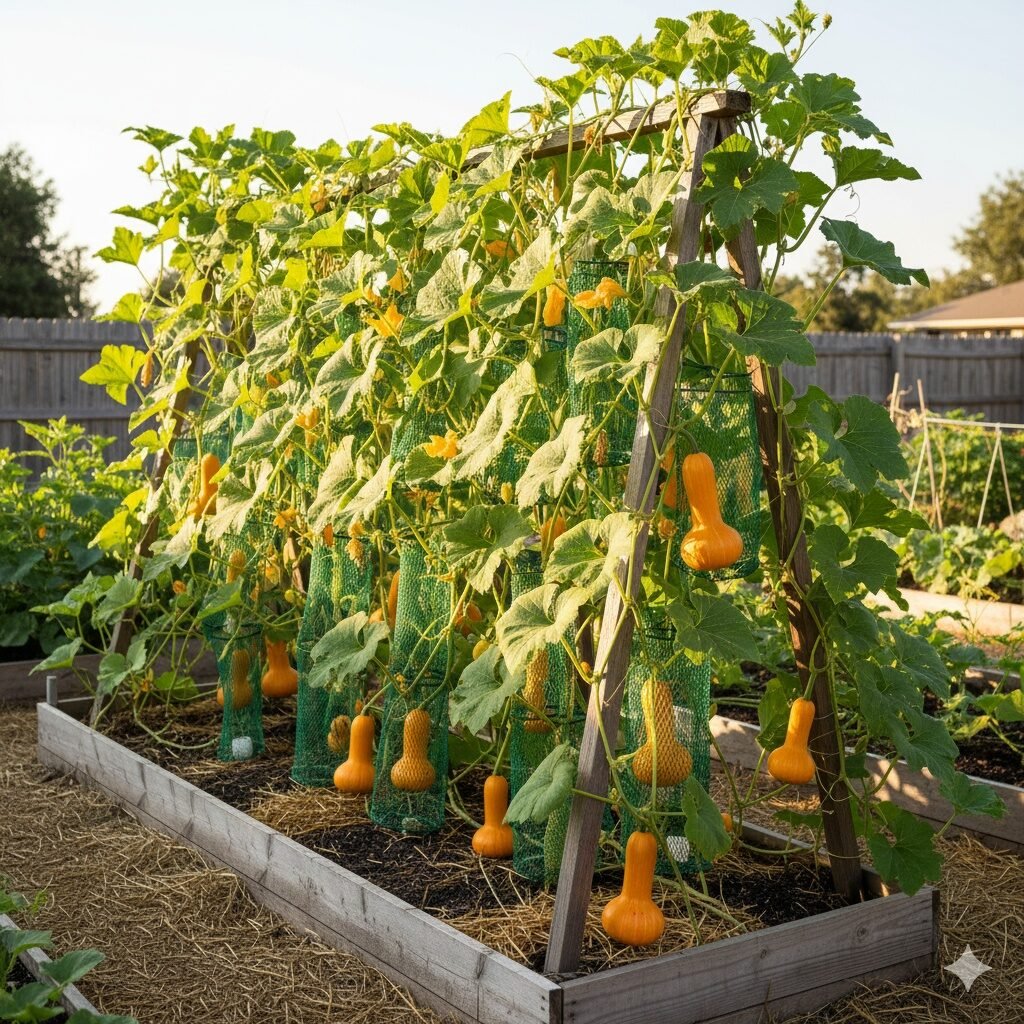
5️⃣ Squash (Vining Varieties)
Some squashes, like Butternut and Tromboncino, climb beautifully when trained up a sturdy frame. They save space and resist mildew better vertically.
- Soil: Fertile, moisture-retaining soil rich in organic matter.
- Sunlight: 7–8 hours of full sun.
- Watering: Deep soak once or twice weekly; keep roots cool with mulch.
- Support: Wooden or metal trellis strong enough to hold fruit weight.
- Harvest Tip: Support heavy fruits with fabric slings and pick before skin hardens completely.
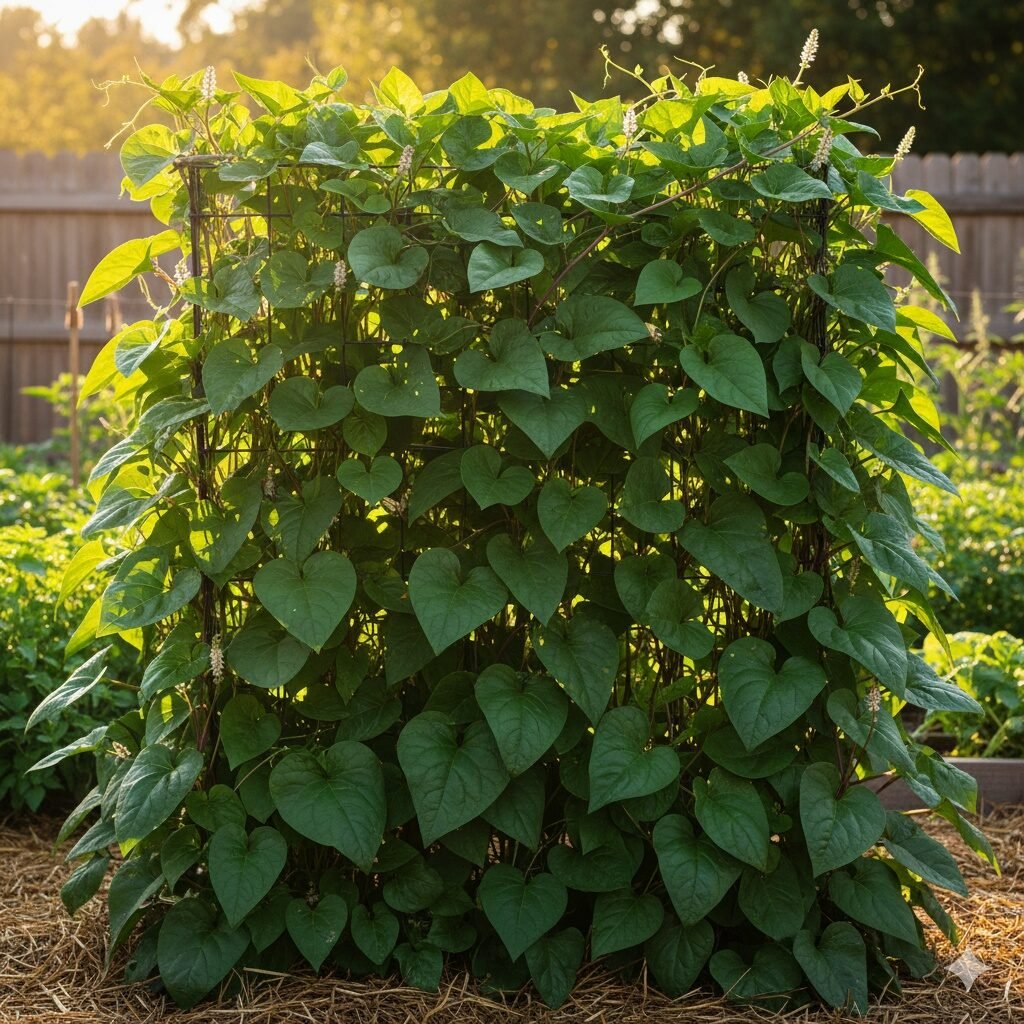
6️⃣ Malabar Spinach
Malabar spinach isn’t a true spinach, but it thrives in heat and humidity. Its thick, glossy leaves grow on long vines that love climbing.
- Soil: Moist, well-drained soil rich in compost.
- Sunlight: Prefers full sun but tolerates partial shade.
- Watering: Regularly; this plant wilts quickly if dry.
- Support: Any vertical netting or rope trellis will work.
- Harvest Tip: Pinch off young leaves and tips for continuous growth.
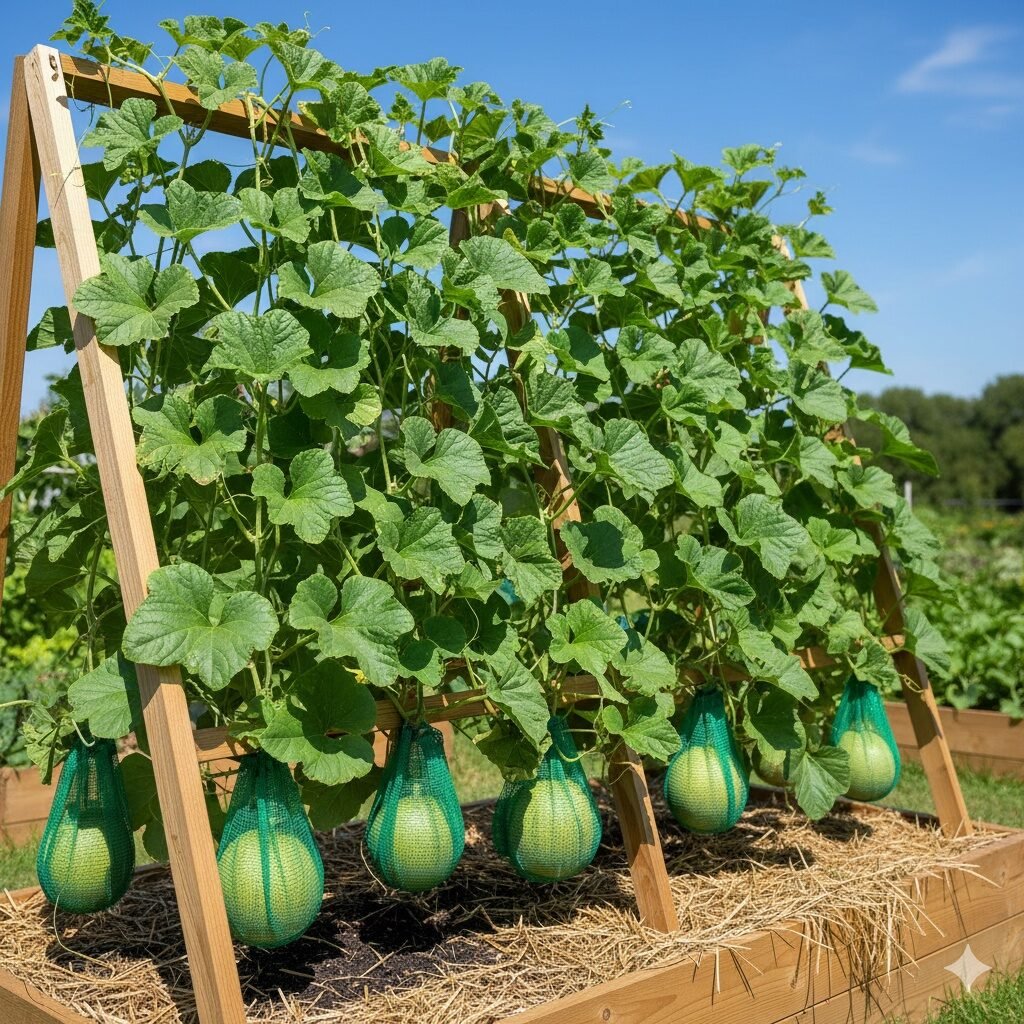
7️⃣ Small Melons
Compact melons like Cantaloupe and Mini Sugar Baby can be trained upward for cleaner, sweeter fruits.
- Soil: Loose, sandy loam with organic fertilizer.
- Sunlight: Full sunlight for at least 7 hours daily.
- Watering: Regular watering during flowering; reduce slightly during ripening.
- Support: Strong wooden or metal trellis with net slings for fruit.
- Harvest Tip: Pick when the netting pattern on rind becomes visible and fruit smells sweet near the stem.
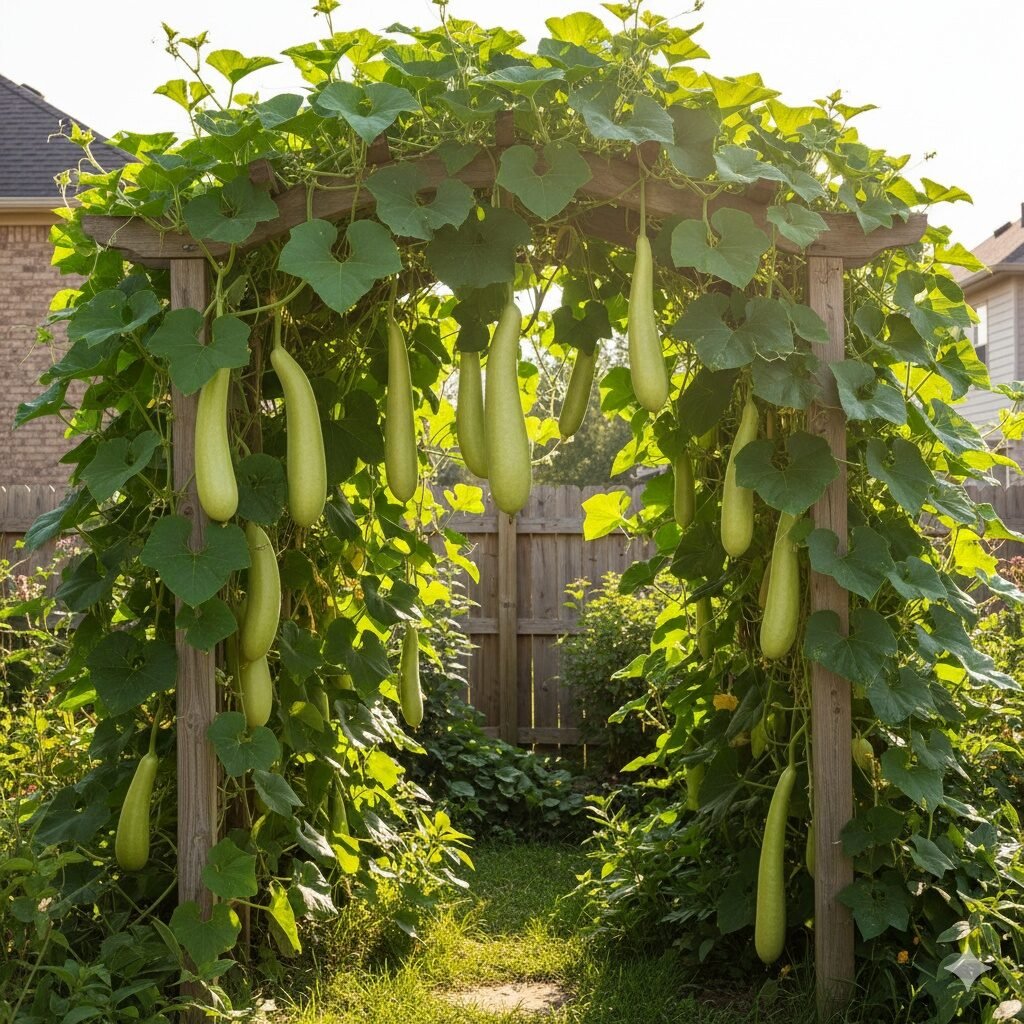
8️⃣ Bottle Gourd
Bottle gourd is a vigorous tropical vine that thrives in warm climates and grows fast once established. It’s perfect for pergolas or tall trellises.
- Soil: Fertile, well-drained, rich in compost or cow manure.
- Sunlight: Full sun exposure for 6–8 hours.
- Watering: Regular deep watering, especially during fruit set.
- Support: Strong overhead trellis or arch — vines can reach 10–12 feet easily.
- Harvest Tip: Pick fruits when tender and 10–12 inches long; older ones become hard and fibrous.
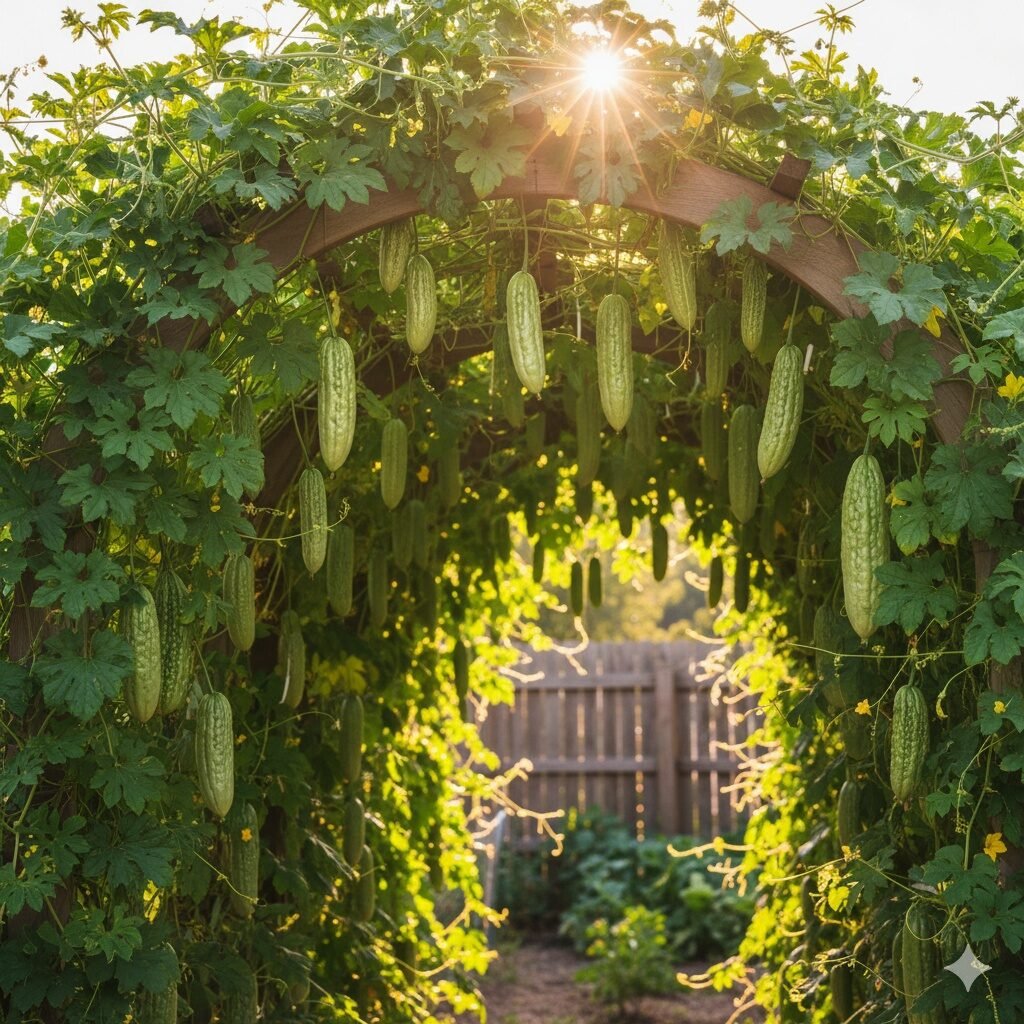
9️⃣ Gourds or Bitter Melon
These heat-loving vines grow fast and decorate your garden beautifully. Perfect for trellises, arches, or even balconies.
- Soil: Well-drained sandy loam with compost.
- Sunlight: Full sun; thrives in tropical and subtropical heat.
- Watering: Keep soil evenly moist during flowering and fruiting.
- Support: Overhead trellis or pergola allows hanging fruits to form well.
- Harvest Tip: Harvest young fruits for tenderness; mature ones can be used for seeds or crafts.
Get more ideas about Best Vegetables That Grow Upwards – Explore Here.
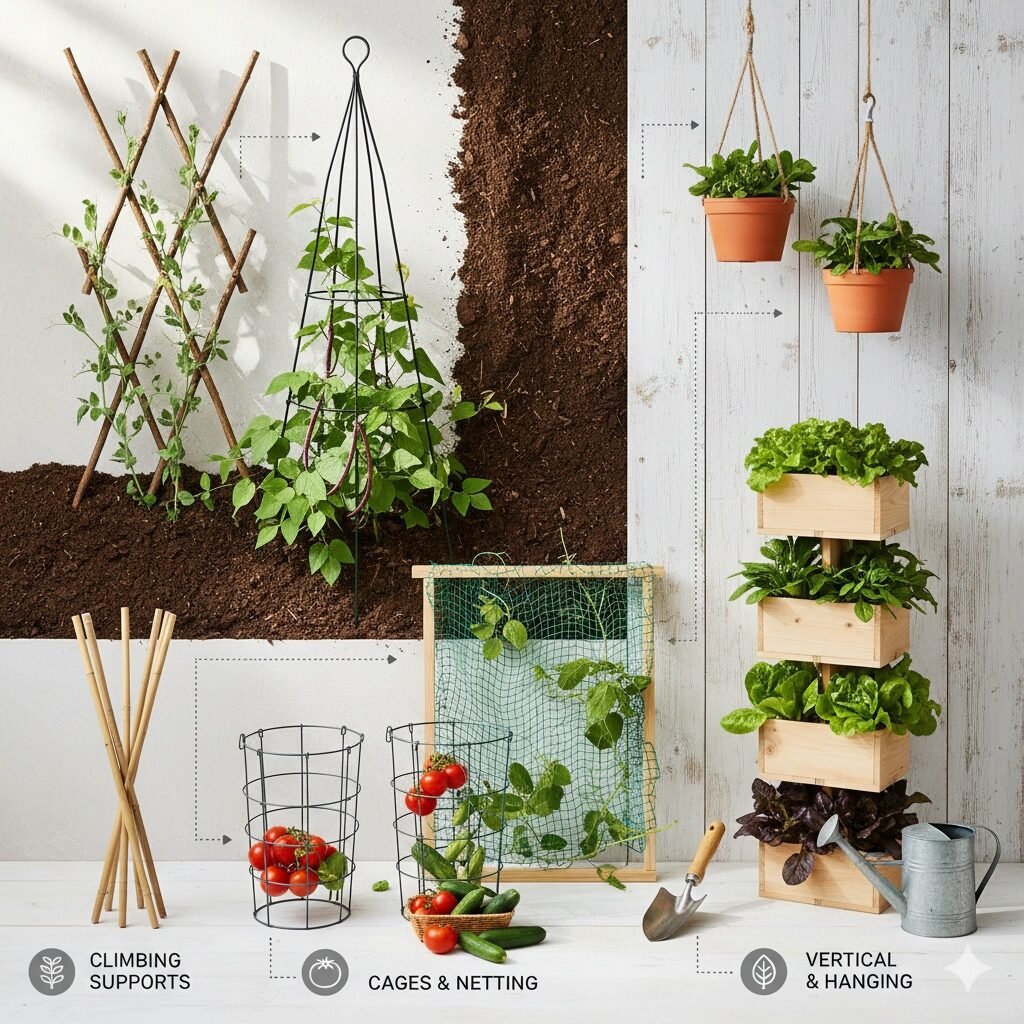
Design Ideas for Vertical Gardens
Vertical setups can look super creative if you mix function with style.
- Wall Planters: Stack herbs and greens in mounted planters.
- A-Frame Trellis: Ideal for beans, peas, or cucumbers.
- Hanging Baskets: Try cherry tomatoes or strawberries.
- Upcycled Pallets: Attach pots or mesh cups for a rustic look.
Small gardens instantly look more layered and lush when plants grow upward — kind of like turning your garden into living art.
⚠️ Common Mistakes to Avoid
Alright, so a few things often trip people up:
- Weak Supports: Once fruits form, flimsy trellises collapse.
- Overcrowding: Plants need space for airflow.
- Uneven Watering: Top planters dry faster.
- Skipping Pruning: Leads to tangled messes and mildew.
Keep those in check, and your vertical garden will stay strong and thriving.
💡 Quick FAQs
Q: Can I grow vertical veggies indoors?
A: Yep! Peas, beans, and lettuce towers do great near sunny windows or under grow lights.
Q: Do I need special soil?
A: Use a lightweight mix — compost + coco coir + perlite is perfect.
Q: How much sunlight do these plants need?
A: Most vertical veggies need around 6 hours of sunlight each day.
Final Thoughts
So, yeah — the beauty of vertical gardening is how it flips small spaces into productive green corners. Whether you’ve got a narrow patio, a sunny balcony, or just one little raised bed, there’s always a way to grow more by simply going upward.
These nine veggies — from tomatoes and beans to bottle gourd — prove that you don’t need a big backyard to get a serious harvest. Just give your plants some solid support, steady sunlight, and regular care, and they’ll reward you with more food than you might expect from such a tiny footprint.
At the end of the day, growing vertically isn’t just a space hack — it’s kind of a mindset shift. You start seeing every wall, railing, and fence as a chance to grow something edible. And that’s where gardening really starts to feel creative — where structure meets life, and your space turns into something alive, green, and honestly pretty inspiring to look at.
If this got your green thumb itching, you might want to check out your next read: “How to Grow Microgreens & Sprouts at Home” — it pairs perfectly with this one and helps you make the most out of every square inch of growing space.
If you’re eager to make the most of a small garden or balcony, vertical gardening is a game-changer. From saving space to boosting yields, growing upwards can transform even the tiniest area into a productive vegetable haven. Check out this expert video guide on 10 of the best vegetables for vertical gardening — it’s packed with practical tips, setup ideas, and easy-to-follow advice to help you grow more with less space.