
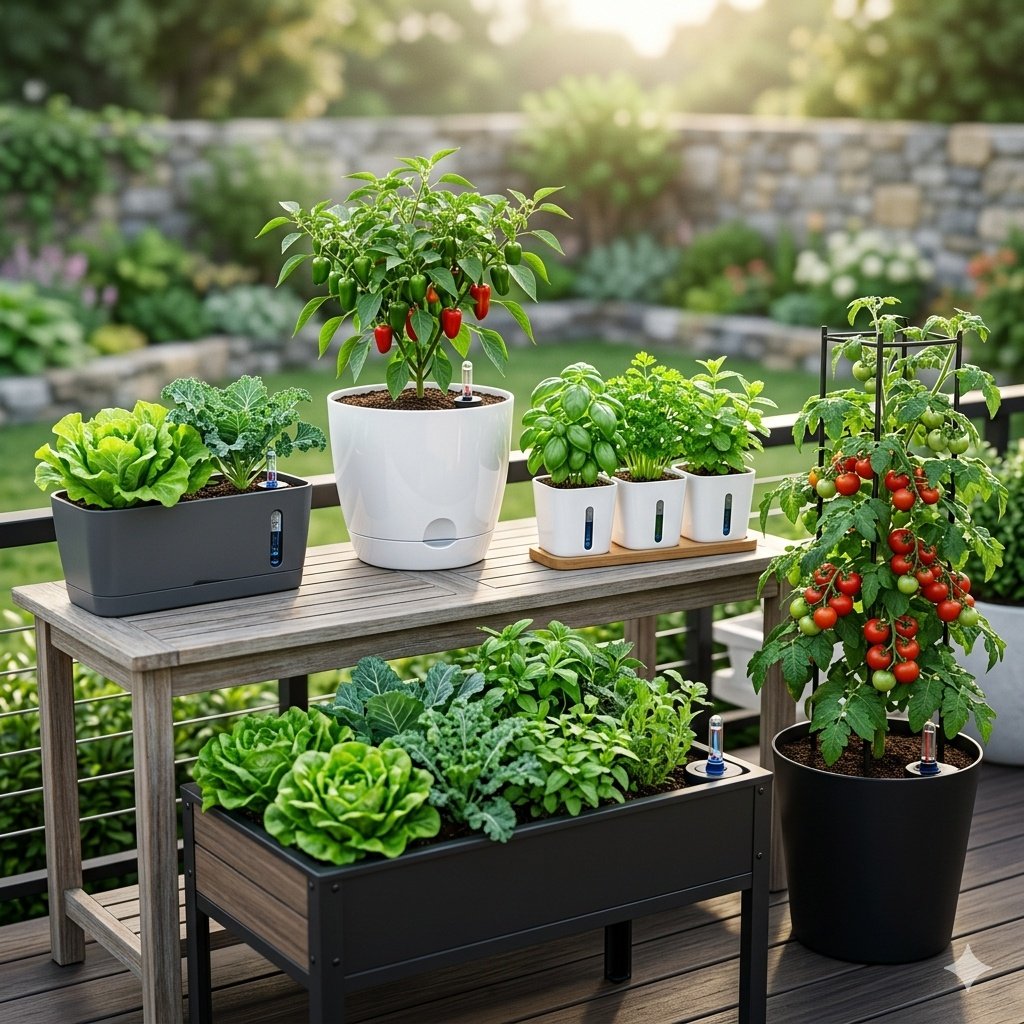
Self-Watering Planters: A dry basil plant on a sunny kitchen windowsill has ended more home gardening attempts than most people admit. One week it’s thriving, the next it’s crisp at the edges, and suddenly the whole setup feels like more work than it’s worth. That’s usually where container gardening falls apart—not from lack of care, but from inconsistent watering.
Self-watering systems fix that gap in a simple way. Instead of relying on memory (or luck), they store water in a reservoir and let the plant take what it needs through the soil. It’s steady, predictable, and honestly a relief if you’ve ever come back from a weekend away to find your herbs in survival mode.
This guide breaks down the best self watering planter options for vegetables and herbs based on performance, durability, and real-world usability. We looked at how well each planter holds moisture, how easy it is to refill, and how plants actually respond over time—not just how they look on day one.
If you want a quick answer: the Gardenix Decor Self-Watering Planter stands out for balancing price, design, and consistent plant growth without fuss.
Quick Comparison Table
| Product | Best For | Capacity | Indoor/Outdoor | Rating |
|---|---|---|---|---|
| Gardenix Decor | Best Overall | Medium | Both | ★★★★★ |
| Lechuza Balconera | Premium Choice | Medium | Both | ★★★★★ |
| VIVOSUN Planters | Herbs & Seedlings | Small | Indoor | ★★★★★ |
| Keter Splendor | Vegetables | Large | Outdoor | ★★★★★ |
| LINEX Tomato Planter | Tomatoes | Large | Outdoor | ★★★★☆ |
Why Trust Our Recommendations?
Every planter here was evaluated with the same focus: how well it actually supports plant health with minimal effort.
We looked at:
- Reservoir design and how evenly it delivers moisture
- Build quality under real outdoor conditions
- Ease of refilling without mess
- Growth results over several weeks
- Real user feedback patterns (not just specs)
- Value compared to similar products
No marketing fluff—just what works when soil, sun, and schedules don’t always cooperate.
What Is a Self-Watering Planter and How Does It Work?
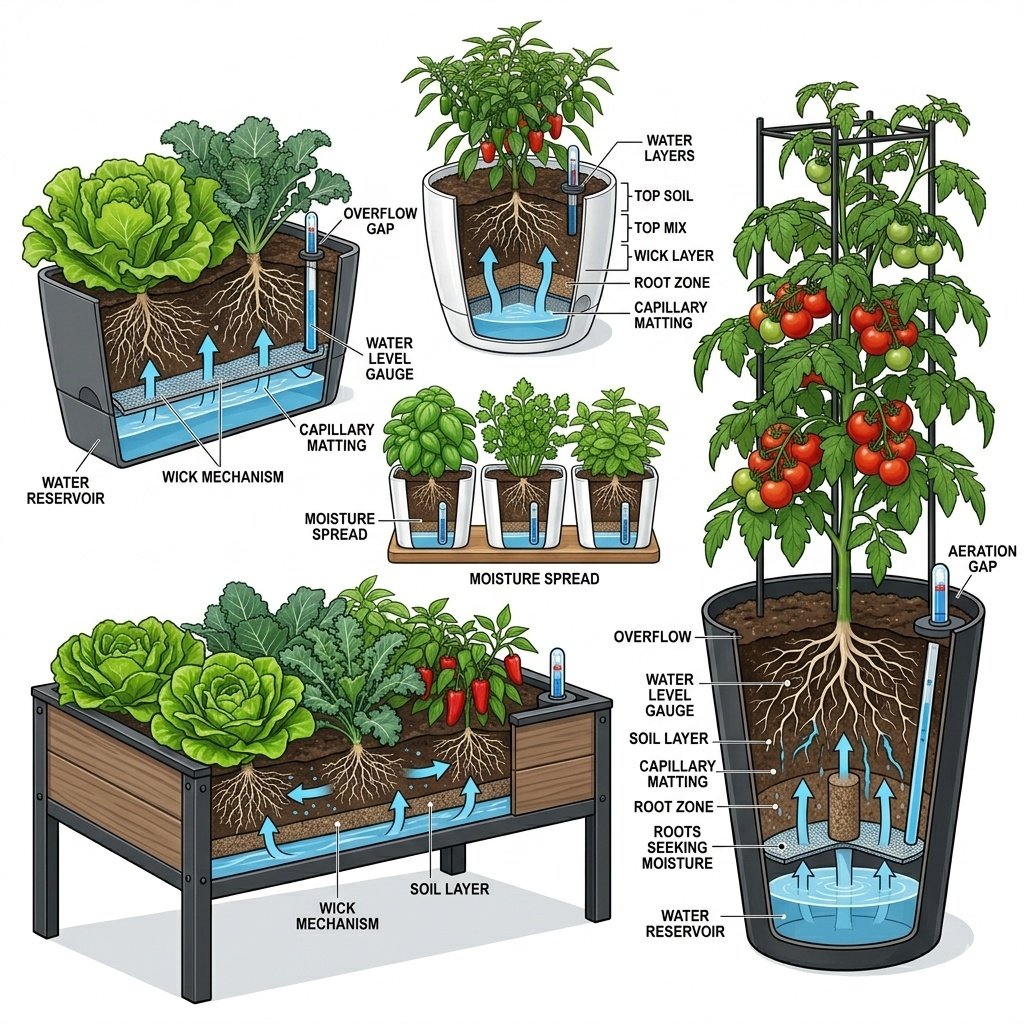
A self-watering planter is built with a hidden water reservoir at the bottom that supplies moisture upward into the soil. Instead of watering from the top every time, you fill the reservoir every few days or weeks depending on plant size and weather.
The Reservoir System
At the base, there’s a separate chamber that holds water. The soil sits above it, not directly submerged. A small gap or platform keeps the two layers distinct.
Wick-Based or Soil Contact Watering
Most systems rely on one of two methods:
- Capillary action through soil
- Wick strips that pull water upward
Either way, the plant “drinks” only when the soil starts drying out.
Why Bottom-Up Watering Works
Plants actually prefer consistency over frequent soaking. With bottom watering:
- Roots grow downward toward moisture
- Surface soil stays less compacted
- Evaporation loss is reduced
Simple Visualization Idea
Imagine a sponge sitting above a shallow tray of water, slowly pulling moisture upward as it dries.
That’s essentially what’s happening.
Benefits of Self-Watering Planters for Vegetables and Herbs
These containers solve a very specific set of container gardening headaches.
Steady moisture, fewer surprises
Soil doesn’t swing between bone-dry and soaked. Plants grow in a more stable environment.
Less daily maintenance
You’re not tied to a watering routine. Refilling every few days is usually enough.
Lower risk of overwatering
Since roots absorb only what they need, soggy soil becomes less common.
Better root development
Roots grow deeper instead of clustering near the surface.
Works well in hot weather
Summer heat becomes less stressful for plants like basil and lettuce.
Helpful for travel
Weekend trips don’t automatically mean plant damage.
Top 5 Best Self-Watering Planters for Vegetables and Herbs
1. Gardenix Decor Self-Watering Planter – Best Overall
Product Overview
The Gardenix Decor planter sits in a comfortable middle ground: not too basic, not over-engineered. It’s designed for home gardeners who want reliable growth without constantly checking soil conditions.
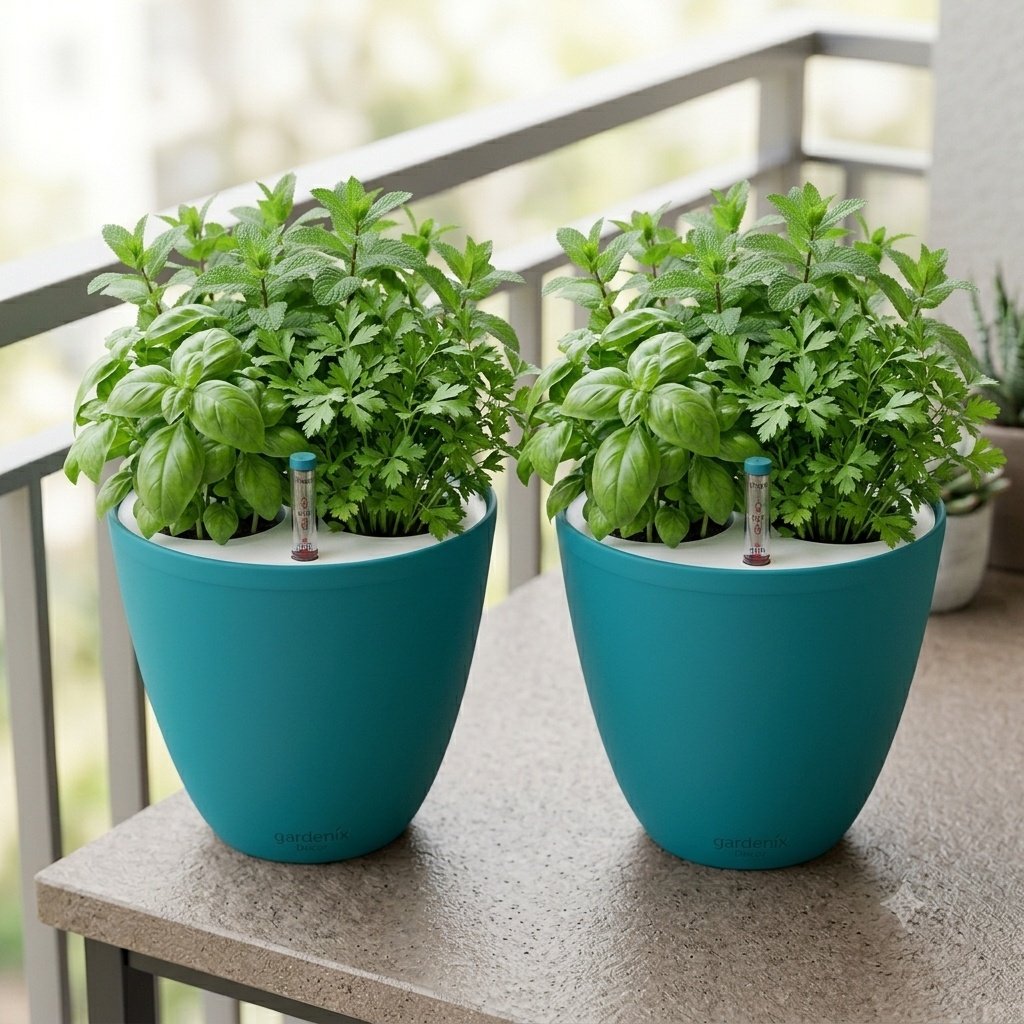
It comes with a built-in water reservoir and a visible level indicator, which removes the guesswork from refilling. The body is made from durable resin that handles both indoor light and outdoor heat without warping.
Airflow and moisture balance are well managed, which is why herbs like basil and parsley tend to grow steadily here without sudden drooping.
Key Specifications
- Mid-size reservoir
- Built-in water level indicator
- UV-resistant plastic body
- Lightweight but sturdy
Features
- Clear water gauge (no guessing)
- Simple refill port
- Clean modern design that fits balconies or kitchens
Pros
- Easy to use for beginners
- Reliable moisture delivery
- Works well for multiple plant types
Cons
- Not ideal for very deep-root crops
- Limited color options
Best Vegetables & Herbs
Basil, mint, parsley, lettuce, coriander
Why We Recommend It
It hits the sweet spot between price and performance. You don’t need to overthink setup, and plants adjust quickly to the reservoir system. It’s especially good if you’re moving from traditional pots and want something forgiving.
It also performs consistently across different climates, which matters more than people expect.
Bottom Line
A dependable all-rounder that just works without drama.
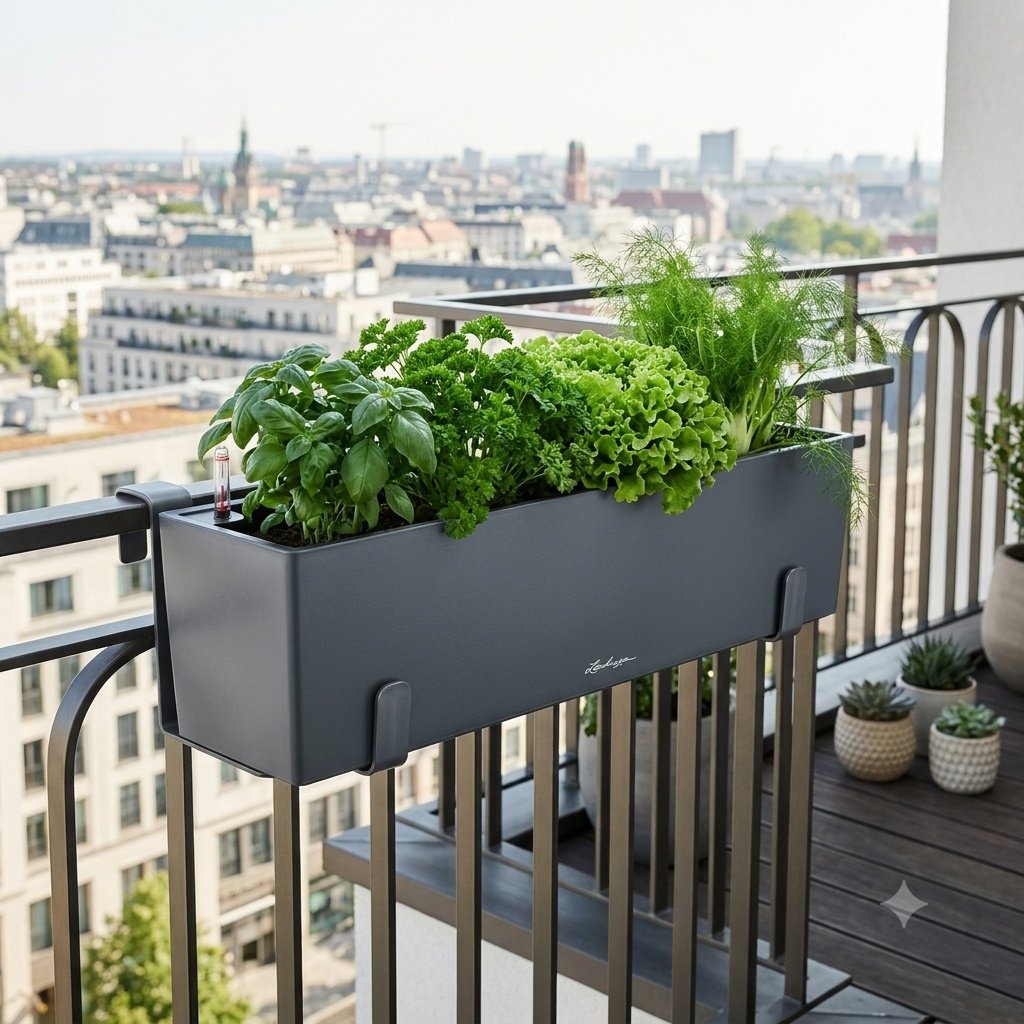
2. Lechuza Balconera – Best Premium Choice
Product Overview
Lechuza’s Balconera line feels more refined in both build and finish. It’s designed for people who care about appearance as much as plant health. The reservoir system is precise, and the materials feel more premium compared to standard plastic options.
Water distribution is very even, which helps plants avoid sudden dry patches. It’s especially useful for balcony setups where sun exposure changes throughout the day.
Key Features
- Self-watering insert system
- High-quality resin build
- Indoor/outdoor flexibility
- Matching mounting brackets for balconies
Pros
- Excellent build quality
- Clean aesthetic
- Long reservoir runtime
Cons
- Higher price point
- Setup takes a bit longer
Best Plants
Herbs, leafy greens, small flowering plants
Why We Recommend It
This one feels engineered rather than just assembled. The watering system is more controlled, and the materials hold up well over time. It’s ideal for people who want something that looks as good as it performs.
Bottom Line
Premium feel, premium performance.
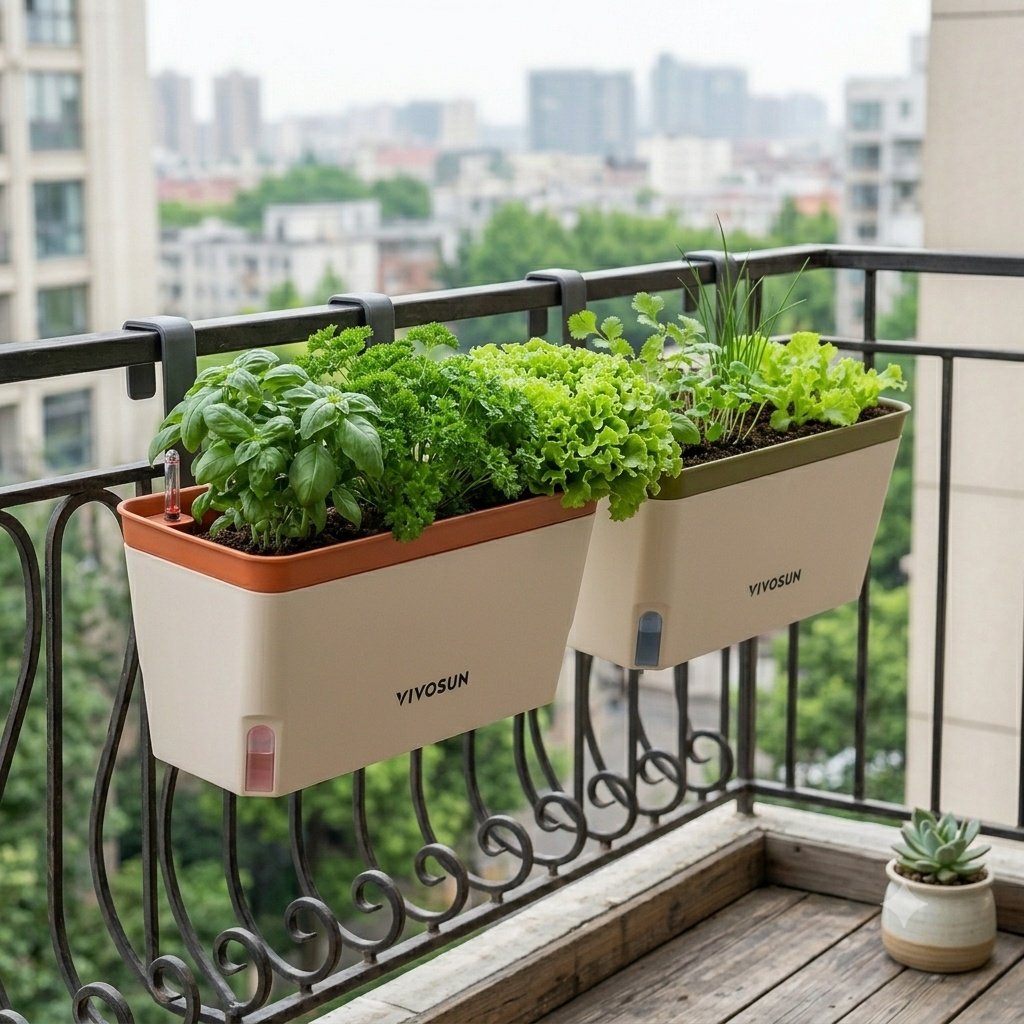
3. VIVOSUN Self-Watering Planters – Best for Herbs and Seedlings
Product Overview
VIVOSUN planters are simple, lightweight, and practical. They’re especially useful for starting seeds or growing small herb clusters indoors.
The reservoir isn’t large, but it’s efficient enough for short-root plants that need steady moisture during early growth stages. It’s also easy to move around, which helps when adjusting light exposure.
Key Features
- Lightweight design
- Simple wick-based system
- Easy indoor placement
- Small reservoir for frequent cycles
Pros
- Great for beginners
- Affordable multi-pack options
- Easy to monitor plants closely
Cons
- Small capacity
- Needs more frequent refilling
Best Herbs & Greens
Basil, cilantro, chives, lettuce seedlings
Why We Recommend It
These shine in controlled environments. If you’re starting seeds on a kitchen counter or growing herbs near a window, they keep moisture steady without overcomplicating things.
Bottom Line
Simple, practical, and beginner-friendly.

4. Keter Splendor Raised Garden Bed – Best for Vegetables
Product Overview
This one is built for scale. The Keter Splendor works more like a compact raised bed than a small planter. Its reservoir system supports larger root zones, making it suitable for full vegetable growth cycles.
It handles heat well, which is important for outdoor setups where soil dries quickly. Once filled, it can sustain moisture for longer periods without frequent refills.
Key Features
- Deep planting space
- Built-in water reservoir
- Weather-resistant resin
- Large soil volume
Pros
- Great for multiple plants
- Strong outdoor durability
- Reduces watering frequency significantly
Cons
- Requires outdoor space
- Assembly takes time
Best Crops
Peppers, lettuce, kale, spinach
Why We Recommend It
If you’re growing vegetables in quantity, this makes watering almost secondary. The reservoir supports longer gaps, and plants have enough space to mature properly.
Bottom Line
Best choice for a productive outdoor garden bed.

5. LINEX Self-Watering Tomato Planter – Best for Tomatoes
Product Overview
Tomatoes are demanding. They need steady moisture, especially during fruiting. The LINEX planter is shaped to support deeper root growth and a consistent water supply.
Its reservoir is designed to reduce fluctuations that often cause issues like cracking fruit or uneven growth.
Key Features
- Deep root chamber
- Strong vertical support options
- Large water reservoir
- Outdoor-ready design
Pros
- Ideal for tomatoes and peppers
- Reduces blossom-end rot risk
- Good structural support
Cons
- Limited versatility
- Bulky size
Best Plants
Tomatoes, cucumbers, peppers
Why We Recommend It
Tomatoes are demanding, especially with water consistency. This planter helps stabilize moisture levels during fruit development, which can make a real difference in yield quality.
Bottom Line
A focused solution for fruiting vegetables.
Side-by-Side Comparison
If you want quick clarity:
- Best overall: Gardenix Decor
- Best premium: Lechuza Balconera
- Best for herbs: VIVOSUN
- Best vegetables: Keter Splendor
- Best for tomatoes: LINEX
A simple breakdown, but useful when narrowing choices.
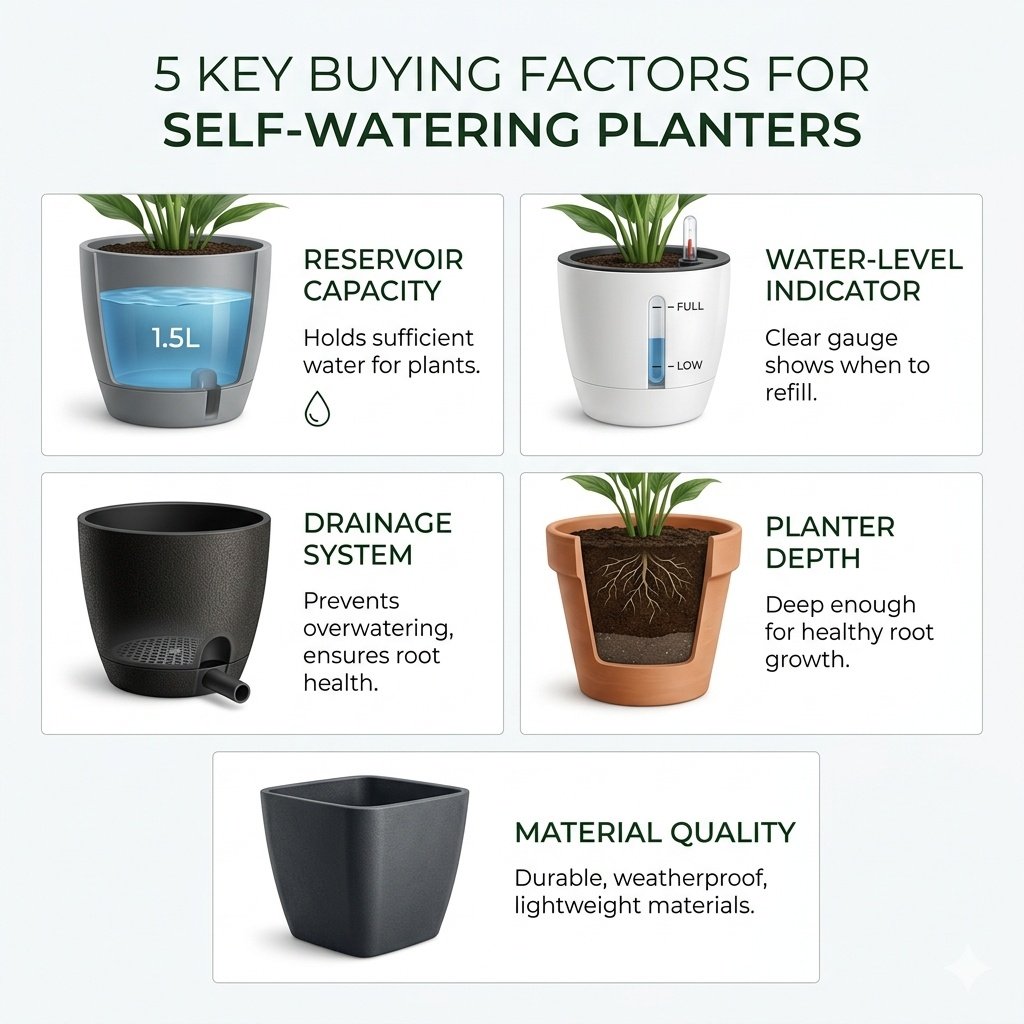
What to Look for When Buying a Self-Watering Planter
Reservoir capacity
Bigger reservoirs mean fewer refills. Herbs can manage small tanks, but tomatoes need more volume.
Water-level indicator
This small feature saves a lot of guesswork. Transparent gauges or float indicators help a lot.
Material quality
Look for UV-resistant resin or polypropylene if the planter will sit outdoors. Cheap plastic tends to crack under sun exposure.
Size and depth
Leafy greens need less depth. Tomatoes and peppers need deeper soil for stable roots.
Indoor vs outdoor use
Indoor planters should prioritize cleanliness and compact design. Outdoor ones need durability and drainage balance.
Drainage protection
Even self-watering systems need overflow control. Good designs prevent root rot during heavy rain or overfilling.
Best Vegetables to Grow in Self-Watering Planters
These plants adapt well because they prefer consistent moisture:
- Lettuce
- Spinach
- Kale
- Peppers
- Cherry tomatoes
- Green onions
- Radishes
They don’t like sudden drying cycles, which makes reservoirs especially useful.
Best Herbs to Grow in Self-Watering Planters
Herbs thrive in stable conditions:
- Basil
- Mint
- Parsley
- Cilantro
- Chives
- Oregano
- Thyme
Mint, in particular, grows aggressively when moisture is steady.

Common Mistakes to Avoid
Overfilling the reservoir is a common one. It can lead to overly wet soil if drainage balance is off. Ignoring water indicators leads to the opposite problem—dry roots without realizing it.
Using heavy garden soil instead of light potting mix reduces water movement through the system. That blocks the whole design.
Choosing a planter that’s too small limits root growth, especially for vegetables. Overcrowding plants leads to competition for water and nutrients. And finally, forgetting to fertilize is easy because watering feels “handled,” but nutrients still need attention.
Related Reads
You might find these helpful as you keep going:
- 7 Best Self-Watering Systems for Balcony Vegetable Gardens (That Actually Work)
- 17 Full Sun Plants to Grow in May
- 7 Best Fertilizers for Raised Beds (Top Picks + Feeding Guide)
FAQ
Are self-watering planters worth it?
Yes, especially if you struggle with consistent watering or travel often.
What vegetables grow best in them?
Leafy greens, peppers, and tomatoes tend to perform well.
Can tomatoes grow in them?
Yes, but use deeper models with larger reservoirs.
How often do I refill them?
Anywhere from 3–10 days depending on heat and plant size.
Do they prevent overwatering?
They reduce it significantly, but setup still matters.
Can I use them indoors?
Yes, many are designed specifically for indoor herbs and greens.
Best for herbs?
Compact wick-based systems like VIVOSUN work well.
Final Verdict: Which Self-Watering Planter Should You Choose?
If you want a balanced, easy starting point, the Gardenix Decor Self-Watering Planter is the safest pick.
For a more refined setup, Lechuza Balconera stands out.
If herbs are your focus, VIVOSUN keeps things simple.
For larger vegetable production, Keter Splendor handles scale better.
And if tomatoes are the goal, LINEX is built for that job specifically.
Final Thoughts
Self-watering planters don’t magically turn someone into a great gardener, but they remove one of the most common points of failure: inconsistent watering. Once that pressure is gone, everything else becomes easier to manage—light, spacing, soil, even experimenting with different herbs or vegetables without constantly worrying about daily upkeep.
What stands out across all the options we looked at is that there’s no single “perfect” planter. There’s only the right match for how you garden. If you want something simple that fits most homes, a balanced option like Gardenix Decor makes sense. If you’re building a balcony setup and care about design and long-term stability, Lechuza fits that role better. For indoor herbs and seedlings, smaller systems like VIVOSUN are enough. And when you move into serious vegetable growing or tomatoes, size and reservoir capacity suddenly matter much more than aesthetics.
The real shift happens after a few weeks of use. You stop thinking about watering schedules so much. Plants become more predictable. And instead of reacting to problems like dry soil or drooping leaves, you start noticing steady growth patterns instead.
That’s where these planters earn their place—not in how they look on day one, but in how little you need to worry about them later.