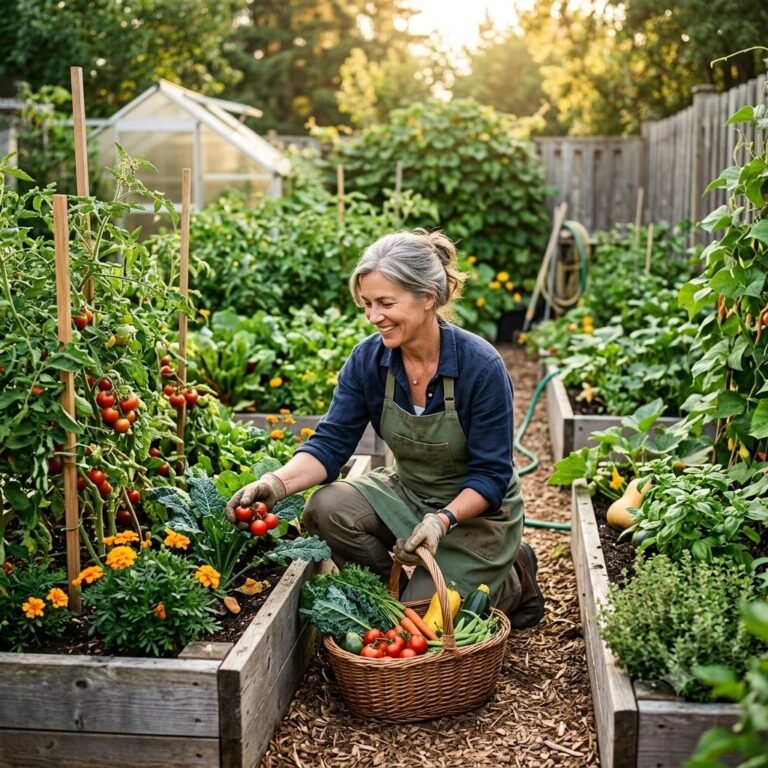


A dragon fruit plant can grow faster than you expect, sending out long green stems and taking over its trellis, yet still refuse to give you a single fruit.
Frustrating? Absolutely.
The good news is that a leafy, healthy-looking plant isn’t always a lost cause. Dragon fruit needs the right mix of age, sunlight, water, nutrition, support, temperature, and pollination before it settles into reliable fruit production.
And sometimes the problem is surprisingly simple. Your plant may be flowering, but the flowers aren’t getting pollinated. Or it may be getting plenty of fertilizer but not enough sun. In other cases, the plant simply isn’t mature enough yet.
If your dragon fruit plant is growing but not producing fruit, these 11 tips can help you figure out what’s going wrong and what to change.
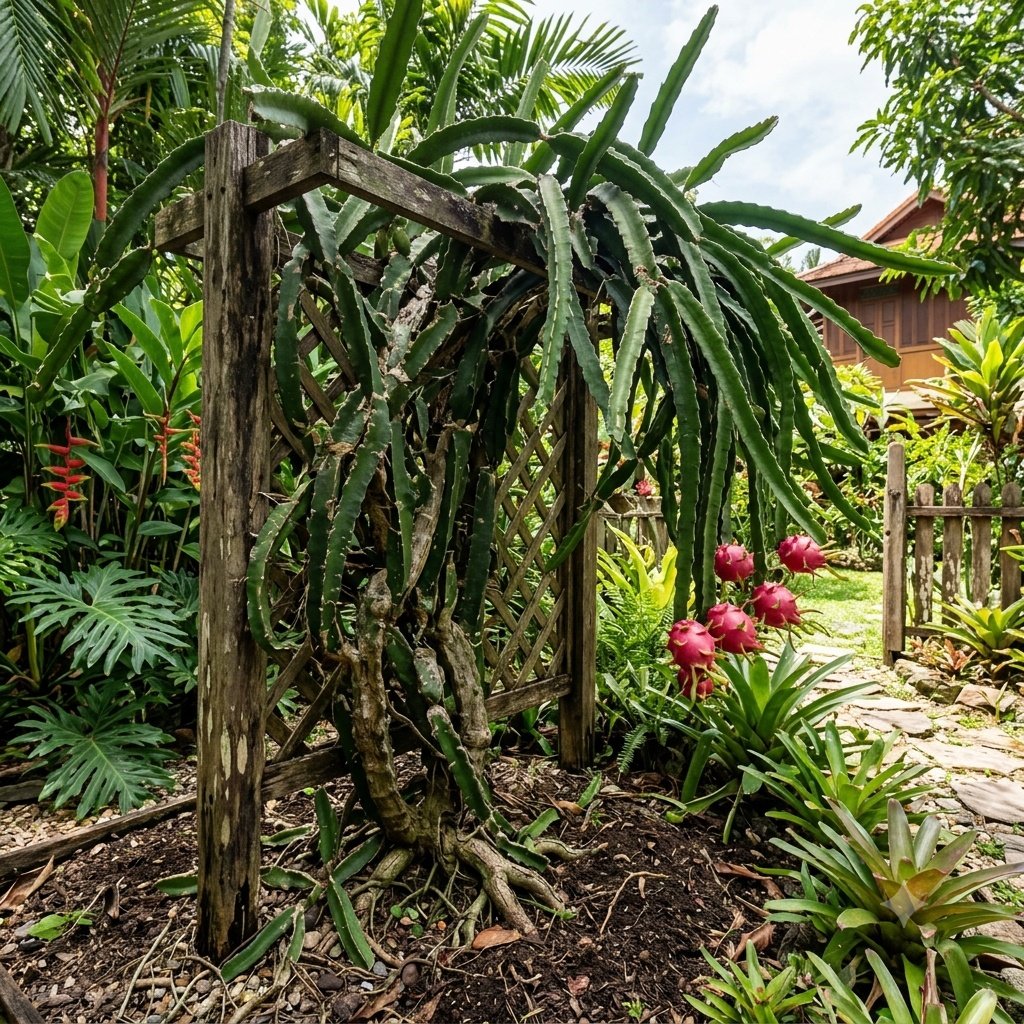
7 Best Products to Help Your Dragon Fruit Plant Thrive and Produce Fruit
1. Make Sure Your Dragon Fruit Plant Is Mature Enough
Before changing your fertilizer or watering routine, ask one simple question: Is the plant old enough to fruit?
Young dragon fruit plants often spend their early years building roots, stems, and branches. A plant can look huge and healthy while still being more interested in growing than reproducing.
Plants grown from cuttings generally reach fruiting age sooner than plants grown from seed. Seed-grown plants can take much longer, and their exact timing varies by variety and growing conditions.
Look for a strong main stem, well-developed branches, healthy roots, and plenty of established growth. Flowering is, of course, the clearest sign that the plant is entering its fruiting stage.
Don’t try to force a very young plant into producing fruit. Give it time to establish itself first.
2. Give Your Dragon Fruit Plenty of Sunlight
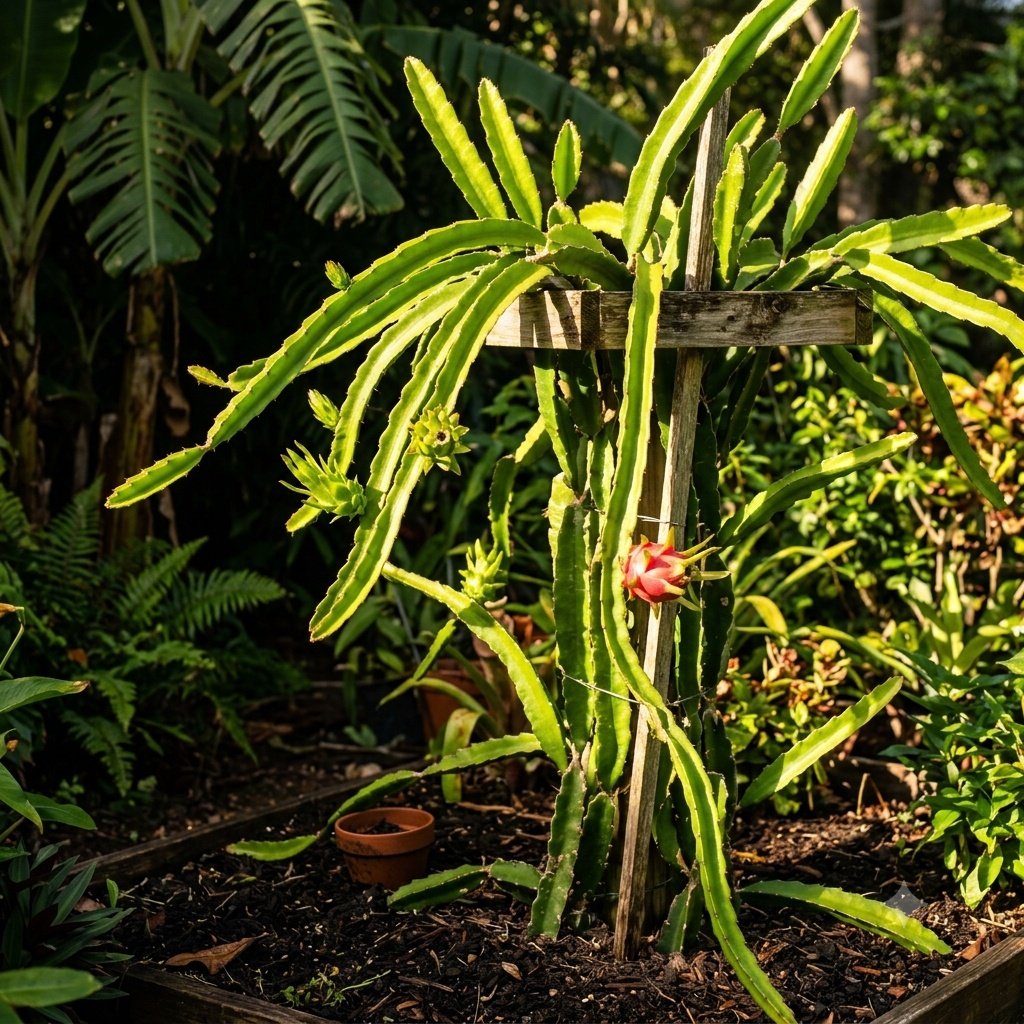
If your dragon fruit plant isn’t flowering, check its sunlight before doing anything else.
Dragon fruit is a tropical and subtropical cactus that generally grows best with plenty of bright, direct sunlight. A plant sitting in deep shade may produce lots of green growth but few flowers.
Take a look at where your plant spends the day. Is it receiving several hours of direct sun, or is it shaded by a wall, tree, fence, or larger plant?
Morning and afternoon sun can both help, although the ideal amount depends on your climate. In extremely hot areas, harsh afternoon sun can sometimes stress a plant, especially if it was previously grown in shade.
If you’re moving a plant into stronger sunlight, do it gradually. A sudden change can cause sunburn on the stems.
Quick tip: Spend one day watching the sunlight around your plant. You may discover that what looks like a sunny spot is actually shaded for much of the day.
3. Use Well-Draining Soil
Dragon fruit may like moisture during active growth, but its roots don’t want to sit in soggy soil.
Poor drainage can lead to root problems, weak growth, and a plant that’s simply too stressed to flower well. This is especially common with container-grown plants.
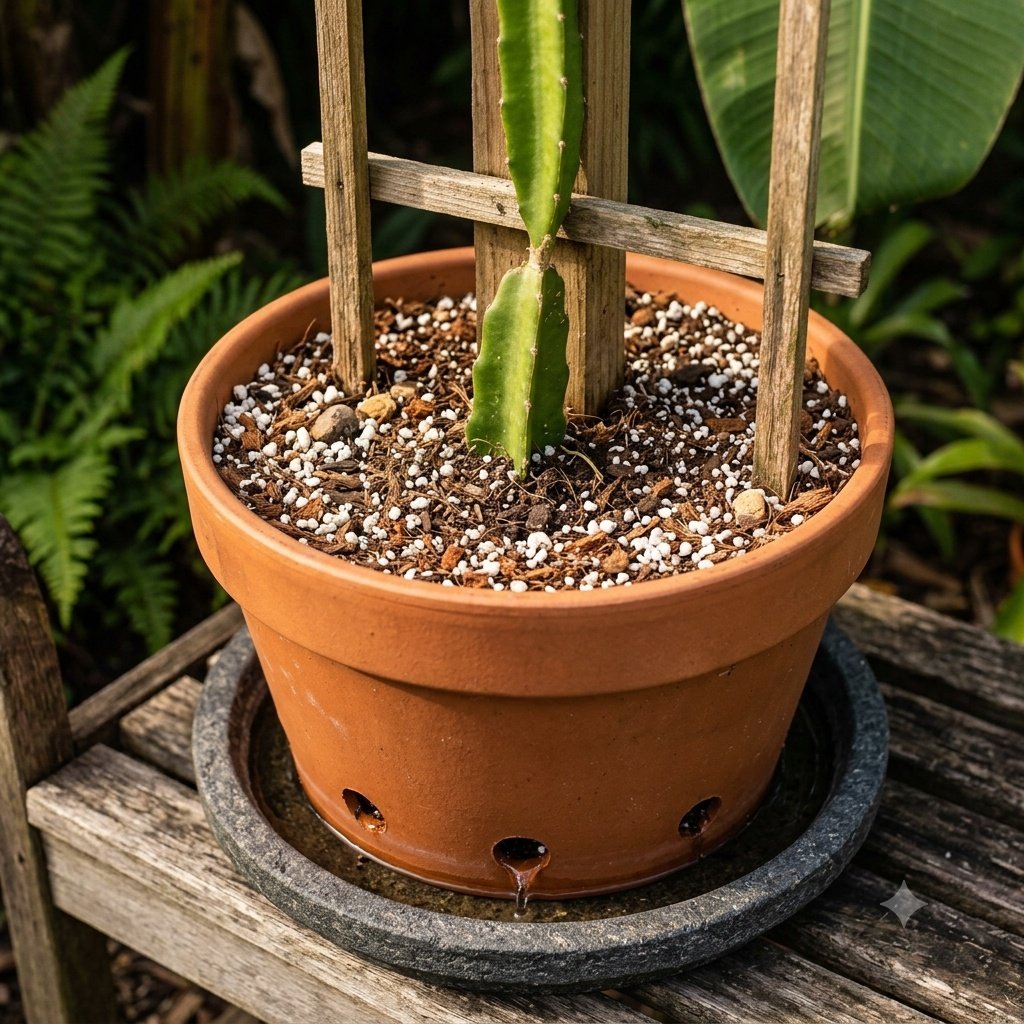
Use a growing medium that’s light, airy, and able to drain excess water quickly. Heavy garden soil can become compacted around the roots, reducing the air they need.
If you’re growing dragon fruit in a pot, make sure it has proper drainage holes. You can also improve a heavy mix with materials such as perlite or pumice.
Good soil doesn’t need to be complicated. The goal is simple: moisture should be available to the roots, but excess water should have somewhere to go.
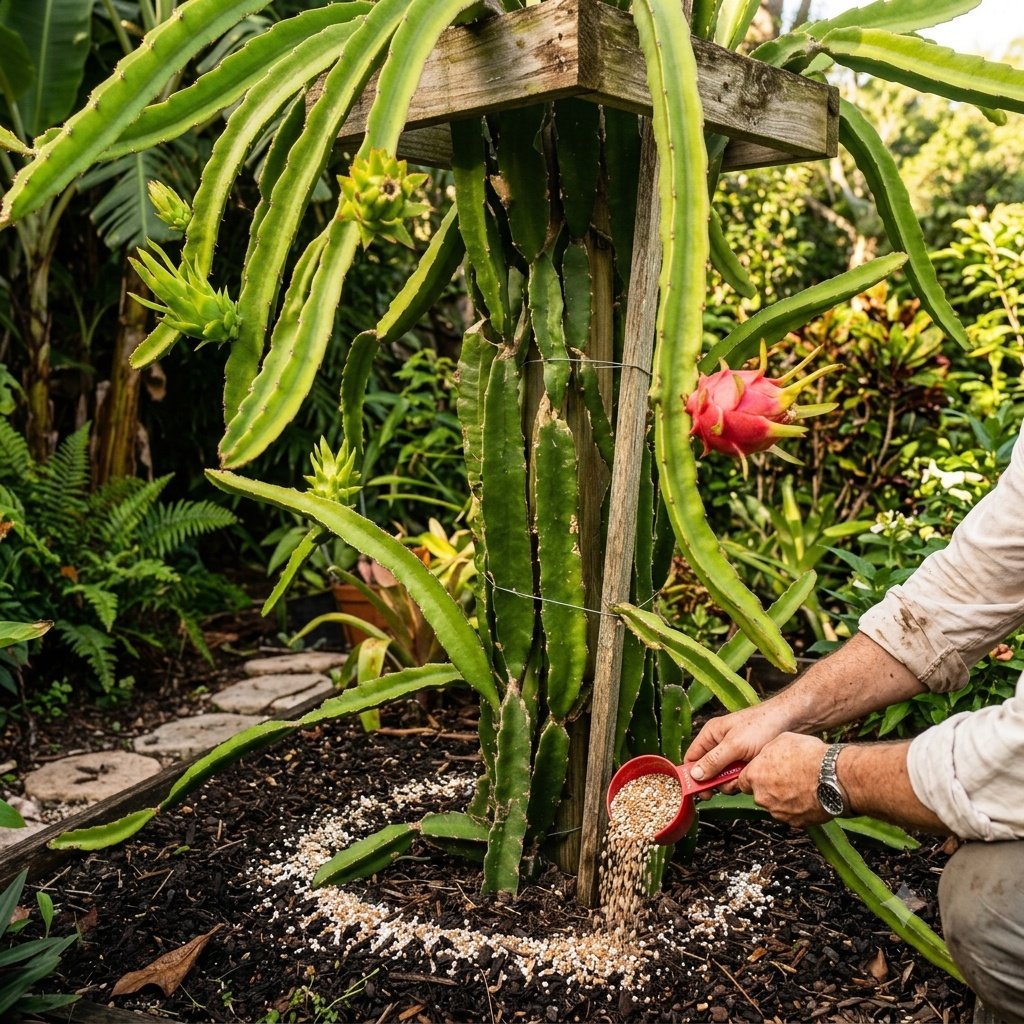
4. Don’t Overdo Nitrogen
One of the easiest mistakes to make with dragon fruit is feeding it too much nitrogen.
Nitrogen encourages leafy and stem growth. That’s useful when you’re trying to establish a young plant, but an excess can leave you with a giant, vigorous plant that produces very few flowers.
Dragon fruit needs more than one nutrient to grow and fruit well. Nitrogen, phosphorus, potassium, and smaller nutrients all play roles in overall plant health.
Rather than looking for a fertilizer with one magical nutrient, focus on balanced feeding and follow the product directions. A slow-release fertilizer or a suitable cactus and fruit fertilizer can be easier to manage than repeatedly adding strong doses.
Also consider the plant’s age and season. A young plant that’s actively building its structure has different needs from a mature plant preparing to flower.
If your dragon fruit is producing stems everywhere but barely any flowers, take a closer look at your feeding routine before adding more fertilizer.
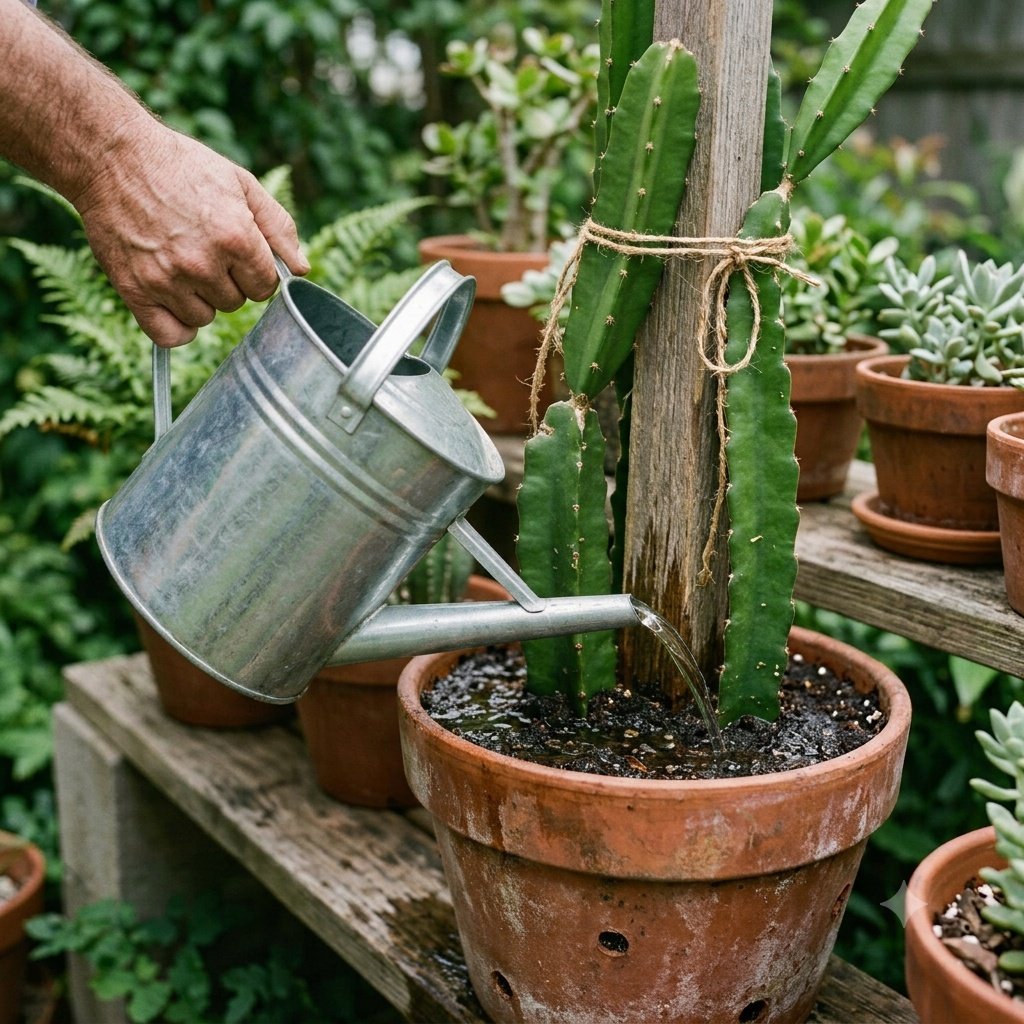
5. Water Your Dragon Fruit Correctly
Dragon fruit is a cactus, but that doesn’t mean you should leave it bone dry for weeks.
During active growth, it needs regular moisture. At the same time, constantly wet roots can cause serious problems.
The right watering schedule depends on your soil, pot size, weather, humidity, rainfall, and plant size. Instead of following a fixed calendar, check the growing medium.
Allow the soil to partially dry before watering again, then water thoroughly enough to moisten the root zone.
Signs of too much water can include soggy soil, yellowing, weak growth, and root problems. An underwatered plant may develop shriveled stems or stop growing normally.
The trick is consistency. A plant that swings repeatedly between severe drought and heavy watering is likely to struggle more than one kept on a steady routine.
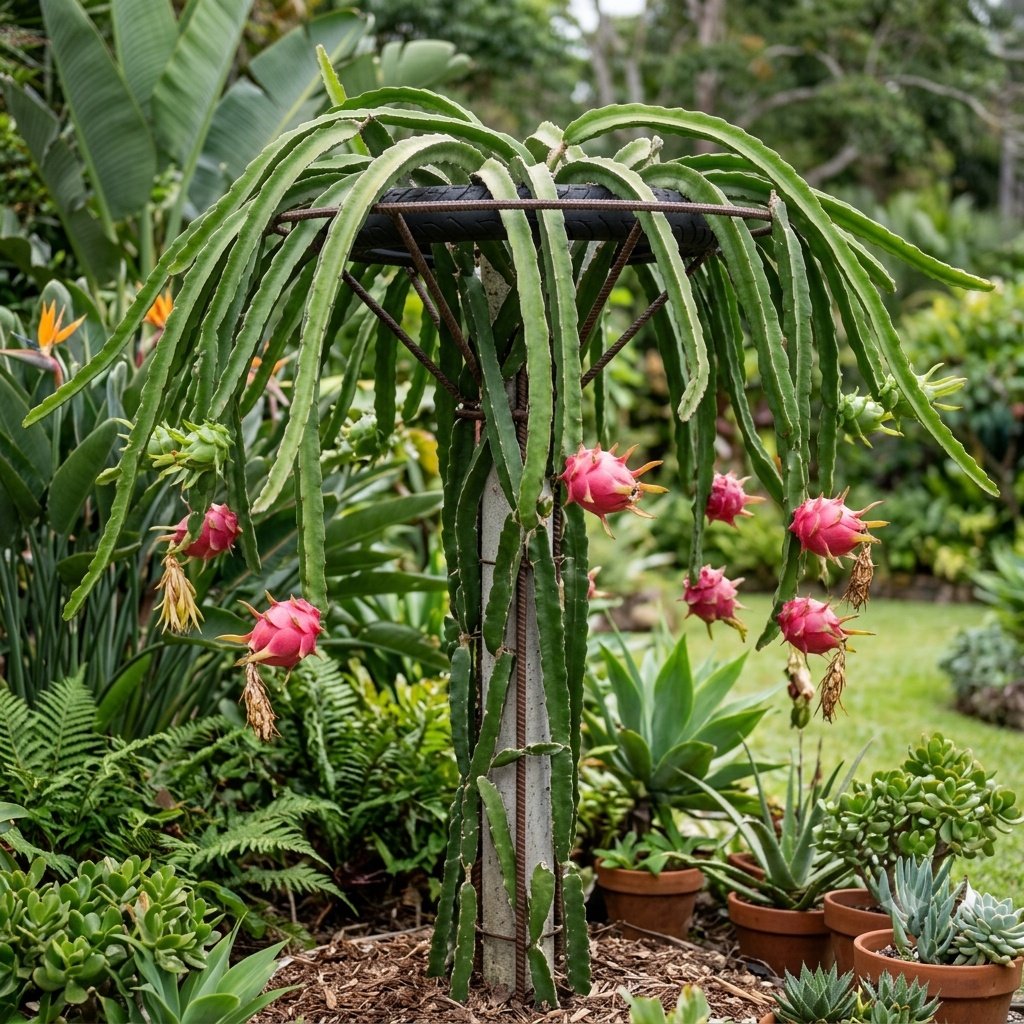
6. Give the Plant a Strong Trellis
Dragon fruit isn’t a small, upright cactus. It’s a climbing plant that becomes surprisingly heavy as it grows.
A strong trellis or support system gives the plant somewhere to climb and allows its branches to spread naturally. A sturdy central post with support near the top is a common setup, but other strong trellis designs can work too.
Once mature branches reach the top, they’re often allowed to hang down. This makes the plant easier to manage and gives you better access to flowers and fruit.
Don’t underestimate the weight of a mature plant. Add support early rather than trying to rescue an overloaded structure later.
Garden ties, climbing clips, and strong plant supports can also make training much easier.
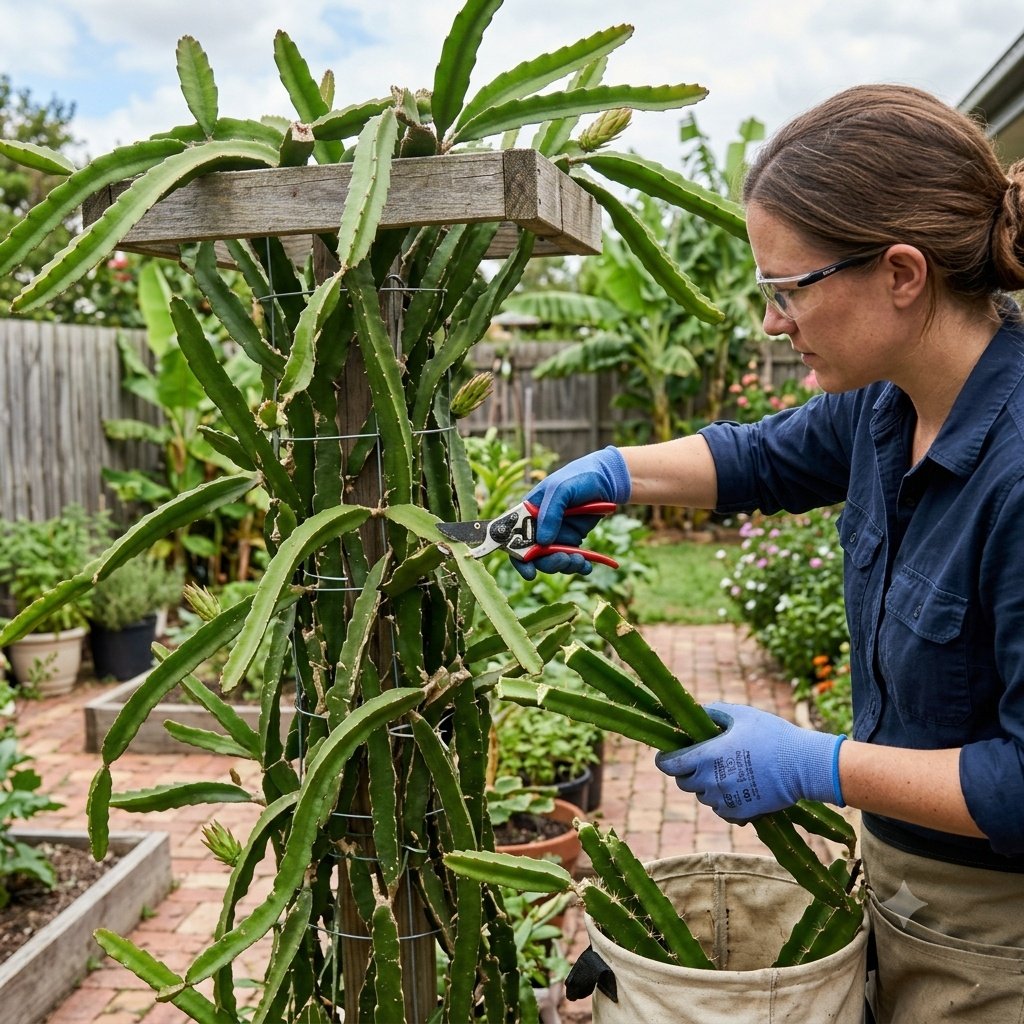
7. Prune at the Right Time
Dragon fruit can quickly turn into a tangled mass of stems if you let every branch grow unchecked.
Pruning helps you maintain a manageable shape, remove dead or damaged growth, and reduce overcrowding. It also makes it much easier to inspect flowers and fruit.
Start by removing damaged, diseased, or clearly weak stems. You can also remove branches that are crossing heavily or growing in places where they won’t contribute to a useful structure.
But don’t assume more pruning means more fruit.
Severe or poorly timed pruning can remove productive growth or put unnecessary stress on the plant. The best approach is to train the plant gradually and keep its structure open enough for light and airflow.
Pruning needs also vary with climate and growth cycle, so pay attention to when your plant actively grows and flowers.
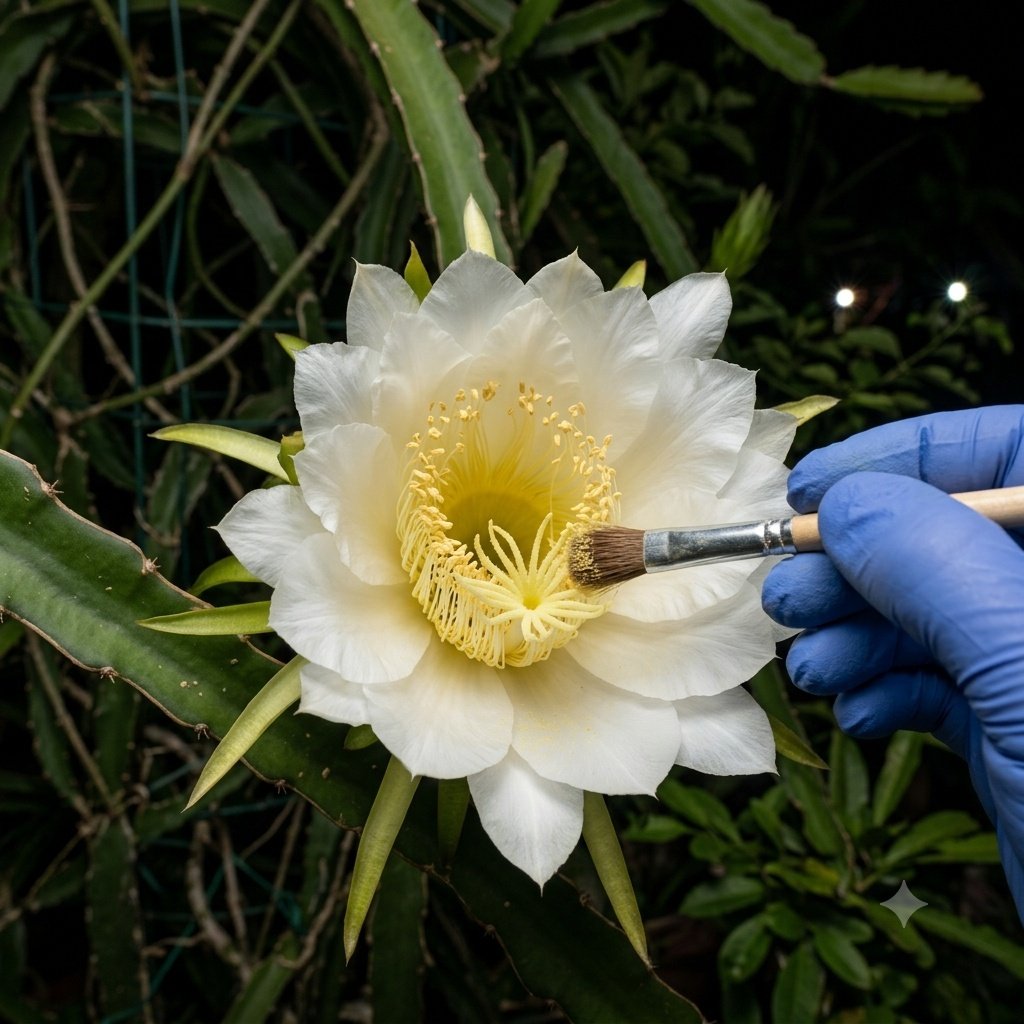
8. Learn How Dragon Fruit Pollination Works
This is the one many new growers miss.
Dragon fruit flowers often open at night, so if you’re checking your plant in the middle of the afternoon, you may never see the flower at its most receptive stage.
Some dragon fruit varieties are self-fertile, while others benefit from pollen from a compatible plant. Natural pollinators can do the job, but weather, location, and nighttime pollinator activity can affect fruit set.
If your plant flowers but the flowers fall without developing fruit, pollination should be high on your list of possible causes.
How to Hand-Pollinate Dragon Fruit
Hand-pollination is simple:
- Wait for an open flower.
- Collect pollen carefully with a clean, soft paintbrush.
- Transfer the pollen onto the flower’s stigma.
- Make sure the pollen reaches the receptive surface.
- Repeat with other flowers as needed.
Timing matters because dragon fruit flowers don’t stay open indefinitely.
If you grow more than one compatible variety, transferring pollen between plants can improve fruit set for varieties that benefit from cross-pollination.

9. Watch the Temperature and Weather
Dragon fruit prefers warm growing conditions, and temperature can have a big effect on flowering and fruit development.
Cold weather can slow growth or damage the plant. Extremely hot conditions can also create stress, particularly when combined with dry soil or intense afternoon sun.
Rain during flowering can be another problem. Wet flowers may have reduced pollination success, while strong wind can damage flowers and stems.
If you live somewhere with cooler winters, container growing can give you more control. You can move the plant into a protected location when temperatures become unsuitable.
A greenhouse, sheltered patio, or protected growing area can also help extend the growing season.
The important thing is to look at the weather when your plant fails to set fruit. Sometimes the plant isn’t doing anything wrong—the conditions simply aren’t cooperating.
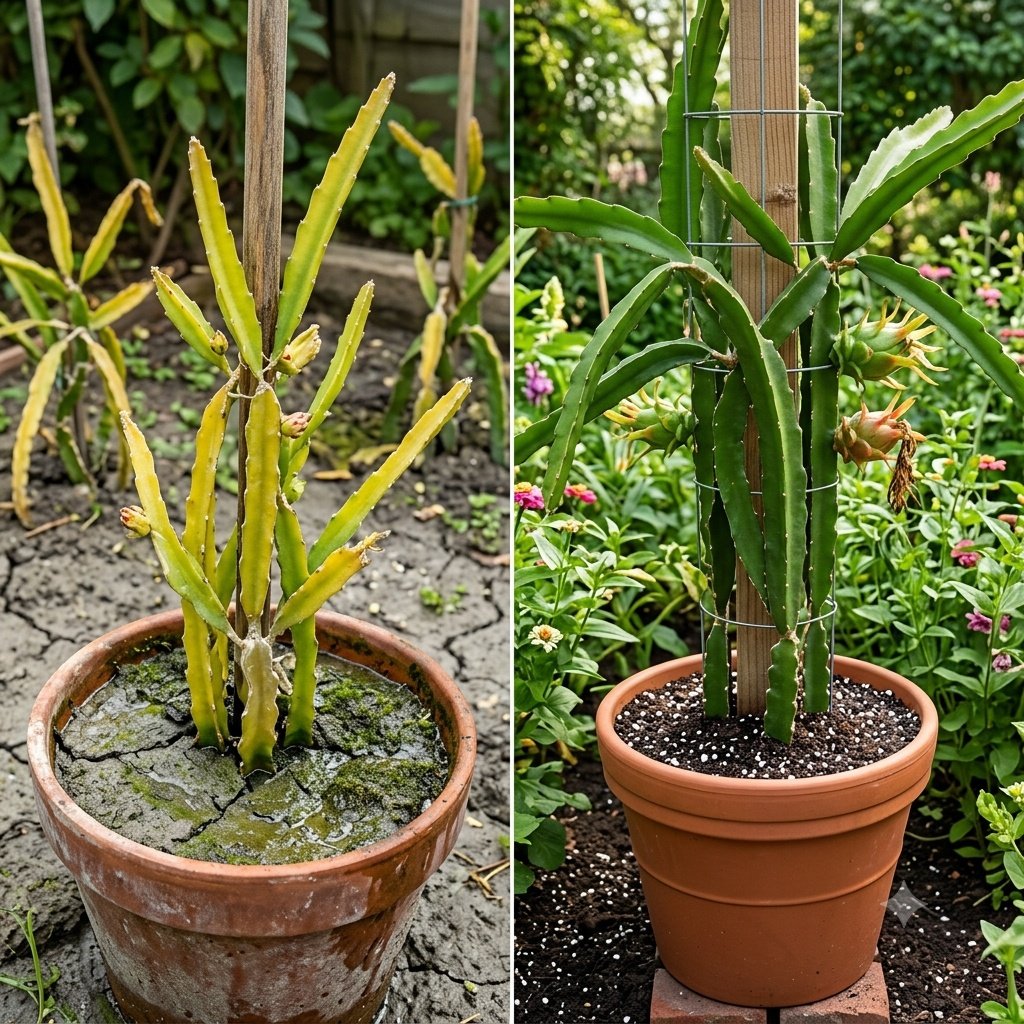
10. Don’t Let the Plant Stay Stressed
Fruit production takes energy. A dragon fruit plant that’s constantly dealing with stress may focus on staying alive rather than producing a crop.
Think about what has happened recently.
Did you transplant it? Has it gone through a long dry spell? Is the soil staying wet? Has the plant been exposed to unusual cold or extreme heat? Are pests damaging the stems? Did you recently cut away a large amount of growth?
Any of these can affect flowering and fruit set.
This is why adding more fertilizer isn’t always the answer.
Before changing several things at once, identify the most likely source of stress and correct that first. Give the plant time to recover, then watch how it responds.
Healthy, steady growth is a much better starting point for fruit production than constantly pushing the plant with fertilizer or water.
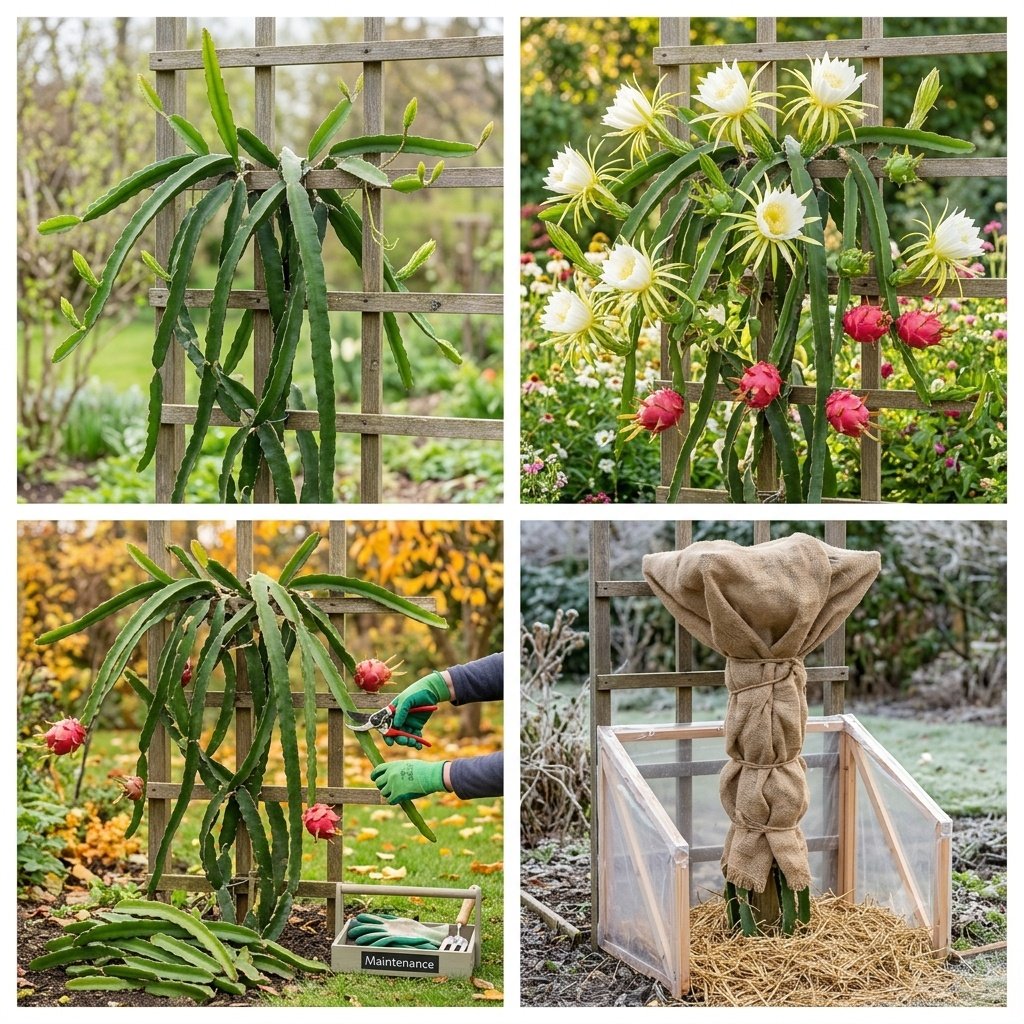
11. Keep Conditions Steady Throughout the Year
Getting dragon fruit to fruit isn’t about one perfect day of care. The plant needs suitable conditions throughout its growing cycle.
Spring
As growth picks up, gradually increase watering when needed and begin appropriate feeding. Train new stems onto the support system before they become difficult to manage.
Summer
Keep an eye on moisture, heat, flowers, and pollination. If flowers appear, check them at night so you don’t miss the chance to hand-pollinate.
Fall
As growth slows, adjust watering and feeding to match the changing conditions. Don’t keep pushing heavy new growth when the plant is naturally slowing down.
Winter
Protect the plant from damaging cold. Container-grown plants are easier to move into a sheltered area when necessary. Water less often if the growing medium is drying more slowly.
A steady routine gives your plant a much better chance than constantly changing its care.
Why Is My Dragon Fruit Plant Not Producing Fruit?
If your plant is refusing to fruit, use this quick checklist:
| What You See | Possible Cause | What to Check |
|---|---|---|
| Lots of stems but no flowers | Young plant or low light | Age and sunlight |
| Flowers but no fruit | Pollination issue | Variety and pollination |
| Yellowing or weak growth | Water or root problem | Drainage and watering |
| Very leafy growth | Too much nitrogen | Fertilizer routine |
| Flowers dropping | Weather or plant stress | Heat, rain, cold, stress |
| Little flowering | Insufficient light or maturity | Sun and plant age |
Start with the simplest possibility rather than changing everything at once.
How Long Does It Take for Dragon Fruit to Produce Fruit?
There’s no single answer for every dragon fruit plant.
A cutting from a mature plant can generally reach fruiting age sooner than a plant grown from seed. Grafted plants and established nursery plants may also have a head start.
Variety matters, too. So do sunlight, temperature, nutrition, watering, and general plant health.
Instead of watching the calendar alone, watch the plant. Strong mature growth, good light, and the appearance of flowers are better signs that fruiting is getting closer.
Related Reads
You might find these helpful as you keep going:
7 Best Fertilizers for Raised Beds (Top Picks + Feeding Guide)
7 Best Self-Watering Systems for Balcony Vegetable Gardens (That Actually Work)
7 July Tasks for the Midsummer Garden
FAQ
Why is my dragon fruit flowering but not producing fruit?
Poor pollination is one common reason. The variety may also benefit from cross-pollination, or weather may be interfering with the flowers. Hand-pollinating open flowers can help.
How do I get my dragon fruit plant to flower?
Start with the basics: make sure the plant is mature, receives plenty of sunlight, has healthy roots, and gets balanced nutrition. Avoid excessive nitrogen and ongoing stress.
How often should I water dragon fruit?
There isn’t one schedule that works everywhere. Check the soil and water when it has partially dried. Hot, dry weather may require more frequent watering than cool or rainy conditions.
What is the best fertilizer for dragon fruit?
There isn’t one magic fertilizer. Choose a product suited to fruiting plants or cactus and follow the label directions. Balanced nutrition is more useful than repeatedly adding a single nutrient.
Does dragon fruit need full sun?
Dragon fruit generally performs best with abundant sunlight. However, plants in very hot climates may need some protection from intense afternoon conditions.
Can dragon fruit grow in pots?
Yes. Choose a suitably large container with good drainage and provide a strong trellis or support. Container plants may also be easier to protect from cold weather.
Do I need two dragon fruit plants to get fruit?
Not always. Some varieties are self-fertile, while others benefit from pollen from another compatible plant. Check the characteristics of your specific variety.
Can you grow dragon fruit from a cutting?
Yes. Cuttings are a common way to propagate dragon fruit and can establish faster than plants grown from seed.
Final Thoughts
Getting a dragon fruit plant to produce fruit usually isn’t about finding one secret fertilizer or a special trick.
It’s about getting several basic things right at the same time: a mature plant, enough sunlight, healthy soil, proper watering, balanced nutrition, strong support, sensible pruning, suitable weather, and good pollination.
If your plant isn’t fruiting, don’t panic. Look at the whole growing setup and change one thing at a time.
And if flowers are appearing but fruit isn’t following, check the pollination first. That small step could be the missing piece.