


Keeping your lawn in excellent condition doesn’t have to mean spending every weekend behind a traditional mower. Over the last few years, robotic lawn mowers have become smarter, easier to install, and capable of handling everything from compact suburban yards to large properties with steep slopes.
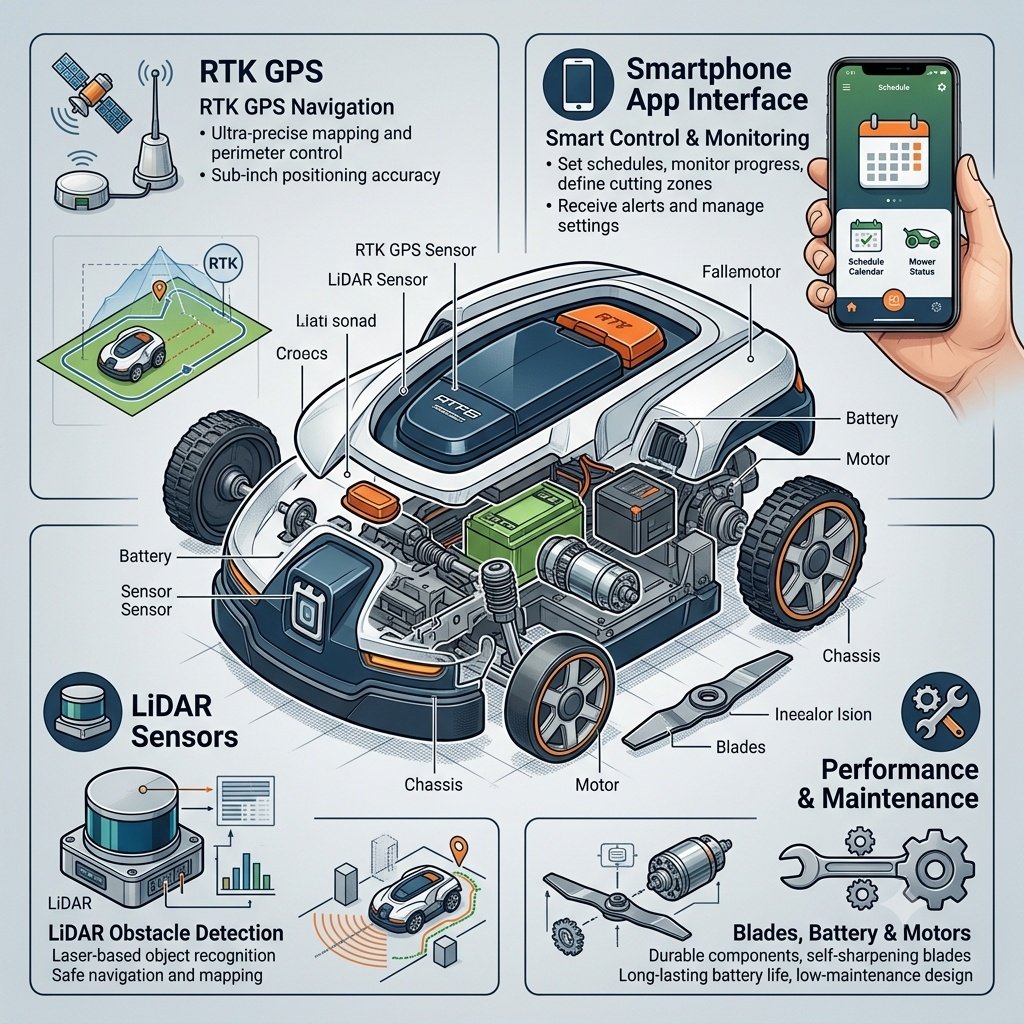
Modern models now use technologies such as RTK GPS, LiDAR, AI-assisted obstacle detection, and virtual boundary mapping to navigate accurately without the need for traditional perimeter wires. Combined with smartphone apps, automatic charging, and customizable mowing schedules, these machines can maintain a consistently neat lawn with very little day-to-day attention.
Of course, choosing the right robotic mower isn’t simply about buying the most expensive model. Lawn size, terrain, navigation technology, and ease of installation all play an important role in determining which mower will work best for your property. A model that’s perfect for a flat suburban lawn may not be the best choice for a yard with multiple slopes or complex landscaping.
For this guide, we compared seven of the most talked-about robotic lawn mowers currently available. Rather than repeating manufacturer specifications, we’ve focused on practical buying considerations, standout features, potential trade-offs, and the type of homeowner each mower is best suited for. If you’re planning to invest in a robot lawn mower in 2026, this comparison should help narrow your options.
How We Evaluated These Robotic Lawn Mowers
Every robotic mower featured in this guide was selected based on factors that matter most to homeowners rather than simply comparing specification sheets.
Our evaluation focused on:
- Navigation technology and mowing accuracy
- Coverage area and suitability for different lawn sizes
- Performance on slopes and uneven terrain
- Ease of installation and day-to-day operation
- Smart features and mobile app functionality
- Overall value relative to price
- Brand reputation and long-term product support
We also considered common feedback patterns reported by homeowners across major retail platforms, professional product reviews, and manufacturer documentation. Instead of repeating marketing claims, we’ve highlighted where a mower is likely to perform well, along with a few practical trade-offs buyers should consider before making a purchase.
What to Consider Before Buying a Robotic Lawn Mower
Match the Mower to Your Lawn Size
One of the biggest mistakes buyers make is choosing a mower that doesn’t match their property. Every robotic lawn mower has a recommended coverage area, and selecting the right capacity helps reduce charging interruptions while ensuring the mower can maintain the lawn consistently throughout the growing season.
Navigation Technology
Navigation systems vary considerably between models. Traditional robotic mowers rely on boundary wires, while many newer machines use RTK positioning, LiDAR sensors, cameras, or a combination of technologies to create virtual mowing boundaries.
Wire-free systems generally make installation much easier, especially for homeowners who plan to modify their landscaping in the future.
Slopes and Uneven Ground
Flat lawns don’t require the same traction as properties with hills or uneven terrain. If your yard includes steep inclines, look for models specifically designed with enhanced climbing ability or all-wheel-drive systems.
Smart Features
Most premium robotic mowers now include companion smartphone apps that allow users to adjust mowing schedules, create work zones, monitor progress, and receive maintenance notifications. These features add convenience without making daily operation complicated.
Noise Levels
One advantage shared by nearly every robotic mower is quiet operation. Most produce significantly less noise than traditional gas-powered mowers, making it possible to mow during early mornings or evenings with minimal disturbance.
Comparison Table
| Model | Navigation | Best For | Wire-Free | Smart App |
|---|---|---|---|---|
| ECOVACS GOAT A3000 LiDAR PRO | LiDAR + AI | Best Overall Wire-Free | ✔ | ✔ |
| ECOVACS GOAT O1000 RTK Care Kit | RTK Navigation | Small & Medium Lawns | ✔ | ✔ |
| Segway Navimow i210 AWD | RTK GPS + AWD | Hills & Uneven Terrain | ✔ | ✔ |
| Segway Navimow X430 | RTK GPS | Smart Features | ✔ | ✔ |
| Mammotion LUBA 3 AWD 1500H | RTK + AI + AWD | Large Complex Lawns | ✔ | ✔ |
| Husqvarna Automower 440iQ | Intelligent GPS | Premium Performance | ✔ | ✔ |
| Husqvarna Automower 410iQ | Smart Navigation | Medium Yards | ✔ | ✔ |
1. ECOVACS GOAT A3000 LiDAR PRO Robotic Lawn Mower
Best Overall Wire-Free Robotic Lawn Mower
Product Overview
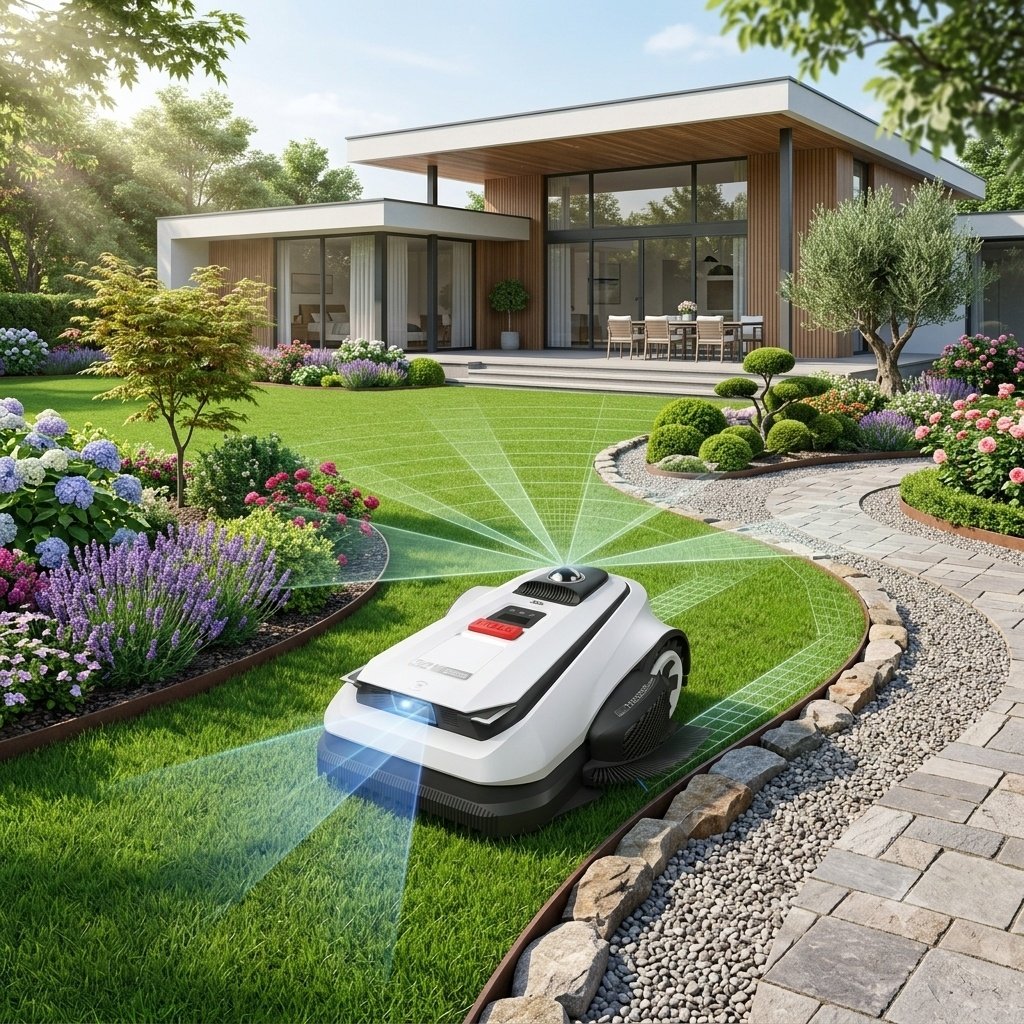
The ECOVACS GOAT A3000 LiDAR PRO is aimed at homeowners who want the convenience of automated lawn care without the extra work of installing perimeter wires. By combining LiDAR-based navigation with intelligent mapping technology, it offers a modern alternative to traditional robotic mowers while keeping setup relatively straightforward.
Compared with many earlier robot mowers that relied heavily on boundary cables, the GOAT A3000 focuses on creating virtual mowing areas through advanced sensors and software. That makes it an appealing choice for homeowners who expect their landscaping to evolve over time or simply want a cleaner installation.
Key Features
- LiDAR PRO navigation system
- Wire-free virtual boundary setup
- Intelligent lawn mapping
- Advanced obstacle detection
- Edge mowing capability
- Smartphone app control
- Automatic charging
Pros
- No boundary wire installation
- Modern navigation technology
- Easy app management
- Efficient edge mowing
- Clean, quiet operation
Cons
- Premium pricing compared with entry-level models
- Newer product ecosystem than some established competitors
Best For
Homeowners who want a wire-free robotic mower that’s easy to install and offers modern navigation technology.
Our Analysis
The biggest advantage of the GOAT A3000 isn’t simply its technology—it’s the overall ownership experience. Eliminating perimeter wires reduces installation time and makes future adjustments much easier if garden beds, pathways, or landscaping change.
Compared with RTK-only systems, LiDAR navigation can also be beneficial in properties where trees, fences, or surrounding structures may influence satellite reception. That flexibility makes the mower suitable for a wider range of residential landscapes.
One trade-off worth considering is price. Buyers with small, straightforward lawns may not fully benefit from every advanced feature included here. If your mowing needs are relatively simple, a less expensive robotic mower could provide similar day-to-day results.
For homeowners looking for premium automation and minimal installation effort, however, the GOAT A3000 offers one of the strongest combinations of convenience, intelligent navigation, and smart connectivity available today.
2. ECOVACS GOAT O1000 RTK Care Kit Robotic Lawn Mower
Best Robotic Lawn Mower for Small to Medium Yards
Product Overview
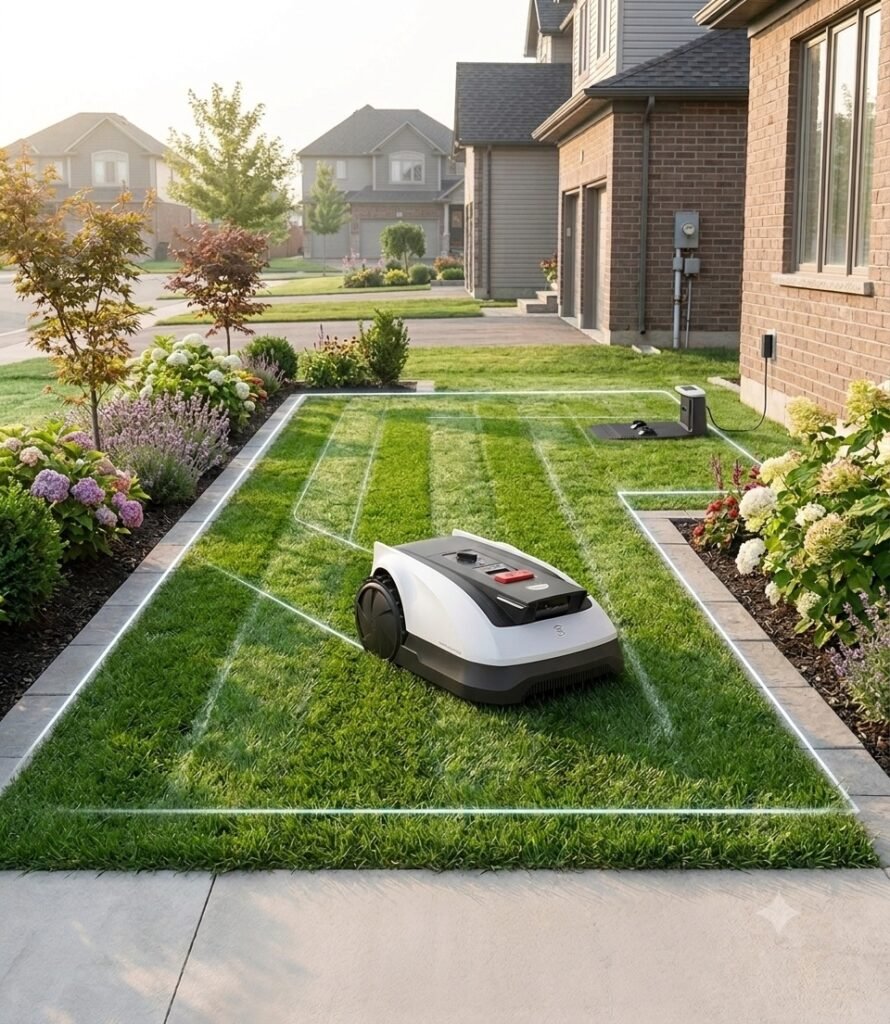
The ECOVACS GOAT O1000 RTK Care Kit is designed for homeowners who want the convenience of a wire-free robotic mower without moving into the premium price range of larger models. Built around RTK precision navigation, it aims to simplify installation while delivering accurate, consistent mowing for small and medium-sized lawns.
Unlike many traditional robotic mowers that require hours of boundary wire installation, the GOAT O1000 uses virtual boundaries that can be adjusted through the companion app. That flexibility makes it easier to modify mowing zones if your landscaping changes over time or if you decide to expand flower beds, pathways, or outdoor living spaces.
Key Features
- RTK precision navigation
- Wire-free virtual boundary setup
- Intelligent route planning
- Smartphone app control
- Multi-zone mowing support
- Automatic charging
- Compact design
Pros
- Straightforward installation
- Accurate navigation
- Quiet daily operation
- Easy-to-use mobile app
- Flexible virtual boundaries
Cons
- Designed primarily for smaller properties
- Less suitable for large or complex landscapes
Best For
Homeowners with small to medium-sized lawns who want an easy-to-manage robotic mower without the hassle of installing perimeter wires.
Our Analysis
One of the strongest selling points of the GOAT O1000 is simplicity. Many homeowners are interested in robotic lawn care but are discouraged by complicated installation procedures. This model removes much of that concern by replacing physical boundary wires with digital mapping.
Its compact size is another practical advantage. Smaller robotic mowers often navigate narrow garden paths, landscaped borders, and tighter residential spaces more comfortably than larger machines built for expansive properties.
The main trade-off is coverage capacity. Buyers with larger lawns or multiple mowing zones may eventually outgrow this model and benefit more from a higher-capacity mower. Matching the mower to the size of your property remains one of the most important purchasing decisions.
For homeowners looking to automate routine lawn maintenance without unnecessary complexity, the GOAT O1000 provides a well-balanced combination of smart technology and everyday usability.
3. Segway Navimow i210 AWD Robot Lawn Mower Wire Free
Best Robotic Lawn Mower for Hills and Uneven Terrain
Product Overview
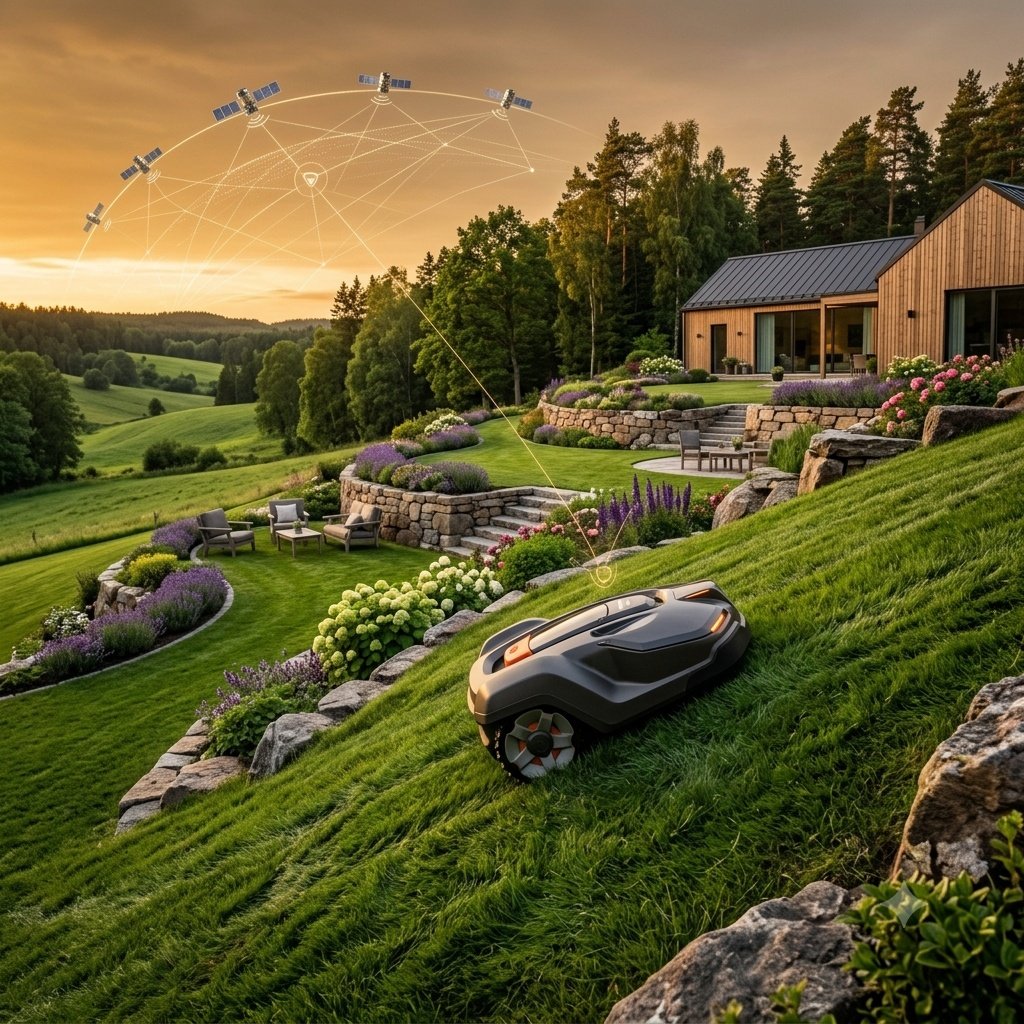
The Segway Navimow i210 AWD is built for lawns that present more of a challenge than a flat suburban yard. Equipped with an all-wheel-drive system and RTK GPS navigation, it is designed to maintain traction while delivering accurate mowing across uneven ground, slopes, and changing elevations.
Its wire-free installation also makes it appealing to homeowners who want modern navigation without spending hours installing perimeter cables. Once the virtual mowing area is created through the mobile app, the mower can begin working with very little additional setup.
Key Features
- All-wheel-drive system
- RTK GPS navigation
- Virtual boundary technology
- Intelligent route planning
- Smartphone app management
- Automatic charging
- Obstacle detection system
Pros
- Excellent traction on hills
- Wire-free installation
- Accurate navigation
- Quiet operation
- Simple app setup
Cons
- Premium pricing
- Additional traction may be unnecessary for flat lawns
Best For
Properties with hills, uneven terrain, multiple elevation changes, or lawns where standard robotic mowers may lose traction.
Our Analysis
Terrain is one area where robotic lawn mowers can differ significantly, and the Navimow i210 AWD is clearly designed with difficult landscapes in mind. The all-wheel-drive system gives it an advantage on properties where traditional two-wheel robotic mowers may struggle to maintain grip.
From a practical standpoint, homeowners with relatively flat lawns may not notice a major improvement over less expensive models. However, if your property includes steep sections, uneven ground, or frequent changes in elevation, the additional traction could make a meaningful difference in day-to-day performance.
The RTK navigation system also contributes to a cleaner installation process by removing the need for physical boundary wires. For homeowners planning future landscaping projects, virtual boundaries are generally easier to adjust than buried perimeter cables.
While this mower sits in the premium segment of the market, its specialized design makes it a strong option for buyers whose lawns demand more than basic robotic mowing capabilities.
4. Segway Navimow X430 Robot Lawn Mower Wire Free
Best Smart Robotic Lawn Mower
Product Overview
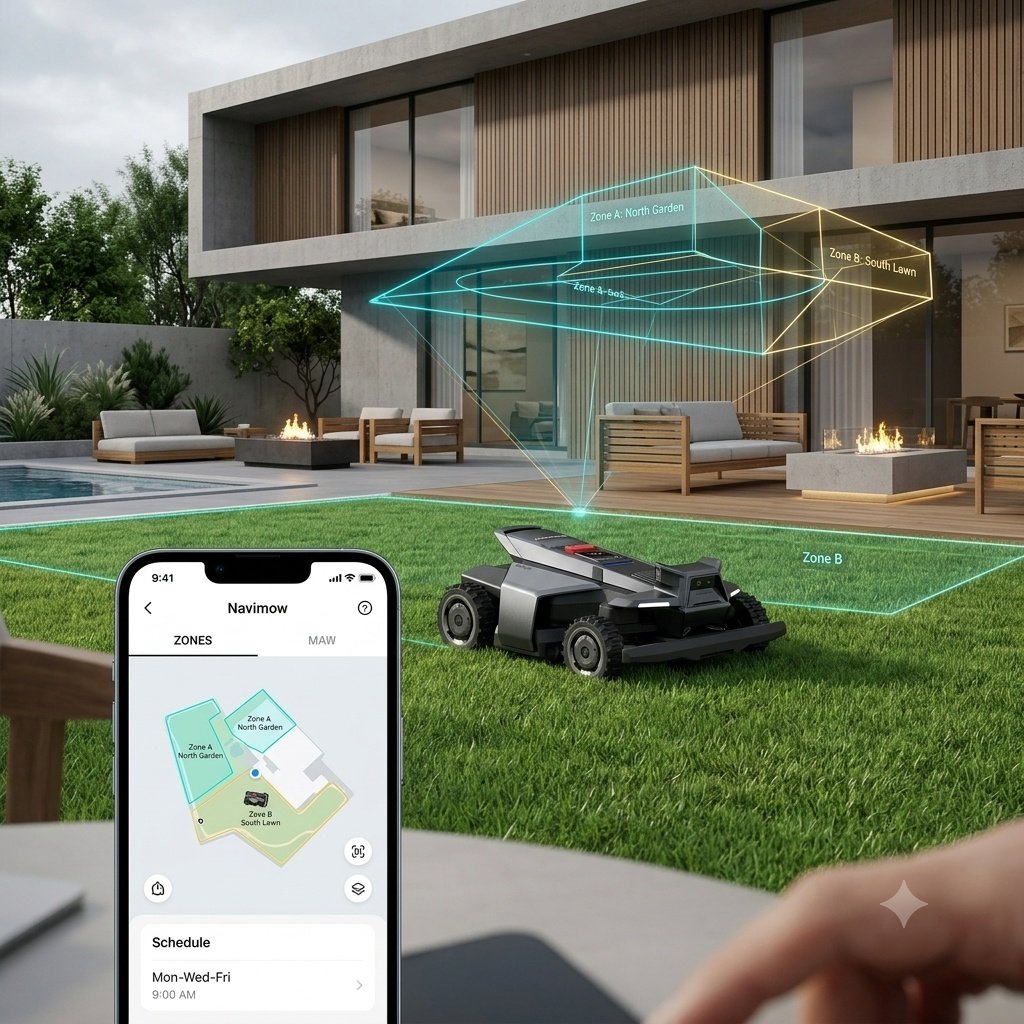
The Segway Navimow X430 focuses on combining intelligent navigation with a user-friendly ownership experience. Designed for homeowners who appreciate smart home technology, it offers wire-free installation, detailed lawn mapping, and advanced mobile app controls that make day-to-day operation remarkably simple.
Rather than relying on complicated setup procedures, the X430 emphasizes convenience. Virtual boundaries, customizable mowing zones, and automatic scheduling allow users to tailor lawn care around their routine instead of adjusting their routine around lawn maintenance.
Key Features
- RTK GPS navigation
- Wire-free virtual boundaries
- Smart lawn mapping
- Multi-zone management
- Intelligent obstacle avoidance
- Smartphone app control
- Automatic charging
Pros
- Quick installation
- Clean, accurate navigation
- Strong mobile app experience
- Flexible mowing zones
- Quiet operation
Cons
- Premium purchase price
- Advanced features may exceed the needs of basic users
Best For
Homeowners who value smart technology, remote management, and customizable lawn care schedules.
Our Analysis
The X430 stands out because it places as much emphasis on software as hardware. The companion app is designed to make managing mowing schedules, virtual boundaries, and lawn zones intuitive, even for first-time robotic mower owners.
Compared with entry-level robotic mowers, the added flexibility is noticeable. Instead of manually adjusting physical boundaries, users can often make changes digitally through the app, saving time whenever landscaping is updated.
The trade-off is cost. Buyers simply looking to automate mowing on a straightforward lawn may not need every premium feature included here. In those situations, a simpler robotic mower could offer comparable mowing performance at a lower price.
For homeowners building a connected smart home ecosystem, however, the X430 offers a polished combination of intelligent navigation, automation, and everyday convenience.
5. Mammotion LUBA 3 AWD 1500H Robot Lawn Mower with Garage
Best Robotic Lawn Mower for Large and Complex Lawns
Product Overview
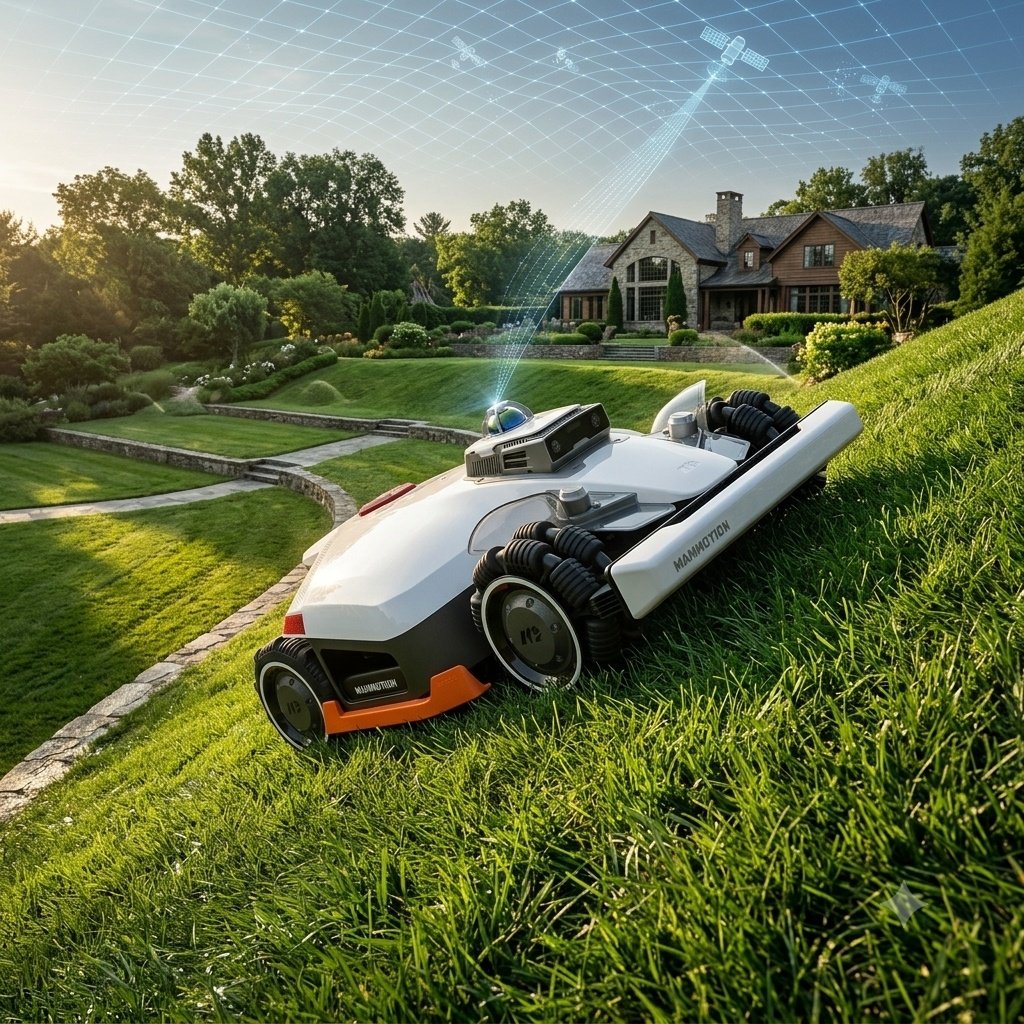
The Mammotion LUBA 3 AWD 1500H is designed for homeowners whose lawns demand more than a standard robotic mower can comfortably handle. Large properties, multiple mowing zones, uneven ground, and steep slopes are where this model is intended to perform best. Its all-wheel-drive system, RTK navigation, and wire-free operation make it one of the most capable options for challenging landscapes.
The included garage is another practical addition. While it doesn’t change mowing performance, it helps protect the mower and charging station from prolonged exposure to sun, rain, and debris, which may contribute to better long-term durability.
Key Features
- All-wheel-drive (AWD) system
- RTK precision navigation
- Wire-free virtual boundaries
- Multi-zone lawn management
- Intelligent route planning
- Smartphone app control
- Automatic charging station
- Protective mower garage
Pros
- Excellent climbing ability
- Handles large properties efficiently
- Wire-free installation
- Strong navigation accuracy
- Includes protective garage
- Flexible zone management
Cons
- Higher purchase price
- More capability than many average-sized lawns require
Best For
Large residential properties, uneven landscapes, and homeowners who want premium performance with minimal manual intervention.
Our Analysis
The LUBA 3 AWD 1500H is one of those robotic mowers that makes the most sense when matched with the right property. While it can certainly maintain a flat suburban lawn, its real strengths become apparent on larger, more demanding landscapes where traction and navigation accuracy matter much more.
The all-wheel-drive system gives it an advantage on sloped sections that can challenge conventional robotic mowers. Instead of relying solely on careful route planning, it has the mechanical grip needed to maintain stable movement over changing terrain.
Its RTK navigation also simplifies installation by replacing physical boundary wires with virtual mapping. Homeowners who frequently redesign garden beds or expand landscaped areas may appreciate being able to update mowing zones digitally rather than reinstalling perimeter cables.
The biggest consideration is value. Buyers with modest lawns may never fully use everything this mower offers. However, for larger properties where reliable coverage, climbing ability, and flexible zone management are priorities, the LUBA 3 AWD 1500H represents one of the strongest premium options currently available.
6. Husqvarna Automower 440iQ
Best Premium Robotic Lawn Mower
Product Overview
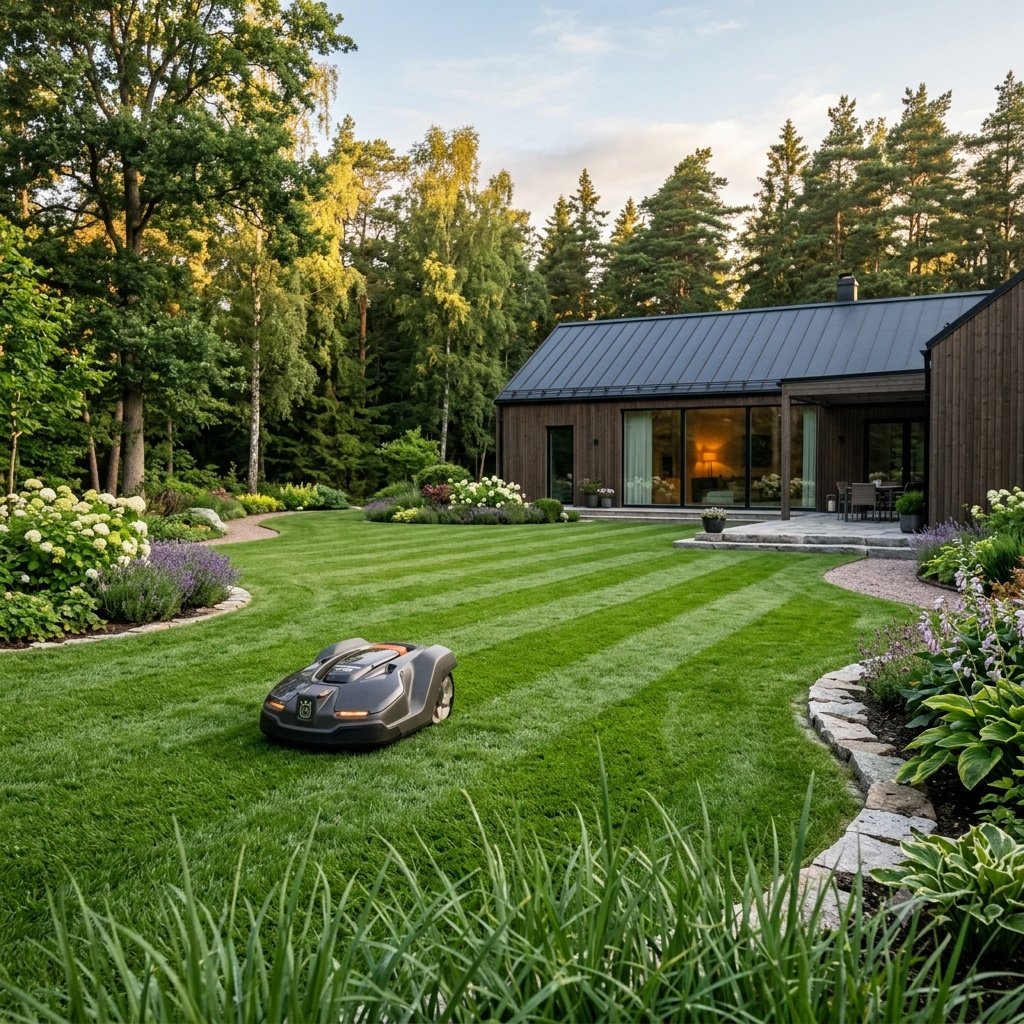
Husqvarna has been producing robotic lawn mowers for many years, and the Automower 440iQ reflects that experience. Designed for homeowners seeking dependable long-term performance, it combines intelligent navigation, quiet operation, and refined software into a premium mowing solution for medium to large residential properties.
Rather than introducing every new technology available, the 440iQ focuses on delivering a balanced ownership experience. Navigation, cutting performance, app functionality, and overall reliability work together to create a mower that requires very little day-to-day attention once installed.
Key Features
- Intelligent GPS-assisted navigation
- Smart app connectivity
- Automatic charging
- Adaptive mowing schedules
- Weather-resistant operation
- GPS tracking and security features
Pros
- Excellent overall reliability
- Consistent mowing performance
- Quiet operation
- User-friendly mobile app
- Strong brand reputation
Cons
- Premium pricing
- Advanced features may exceed the needs of smaller lawns
Best For
Homeowners who value proven reliability, long-term product support, and consistent lawn maintenance.
Our Analysis
One of the biggest advantages of choosing a Husqvarna robotic mower is the company’s long history in this category. Instead of focusing on individual headline features, the Automower 440iQ delivers a polished experience where navigation, software, and cutting performance work together smoothly.
For many buyers, long-term ownership matters just as much as the initial purchase. Factors such as software updates, replacement parts, dealer support, and product reliability often become increasingly important after several seasons of use.
Compared with some newer competitors, the 440iQ may appear more conservative in its overall design. However, that mature approach is also part of its appeal. Buyers looking for dependable performance rather than experimental features may appreciate its refined operation.
Although it’s one of the more expensive robotic mowers in this guide, homeowners planning to automate lawn maintenance for years rather than seasons may find the investment easier to justify.
7. Husqvarna Automower 410iQ
Best Robotic Lawn Mower for Medium-Sized Properties
Product Overview
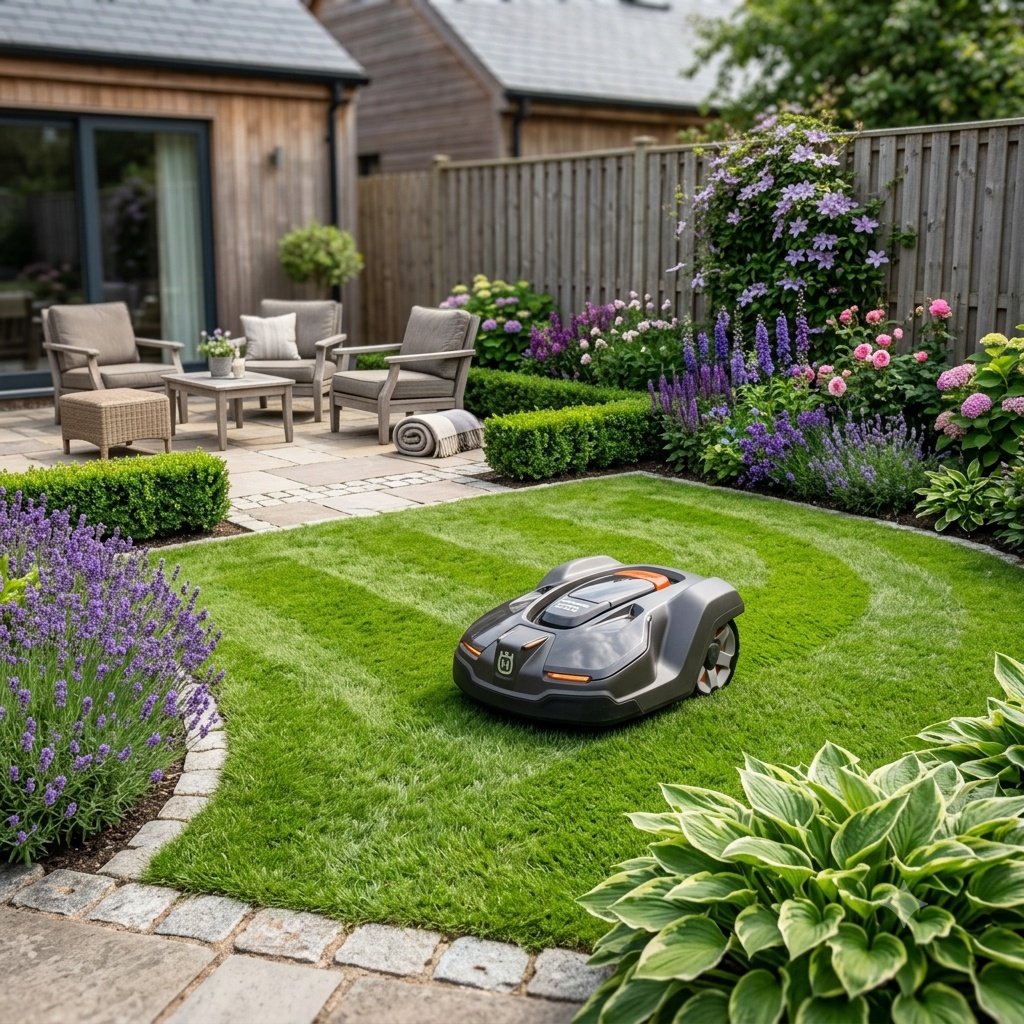
The Husqvarna Automower 410iQ offers many of the qualities that have made the Automower series popular while targeting homeowners with medium-sized lawns. It delivers intelligent navigation, quiet mowing, and simple app-based management in a package that doesn’t require the larger capacity of flagship models.
Its emphasis is on dependable daily performance rather than excessive complexity, making it an attractive option for homeowners who simply want consistent lawn maintenance with minimal involvement.
Key Features
- Intelligent navigation system
- Smartphone app management
- Automatic charging
- Adjustable mowing schedules
- Weather-resistant construction
- Security and GPS features
Pros
- Reliable everyday performance
- Easy operation
- Quiet mowing
- Trusted manufacturer
- Well-designed mobile app
Cons
- Not intended for very large properties
- Premium pricing compared with entry-level robotic mowers
Best For
Medium-sized residential lawns where dependable automation and simple operation are the highest priorities.
Our Analysis
The Automower 410iQ fits comfortably between compact robotic mowers and larger premium machines. It offers enough capability for many residential properties without requiring buyers to invest in features intended primarily for expansive estates.
Its straightforward operation is one of its strongest qualities. Once schedules and mowing zones are configured, ongoing management requires very little attention. Homeowners who prefer technology that quietly works in the background will likely appreciate this approach.
Compared with larger robotic mowers, the 410iQ is also a sensible choice for buyers whose lawns simply don’t require maximum coverage capacity. Spending more doesn’t always produce better results if those additional capabilities are never used.
For homeowners looking for dependable automated mowing from an established manufacturer, the Automower 410iQ remains one of the most balanced options in the premium mid-range category.
Why Trust Our Recommendations
Choosing a robotic lawn mower isn’t just about comparing feature lists or buying the newest model. Every property is different, and the best mower for one homeowner may not be the right fit for another.
For this guide, we focused on practical buying factors rather than marketing claims. We compared each mower based on its navigation technology, recommended lawn size, slope capability, installation process, smart features, and overall value. We also considered the long-term reputation of each brand, product support, and how each model fits different types of homeowners.
Where available, we reviewed information from manufacturer documentation, independent product reviews, and recurring customer feedback published by established retailers. Instead of presenting isolated opinions as facts, we looked for consistent themes that appeared across multiple sources. This approach helps identify both the strengths buyers frequently appreciate and the trade-offs that are commonly mentioned.
It’s also important to be transparent about our recommendations. We have not personally tested every robotic mower featured in this guide, and we don’t believe affiliate content should imply otherwise. Our goal is to help readers make informed decisions by explaining who each mower is best suited for, where it stands out, and what buyers should consider before investing.
As robotic lawn mower technology continues to evolve, we regularly review this guide to reflect new product releases, software improvements, and meaningful developments within the category.
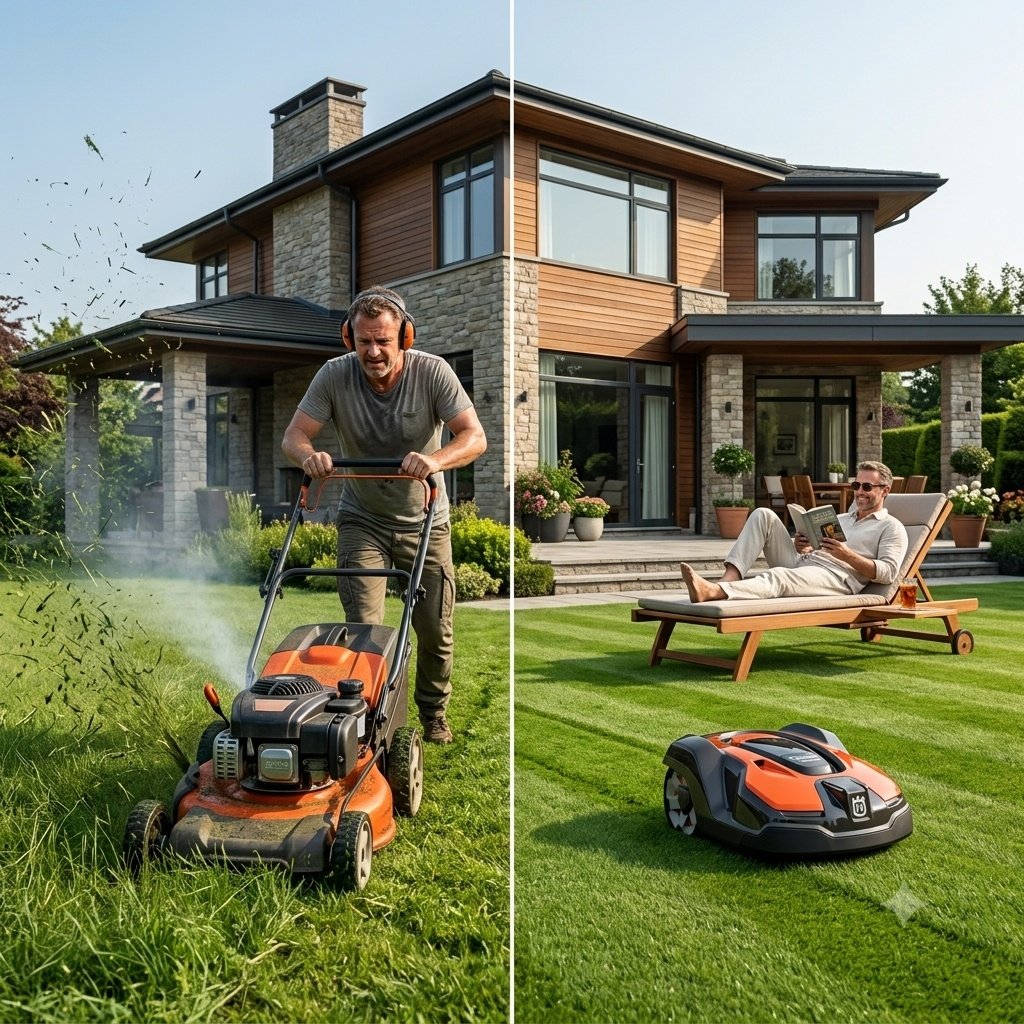
Robot Lawn Mower vs. Traditional Lawn Mower
For decades, gas and electric push mowers have been the standard choice for homeowners. While they still perform well, robotic lawn mowers offer a different approach by maintaining the lawn automatically through frequent, scheduled mowing.
The biggest advantage is convenience. Instead of setting aside time every week to mow the lawn yourself, a robotic mower works independently and returns to its charging station whenever the battery runs low. That means less manual effort and a lawn that remains consistently maintained throughout the growing season.
Another benefit is mowing frequency. Rather than removing large amounts of grass in a single session, robotic mowers trim small amounts more often. The fine clippings fall back into the lawn and naturally decompose, helping return nutrients to the soil. Many lawn care professionals consider this regular mulching approach beneficial for overall turf health.
Noise is another noticeable difference. Most robotic lawn mowers operate much more quietly than gasoline-powered machines, making them suitable for neighborhoods where excessive noise can be a concern.
That said, robotic mowers aren’t the perfect solution for every homeowner. The initial purchase price is considerably higher than many traditional lawn mowers, and premium models represent a significant investment. Some properties with extremely dense landscaping, narrow passages, or frequent yard changes may also require additional setup and occasional adjustments.
For homeowners who value convenience, automation, and consistent lawn maintenance, however, robotic mowers continue to become an increasingly practical alternative to traditional equipment.
Related Reads
You might find these helpful as you keep going:
7 Best Fertilizers for Raised Beds (Top Picks + Feeding Guide)
7 Best Self-Watering Systems for Balcony Vegetable Gardens (That Actually Work)
7 July Tasks for the Midsummer Garden
FAQ
Are robotic lawn mowers worth the investment?
For many homeowners, yes. While the upfront cost is higher than a traditional mower, robotic models can save significant time over the course of each mowing season. They’re especially appealing to homeowners who prefer routine lawn maintenance without dedicating weekends to cutting grass.
Do I need boundary wires?
Not necessarily. Many newer robotic lawn mowers now use RTK positioning, LiDAR technology, or virtual boundary mapping, allowing them to operate without traditional perimeter wires. However, some entry-level models still rely on physical boundary cables.
Can robotic lawn mowers handle steep slopes?
Some can. Models equipped with all-wheel-drive systems or enhanced traction are generally better suited for properties with hills and uneven terrain. If your lawn includes significant elevation changes, always compare the manufacturer’s recommended slope capability before purchasing.
How often should a robotic mower run?
Most homeowners schedule robotic mowers several times each week rather than allowing the grass to grow long between sessions. Frequent mowing helps maintain a consistent appearance while producing smaller clippings that naturally decompose into the lawn.
Are robotic lawn mowers safe around pets and children?
Most modern models include lift sensors, collision sensors, and obstacle detection systems that improve safety during operation. Even so, it’s good practice to supervise pets and young children until you’re familiar with how the mower operates within your yard.
How long do robotic lawn mower batteries last?
Battery life varies depending on the model, lawn conditions, and usage patterns. Many lithium-ion batteries provide several years of normal use before replacement becomes necessary. Following the manufacturer’s maintenance recommendations can help maximize battery lifespan.
Do robotic lawn mowers work in the rain?
Many robotic mowers are designed to operate in light rain and damp conditions, while others include weather sensors that pause mowing during heavy rainfall. Wet grass can sometimes affect cutting quality, so many homeowners choose to delay mowing until conditions improve.
Final Thoughts
The robotic lawn mower market has evolved rapidly over the past few years. Features that were once limited to premium models—such as wire-free installation, RTK navigation, intelligent obstacle detection, and smartphone control—are becoming increasingly common, giving homeowners more choices than ever before.
The right mower ultimately depends on your property and expectations. If you want a straightforward wire-free experience, the ECOVACS GOAT A3000 LiDAR PRO offers an excellent balance of intelligent navigation and everyday convenience. Homeowners with smaller lawns may find the ECOVACS GOAT O1000 RTK Care Kit provides all the functionality they need without paying for unnecessary capacity.
For properties with steep slopes or uneven ground, the Segway Navimow i210 AWD and Mammotion LUBA 3 AWD 1500H offer additional traction and terrain capability that many standard robotic mowers can’t match. Buyers who prioritize connected smart features may appreciate the flexibility of the Segway Navimow X430, while homeowners looking for long-term reliability should consider the proven reputation of the Husqvarna Automower 440iQ and Husqvarna Automower 410iQ.
Before making a purchase, compare the recommended lawn size, navigation system, and slope capability with the conditions in your own yard rather than focusing only on feature lists. Choosing a mower that matches your property’s layout is often more important than selecting the model with the longest specification sheet.
As robotic mowing technology continues to improve, these machines are becoming a practical investment for homeowners who want to spend less time maintaining their lawn and more time enjoying it. Taking a little extra time to compare the available options today can help you choose a robotic mower that will continue to meet your needs for years to come.