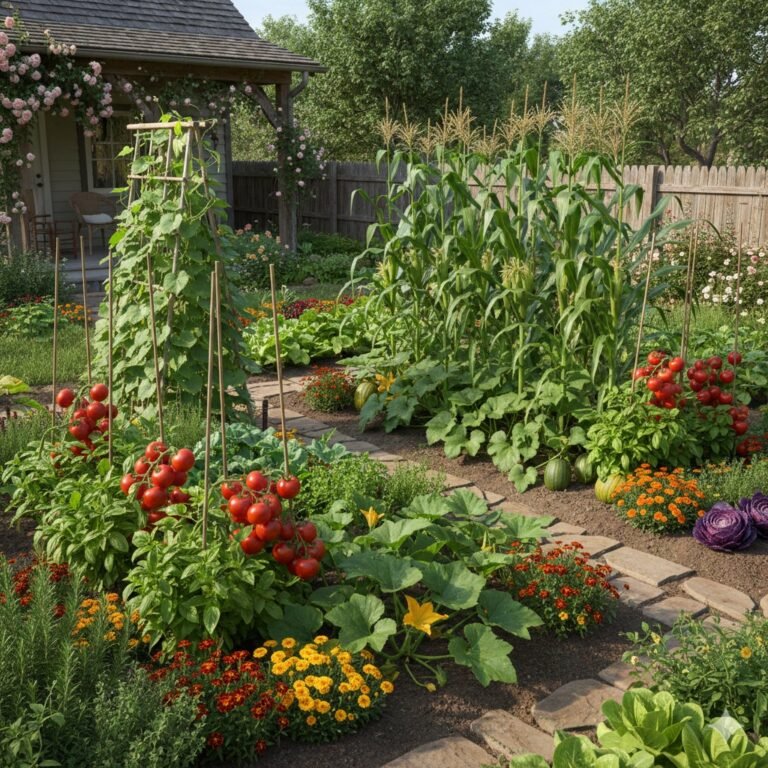

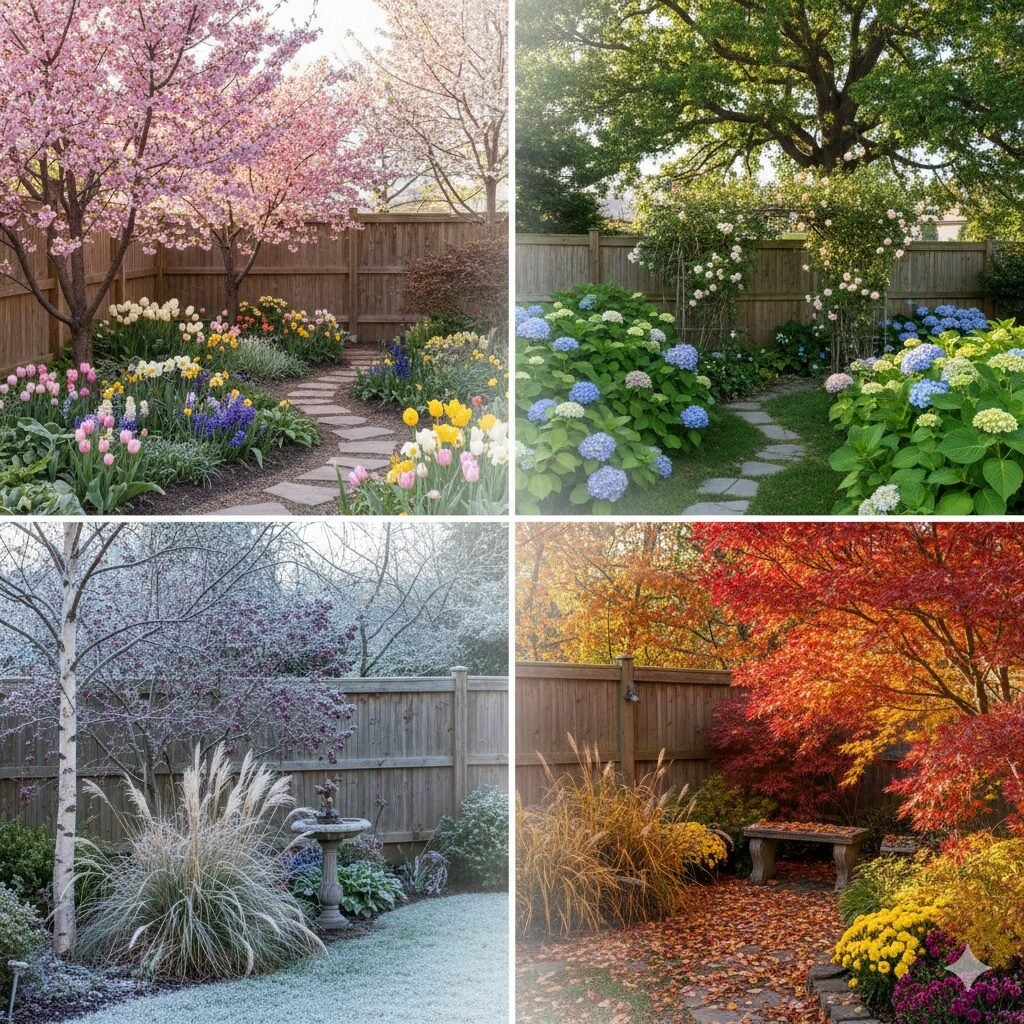
So, year-round backyard garden planning tends to feel like a big job at first, yet in some respects it saves time, cash, and energy once it becomes a habit. In fact, backyard garden care works better when tasks get spread across the year instead of rushed into one short season. So, this guide works like a simple annual map that shows what to handle, what to plant, and when to slow down, and that alone keeps stress low for beginners and long-time growers alike.
Now, backyard garden planning done by season usually leads to stronger plants, fewer mistakes, and better harvests, and that is why this guide focuses on garden maintenance by season instead of random tips. So, if you ever wondered when to plant a backyard garden or how to keep things alive past summer, this roadmap keeps everything clear and steady.
Tools & Supplies for Year-Round Backyard Gardening
So, having the right backyard gardening tools makes care easier, and quality tools last longer. In fact, garden maintenance tools reduce strain and wasted effort.
| ITEM | WHY IT MATTERS | MY RECOMMENDATION (LINKS) |
|---|---|---|
| Garden Mulch (Bags or Bulk) Buying tip: In a way, darker mulch usually hides dirt better and makes plants pop more. | Mulch is, honestly, one of the cheapest ways to clean up beds fast, and it helps soil stay moist too | Check price on Amazon |
| Landscape Fabric Buying tip: Go for thicker fabric, since, in fact, thin rolls tend to tear quickly. | This sits under mulch or gravel, and that is that, it cuts down weeds over time | View on Amazon |
| Solar Pathway Lights Buying tip: Look for waterproof ratings, so, actually, they last past one season. | These lights add night style with no wiring, and that saves money long term | See options here |
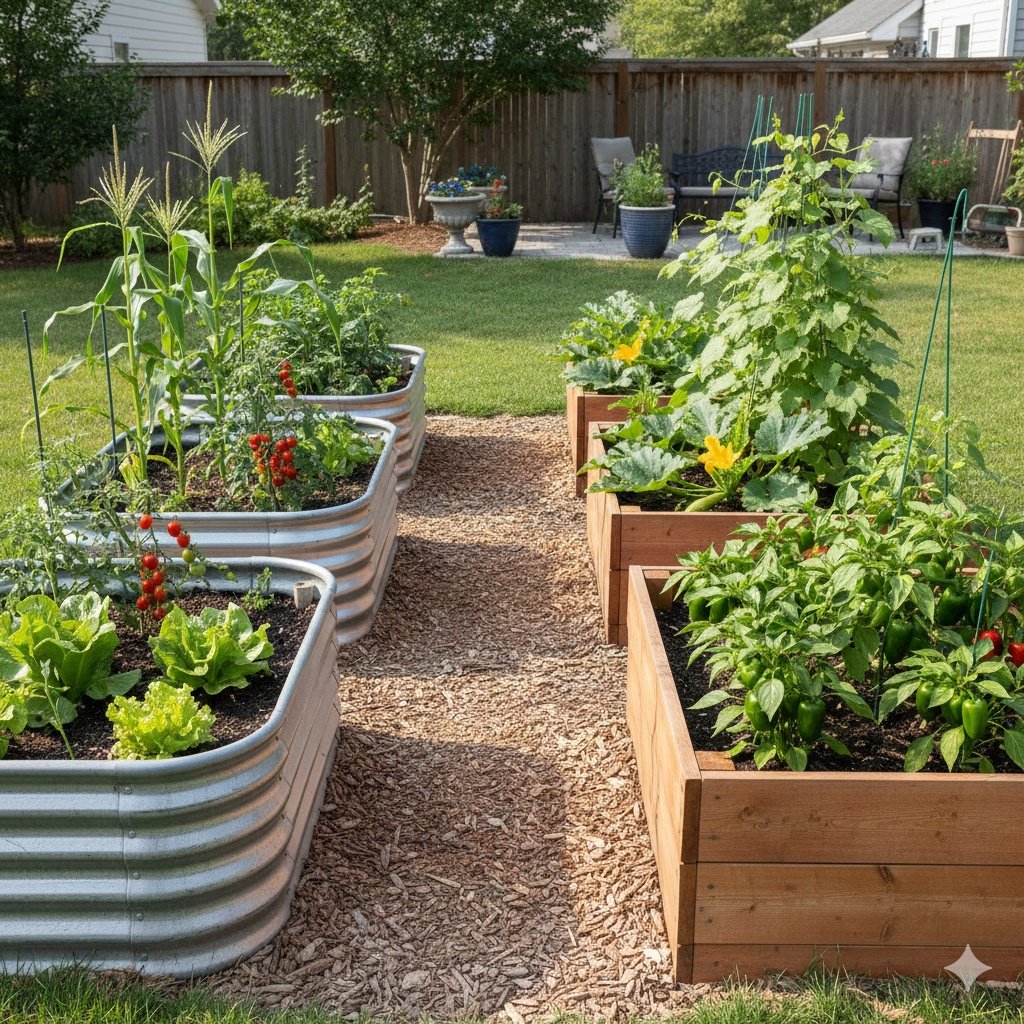
| Raised Garden Bed Kit Buying tip: Kits with untreated wood usually last longer outdoors, in some respects. | Raised beds keep plants tidy, and, frankly, they make gardening easier on the back | Shop Raised Beds |
| Outdoor String Lights Buying tip: Warm light feels cozier, and that tends to work better than bright white.</small> | String lights create instant mood, and, honestly, they finish a yard visually | Browse string lights |
| Gravel or Pea Stone Buying tip: Smaller stones stay in place better, so paths look neat longer. | Gravel works for patios and paths, and it costs less than most hard surfaces | Find Gravel options |
| Garden Edging (Metal or Plastic) Buying tip: Flexible edging bends easier around curves, which helps in small yards. | Clean edges make beds look planned, and that visual upgrade matters a lot | See Edging tools |
| Hand Trowel & Pruner Set Buying tip: Rubber grips feel better after long use, and hands tire less. | Basic tools make DIY jobs smoother, and, actually, they save time | View Tool set |
| Outdoor Area Rug Buying tip: Flat-weave rugs dry faster, which is useful after rain. | Rugs define seating spots, and, in a way, they make yards feel like rooms | Check Outdoor Rugs |
| Vertical Planter or Wall Trellis Buying tip: Metal frames hold up better than thin plastic outdoors. | Vertical planting saves floor space, and that works great for small yards | Shop Vertical Planters |
| Compost Bin Buying tip: Smaller bins fill faster, so results show sooner. | Compost lowers plant costs over time, and, honestly, it reduces waste too | See Compost Bins |
| Weatherproof Storage Bench Buying tip: Hinged lids open easier than lift-off tops, especially daily. | Seating plus storage keeps the yard tidy, and that dual use saves money | View Storage Benches |
Spring Backyard Garden Planning (Prep & Planting Season)
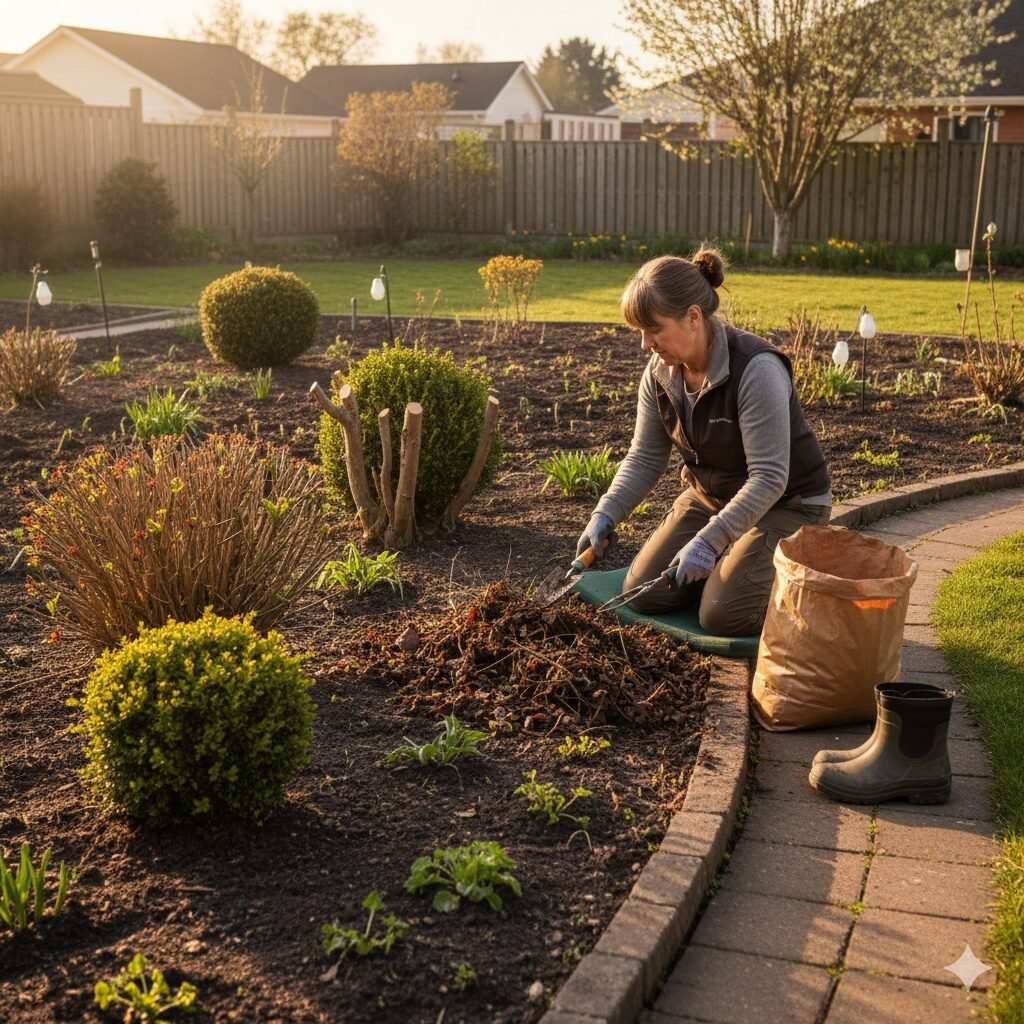
So, spring garden planning feels exciting, yet it is a bit messy in a way, since winter leaves behind debris, tired soil, and hidden damage. In fact, spring sets the tone for the rest of the year, and a solid spring garden checklist keeps mistakes from piling up later.
Cleaning & Soil Preparation
So, the first step in spring garden planning usually starts with cleanup, and that means removing dead leaves, broken branches, and old mulch that stayed wet too long. In fact, clearing beds lets air reach the soil again, and that helps roots wake up slowly instead of rotting.
Now, soil prep matters more than fancy plants, and that truth shows up every season. So, loosening soil with a fork, mixing in compost, and checking drainage gives roots space to stretch. In a way, healthy soil sets peoples’ minds back to the idea that gardening starts underground, not above it.
What to Plant in Spring (Vegetables, Flowers, Shrubs)
So, many cool-season crops enjoy spring weather, and that includes lettuce, spinach, peas, radishes, and carrots. In fact, these plants grow fast before heat shows up, and they help beginners build confidence early.
Now, flowers like pansies, snapdragons, and calendula handle cool nights well, and shrubs such as hydrangeas or berry bushes settle in better during mild weather. So, spring remains one of the best times to plant anything that needs time to build roots before summer stress arrives.
Pruning & Mulching Tips
So, pruning in spring removes dead or damaged growth, and that helps plants send energy where it matters. In fact, trimming roses, shrubs, and fruit trees early encourages better shape and airflow.
Now, mulch plays a quiet role here, and a fresh layer keeps moisture steady and blocks early weeds. So, organic mulch like bark or straw works well, and it breaks down slowly, feeding soil over time.
Common Spring Gardening Mistakes
So, planting too early often backfires, especially when late frost sneaks in. In fact, rushing warm-season plants into cold soil usually leads to weak growth.
Now, overworking wet soil creates compaction, and that sticks around all year. So, letting soil dry slightly before digging avoids long-term damage and keeps roots happier.
Summer Backyard Garden Care (Growth & Maintenance)
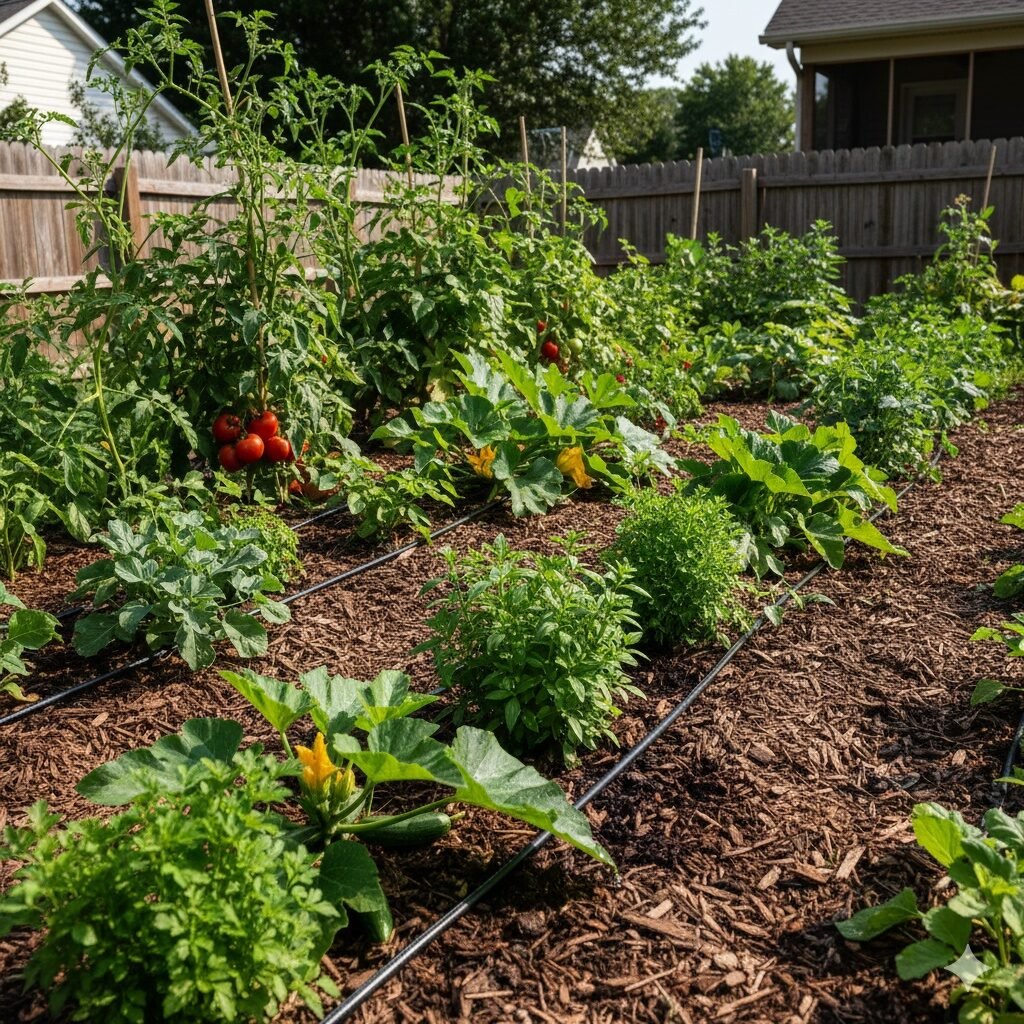
So, summer garden maintenance focuses on keeping plants alive and productive during heat, and that takes steady care rather than random effort. In fact, summer gardening tips often sound simple, yet skipping them causes stress fast.
Watering Schedule & Irrigation Tips
So, watering a backyard garden works best when done deeply and less often. In fact, early morning watering lets moisture soak in before heat pulls it away.
Now, drip irrigation or soaker hoses keep water close to roots, and that reduces waste. So, this method works well for busy schedules and areas with water limits.
Weed & Pest Control (Natural Methods)
So, weeds grow fast in summer, and pulling them early keeps them from stealing water. In fact, staying ahead of weeds saves hours later.
Now, pests show up when plants feel weak, and natural methods help keep balance. So, neem oil, insecticidal soap, and hand-picking pests work without harming helpful insects.
Mulching for Heat Protection
So, mulch acts like a shield in summer, and it keeps soil cool and damp. In fact, thick mulch layers stop moisture loss during heat waves.
Now, organic mulch slowly feeds soil, and that improves structure. So, this single step supports plants through the hardest season.
How to Keep Plants Healthy in Extreme Heat
So, shade cloth helps sensitive plants survive heat spikes. In fact, temporary shade works wonders during long hot stretches.
Now, checking plants daily catches stress early, and that means fewer losses. So, yellow leaves or drooping stems act as signals to adjust care.
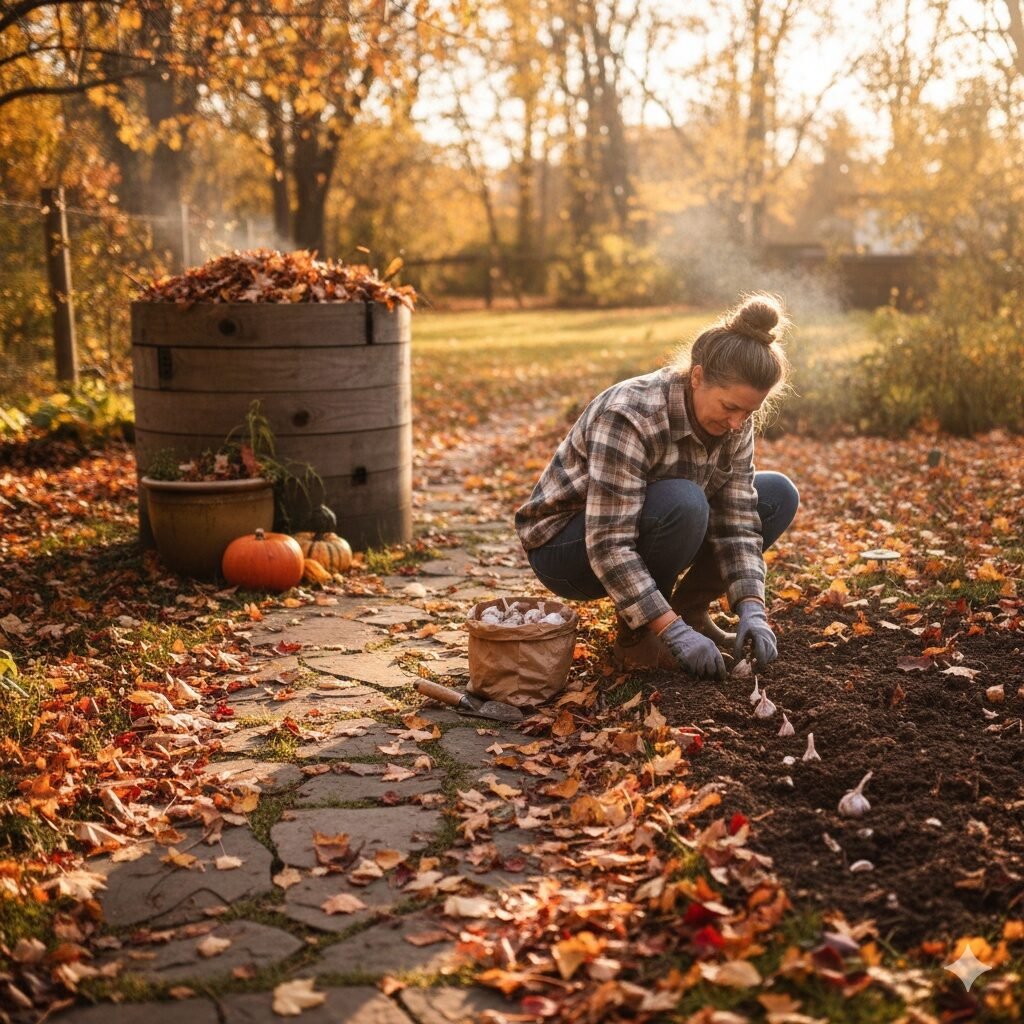
Fall Backyard Garden Planning (Cleanup & Preparation)
So, fall backyard landscaping shifts focus from growth to preparation, and that makes this season feel calm yet important. In fact, a fall garden checklist sets the stage for winter survival and strong spring returns.
What to Plant in Fall
So, fall suits cool-weather crops like kale, broccoli, garlic, and onions. In fact, these plants enjoy cooler days and steady moisture.
Now, trees and shrubs planted in fall develop roots without heat stress. So, this timing helps long-term backyard garden planning.
Soil Improvement & Composting
So, fall remains ideal for improving soil, and adding compost now gives it time to break down. In fact, soil microbes stay active longer than expected.
Now, covering beds with compost or leaves protects soil from erosion. So, this simple habit builds healthier beds year after year.
Leaf Management & Cleanup
So, fallen leaves serve as a free resource, and shredding them creates great mulch. In fact, leaf mold improves soil texture slowly.
Now, clearing diseased plant material reduces problems next year. So, thoughtful cleanup protects future growth.
Perennials, Trees & Shrubs Care
So, cutting back perennials depends on type, and some prefer winter cover. In fact, leaving stems helps protect crowns from cold.
Now, watering trees deeply before frost prevents winter stress. So, hydration matters even as growth slows.
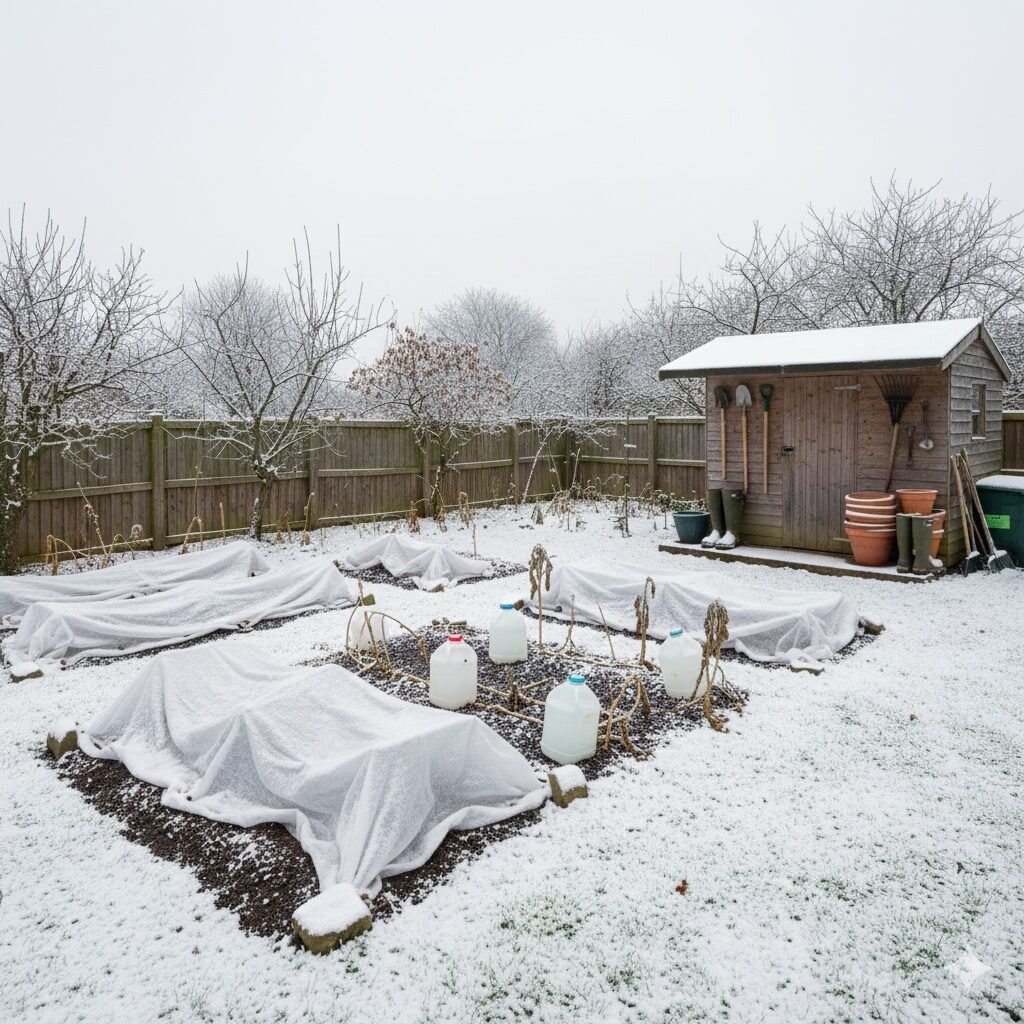
Winter Backyard Garden Planning (Protection & Strategy)
So, winter garden care focuses on protection and planning, and this quiet season offers time to think. In fact, backyard garden winter preparation reduces losses and sharpens future plans.
Protecting Plants from Frost
So, frost cloths, straw, and mulch shield roots from freezing swings. In fact, raised beds need extra attention during cold snaps.
Now, moving containers closer to walls offers warmth. So, small adjustments make a big difference.
Winter Pruning Basics
So, dormant pruning shapes trees and shrubs without stress. In fact, removing damaged limbs now improves spring growth.
Now, learning plant-specific timing avoids mistakes. So, patience pays off here.
Tool Maintenance & Storage
So, cleaning tools extends their life, and sharp blades cut cleaner. In fact, oiling metal parts prevents rust.
Now, storing tools dry keeps them ready. So, winter becomes maintenance time for gear.
Planning Next Year’s Garden Layout
So, sketching layouts helps rotation and spacing. In fact, planning reduces impulse planting later.
Now, seed catalogs inspire ideas during cold months. So, winter planning fuels motivation.
If you’re interested in practical outdoor upgrades, you might enjoy my article “Backyard Landscaping Ideas on a Budget,” where I share cost-effective ways to transform your backyard.
I love sharing valuable gardening articles from other websites that are worth your time. For example, “Year-Round Gardening: It’s Easier Than You Think” walks you through simple ways to garden successfully throughout the year.
Monthly Backyard Garden Planning Checklist
So, a monthly garden checklist breaks work into small steps, and that feels manageable. In fact, garden tasks by month improve consistency.
- January–February: Plan layouts, order seeds, clean tools
- March–April: Prep soil, plant cool crops, prune shrubs
- May–June: Plant warm crops, mulch, set watering systems
- July–August: Water deeply, manage pests, harvest often
- September–October: Plant fall crops, compost, clean beds
- November–December: Protect plants, store tools, review season
Common Year-Round Garden Planning Mistakes to Avoid
So, skipping seasonal planning leads to burnout, and that happens often. In fact, backyard gardening mistakes usually come from rushing.
Now, planting without checking sunlight creates weak growth. So, matching plants to conditions saves frustration.
Now, ignoring soil health limits success. So, feeding soil first keeps gardens balanced.
Frequently Asked Questions About Year-Round Backyard Garden Planning
What is year-round backyard garden planning, really?
So, year-round backyard garden planning is basically the habit of spreading garden work across all seasons instead of cramming everything into spring. In fact, it means thinking ahead about planting, cleanup, soil care, and rest periods, and that tends to keep gardens healthier and people calmer.
Is backyard garden planning hard for beginners?
So, backyard gardening for beginners often feels confusing at first, yet planning by season actually simplifies things. In fact, having a loose seasonal garden checklist helps beginners know what to focus on now instead of worrying about everything at once.
When should I plant a backyard garden?
So, when to plant a backyard garden depends on climate and plant type, yet most gardens begin planting cool-season crops in early spring. In fact, warm-season plants usually wait until frost risks pass, and that timing alone prevents many early failures.
Do I really need to garden in winter?
So, winter gardening tips focus less on growing and more on protection and planning. In fact, winter garden care like mulching, pruning, and tool maintenance makes the next growing season smoother and more productive.
How much time does year-round garden maintenance take?
So, garden maintenance by season often takes less time overall, even though it happens all year. In fact, small regular tasks usually beat large rushed jobs, and that keeps burnout away.
Can I do seasonal garden planning in a small backyard?
So, backyard garden planning works just as well in small spaces, maybe even better. In fact, containers, raised beds, and compact layouts make seasonal changes easier to manage and quicker to adjust.
What happens if I skip a season?
So, skipping a season does not ruin a garden instantly, yet problems tend to stack up quietly. In fact, missing fall cleanup or winter planning often creates extra work in spring, and that cycle repeats.
Do I need special tools for year-round gardening?
So, backyard gardening tools do not need to be fancy, yet reliable basics matter. In fact, sharp pruners, good hoses, and simple soil tools cover most year-round needs.
Final Thoughts: Turning Year-Round Garden Planning Into a Habit
So, year-round backyard garden planning works best when it becomes a rhythm instead of a strict rulebook. In fact, thinking of the garden as something that shifts slowly with the seasons helps expectations stay realistic and flexible.
Now, planning by season saves more than time, and it saves energy and motivation too. In a way, spreading tasks across spring, summer, fall, and winter keeps gardening from feeling like a chore that never ends.
So, backyard garden care improves when attention moves from quick results to steady progress. In fact, soil gets richer, plants grow stronger, and mistakes feel smaller when there is always another season to adjust and try again.
Now, one of the quiet benefits of seasonal planning is confidence. So, knowing what to do each month, even roughly, makes backyard gardening for beginners feel less overwhelming and more inviting.
So, whether the goal is fresh vegetables, flowers, or simply a calm outdoor space, planning the garden year-round builds a system that supports growth without constant stress. In fact, over time, the garden starts to feel like it runs alongside daily life instead of competing with it.
So, if seeing real examples helps things click, this short video walks through how a backyard garden changes across the seasons. In fact, it shows what year-round garden planning looks like in practice, from early prep to ongoing care, and that can make seasonal tasks feel a bit clearer before jumping in.