
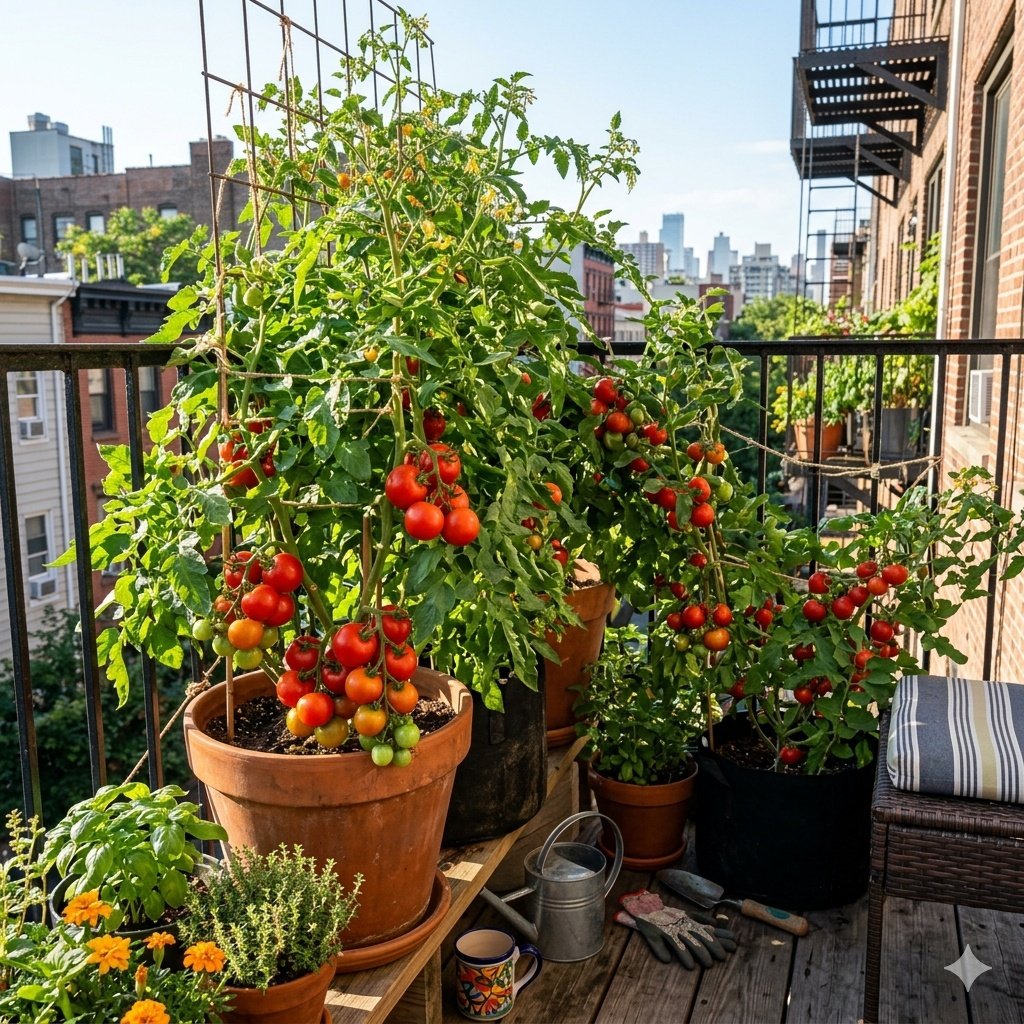
Most people assume you need a big backyard to grow armloads of juicy tomatoes. You don’t. A sunny balcony, a small patio, or even a rooftop corner can turn into a surprisingly productive tomato garden with the right setup.
That’s why more renters, apartment dwellers, and small-space gardeners are trying Growing Huge Tomatoes in Containers instead of traditional gardening. Grocery prices keep climbing, and there’s something satisfying about picking fresh tomatoes a few feet from your kitchen.
Container tomato gardening also gives you more control. Better soil. Fewer weeds. Easier watering. And if sunlight shifts during the season, you can move the plants around instead of hoping for the best.
The good news? Huge tomato harvests usually come down to a few simple habits that experienced container gardeners swear by. Get those right, and even one pot can produce pounds of tomatoes through the season.
Here are the seven secrets that make the biggest difference.
Why Tomatoes Thrive Surprisingly Well in Containers
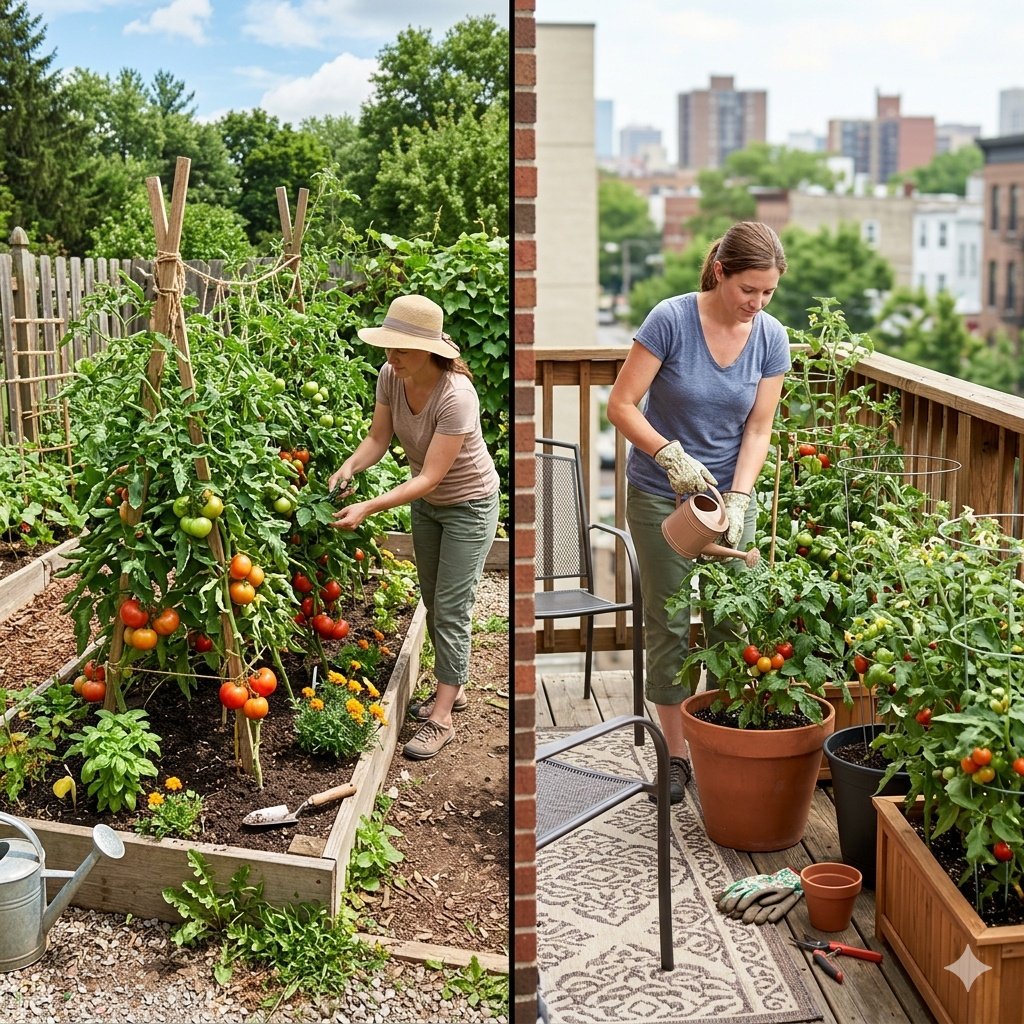
Tomatoes actually adapt well to containers when their basic needs are met. In some cases, potted tomatoes outperform backyard plants because you control the growing conditions from day one.
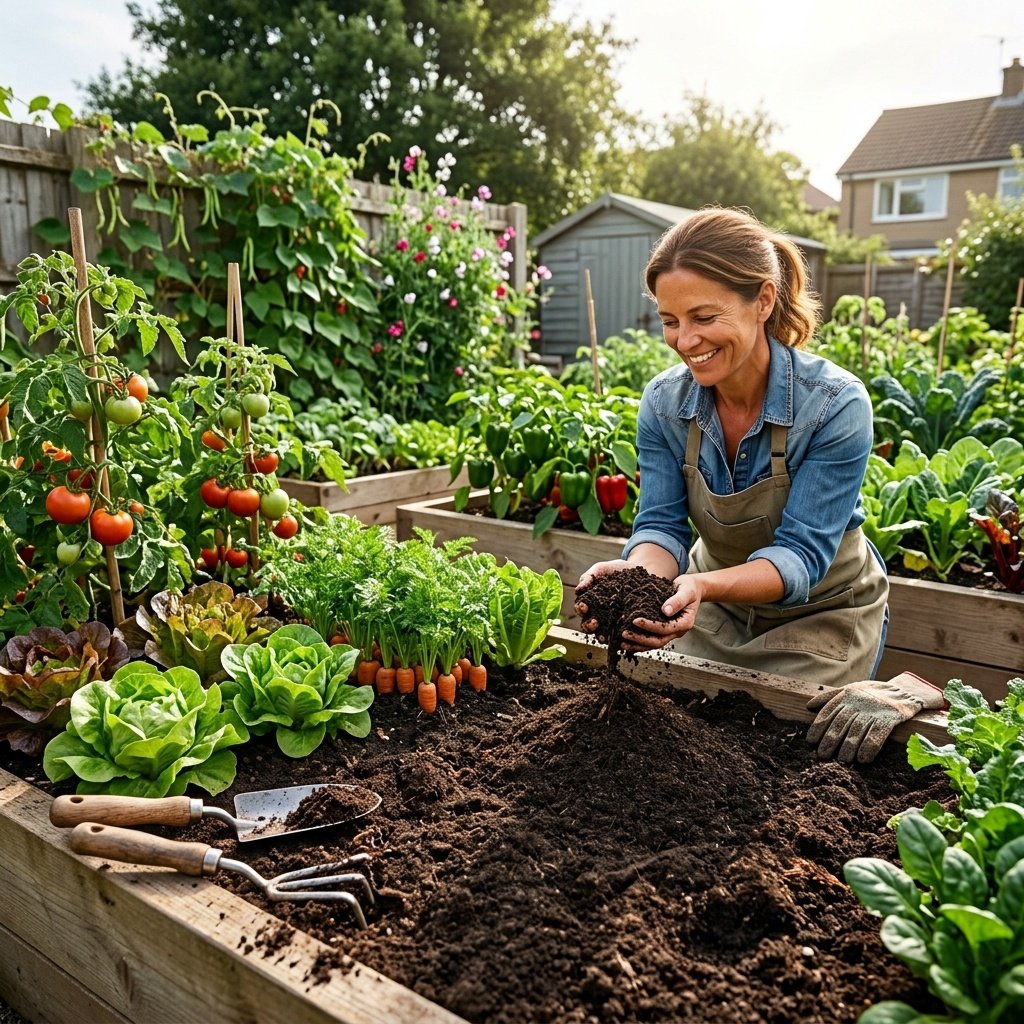
The biggest advantage is soil quality. Backyard soil can carry diseases, weeds, and drainage problems. A container lets you start fresh with nutrient-rich potting mix designed specifically for vegetables.
Pests are easier to manage too. If one plant develops a problem, you can isolate it quickly. And because containers are movable, you can chase sunlight throughout the day — especially useful for apartment gardening and balconies.
Here’s a quick comparison:
| Backyard Gardening | Container Gardening |
|---|---|
| Harder weed control | Easier maintenance |
| Soil diseases common | Better soil control |
| Requires large space | Works on balconies |
| Difficult to relocate | Easy to move for sunlight |
Another overlooked benefit? Less bending and digging. Patio tomato gardening is often easier on your back and knees.
And for beginners, that matters.
Secret #1 – Choose the Right Tomato Variety for Containers
Not every tomato plant belongs in a pot.
Some varieties grow into sprawling vines taller than a person, while others stay compact and productive in small spaces. Picking the right type makes container tomato gardening much easier from the start.
Tomatoes generally fall into two categories:
- Determinate tomatoes grow to a fixed size and produce fruit in a shorter window.
- Indeterminate tomatoes keep growing and producing until frost.
For containers, compact or dwarf varieties usually perform best unless you’re using large pots with strong support systems.
Best Tomato Types for Beginners in Small Spaces
| Variety | Type | Best For |
|---|---|---|
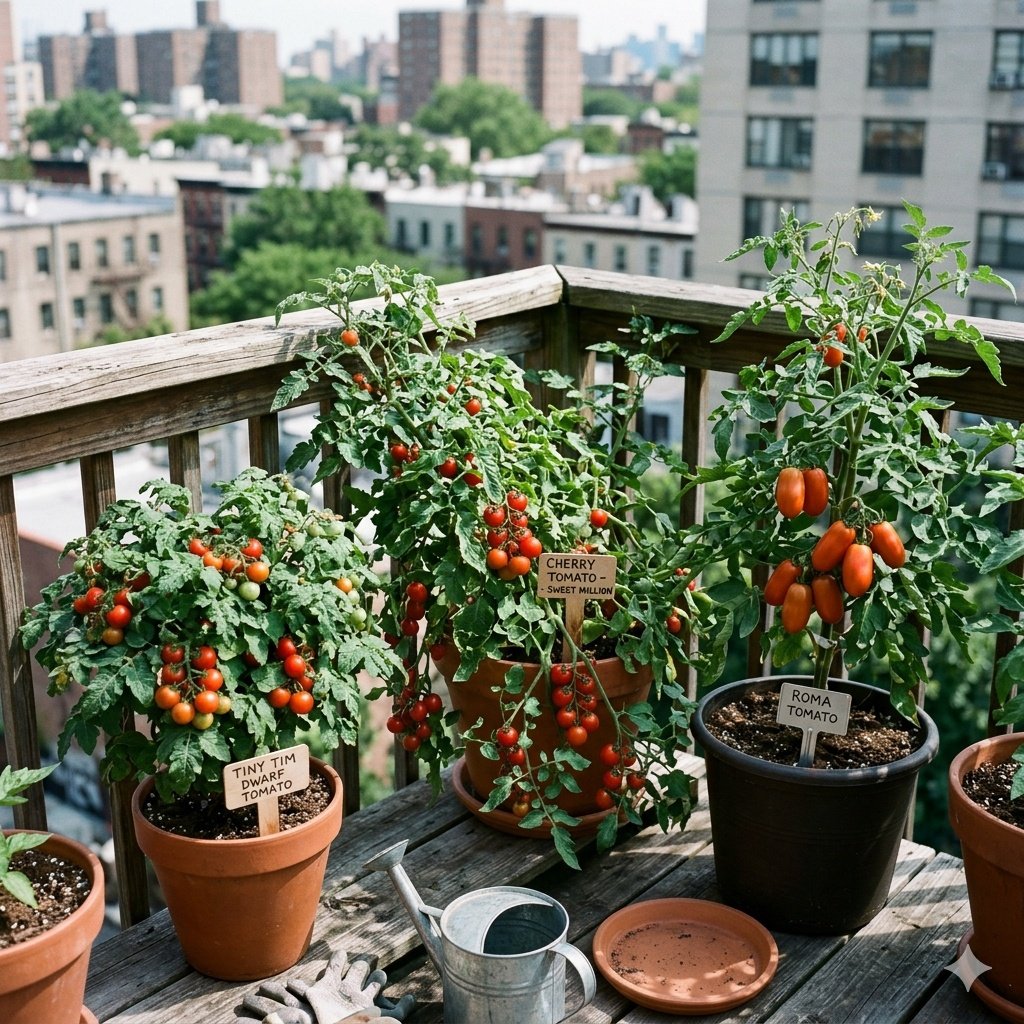
| Cherry Tomato | Indeterminate | Beginners |
| Roma | Determinate | Cooking |
| Tiny Tim | Dwarf | Small balconies |
| Celebrity | Hybrid | High yield |
| Beefsteak | Large fruit | Bigger containers |
Cherry tomatoes are often the easiest starting point. They grow fast, produce heavily, and tolerate beginner mistakes better than larger varieties.
If you want giant slicing tomatoes like Beefsteak, use a much larger container and expect heavier feeding and watering needs.
Starter plants are great for first-timers because they skip the seedling stage. But if you enjoy the process, seed kits and trays are budget-friendly ways to experiment with several varieties at once.
One plant. One good container. That’s enough to start.
Secret #2 – Use a Large Container (Most People Go Too Small)
This is where many tomato growers struggle.
Small pots dry out fast, overheat easily, and restrict root growth. And weak roots mean weak harvests.
If you want high-yield tomato plants, give the roots room to spread.
Recommended Container Sizes
- Minimum: 5-gallon container
- Ideal: 10–15 gallons for larger varieties
Bigger containers hold moisture longer and give plants more stable growing conditions during summer heat.
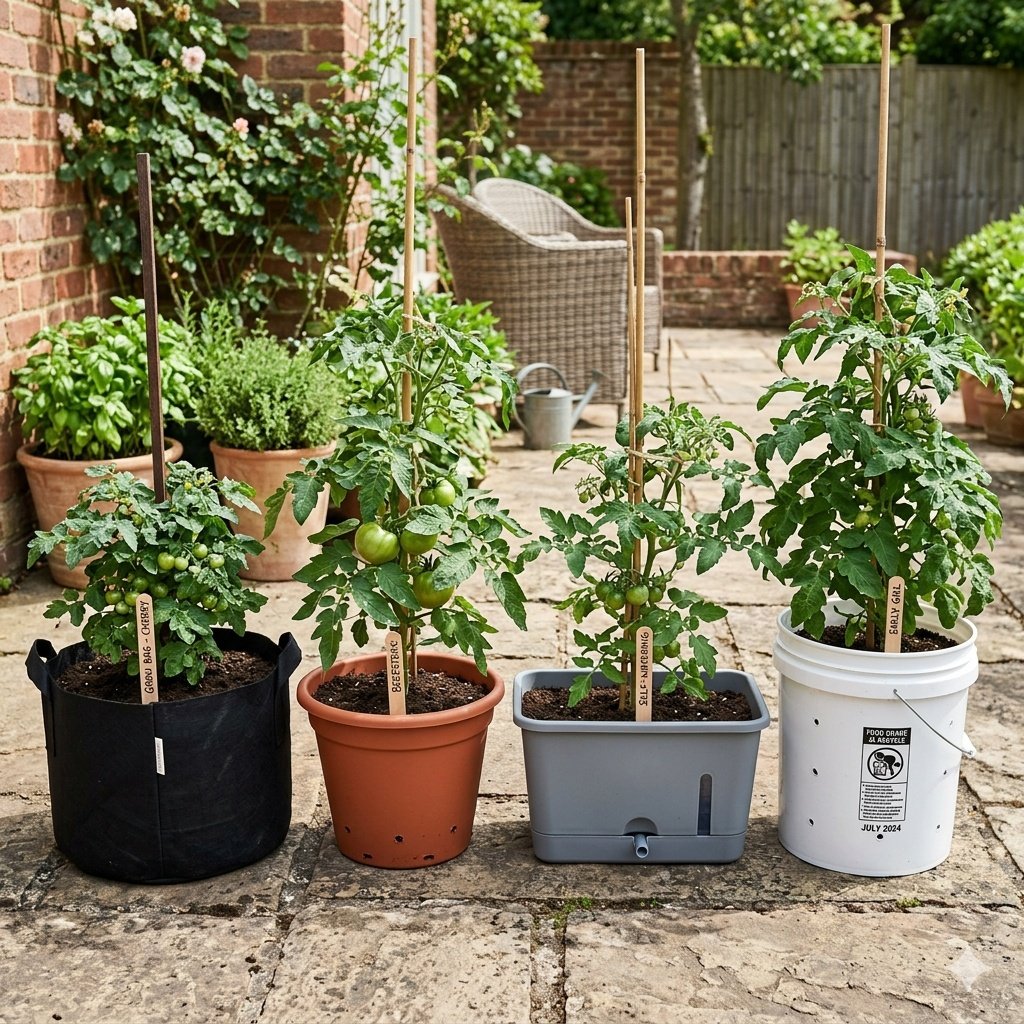
Here’s how common container options compare:
| Container Type | Pros | Cons |
|---|---|---|
| Fabric Grow Bag | Great drainage | Dries faster |
| Plastic Pot | Affordable | Can overheat |
| Self-Watering Planter | Less maintenance | Higher cost |
| Food-Grade Bucket | Cheap and durable | Needs drainage holes |
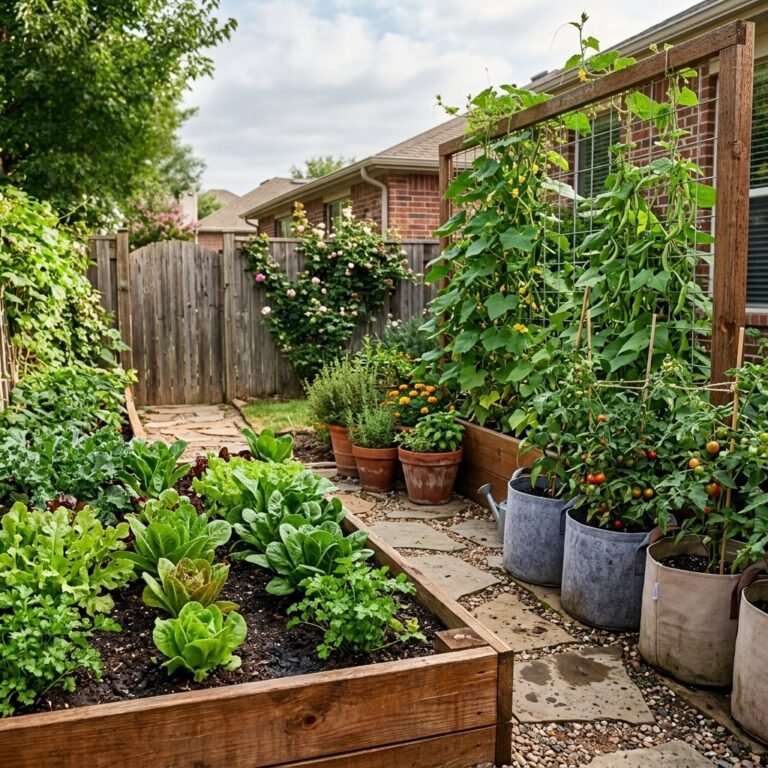
Fabric grow bags are popular for balcony tomato gardens because they’re lightweight and breathable. Self-watering containers help if you travel often or forget daily watering.
Rolling plant caddies are useful too — especially on patios where sunlight changes through the season.
One more thing: don’t crowd plants together. A single healthy tomato plant in a properly sized container often produces more than two cramped plants fighting for space.
Secret #3 – Use High-Quality Potting Mix (Never Use Garden Soil)
Garden soil seems convenient. It’s also one of the fastest ways to stunt container tomatoes.
Outdoor soil becomes compacted inside pots. Water stops draining properly, roots struggle for oxygen, and diseases spread more easily.
Tomatoes in containers need loose, airy soil that drains well while still holding moisture.
A quality potting mix creates that balance.
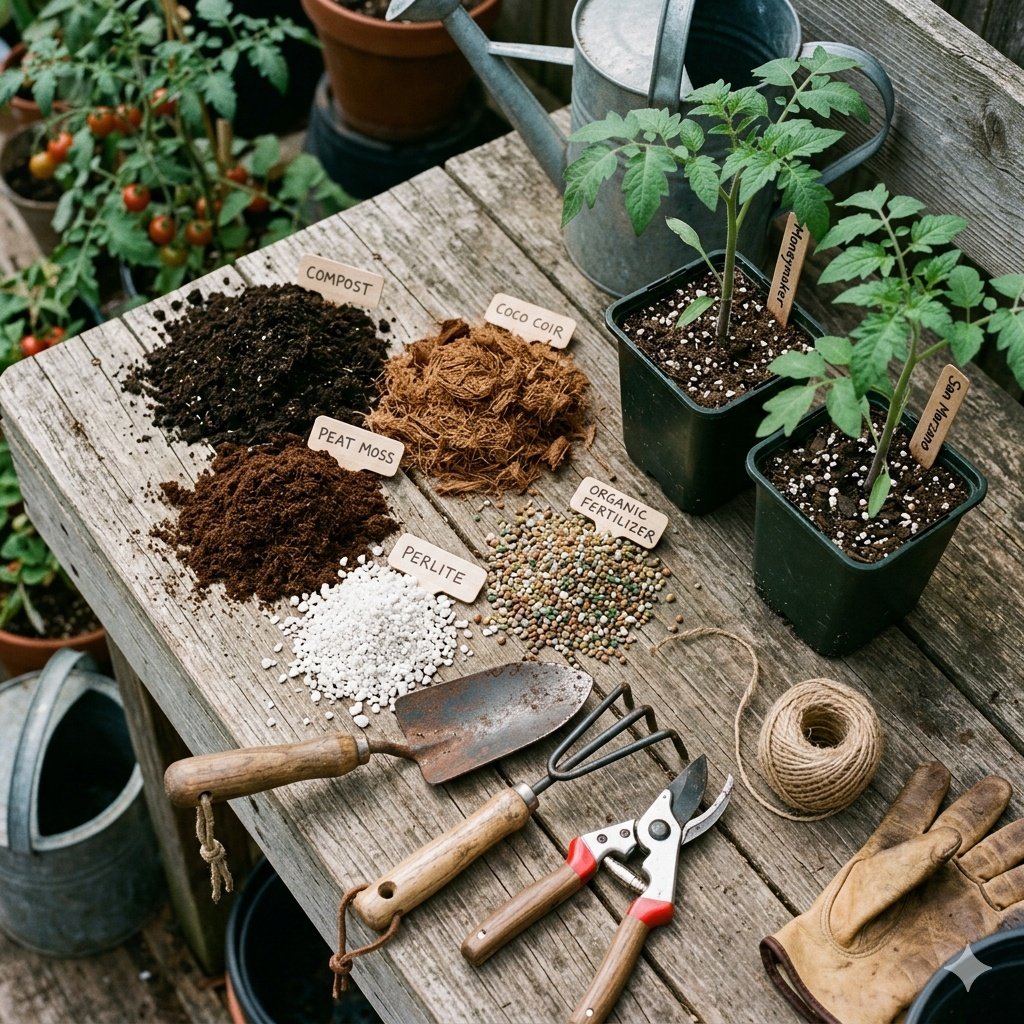
DIY Tomato Potting Mix Recipe
- 40% compost
- 40% coco coir or peat moss
- 20% perlite
This mix stays light while giving roots access to water and nutrients.
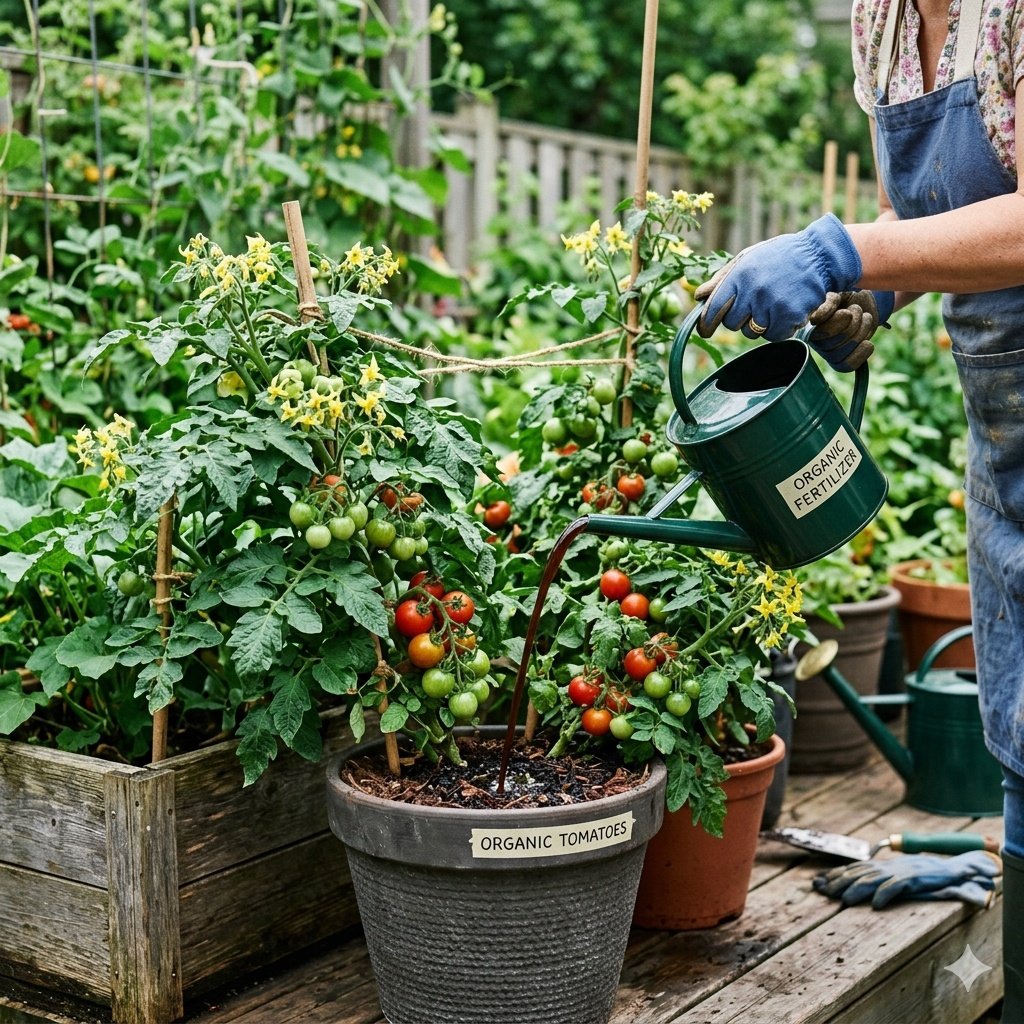
Adding organic tomato fertilizer at planting time helps too. Tomatoes are heavy feeders, and containers lose nutrients faster than garden beds.
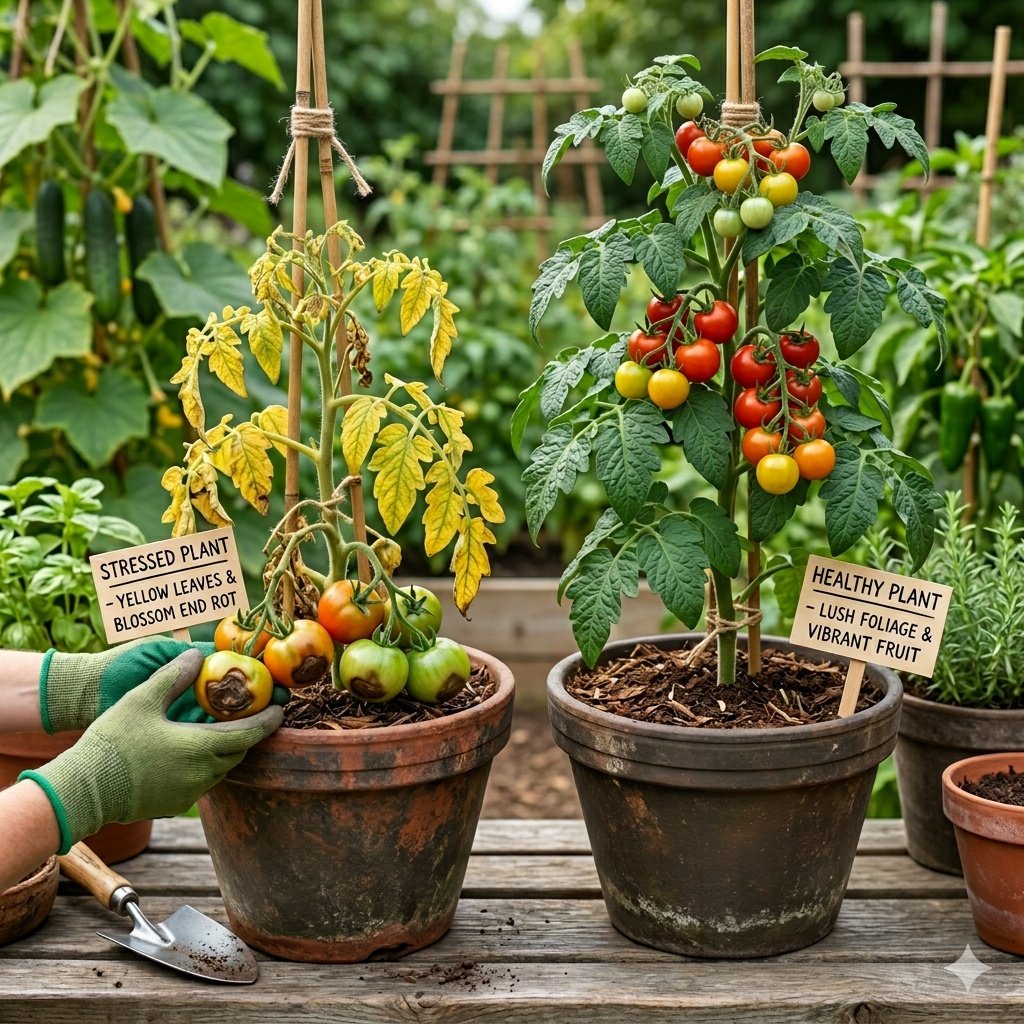
Calcium matters as well. Without enough calcium, tomatoes can develop blossom end rot — those dark, sunken spots at the bottom of fruits.
Crushed eggshells, lime, or calcium supplements can help prevent it.
Good soil doesn’t need to be fancy. It just needs to drain well and stay rich enough to support steady growth.
That’s the goal.
Secret #4 – Give Tomatoes 6–8 Hours of Full Sunlight
Tomatoes love sunlight. The more they get, the better they usually produce.
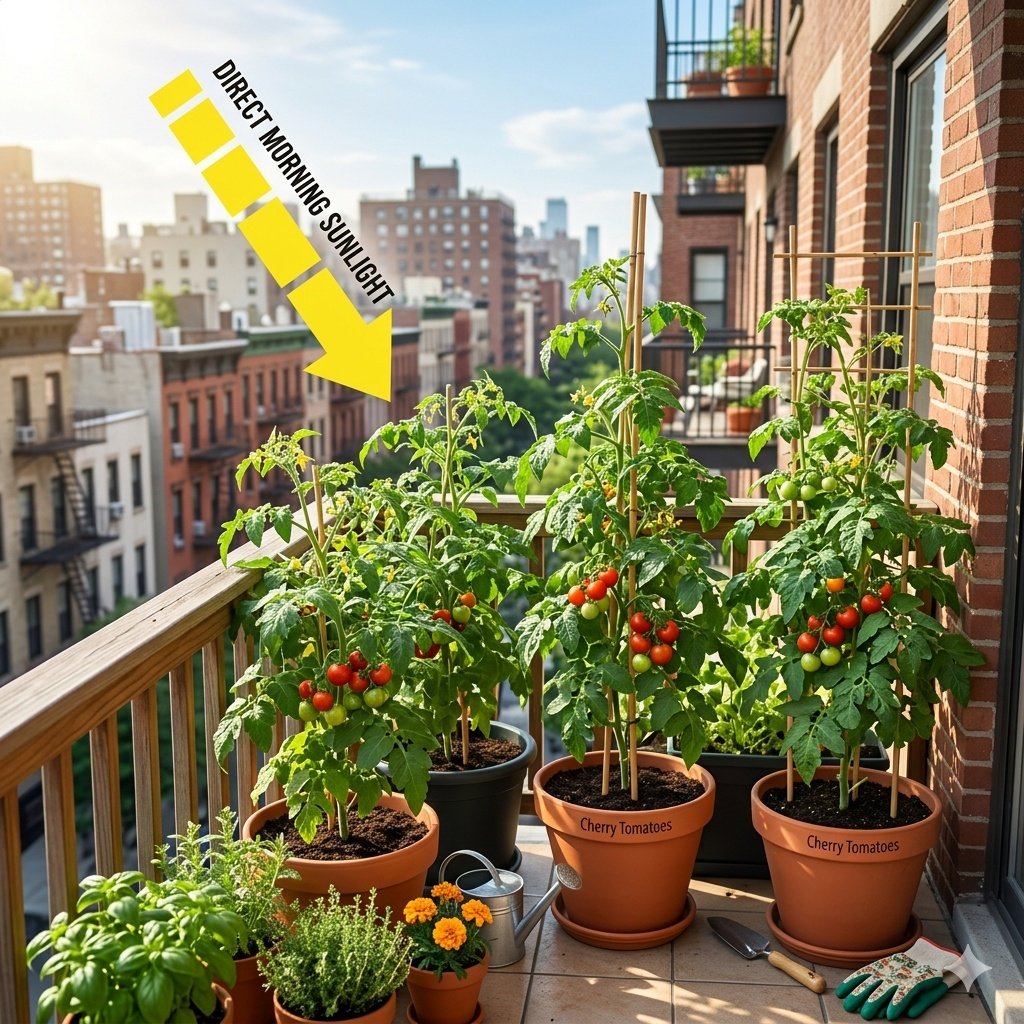
For strong growth and heavy fruiting, aim for at least six to eight hours of direct sun daily. Morning sunlight is especially valuable because it dries moisture from leaves early in the day and reduces disease risk.
Balconies can be tricky since nearby buildings create shifting shade patterns. Watch where sunlight hits throughout the day before placing containers permanently.
If your plants aren’t producing well, lack of sun is often the reason.
Signs Your Tomato Plant Needs More Sun
- Leggy, stretched growth
- Few flowers
- Small fruits
- Slow ripening
There are ways to improve light exposure even in small spaces.
White walls and reflective surfaces can bounce extra light onto plants. Rotating containers weekly helps all sides grow evenly. And rolling planters make it easier to follow the sun during different seasons.
South-facing balconies usually perform best for growing tomatoes on a balcony, but east-facing spaces can still produce solid harvests with smaller varieties.
A little extra sunlight can dramatically change production.
Secret #5 – Water Consistently (The #1 Reason Tomatoes Fail)
Most container tomato problems start with inconsistent watering.
Too dry one day. Flooded the next. Tomatoes hate that.
Irregular watering causes cracked fruit, blossom end rot, weak growth, and stressed plants that stop producing.
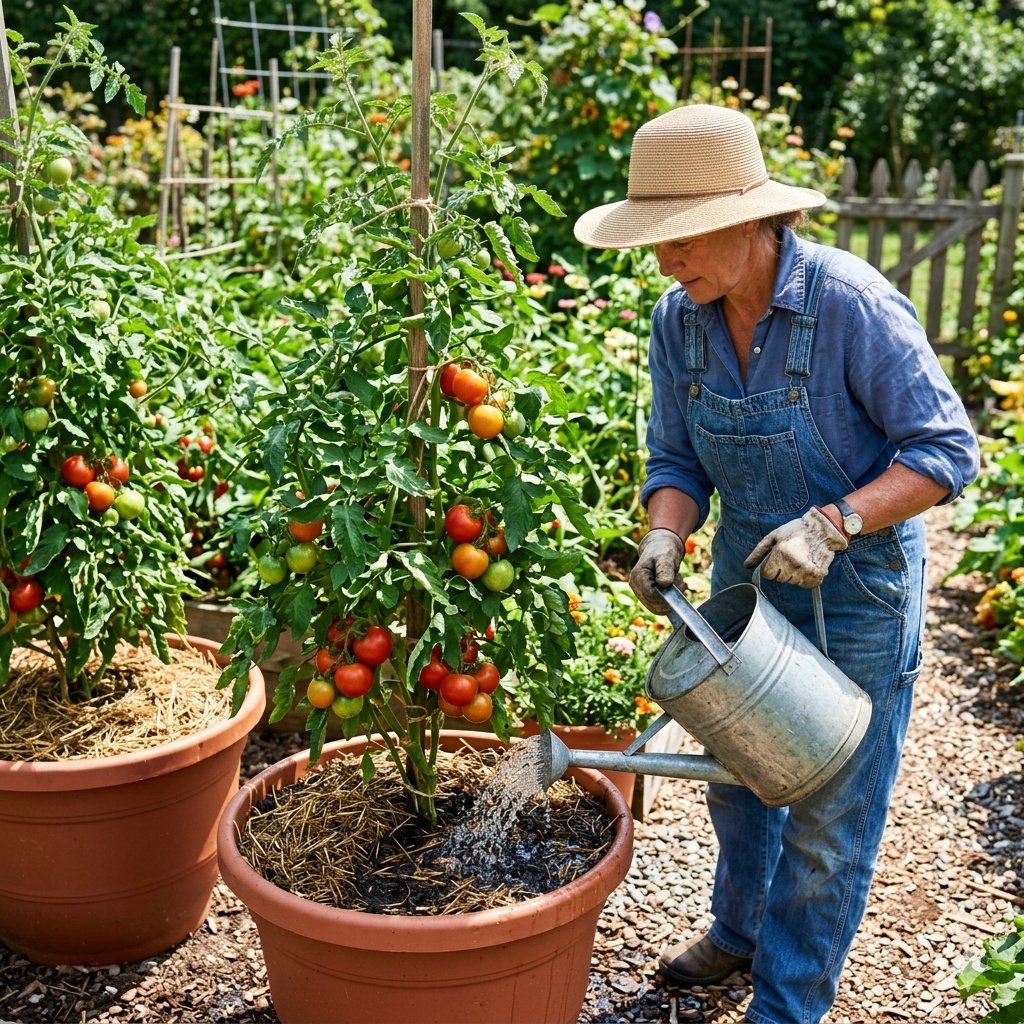
Deep watering works better than quick surface watering. You want moisture reaching the lower roots where plants stay stable during heat waves.
Morning watering is ideal because plants absorb moisture before the hottest part of the day.
Easy Watering Schedule
| Weather | Watering Frequency |
|---|---|
| Mild | Every 2 days |
| Hot summer | Daily |
| Extreme heat | Twice daily |
Containers dry faster than backyard soil — especially fabric grow bags and dark plastic pots sitting in direct sun.
Mulch helps more than people realize. A thin layer of straw, bark, or shredded leaves slows evaporation and keeps roots cooler.
Self-watering systems are useful for busy gardeners. Moisture meters also remove the guesswork if you’re unsure whether the soil is too wet or too dry.
One important tip: water deeply until excess moisture drains from the bottom of the container. Shallow watering encourages weak roots near the surface.
And weak roots struggle in summer heat.
Secret #6 – Feed Tomato Plants Regularly for Massive Harvests
Tomatoes are hungry plants.
A single container tomato can pull nutrients from potting mix surprisingly fast, especially once flowering and fruiting begin.
Early growth needs more nitrogen for strong stems and leaves. Once flowers appear, plants need more phosphorus and potassium to support fruit production.
Tomato Feeding Schedule
| Plant Stage | Fertilizer Type |
|---|---|
| Early growth | Nitrogen-rich |
| Flowering | Balanced fertilizer |
| Fruiting | Potassium-rich |
Liquid fertilizers work well in containers because nutrients reach roots quickly. Compost tea and fish emulsion are popular organic options that many balcony gardeners use weekly during peak growth.
But don’t overfeed.
Too much nitrogen creates giant leafy plants with very few tomatoes. If your plant looks huge but barely flowers, fertilizer imbalance is usually the culprit.
A steady feeding routine matters more than dumping large amounts occasionally.
Think consistency, not excess.
Secret #7 – Support and Prune Plants Correctly
Tomato plants get heavy fast. Especially indeterminate varieties.
Without support, stems bend, fruit touches the soil, and airflow decreases — which increases disease risk.
There are several reliable support options:
Best Support Options
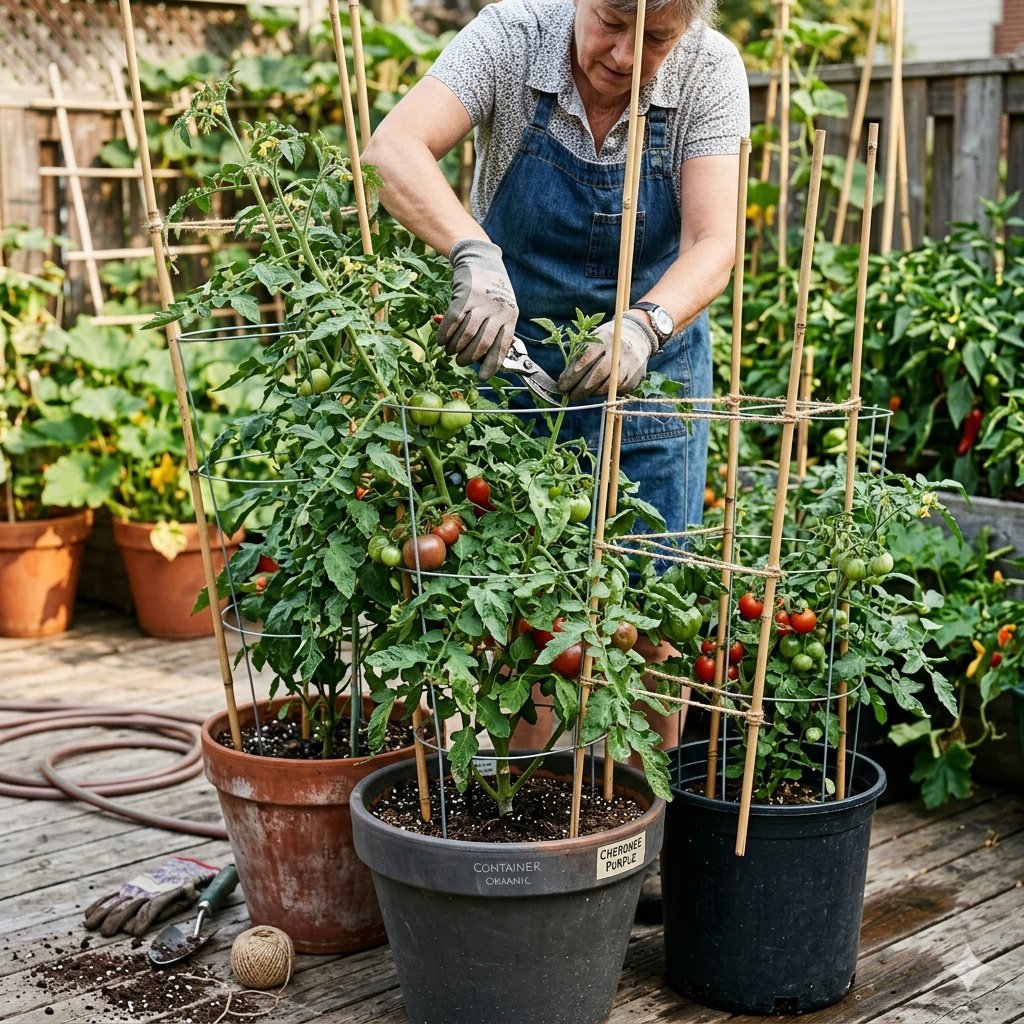
- Tomato cages
- Bamboo stakes
- Trellis systems
- String support
Tomato cages are beginner-friendly and work well for medium-sized plants. Bamboo stakes save space on balconies. Trellis systems are great for patios where vertical growing matters.
Pruning also helps direct energy into fruit production instead of endless leafy growth.
Focus on removing “suckers,” the small shoots growing between the main stem and branches. Removing some suckers improves airflow and encourages larger tomatoes.
But don’t overdo it.
Determinate varieties naturally stay compact and usually need less pruning than indeterminate plants.
Garden ties and plant clips make supporting stems easier without damaging them during growth spurts.
And trust me — tomato plants grow faster than most beginners expect.
Common Container Tomato Problems and Quick Fixes
Even healthy tomato plants hit occasional problems. The key is catching them early.
| Problem | Cause | Solution |
|---|---|---|
| Yellow leaves | Overwatering | Reduce watering |
| Blossom end rot | Calcium deficiency | Add calcium |
| No flowers | Too little sun | Move container |
| Wilting | Heat stress | Water deeply |
Pests show up occasionally too, especially during warm weather.
Aphids, whiteflies, and spider mites are common in patio tomato gardening. Neem oil sprays help manage many infestations naturally without harsh chemicals.
Good airflow also prevents fungal issues. Avoid overcrowding containers and remove damaged leaves quickly.
If leaves curl slightly during hot afternoons, don’t panic. Tomatoes often do this temporarily to conserve moisture.
But persistent curling paired with yellowing usually signals watering stress.
Your plants will tell you what they need if you watch closely enough.
Best Companion Plants for Container Tomatoes
Tomatoes grow even better with the right neighbors.
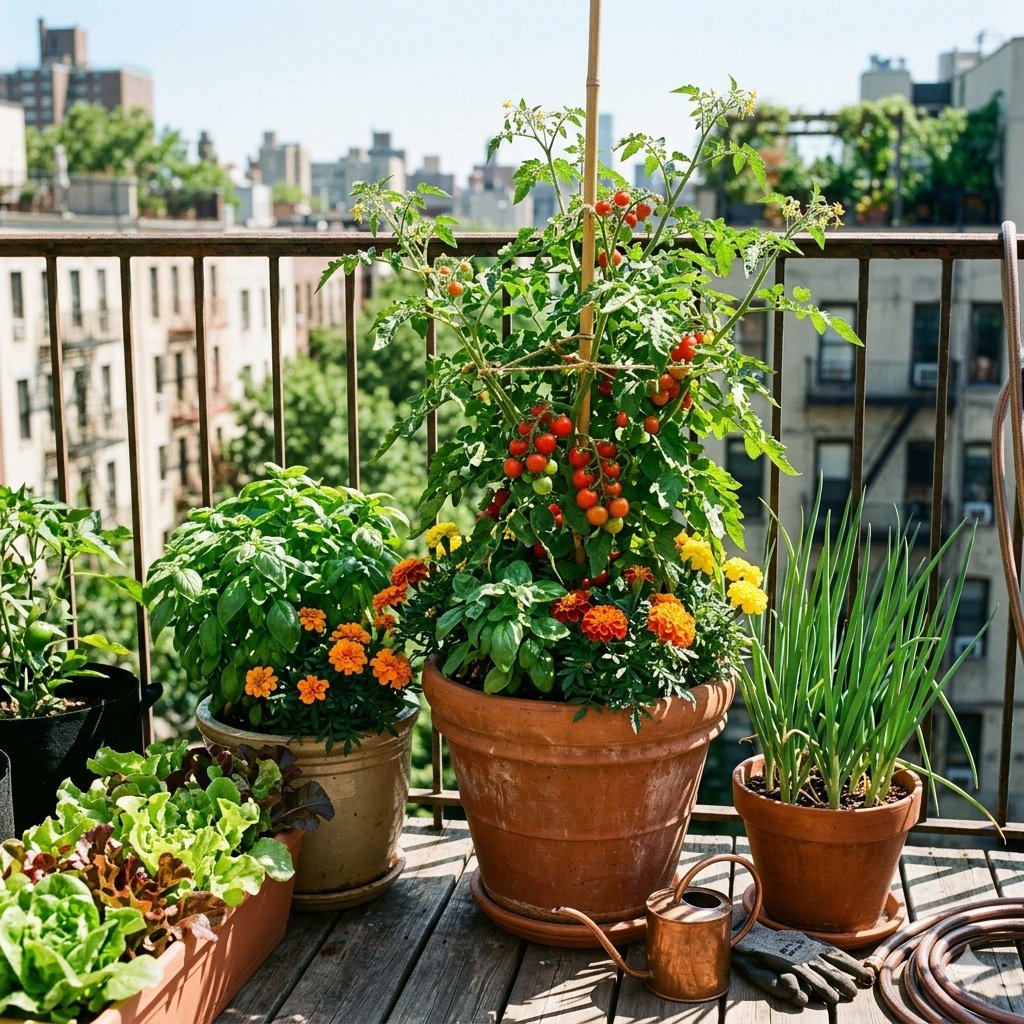
Companion planting helps with pest control, pollination, and space efficiency — especially in small balcony gardens.
Here are a few excellent companions:
- Basil – May help repel pests and pairs perfectly in the kitchen
- Marigolds – Discourage certain insects
- Lettuce – Uses shallow root space beneath taller tomatoes
- Green onions – Compact and useful for pest management
Basil is probably the most popular companion plant for tomatoes. Many gardeners swear tomatoes taste better when grown nearby. Whether that’s scientifically proven or not… fresh basil beside tomatoes never hurts.
Mixing companion plants also makes containers look fuller and more attractive on patios and balconies.
Productive and good-looking. Hard to argue with that.
Related Reads
You might find these helpful as you keep going:
- Metal vs Wood Raised Garden Beds: Which Is Better?
- 17 Full Sun Plants to Grow in May
- 7 Best Fertilizers for Raised Beds (Top Picks + Feeding Guide)
Frequently Asked Questions
1. What size container is best for tomatoes?
A 5-gallon container is the minimum for most tomato plants, but 10–15 gallons works better for larger harvests and stable moisture levels.
2. Can tomatoes grow on a balcony?
Yes. Tomatoes grow well on sunny balconies with at least six hours of direct sunlight daily. Compact varieties are usually easiest for apartment gardening.
3. How often should container tomatoes be watered?
Most container tomatoes need watering daily during hot summer weather. Smaller containers may require twice-daily watering during extreme heat.
4. What is the easiest tomato variety for beginners?
Cherry tomatoes are usually the easiest because they grow quickly, produce heavily, and tolerate beginner mistakes better than larger varieties.
5. Why are my tomatoes small?
Small tomatoes are often caused by insufficient sunlight, inconsistent watering, poor nutrition, or overcrowded roots inside small containers.
6. Can I grow tomatoes indoors?
Yes, but indoor tomatoes need strong light. A sunny south-facing window or grow lights are usually necessary for decent fruit production.
7. How long do tomatoes take to produce fruit?
Most tomato plants begin producing fruit within 60–85 days depending on the variety and growing conditions.
Final Thoughts
Growing tomatoes without a backyard is a lot more realistic than people think. You don’t need raised beds, expensive tools, or a huge outdoor space to harvest fresh tomatoes at home.
What matters most is consistency.
Good soil. Enough sunlight. Regular watering. Proper feeding. Those simple habits make a bigger difference than gardening experience.
Start small if you’re new to container tomato gardening. One healthy plant can produce more than enough tomatoes to build confidence for next season.
And once you taste a sun-ripened tomato straight from your balcony or patio, grocery store tomatoes start feeling a little disappointing.
So grab a container, pick a variety, and start this weekend.
Even a small sunny corner can grow something impressive.