

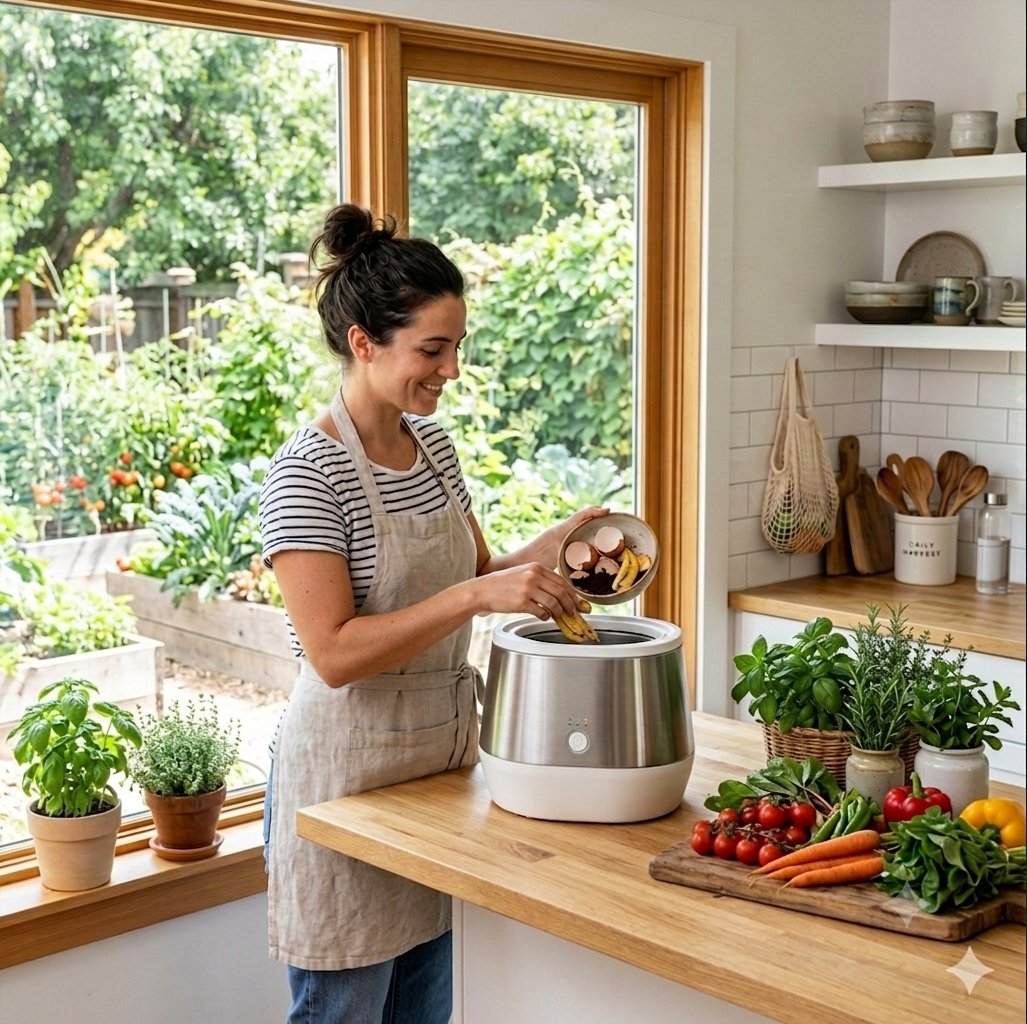
Growing your own vegetables, herbs, and flowers is rewarding, but it also creates a steady stream of kitchen scraps and garden waste. Vegetable peels, coffee grounds, fruit leftovers, and plant trimmings can quickly pile up. While traditional compost bins are a great solution, they aren’t always practical for every gardener.
Outdoor compost piles require space, regular turning, and patience. In many cases, they can attract pests or produce unpleasant odors if not managed properly. For gardeners living in urban areas, apartments, or homes with limited yard space, traditional composting can feel like more work than it’s worth.
That’s where electric composters come in. These machines speed up the breakdown process by drying, grinding, or biologically processing food waste into a soil-friendly material that can be used around the garden. They offer a cleaner, faster, and more convenient way to reduce food waste throughout the year.
After reviewing the leading models available today, we’ve selected five standout options that cater to different budgets, garden sizes, and composting goals.
Quick Comparison Table
| Product | Capacity | Cycle Time | Odor Control | Best For |
|---|---|---|---|---|
| Food Cycler Eco 5 | Medium | 4–8 hrs | Excellent | Best Overall |
| Soliddis Electric Composter | Small-Medium | 4–10 hrs | Very Good | Budget Pick |
| Reencle Prime | Large | Continuous | Excellent | Serious Gardeners |
| GEME Electric Composter | Large | Continuous | Excellent | Premium Microbial |
| Growell Electric Composter | Small-Medium | Overnight | Excellent | Smart Users |
Our Top Picks at a Glance
Best Overall: Food Cycler Eco 5
Best Budget Pick: Soliddis Electric Composter
Best for Serious Gardeners: Reencle Prime
Best Premium Microbial Pick: GEME Electric Composter
Best Smart Large Capacity Option: Amazon Smart Composter Category Units

What Is an Electric Composter?
An electric composter is a kitchen appliance designed to reduce food waste quickly and conveniently. Unlike traditional compost piles that can take months to create usable compost, electric composters accelerate the process through heating, grinding, dehydration, or microbial activity.
Most countertop composters work by drying food scraps and reducing them into a nutrient-rich material. This output isn’t always finished compost, but it breaks down much faster once added to soil or a traditional compost bin.
Some advanced models, particularly microbial systems like Reencle and GEME, use beneficial microorganisms to process food waste continuously. These systems create an end product that more closely resembles traditional compost.
For gardeners, the biggest advantage is consistency. You can process food scraps throughout the year regardless of weather conditions. There’s no need to manage a large outdoor pile, and odor control systems help keep kitchens smelling fresh.
How We Chose the Best Electric Composters
We evaluated each model based on factors that matter most to gardeners:
- Processing capacity
- Speed and efficiency
- Odor management
- Noise levels
- Ease of cleaning
- Energy consumption
- Compost quality
- Long-term reliability
- Customer feedback
- Overall value for money
The goal wasn’t simply to find the fastest machine. We focused on products that help gardeners turn food waste into something genuinely useful for their plants and soil.
5 Best Electric Composters for Gardeners Reviewed

1. Food Cycler Eco 5 – Best Premium Countertop Composter (Amazon Bestseller Alternative)
Overview
The Food Cycler Eco 5 is part of the next generation of countertop food recyclers and is positioned as a more advanced evolution of the well-known Food Cycler line. It’s designed for households that want faster cycles, improved efficiency, and a more refined user experience compared to basic composters.
This model focuses on reducing food waste into a dry, odorless material in just a few hours, making it highly practical for daily kitchen use.
Key Features
- High-efficiency food waste reduction system
- 4–8 hour composting cycles
- Large-capacity removable bucket
- Advanced odor control filtration
- Quiet operation suitable for indoor use
- Durable, premium build quality
Pros
- Strong brand trust and Amazon popularity
- Faster and more efficient cycles than entry-level models
- Very effective odor management system
- Higher capacity suitable for families
- Simple, user-friendly operation
Cons
- Higher price point than budget models
- Still produces pre-compost, not finished compost
- Filter replacements required over time
Best For
Gardeners and households who want a premium, reliable countertop composter with proven performance and strong Amazon availability.
Why We Recommend It
The Food Cycler Eco 5 earns its place as a premium Amazon-friendly option because it combines speed, reliability, and brand trust in a way most competitors struggle to match.
It handles everyday kitchen waste efficiently, reducing it to a fraction of its original volume in just a few hours. That makes it especially useful for households that cook frequently and want to avoid daily trash buildup.
Where it really stands out is consistency. Unlike many generic electric composters, the Eco 5 delivers stable results cycle after cycle without much user intervention. The odor control system is also strong enough for indoor kitchens, even during longer processing loads.
For gardeners, the output integrates easily into soil systems or outdoor compost piles. It’s not a finished compost product, but it significantly accelerates the breakdown process once added to garden beds.
Overall, this is one of the most dependable “set it and forget it” options currently available on Amazon.

2. Soliddis Electric Composter – Best Smart Budget Countertop Pick
Overview
The Soliddis Electric Composter is one of the newer countertop food recyclers gaining traction on Amazon thanks to its simple operation, compact size, and fully automatic cycle system. It’s designed for everyday kitchen waste without requiring much setup or maintenance, making it a practical entry point into electric composting.
Unlike premium composting systems, it focuses on speed and convenience. You load food scraps, start a cycle, and let the machine dry and reduce waste volume into a more manageable, garden-ready form.
Key Features
- One-touch automatic composting cycle
- Self-cleaning mode for easier maintenance
- Compact countertop-friendly design
- Activated carbon odor filtration system
- Fast drying and volume reduction technology
- Removable inner bucket for cleaning
Pros
- Very easy for beginners to use
- Affordable compared to premium composters
- Compact enough for small kitchens
- Strong odor control for daily use
- Good entry-level Amazon availability
Cons
- Smaller processing capacity
- Output is pre-compost, not finished compost
- Build quality is not as refined as premium brands
Best For
Home gardeners or beginners who want a low-cost, simple electric composter that works straight out of the box without complexity.
Why We Recommend It
The Soliddis unit stands out because it removes friction from the composting process. There’s no learning curve, no setup complexity, and no app dependency. You just add scraps and run a cycle.
It’s particularly useful for small households or apartment gardeners who want to reduce kitchen waste without dealing with smell or mess. The carbon filtration system does a decent job of keeping odors contained, even when processing stronger food waste like onion peels or coffee grounds.
While it doesn’t match the output quality of microbial systems, it performs well for what it is: a fast, compact food recycler for everyday kitchen use. For its price range, it offers one of the more balanced entry points into electric composting on Amazon.
3. Reencle Prime – Best for Serious Gardeners
Overview
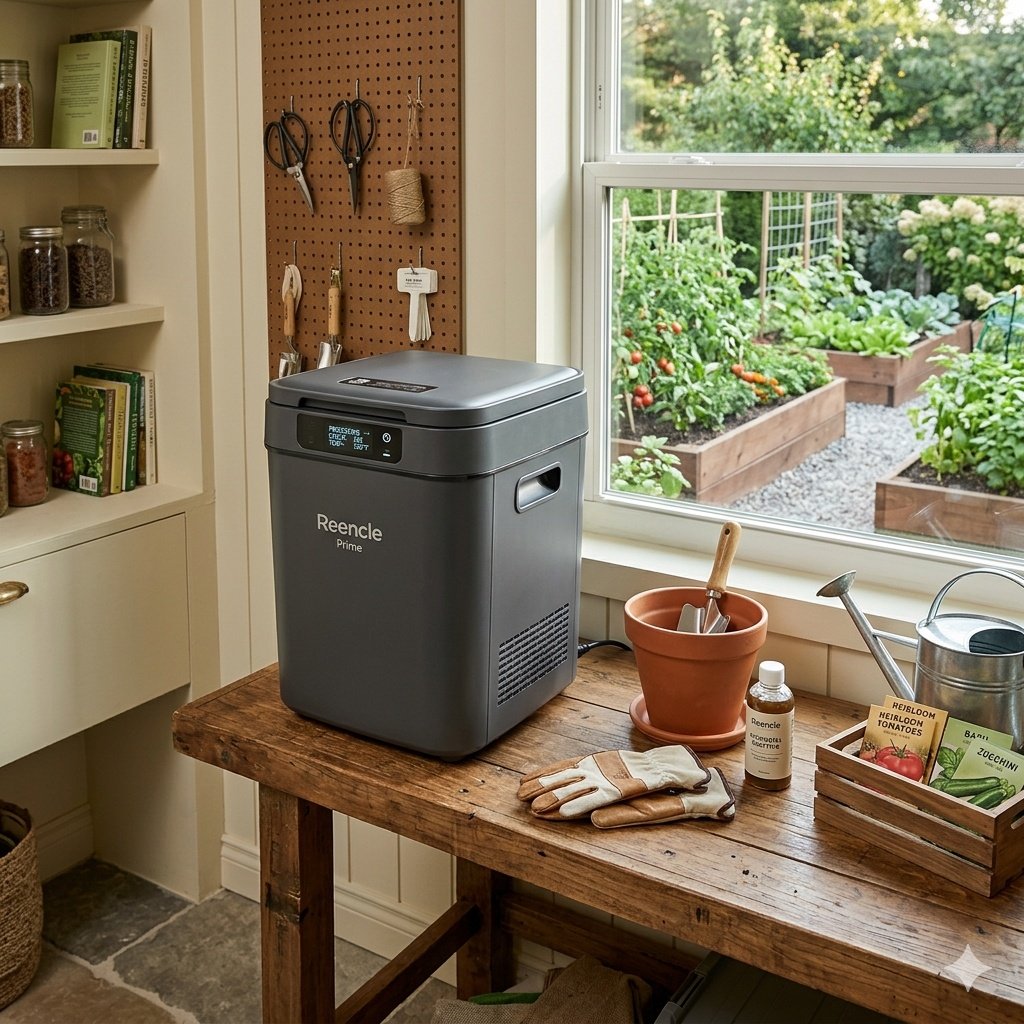
Reencle Prime uses microbial composting instead of simple drying, making it one of the closest systems to traditional composting in an indoor format.
It continuously processes food waste into compost-like material.
Key Features
- Microbial composting system
- Continuous operation
- Large waste capacity
- Produces compost-like output
Pros
- Handles significant food waste
- Continuous processing
- Reduced manual effort
- Suitable for active gardeners
Cons
- Higher investment
- Requires more floor space
Best For
Gardeners managing larger vegetable gardens, raised beds, or extensive landscaping projects.
Why We Recommend It
Reencle Prime stands out because it doesn’t rely solely on drying and grinding. Instead, beneficial microbes actively break down food waste over time.
This creates an output that feels much closer to traditional compost than many countertop systems. That’s a major advantage for gardeners focused on improving soil health.
The continuous-feed design is another benefit. Rather than waiting for individual cycles to finish, users can regularly add food scraps as they accumulate.
Although it requires more space and costs more than compact models, the payoff is significant for households generating large amounts of organic waste.

4. Growell Electric Composter – Best Compact Self-Cleaning Option
Overview
The Growell Electric Composter is a compact countertop food recycler designed for everyday kitchen waste management. It focuses on simplicity and automation, making it a practical option for beginners who want a low-maintenance way to reduce food scraps without dealing with traditional compost bins.
It uses a fully automated drying and grinding cycle to reduce food waste into a dry, soil-ready material that can be added to garden beds or outdoor compost piles.
Key Features
- Automatic composting and drying cycle
- Self-cleaning function for easier maintenance
- Compact countertop-friendly design
- Activated carbon odor filtration system
- LED display with simple controls
- Designed for daily kitchen food waste
Pros
- Very easy to operate (one-touch use)
- Good fit for small kitchens and apartments
- Self-cleaning feature reduces maintenance effort
- Odor control works well for typical food scraps
- Affordable entry into electric composting
Cons
- Smaller capacity compared to premium units
- Output is pre-compost, not finished compost
- Not ideal for heavy daily waste loads
Best For
Home gardeners and beginners who want a simple, compact, and low-effort electric composter available directly on Amazon.
Why We Recommend It
The Growell composter is designed for convenience more than complexity. It removes most of the friction usually associated with composting—no turning piles, no outdoor setup, and minimal cleaning.
For small households, it handles daily kitchen scraps comfortably and keeps odors under control thanks to its carbon filtration system. The self-cleaning function is especially useful for users who don’t want to deal with manual maintenance after every cycle.
While it won’t replace full-scale composting systems for serious gardeners, it works well as a steady kitchen-to-garden waste reducer. The output breaks down quickly once added to soil, making it a helpful support tool for home gardening routines.

5. GEME Electric Composter – Best Premium Pick
Overview
GEME is a high-end microbial electric composter designed for users who want the closest possible experience to natural composting indoors.GEME is built for gardeners who want an electric composter that comes as close as possible to traditional composting.
Key Features
- Microbial composting process
- Advanced odor management
- High processing capacity
- Automatic operation
Pros
- Produces compost-like material
- Excellent odor control
- Handles larger volumes
Cons
- Expensive
- Larger footprint
Best For
Gardeners seeking a premium composting solution with minimal compromise.
Why We Recommend It
GEME’s microbial system continuously breaks down food scraps instead of simply dehydrating them. As a result, the final material is often more useful for soil applications.
Odor management is particularly impressive. Even during extended operation, the system remains suitable for indoor environments.
The larger processing chamber also makes it a strong choice for households producing substantial food waste every week.
The price places it firmly in the premium category, but serious gardeners may find the investment worthwhile if compost quality is their top priority.

Electric Composter vs Traditional Compost Bin
| Feature | Electric Composter | Traditional Compost |
|---|---|---|
| Speed | Hours to days | Months |
| Odor | Controlled | Variable |
| Maintenance | Low | Moderate to high |
| Space Needed | Small | Larger outdoor area |
| Cost | Higher upfront | Lower upfront |
Key Takeaways
Traditional compost bins remain an excellent choice for gardeners with plenty of outdoor space and patience. They create true compost naturally and have minimal operating costs.
Electric composters appeal to gardeners who value speed, convenience, and year-round operation. They’re especially useful for urban homes, apartments, and households where outdoor composting isn’t practical.
Many gardeners actually combine both methods. An electric composter reduces food waste quickly, and the resulting material can then be added to a traditional compost pile or garden beds.

What to Look for When Buying an Electric Composter
Capacity
Household size matters. Smaller units work well for one or two people, while larger families benefit from systems with greater capacity.
Processing Time
Some machines finish a cycle within a few hours. Others operate continuously. Consider how much food waste you generate each week.
Noise Level
Most modern electric composters are reasonably quiet, but noise levels can vary. This is particularly important in apartments and open-plan homes.
Odor Control
Look for carbon filtration or advanced odor management systems. Good odor control can make daily use much more pleasant.
Maintenance
Filters, cleaning requirements, and removable components all affect long-term convenience.
Energy Consumption
Electric composters use power, so efficiency matters. Models with optimized cycles can help reduce operating costs over time.
Compost Quality
Not all outputs are equal. Some machines produce dried food particles, while others create compost-like material through microbial activity.
Size and Footprint
Countertop models save space, while larger floor-standing units generally offer greater processing capacity.
Choosing the right balance between these factors will help ensure you’re satisfied with your purchase for years to come.

Are Electric Composters Worth It for Gardeners?
For many gardeners, the answer is yes.
One of the biggest benefits is speed. Instead of waiting months for food scraps to decompose naturally, electric composters can reduce waste within hours or days.
They also help eliminate common composting frustrations. Odors are reduced, pests aren’t attracted to food scraps, and the process remains consistent throughout the year.
Convenience is another major advantage. Loading scraps into a machine requires far less effort than managing a traditional compost pile.
That said, electric composters aren’t perfect. The initial purchase price can be substantial, and all models consume electricity. Some systems also produce a pre-compost material rather than finished compost.
For gardeners with limited space or busy schedules, however, the convenience often outweighs the drawbacks. They make composting accessible to people who might otherwise avoid it altogether.
Related Reads
You might find these helpful as you keep going:
7 Best Fertilizers for Raised Beds (Top Picks + Feeding Guide)
7 Best Self-Watering Systems for Balcony Vegetable Gardens (That Actually Work)
17 Full Sun Plants to Grow in May
FAQ
Do electric composters make real compost?
Some do, particularly microbial systems such as Reencle Prime and GEME. Many countertop units primarily dry and grind food waste into a material that decomposes faster once added to soil or compost.
Can I use electric composter output in vegetable gardens?
Yes, though it’s wise to follow manufacturer recommendations. Some outputs perform best after further decomposition in soil or a compost pile.
How long does an electric composter take?
Most drying and grinding units complete a cycle in roughly 3 to 20 hours. Continuous microbial systems operate differently and process waste over time.
Are electric composters energy efficient?
Most modern models are designed to balance performance and energy use. Actual consumption varies by size and processing method.
What foods should not go into an electric composter?
Always follow manufacturer guidelines. Certain models may restrict large bones, excessive liquids, or specific food types.
Do electric composters smell?
Quality models include carbon filters or odor-control systems that significantly reduce smells during operation.

Final Verdict
Choosing the best electric composter comes down to how much food waste your household produces, how much space you have, and what you expect from the output.
Best Overall: Food Cycler Eco 5
The Food Cycler Eco 5 offers the best balance of performance, ease of use, odor control, and Amazon availability. It’s a dependable choice for most gardeners who want a simple way to reduce kitchen waste throughout the year.
Best Budget Pick: Soliddis Electric Composter
If you’re new to electric composting or want an affordable countertop solution, the Soliddis Electric Composter delivers solid performance without a premium price tag. It’s compact, easy to operate, and well-suited for smaller households.
Best for Serious Gardeners: Reencle Prime
Reencle Prime stands out for its microbial composting system and continuous operation. For gardeners who generate a lot of food waste and want an output that more closely resembles traditional compost, it’s one of the strongest options available.
Best Premium Option: GEME Electric Composter
GEME is designed for users who want the closest indoor alternative to traditional composting. Its microbial technology, large capacity, and high-quality compost-like output make it a premium choice for dedicated gardeners.
Best Compact Alternative: Growell Electric Composter
Growell is a practical option for apartment dwellers and small households. Its self-cleaning feature, compact footprint, and user-friendly design make composting accessible without taking up much kitchen space.
Bottom Line
For most readers, the FoodCycler Eco 5 is the safest all-around recommendation. Budget-conscious buyers should consider the Soliddis Electric Composter, while gardeners focused on compost quality and larger-scale waste processing will likely get the most value from Reencle Prime or GEME. If space is limited, Growell offers a convenient and beginner-friendly alternative. The right choice depends on your garden size, household waste volume, and composting goals.
Final Thoughts
Electric composters make it easier than ever to turn everyday food scraps into useful material for your garden. They eliminate many of the challenges associated with traditional composting, including long wait times, odors, and the need for outdoor space.
If you’re looking for the best all-around option, the Food Cycler Eco 5 offers a strong mix of performance, convenience, and reliability. Gardeners on a tighter budget may find the Soliddis Electric Composter to be a practical and affordable starting point. For larger households and more serious gardening projects, the Reencle Prime provides greater capacity and a compost-like output through microbial processing. The GEME Electric Composter is worth considering if your priority is premium composting performance and minimal manual effort. Those with limited kitchen space may appreciate the compact design of the Growell Electric Composter.
Ultimately, the best electric composter is the one that fits your household’s waste volume, available space, and gardening goals. By choosing the right model, you can reduce food waste year-round while putting valuable nutrients back into your soil.