

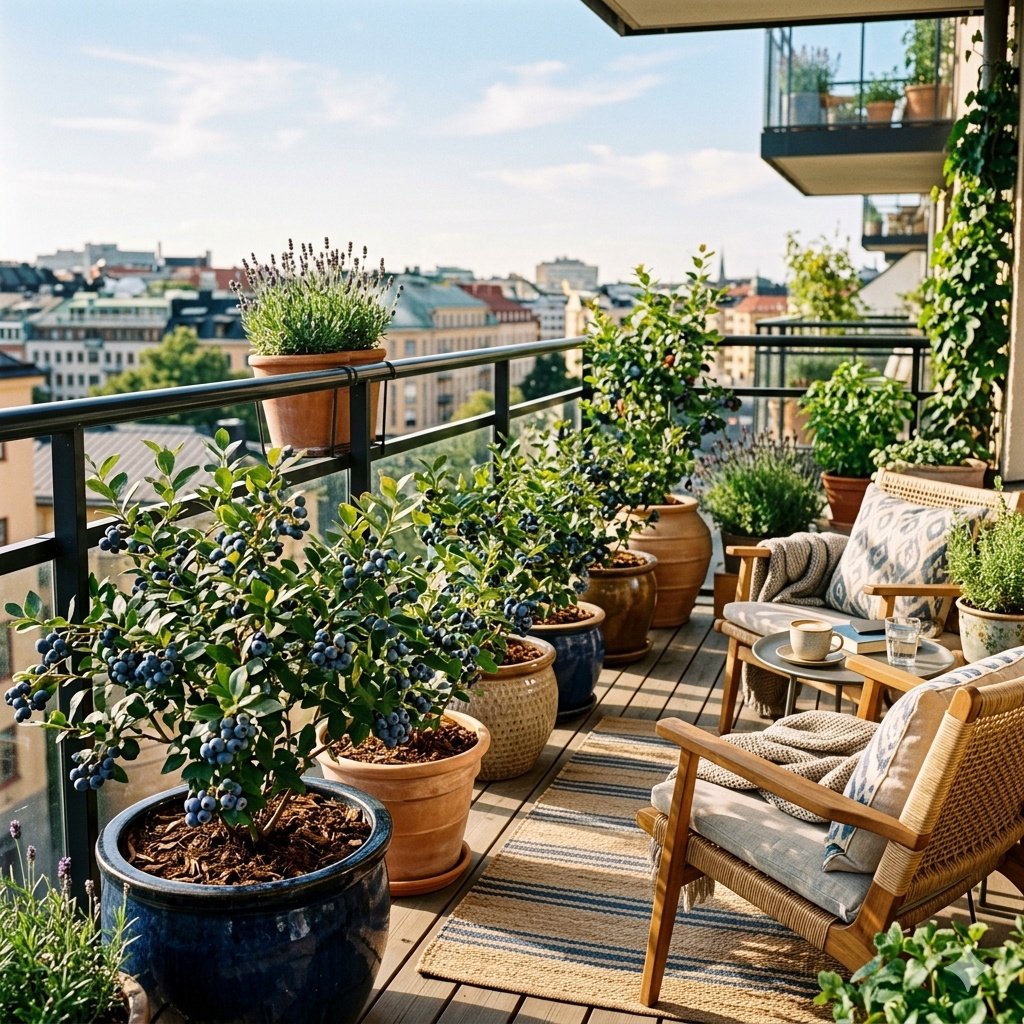
You don’t need a huge backyard to grow fresh blueberries. In fact, some of the Best Blueberry Varieties for Pots grow better in containers than they do in the ground. That’s good news for apartment gardeners, balcony growers, and anyone working with a tiny patio or small garden.
Blueberries have become one of the most popular fruits for home gardeners. Grocery prices keep climbing, and fresh blueberries rarely stay cheap for long. A single healthy blueberry bush can produce fruit for years, making it one of the smartest edible plants you can grow at home.
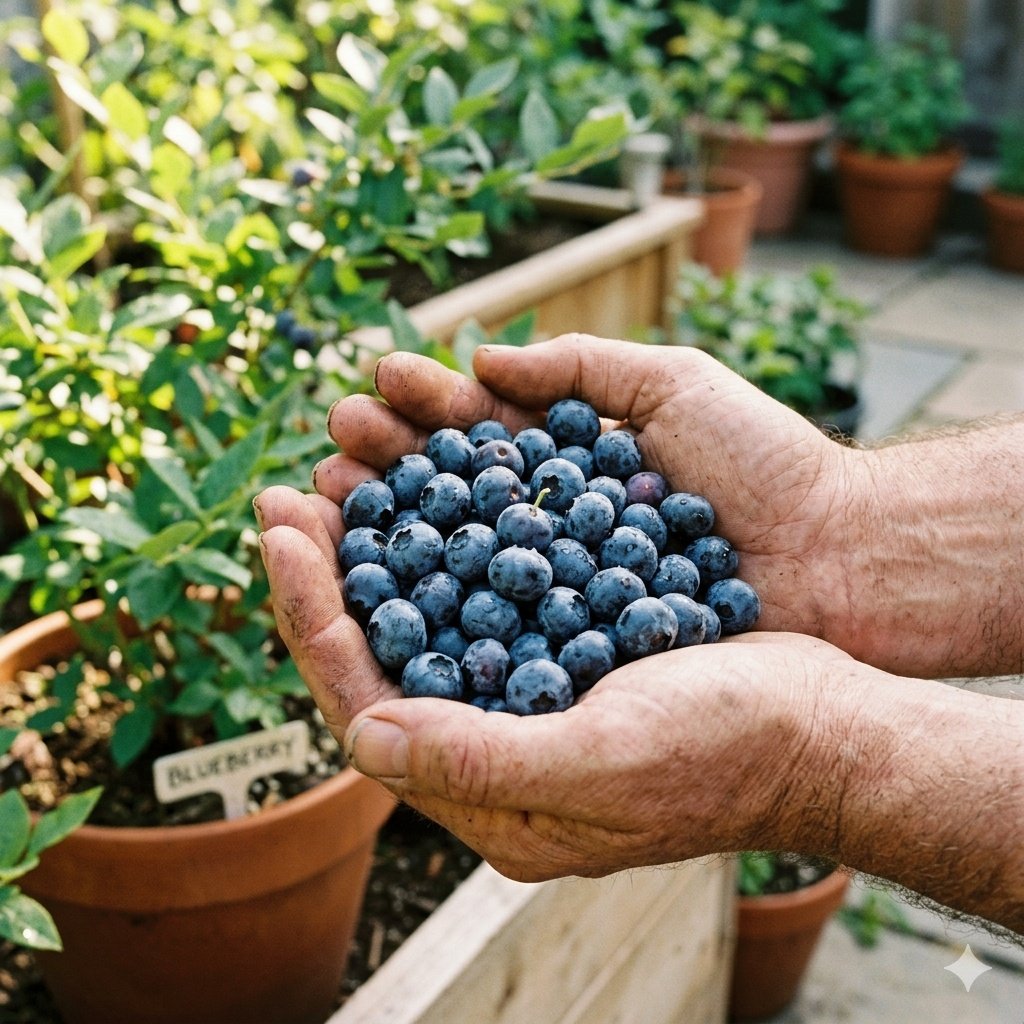
Many people assume blueberries need wide garden beds and perfect soil conditions. They don’t. Compact blueberry plants thrive in containers because pots make it easier to control soil acidity, watering, and sunlight exposure.
And honestly, they look great too. Some varieties have pink flowers in spring, deep green leaves in summer, and fiery red foliage in fall. A blueberry bush can work as both a fruit plant and a decorative patio feature.
Whether you want a productive berry plant for your balcony or a colorful edible shrub for a small space, these container-friendly blueberry varieties are a great place to start.
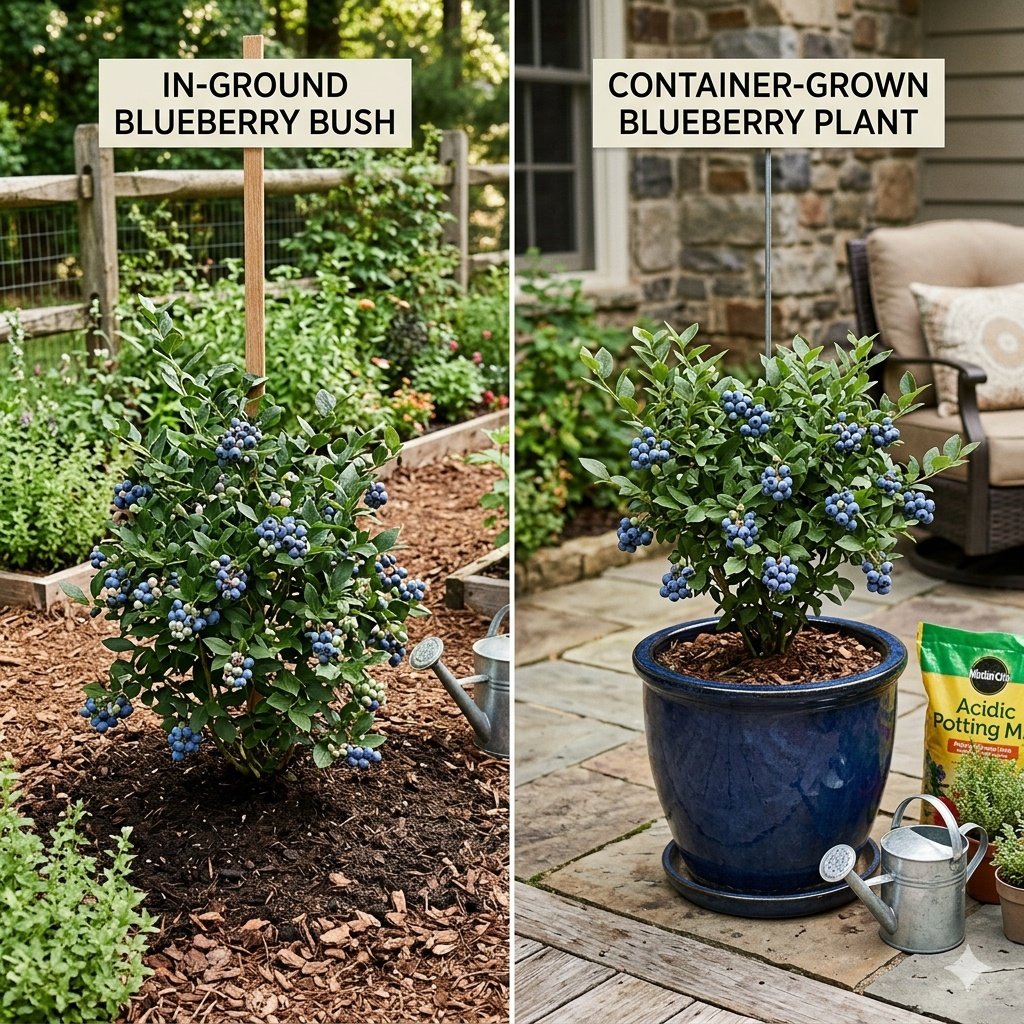
Why Blueberries Grow So Well in Containers
Blueberries are one of the easiest fruit plants to grow in containers because they have very specific soil needs. Most garden soil isn’t acidic enough, but pots allow you to create the perfect growing environment without changing your entire yard.
Container growing also helps avoid common drainage problems. Blueberry roots dislike soggy soil, and containers give you better control over moisture levels.
Another reason people love growing blueberries in pots? Mobility.
You can move the plants to follow sunlight, protect them from harsh weather, or rearrange your patio whenever needed. That flexibility matters in small-space gardening.
Balconies, rooftops, patios, and compact urban gardens are all good spots for container blueberry plants.
| In-Ground Blueberries | Container Blueberries |
|---|---|
| Soil pH harder to control | Easier acidity management |
| Larger space needed | Great for balconies |
| Harder to relocate | Portable |
Growing blueberries in containers also makes harvesting easier. You won’t need to bend down as much, and birds are easier to manage with simple netting.
What to Look for in a Blueberry Variety for Pots
Not every blueberry bush belongs in a container. Some grow over six feet tall and need large root systems. For pots and patios, smaller plants usually perform best.
Start by looking for dwarf or semi-dwarf blueberry varieties. Compact plants adapt better to container life and are easier to maintain long term.
Self-pollinating plants are another smart choice, especially if you only have room for one bush. That said, planting two different varieties nearby often improves berry production.
Here are the main features worth looking for:
Best Features Checklist
- Compact growth habit
- Small root system
- Long fruiting season
- Disease resistance
- Good heat or cold tolerance
- Sweet berry flavor
- Suitable for your USDA zone
Fruit production matters too. Some dwarf blueberry plants stay tiny but produce lighter harvests. Others need slightly larger containers but reward you with heavy crops.
Think about your climate as well. Certain blueberry bushes handle cold winters better, while others thrive in hot southern conditions.
If you’re new to growing blueberries in pots, beginner-friendly varieties with strong disease resistance can save a lot of frustration later.
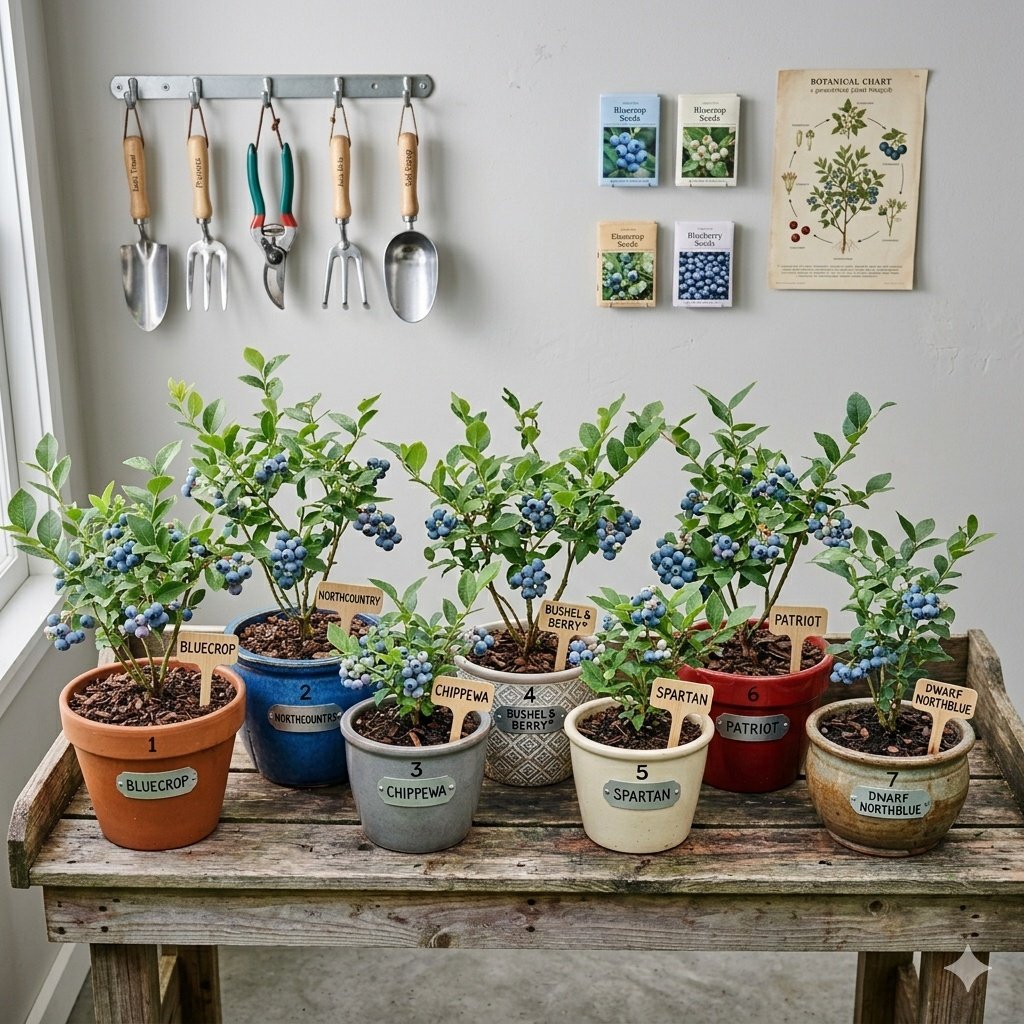
7 Best Blueberry Varieties for Pots and Small Gardens
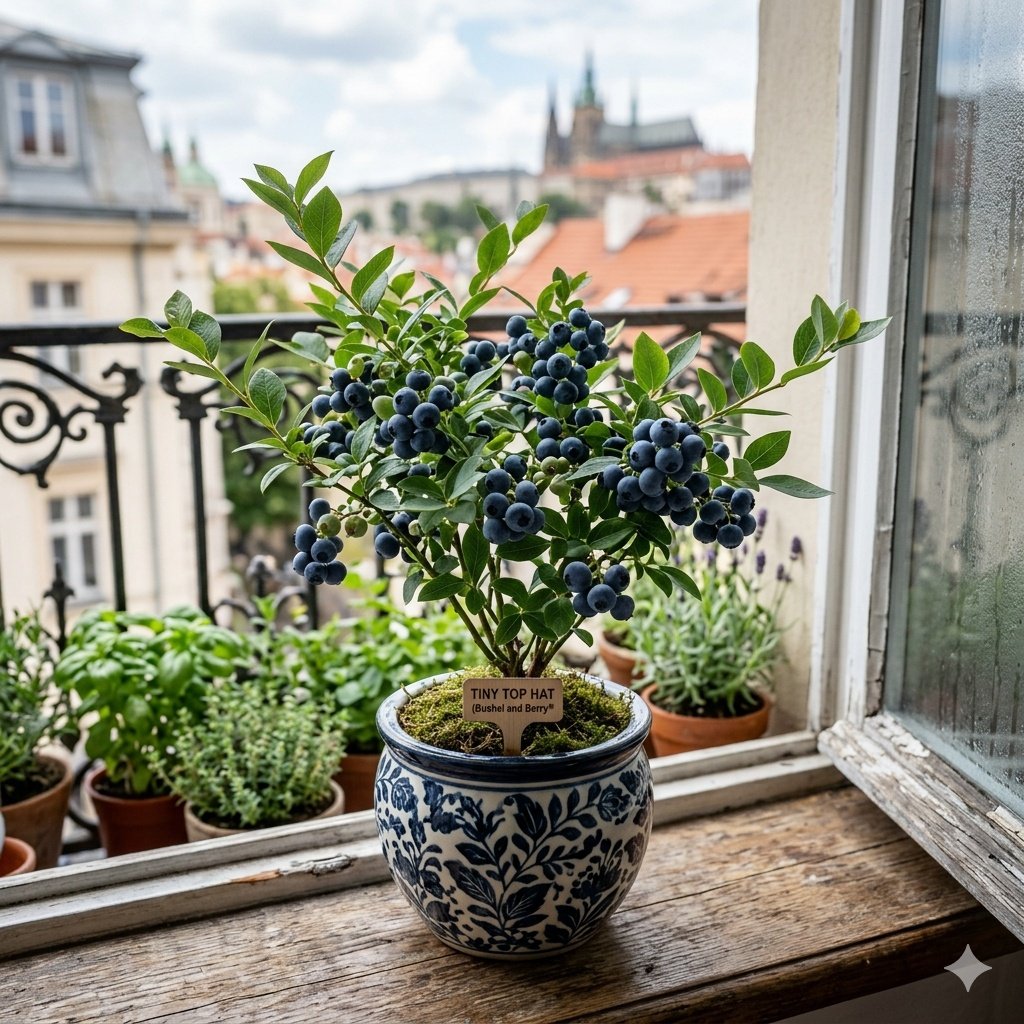
1. Top Hat Blueberry – Best Dwarf Variety for Tiny Spaces
Top Hat is one of the smallest blueberry bushes you can grow. Mature plants usually stay between 1 and 2 feet tall, making them perfect for balconies, windowsills, and compact patios.
Despite the small size, Top Hat produces surprisingly sweet berries.
This variety also doubles as an ornamental plant. Its rounded shape and dense foliage look neat in decorative containers, especially during fall when leaves turn bright red and orange.
It’s one of the easiest blueberry varieties for beginners because it stays manageable and rarely becomes overgrown.
Best For
- Apartment gardeners
- Tiny balconies
- Decorative edible gardens
| Pros | Cons |
|---|---|
| Extremely compact | Smaller harvest |
| Beginner-friendly | Needs acidic soil |
A 16-inch decorative pot usually works well for this variety.
2. Sunshine Blue – Best Blueberry for Warm Climates
Sunshine Blue is a favorite among patio gardeners in warmer regions. Unlike many blueberry bushes, it handles heat surprisingly well and stays semi-evergreen in mild climates.
The plant grows around 3 to 4 feet tall, making it large enough for strong berry production without becoming difficult to manage in a container.
Its pink spring flowers add extra color before the berries arrive.
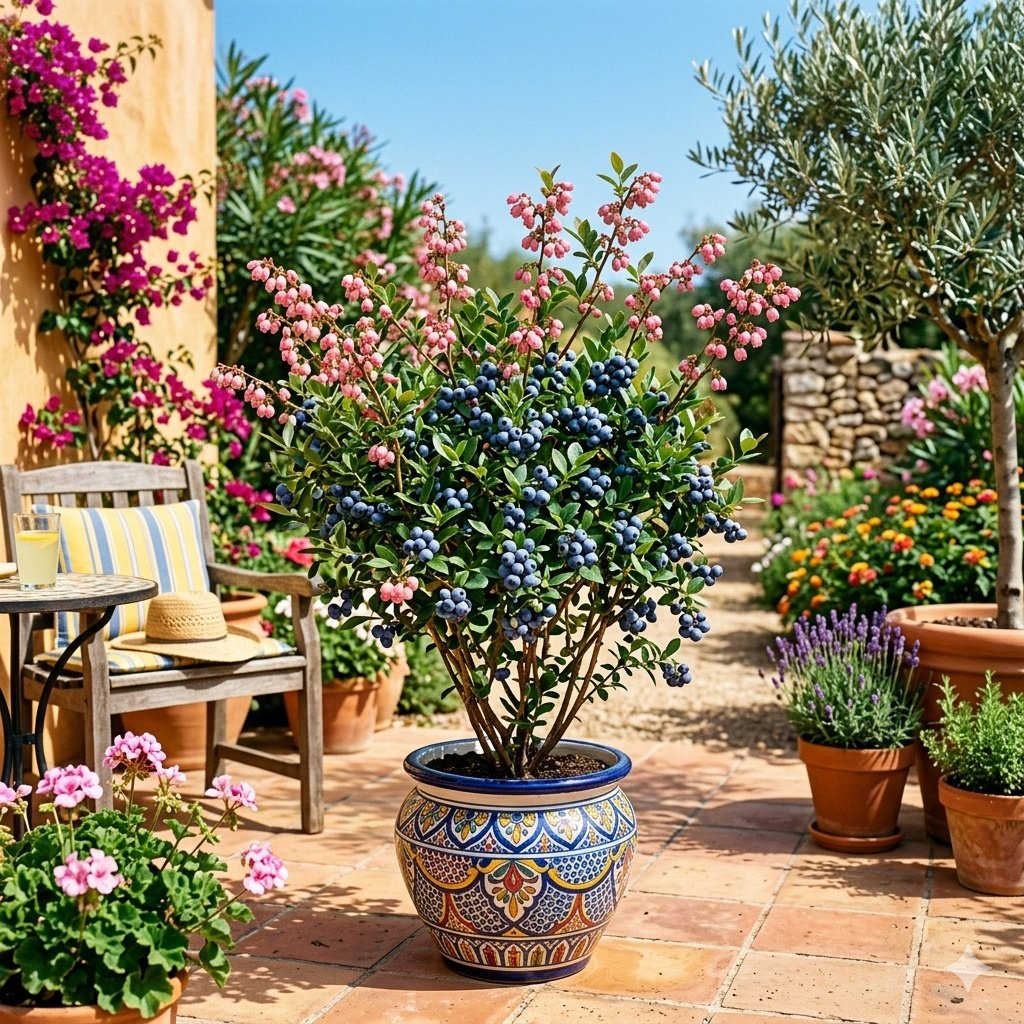
Sunshine Blue is self-pollinating, though adding another blueberry nearby can improve harvest size. The berries are sweet with a slight tang, making them great for fresh eating.
This variety also tolerates slightly higher soil pH levels than many other blueberries, which helps beginner gardeners avoid common growing problems.
If your patio gets lots of sun and summer heat, Sunshine Blue is one of the safest picks.
3. Jelly Bean Blueberry – Best Variety for Decorative Containers
Jelly Bean blueberry was practically made for small-space gardening.
This compact bush grows thick, tidy foliage and produces sweet mid-sized berries during summer. New leaves often emerge with reddish tones, giving the plant extra visual appeal throughout the year.
It works especially well in ceramic pots and decorative patio planters.
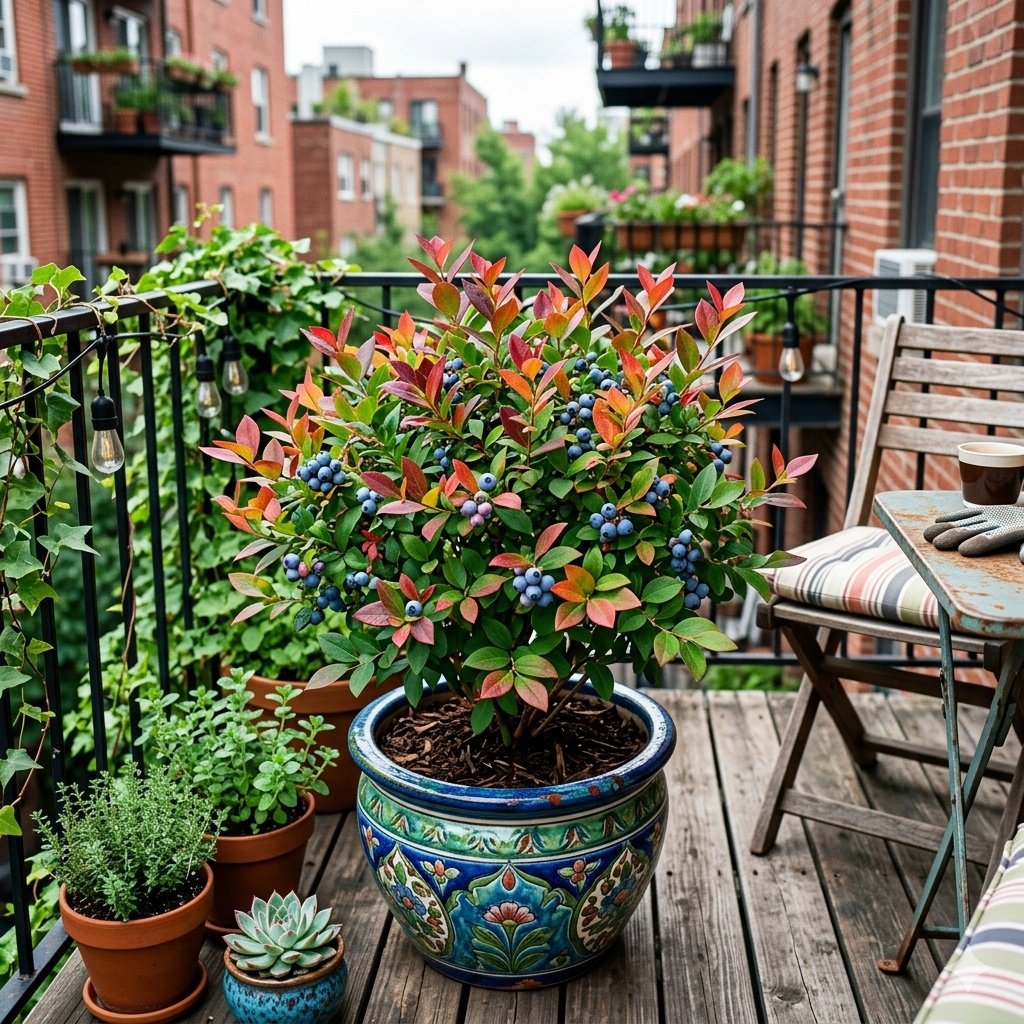
The plant usually reaches around 2 feet tall, so it fits comfortably on balconies and small patios without taking over the space.
Jelly Bean blueberries also have one of the sweeter flavor profiles among dwarf varieties. Kids tend to love this one.
If you want a blueberry plant that looks polished even when it’s not fruiting, Jelly Bean is a strong option.
4. Patriot Blueberry – Best High-Yield Container Variety
Some gardeners care less about looks and more about harvest size. That’s where Patriot stands out.
Patriot blueberry produces large berries and heavy yields compared to many compact varieties. The bush grows bigger than most container blueberries, usually reaching 4 to 5 feet tall, so it needs a larger pot.
Still, the production makes it worth the extra space.
Patriot also handles cold weather extremely well and adapts nicely to container growing when given proper drainage.
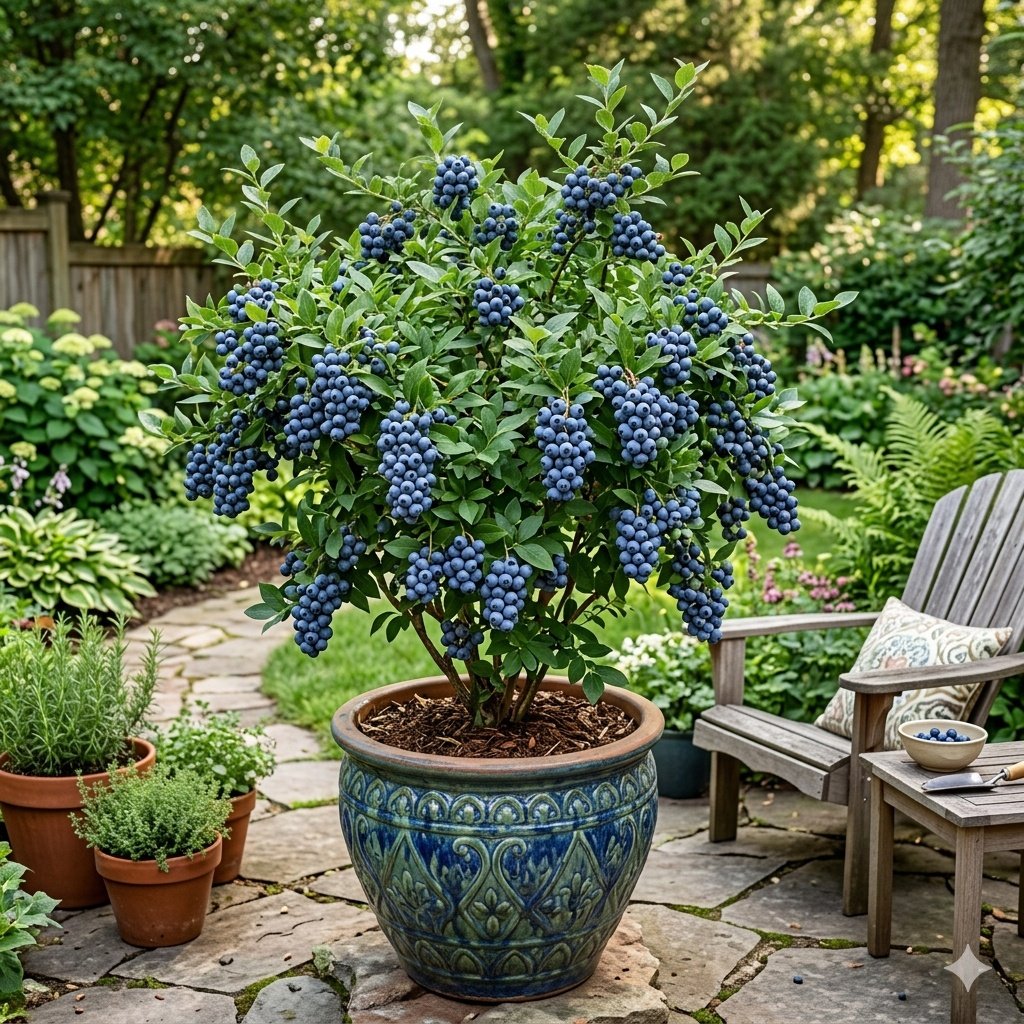
Beginner gardeners often have success with this variety because it grows vigorously and fruits reliably.
Yield Expectations
| Plant Age | Approx Yield |
|---|---|
| Year 1 | Light harvest |
| Year 3+ | Heavy harvest |
Use a container at least 20 inches wide for best results.
5. Pink Icing Blueberry – Best Colorful Blueberry Bush
Pink Icing may be one of the prettiest blueberry bushes available today.
Its foliage shifts through shades of blue-green, pink, and deep turquoise depending on the season. Even people who don’t grow fruit plants often buy this variety simply because it looks striking on a patio.
And yes, it produces sweet berries too.
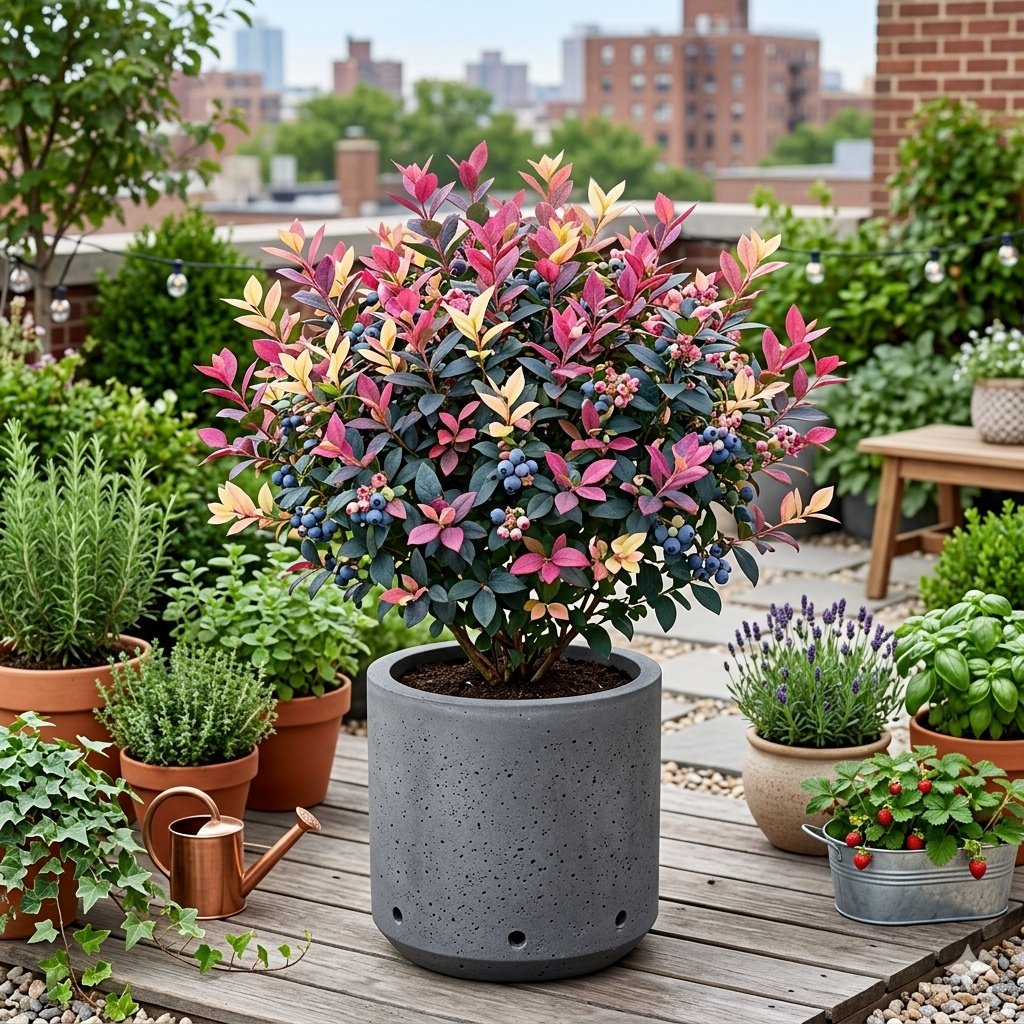
The compact size makes it ideal for containers, while the colorful leaves help it blend into decorative landscaping.
Gardeners love using Pink Icing in modern patios and social-media-friendly edible gardens because it looks good almost year-round.
This variety stays fairly low maintenance and works well in both cool and moderate climates.
6. Northsky Blueberry – Best Cold-Hardy Variety
If you live in a colder region, Northsky deserves attention.
This compact blueberry bush was developed to survive freezing winters that damage many other varieties. It stays small, usually around 2 feet tall, and produces sweet sky-blue berries during summer.
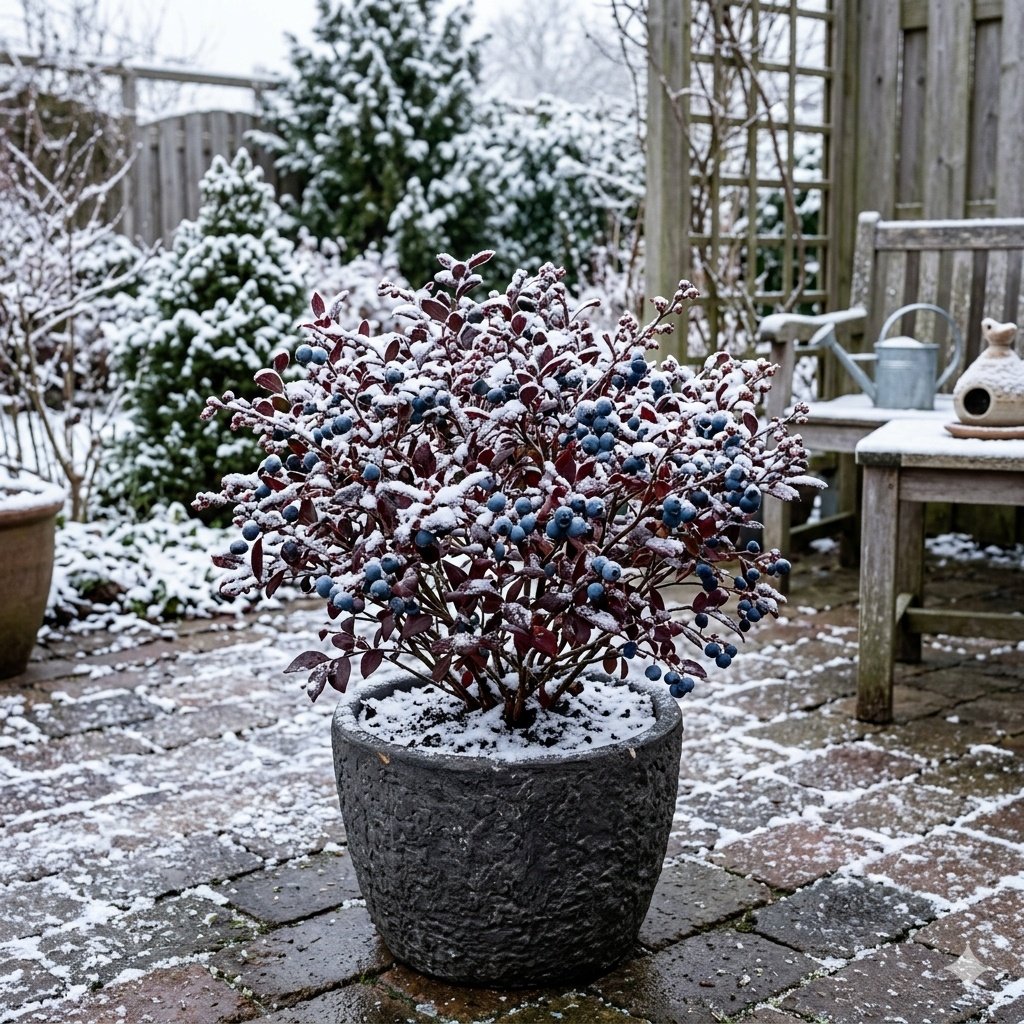
Northsky handles harsh winter temperatures better than most container blueberries, making it a smart choice for northern gardeners.
The low-growing shape also protects it from wind exposure on balconies and rooftops.
For beginners dealing with cold climates, Northsky removes a lot of the guesswork.
Even after tough winters, healthy plants often bounce back strongly in spring.
7. Bushel and Berry Peach Sorbet – Best Unique Patio Blueberry
Peach Sorbet stands out immediately because of its foliage.
Leaves shift between peach, pink, emerald green, and deep purple throughout the seasons, giving the plant almost constant color variation.
It stays compact enough for containers and works beautifully in stylish patio arrangements.
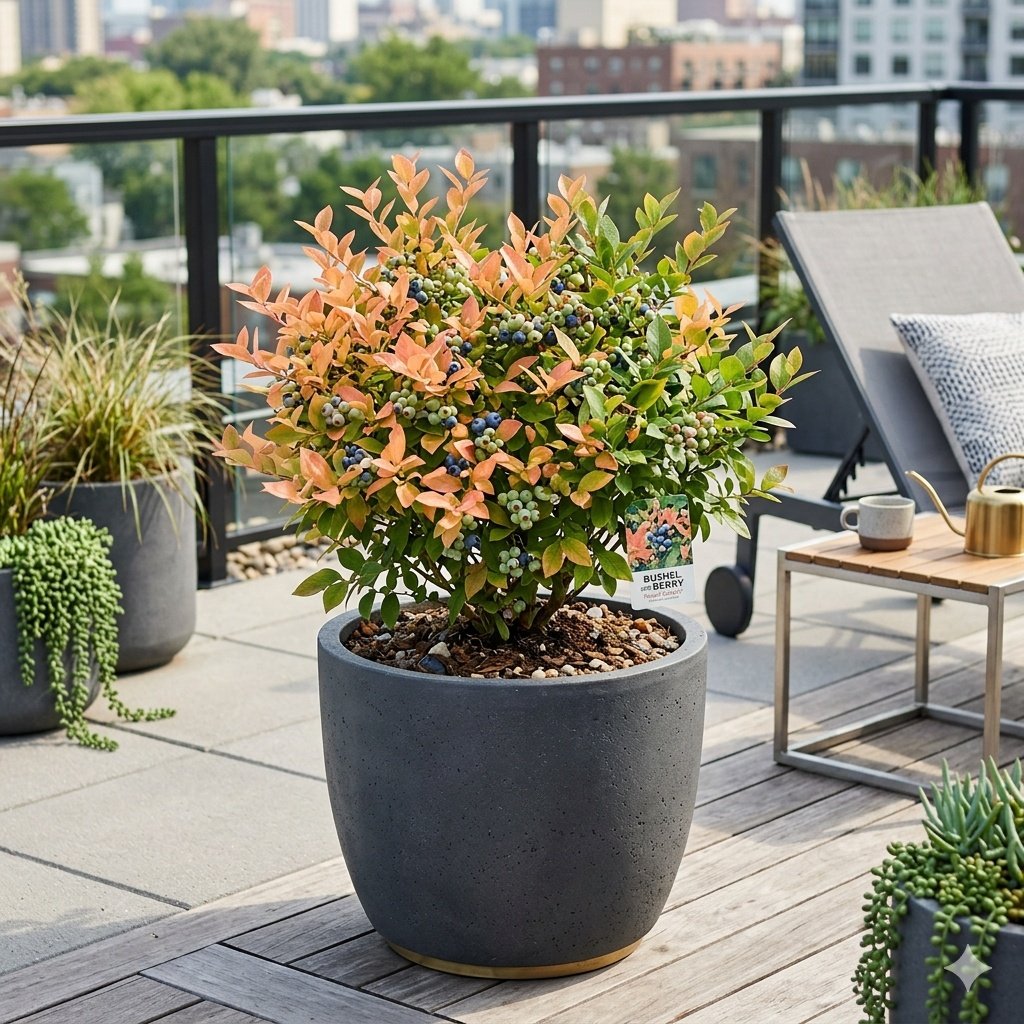
While harvests are moderate rather than massive, the plant makes up for it with visual appeal and easy maintenance.
This variety works especially well for gardeners who want edible plants that also function as decorative landscape pieces.
A pair of Peach Sorbet blueberry bushes in matching planters can completely change the look of a small patio.
Best Containers for Growing Blueberries
Blueberries need containers with excellent drainage. Their roots dislike standing water, and soggy soil can quickly damage the plant.
The container size matters more than many beginners realize. Small pots dry out too quickly and restrict root growth.
Aim for containers at least 16 to 20 inches wide.
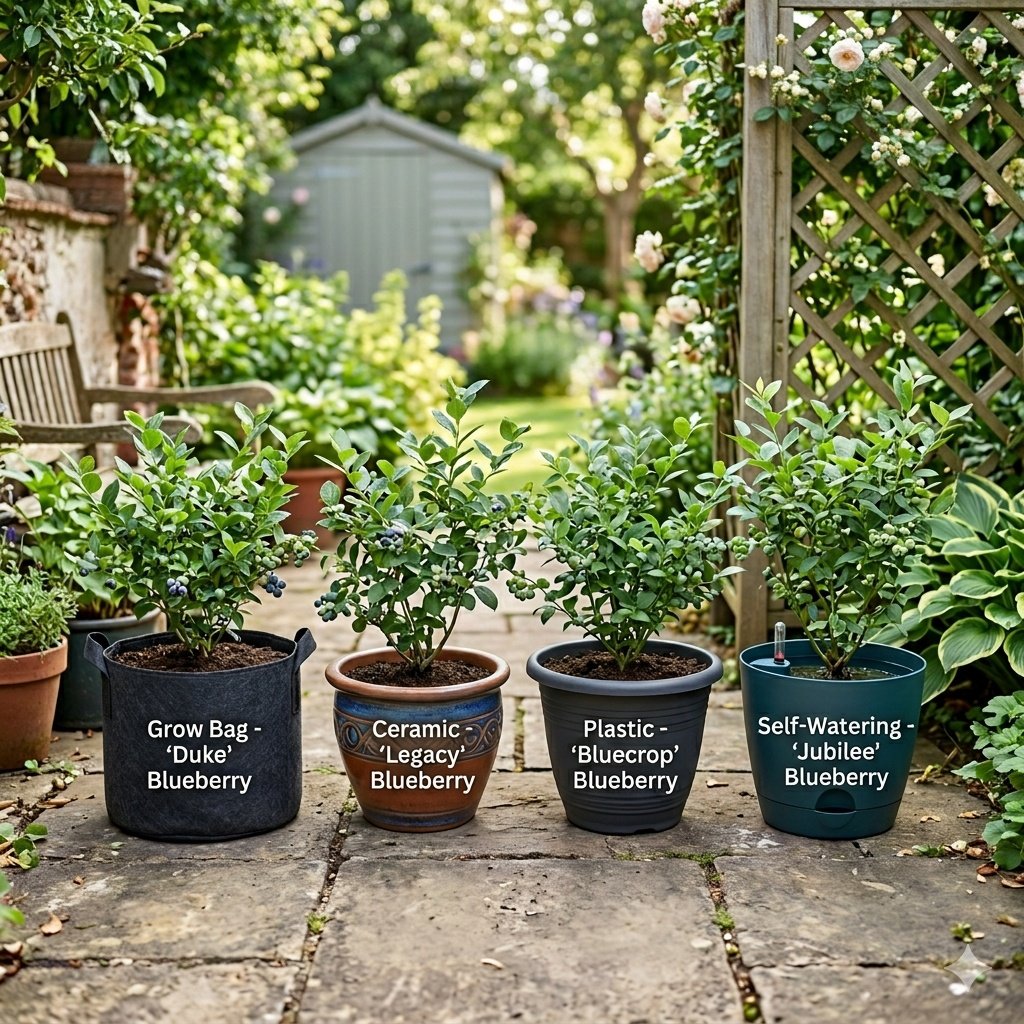
Here’s a quick comparison of common pot types:
| Container Type | Best Feature | Drawback |
|---|---|---|
| Fabric Grow Bags | Great airflow | Dry faster |
| Plastic Pots | Affordable | Heat retention |
| Ceramic Pots | Decorative | Heavy |
| Self-Watering Pots | Easy maintenance | Expensive |
Fabric grow bags work well in cooler climates because they improve airflow around roots. Ceramic containers look beautiful but become difficult to move once filled with soil.
Larger pots almost always lead to better berry production. More root space means healthier plants and steadier moisture levels.
Drainage holes are non-negotiable.
Soil Requirements for Container Blueberries
Blueberries are acid-loving plants. Their ideal soil pH sits between 4.5 and 5.5.
Regular garden soil usually doesn’t work well in pots because it compacts too heavily and often contains too much alkalinity.
A lightweight acidic mix produces better root growth and healthier berries.
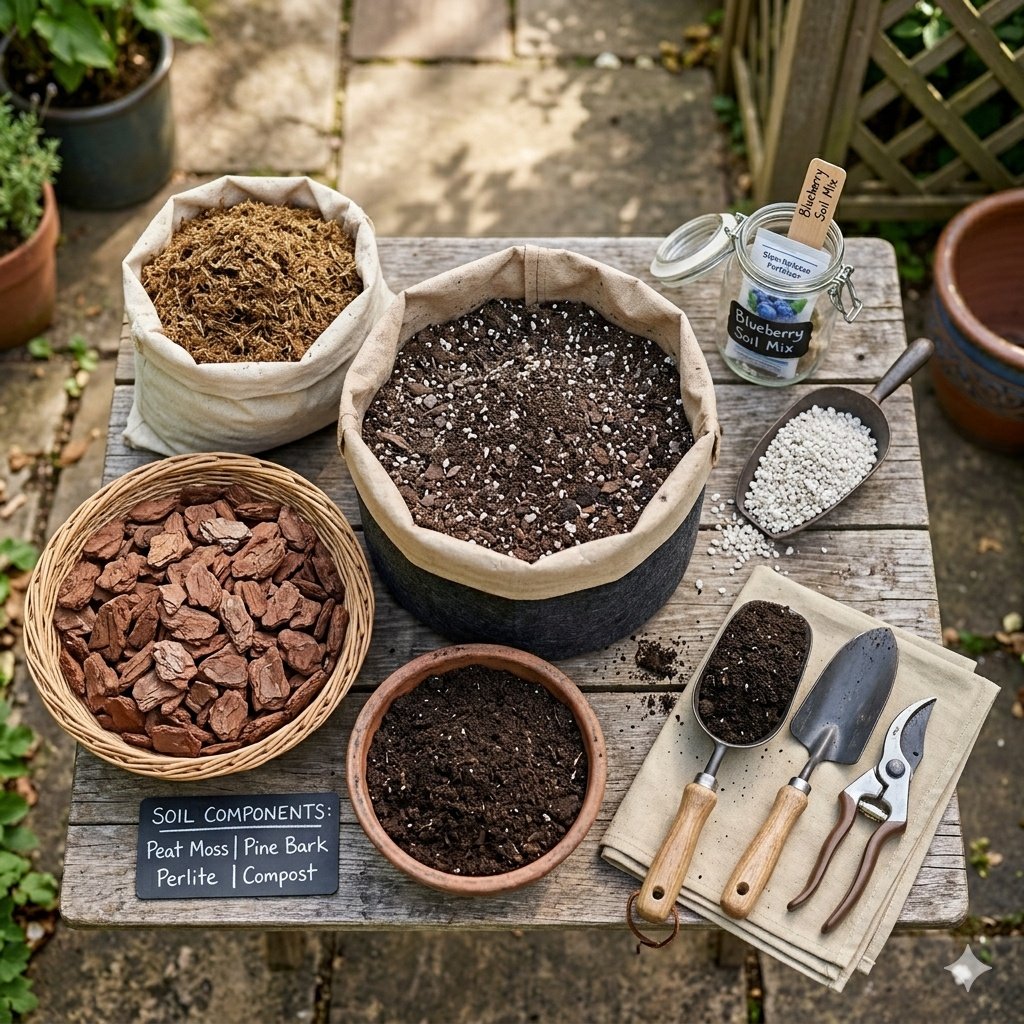
DIY Blueberry Soil Mix
- Peat moss
- Pine bark
- Perlite
- Compost
This mix drains well while holding enough moisture for healthy growth.
Pine bark mulch on top of the soil helps maintain acidity and keeps roots cooler during hot weather.
Avoid adding lime or alkaline composts to your blueberry containers. Even healthy-looking plants can struggle to produce fruit if the soil pH climbs too high.
If leaves begin turning yellow while veins stay green, high pH is often the problem.
A simple soil pH tester can help prevent long-term issues.
How to Care for Blueberries in Pots
Blueberries aren’t difficult plants, but consistency matters.
Watering is usually the biggest challenge for container growers. Pots dry out faster than garden beds, especially during summer heat. Blueberries prefer evenly moist soil, not bone dry conditions followed by heavy soaking.
Most plants need watering two to four times weekly depending on weather.
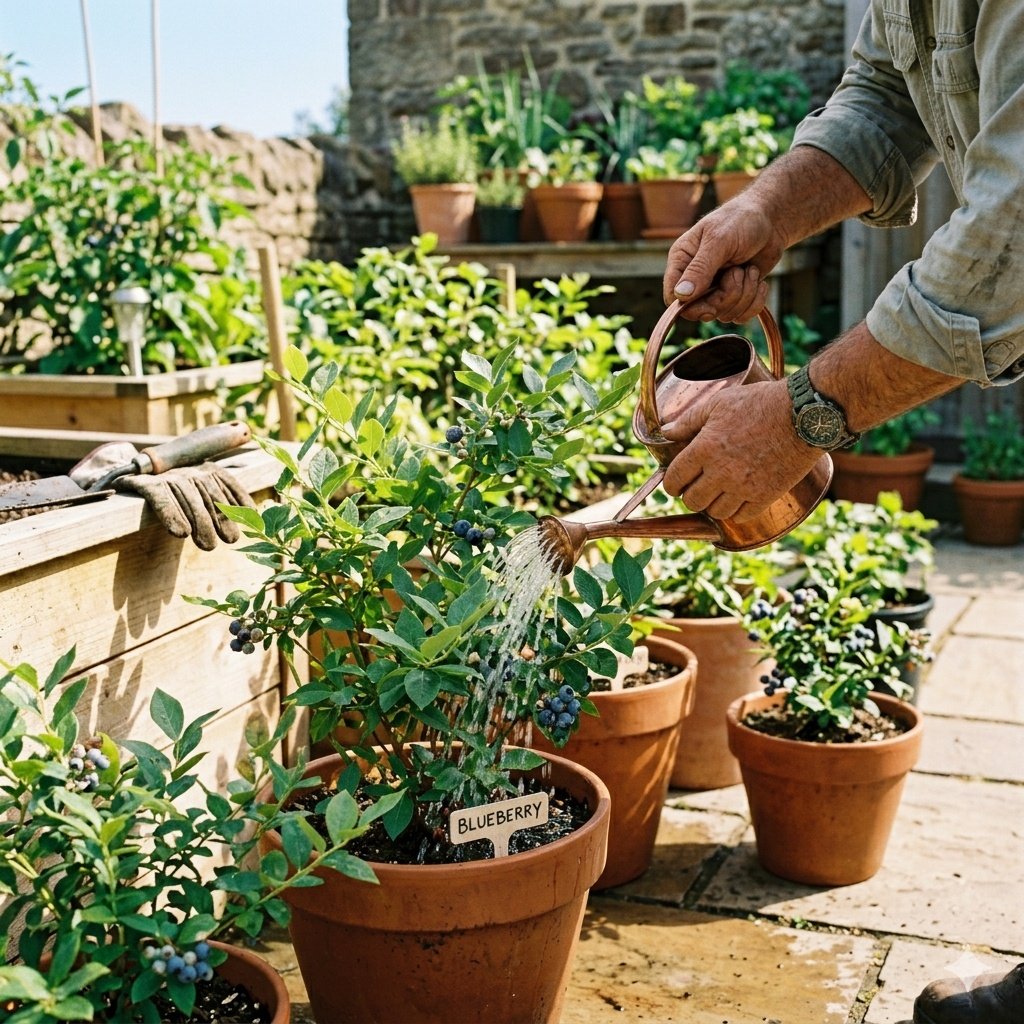
Sunlight matters too. Blueberries grow best with at least 6 to 8 hours of direct sun daily. Less sunlight usually means weaker harvests and fewer flowers.
Use fertilizers designed for acid-loving plants. Slow-release formulas work well because they feed gradually without overwhelming the roots.
Pruning is fairly simple. Remove dead or weak branches once a year to improve airflow and encourage stronger berry production.
Quick Care Schedule
| Task | Frequency |
|---|---|
| Watering | 2–4 times weekly |
| Fertilizing | Every 6–8 weeks |
| Pruning | Once yearly |
Birds can become a problem once berries ripen. Lightweight netting often solves that quickly.
Common Problems When Growing Blueberries in Containers
Even healthy blueberry plants run into occasional issues.
Here are the most common problems container gardeners face:
| Problem | Cause | Solution |
|---|---|---|
| Yellow leaves | High soil pH | Acidify soil |
| Poor fruiting | Lack of sun | Move container |
| Small berries | Underfeeding | Fertilize |
| Dry plants | Pot too small | Upgrade container |
Overwatering can also create root stress, especially in containers without proper drainage holes.
If plants stop growing vigorously after a few years, root crowding may be the reason. Repotting into a larger container often helps restore production.
Watch for birds as berries begin ripening. They usually notice ripe fruit before gardeners do.
Companion Plants for Potted Blueberries
Blueberries pair nicely with several other acid-loving plants.
Thyme works well around the base of containers because it stays low and doesn’t compete heavily for space. Strawberries also make attractive companions in larger pots.
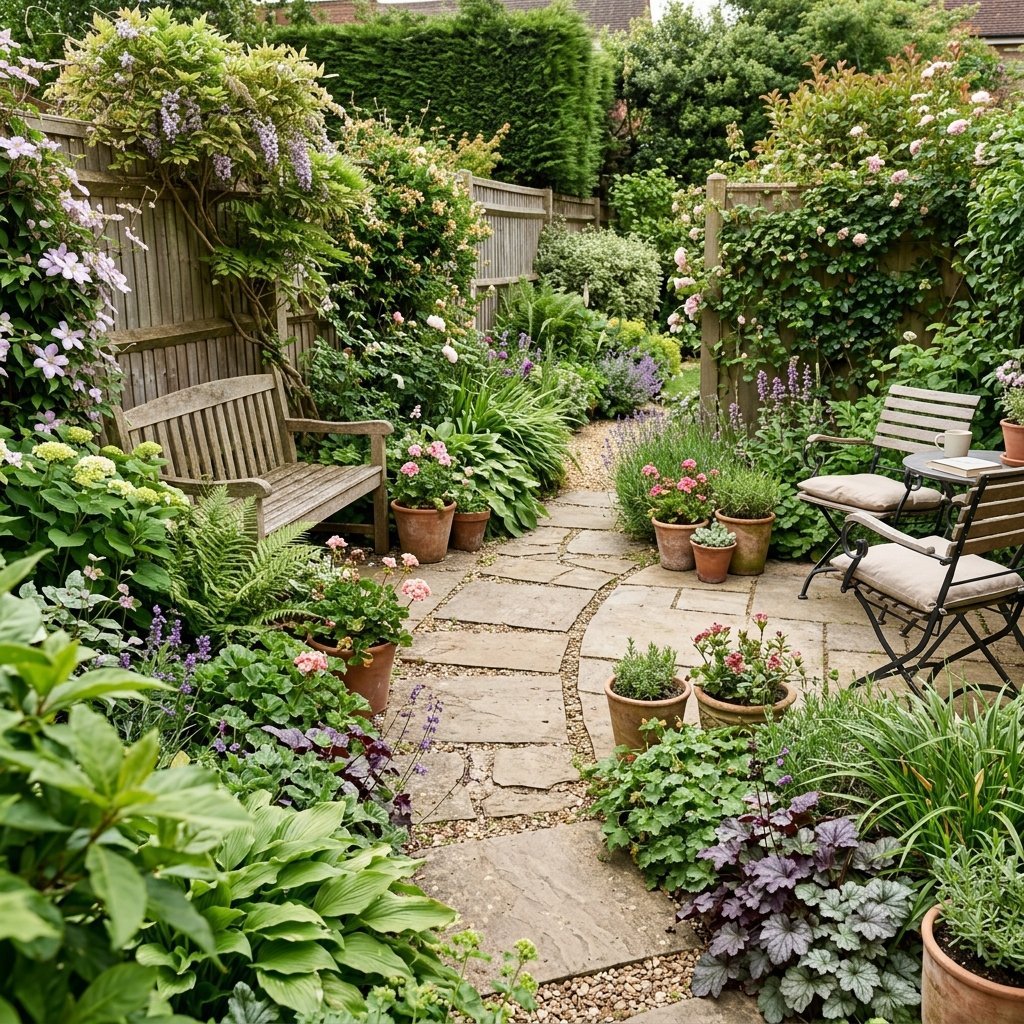
For decorative patio arrangements, ferns, azaleas, and rhododendrons blend beautifully with blueberry bushes while sharing similar soil preferences.
Mixing edible plants with ornamental foliage creates a fuller, layered container garden without needing much space.
That combination works especially well on balconies and compact patios.
Related Reads
You might find these helpful as you keep going:
- Metal vs Wood Raised Garden Beds: Which Is Better?
- 17 Full Sun Plants to Grow in May
- 7 Best Fertilizers for Raised Beds (Top Picks + Feeding Guide)
FAQ
Can blueberries really grow in pots?
Yes. Many blueberry varieties perform extremely well in containers because pots allow better control over soil acidity and drainage.
What size pot is best for blueberries?
Most blueberry plants need containers at least 16 to 20 inches wide. Larger pots support stronger root systems and better harvests.
Do blueberries need two plants to produce fruit?
Some varieties are self-pollinating, but growing two different varieties nearby usually improves berry production and fruit size.
How long do blueberry plants live in containers?
Healthy blueberry plants can live for many years in containers if they receive proper watering, acidic soil, and occasional repotting.
Why are my blueberry leaves turning yellow?
Yellow leaves often signal high soil pH or poor drainage. Blueberries need acidic soil to absorb nutrients properly.
Can blueberries survive winter in pots?
Yes, though cold-climate gardeners may need extra winter protection for containers. Cold-hardy varieties like Northsky handle freezing weather well.
How long does it take for blueberry bushes to produce fruit?
Most blueberry plants produce light harvests during the first year and heavier crops by year three.
Final Thoughts
Blueberries are one of the best fruits for small-space gardening. They’re productive, attractive, and surprisingly manageable once the soil conditions are right.
You don’t need a giant yard to enjoy homegrown berries. A sunny balcony, compact patio, or tiny garden corner is enough for many dwarf blueberry varieties to thrive.
Start with one healthy plant and a properly sized container. That’s usually all it takes to get hooked on growing blueberries in pots.
Fresh berries straight from your patio hit differently.

Pingback: Late-Season Blueberry Care Can Affect Next Summer's Crop - Complete Gardening