
Most balcony vegetable gardens don’t fail because of bad seeds or weak sunlight. They fail because watering becomes hard to keep up with.
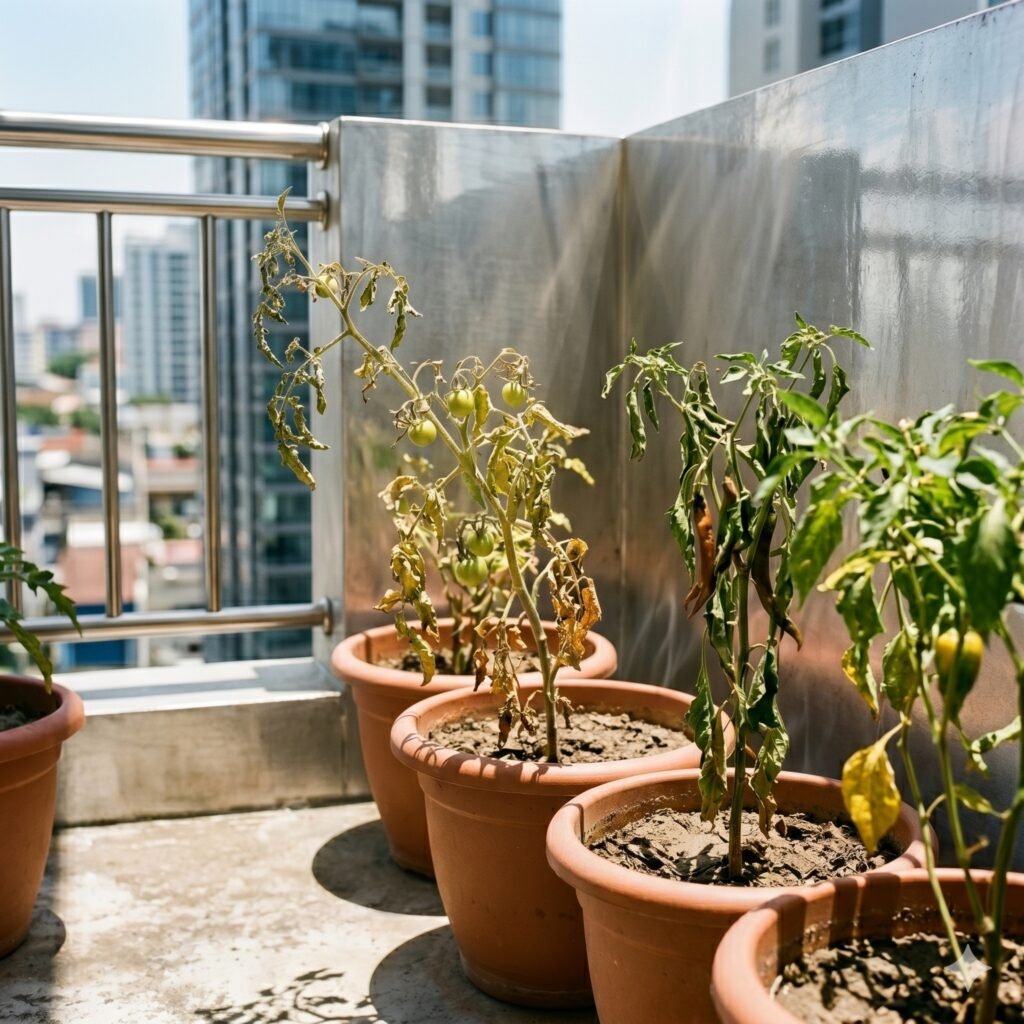
A few hot afternoons can dry out containers faster than most people expect. Add reflective concrete walls, wind exposure, busy schedules, or a weekend away from home, and suddenly those healthy tomato plants start drooping. Lettuce bolts. Herbs dry out. Soil turns into cracked dust by evening.
That’s why more balcony gardeners are turning to self-watering systems.
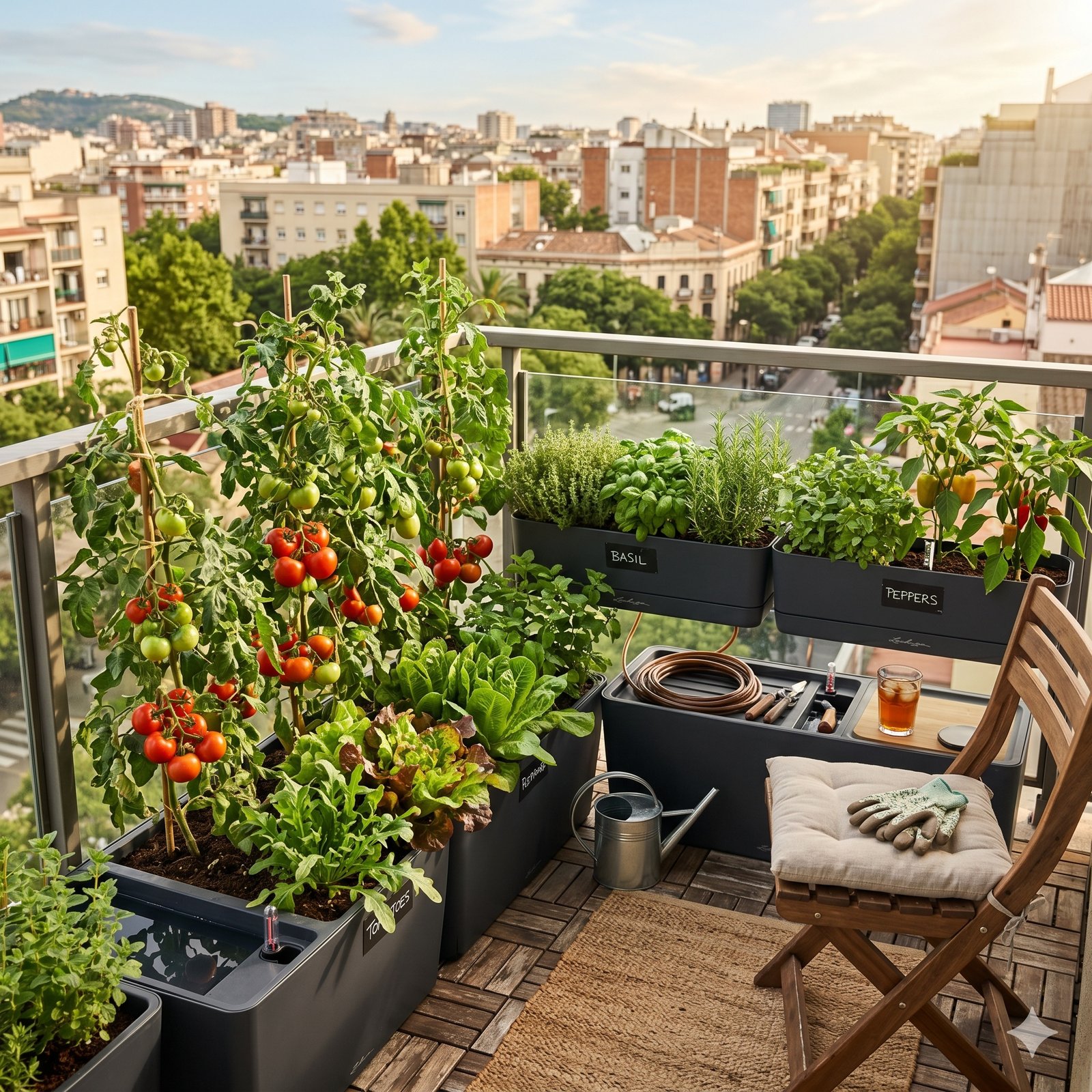
A good setup keeps moisture levels steady without forcing you to stand outside every morning and evening with a watering can. And consistency matters more than perfection when you’re growing vegetables in containers.
Some systems are simple planter boxes with hidden reservoirs. Others use drip irrigation, gravity-fed watering, or smart sensors that handle everything automatically. The best option depends on your balcony size, climate, budget, and how hands-on you want to be.
This guide breaks down the best self-watering systems for balcony vegetable gardens that actually work in real-world conditions. You’ll see the pros and cons of each setup, which vegetables they suit best, and which systems are worth buying if you want healthier plants with less daily maintenance.
Why Balcony Vegetable Gardens Need Self-Watering Systems
Balcony gardens dry out much faster than traditional garden beds. Containers hold less soil, which means less moisture retention. And on upper floors, wind can pull moisture out of pots surprisingly fast.
Concrete walls and metal railings make things worse during summer. Heat bounces around the balcony and raises soil temperatures quickly, especially in dark-colored containers. A tomato plant that looks fine at noon can become severely stressed by late afternoon.
Then there’s the human side of the problem.
Most people water inconsistently. One day the soil gets soaked. The next day it’s bone dry. That cycle stresses roots and slows vegetable production. Overwatering can also suffocate roots and invite fungal problems.
Self-watering systems help balance moisture levels naturally. Instead of dramatic swings between wet and dry soil, plants get a steadier water supply. That usually means:
- Faster growth
- Fewer wilted plants
- Better fruit production
- Less daily maintenance
- Stronger root systems
Vegetables like tomatoes, cucumbers, peppers, lettuce, spinach, basil, mint, and parsley respond especially well to stable moisture conditions.
And if you travel often or work long hours, a balcony vegetable garden watering system can save your entire harvest during hot weather.
What to Look for Before Buying a Self-Watering System
Not every self-watering setup works well for vegetables. Some are too shallow. Others hold too much water and create root problems.
A few details make a huge difference.
Reservoir Size
Small reservoirs may only last one or two days during summer heat. Larger reservoirs can support plants for a week or longer depending on crop size and temperature.
Tomatoes and cucumbers usually need deeper water storage than herbs or lettuce.
If you live in a hot climate, bigger reservoirs are usually worth the extra cost.
Balcony Space Requirements
Space matters more than people think.
Compact balconies often benefit from vertical towers, railing planters, or stacked systems. Larger balconies can support wider planter boxes or drip irrigation layouts with multiple containers connected together.
Measure carefully before buying anything bulky.
Manual vs Automatic Systems
Passive self-watering systems use reservoirs and wicking action to feed moisture upward into the soil. They’re simple and reliable.
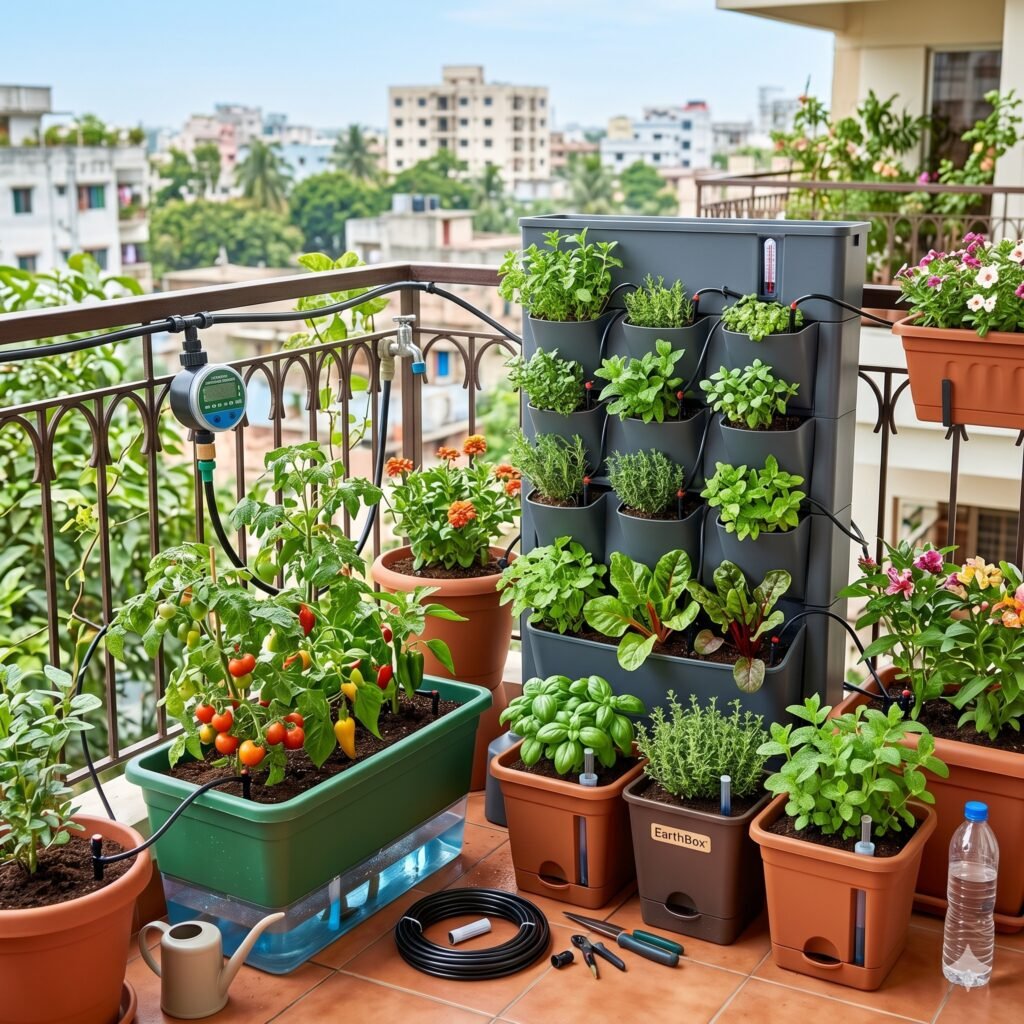
Automatic watering systems for balcony plants use timers, drip emitters, pumps, or smart sensors. These setups reduce daily work but need more setup and occasional maintenance.
If you travel frequently, automation helps a lot.
Material Quality
Cheap plastic cracks quickly under direct sun exposure.
Look for UV-resistant materials and food-safe plastics, especially when growing edible crops. Fabric grow bags should have strong stitching and breathable sides that won’t collapse after one season.
Drainage & Root Health
Too much moisture can create root rot fast.
The best self-watering containers for vegetables balance water retention with airflow. Drainage overflow holes and aerated soil mixes are essential. Healthy roots need oxygen just as much as water.
7 Best Self-Watering Systems for Balcony Vegetable Gardens
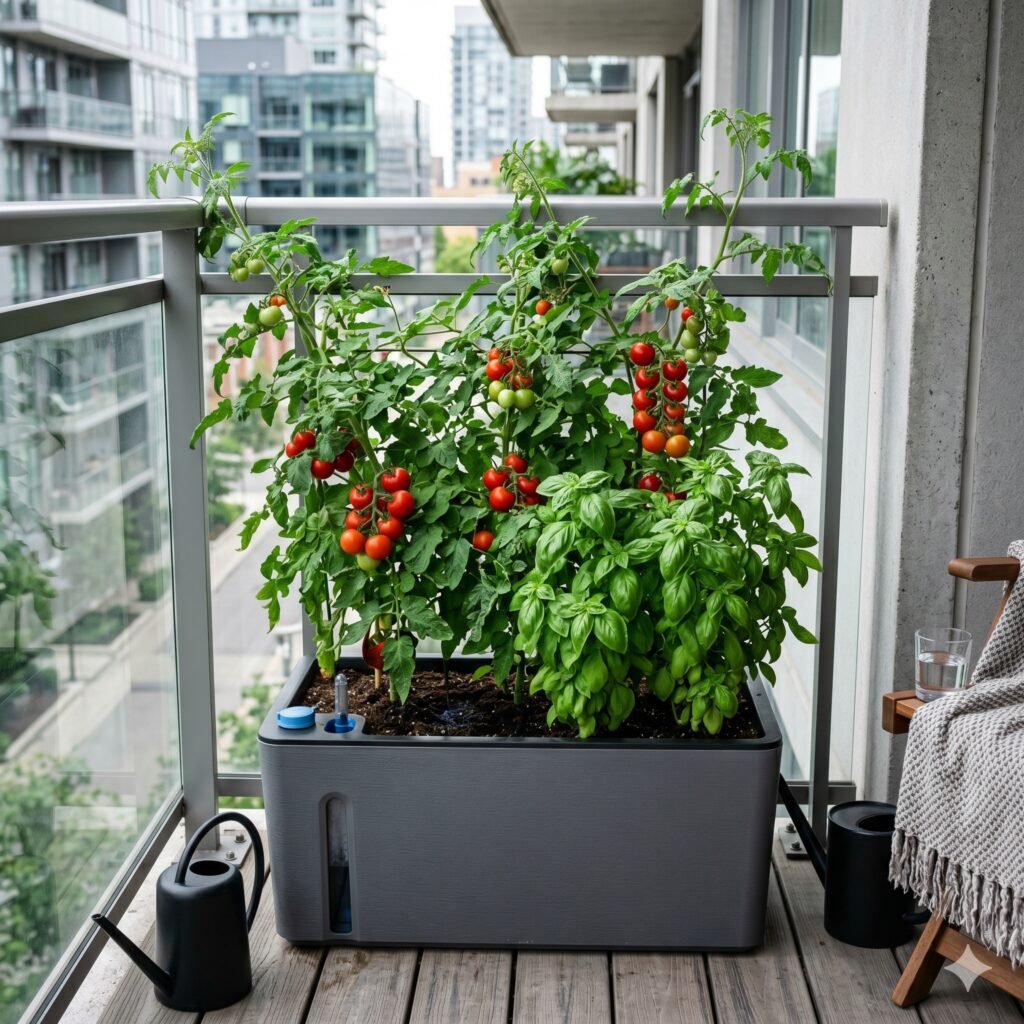
1. Self-Watering Planter Boxes (Best Overall)
If you want the easiest all-around option, self-watering planter boxes are hard to beat.
These containers include a built-in water reservoir beneath the soil. Plants draw moisture upward as needed through wicking systems or perforated platforms.
They’re simple. Clean-looking. Beginner-friendly.
And they work especially well for tomatoes, basil, peppers, lettuce, and compact cucumbers.
Most models also fit nicely against balcony walls or railings without taking over the entire space.
Best for:
- Beginners
- Apartment renters
- Compact balconies
- Low-maintenance gardening
Pros:
- Easy setup
- Stable moisture levels
- Cleaner appearance
- Less frequent watering
- Good for edible balcony garden setups
Cons:
- More expensive than standard pots
- Reservoirs need occasional cleaning
- Large models can get heavy
Best vegetables:
Tomatoes, herbs, lettuce, spinach, peppers
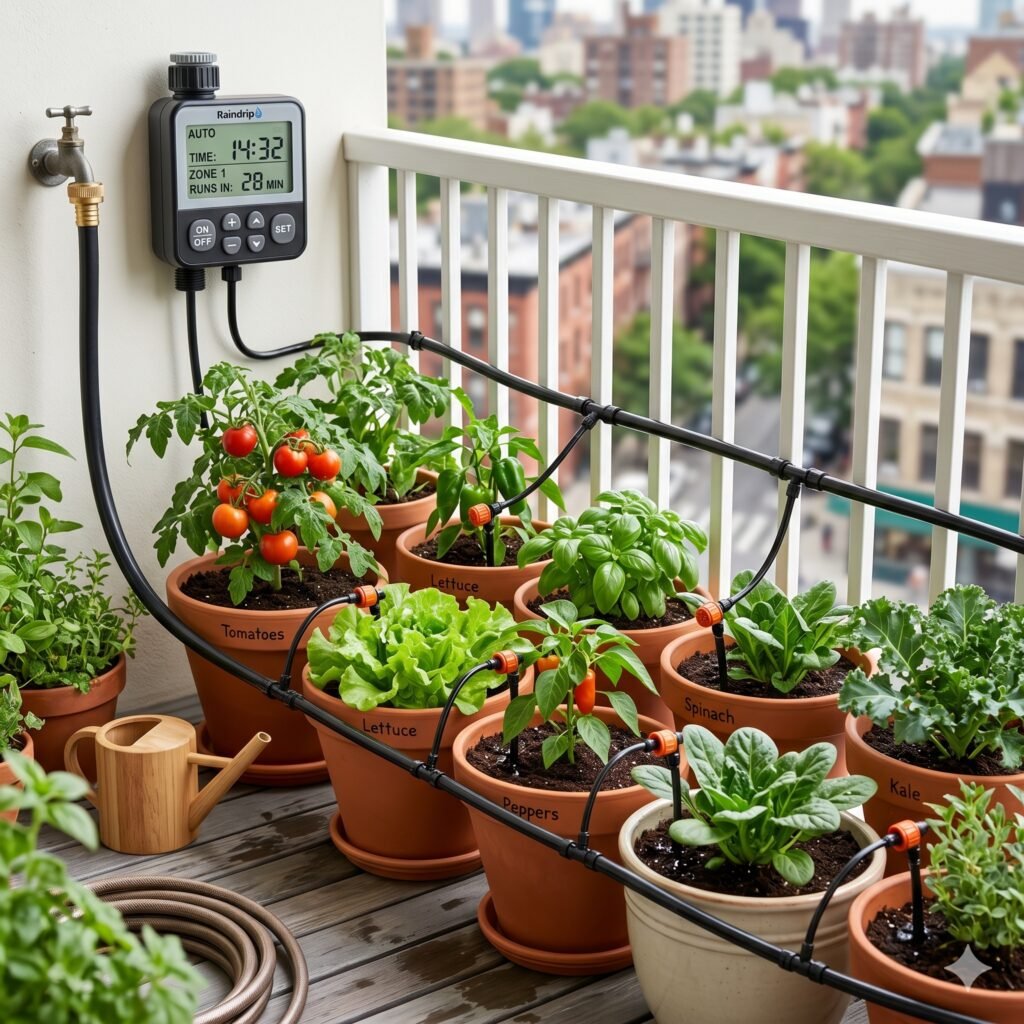
2. Drip Irrigation Kits with Timers (Best for Busy Gardeners)
Drip irrigation for balcony gardens gives you far more control over watering schedules.
These systems connect tubing and drip emitters to multiple containers at once. Add a timer, and the watering process becomes mostly automatic.
This setup works especially well if you have lots of pots scattered around your balcony.
Some newer systems even use solar-powered timers or smart controllers connected to phone apps.
Best for:
- Frequent travelers
- Large container collections
- Busy schedules
Pros:
- Highly customizable
- Waters multiple plants evenly
- Vacation-friendly
- Expandable over time
Cons:
- Initial setup takes time
- Drip lines can clog
- Requires occasional monitoring
Ideal crops:
Tomatoes, cucumbers, peppers, beans, eggplants
A well-designed drip system can dramatically reduce watering stress during peak summer heat.
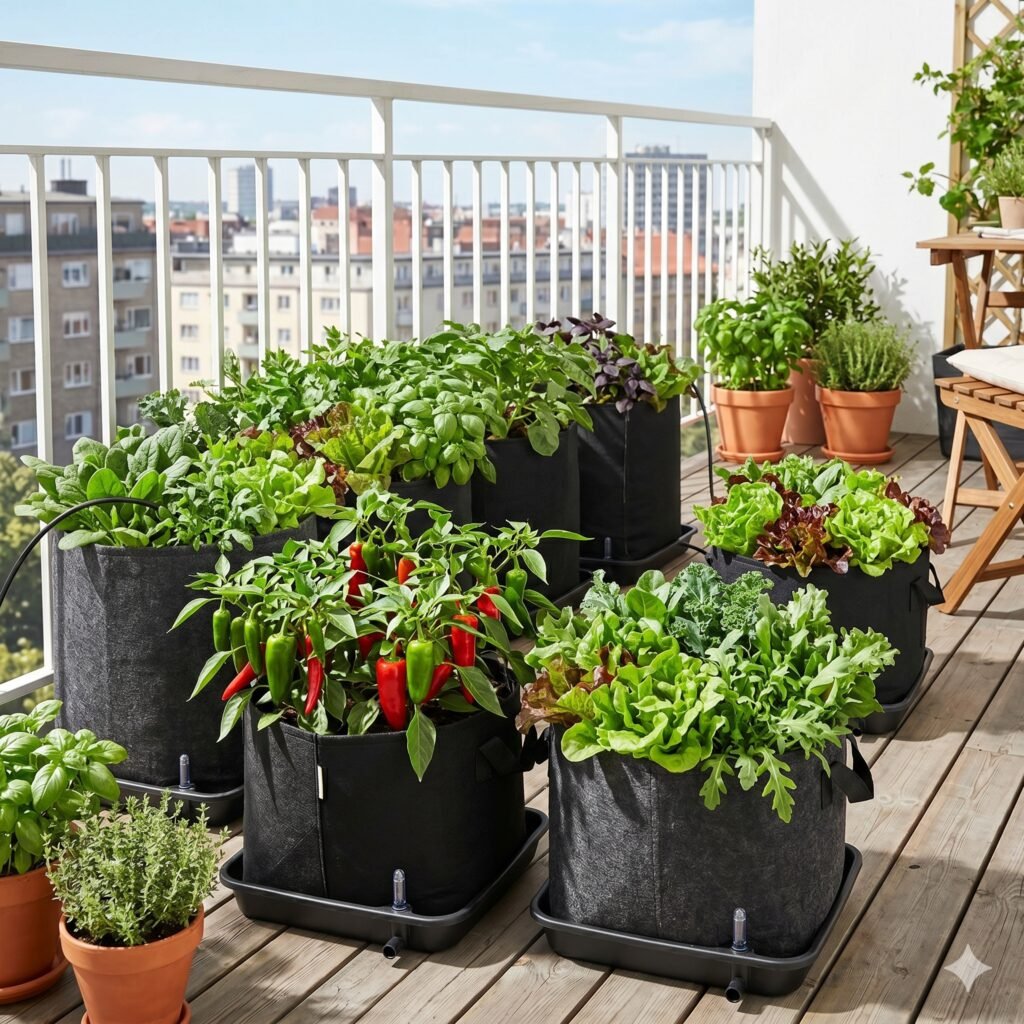
3. Self-Watering Grow Bags (Best Budget Option)
Self-watering grow bags have become popular for one simple reason: they’re affordable and surprisingly effective.
Most use breathable fabric combined with water reservoirs or bottom trays that allow roots to absorb moisture gradually.
The breathable sides improve airflow and help prevent overheating during hot weather.
They’re lightweight too, which matters on balconies with limited weight capacity.
Best for:
- Budget gardeners
- Temporary setups
- Balcony gardening for beginners
Pros:
- Low cost
- Portable
- Good root aeration
- Easy storage during winter
Cons:
- Fabric degrades over time
- Smaller reservoirs dry faster
- Can require more refilling in summer
Best vegetables:
Potatoes, peppers, leafy greens, carrots, herbs
Maintenance matters here. Clean trays regularly and avoid letting algae build up around standing water.
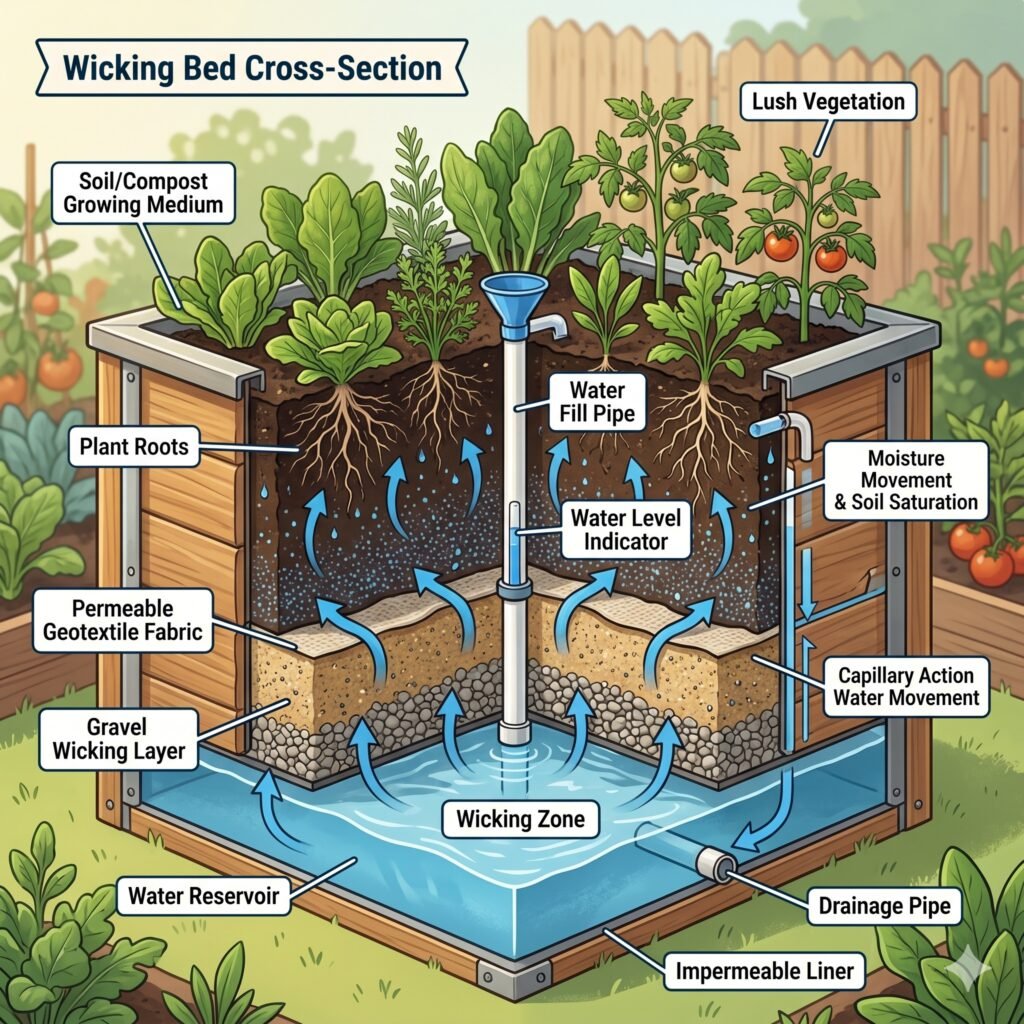
4. Wicking Bed Systems (Best Water Efficiency)
Wicking beds water plants from below instead of from the top.
A lower reservoir stores water while the soil above pulls moisture upward naturally through capillary action. The result is impressively stable soil moisture with very little evaporation.
These systems perform especially well in hot climates where water conservation matters.
And vegetables tend to love the steady hydration.
Best for:
- Hot regions
- Water-saving gardens
- Serious vegetable growers
Pros:
- Extremely water efficient
- Less evaporation
- Consistent soil moisture
- Strong plant growth
Cons:
- Heavier than standard containers
- Setup can be more technical
- Poor drainage design can cause problems
Best vegetables:
Tomatoes, cucumbers, zucchini, peppers, leafy greens
You can build DIY self-watering garden systems using storage bins, gravel, and PVC pipe. Or buy prebuilt versions with cleaner finishes and easier maintenance.
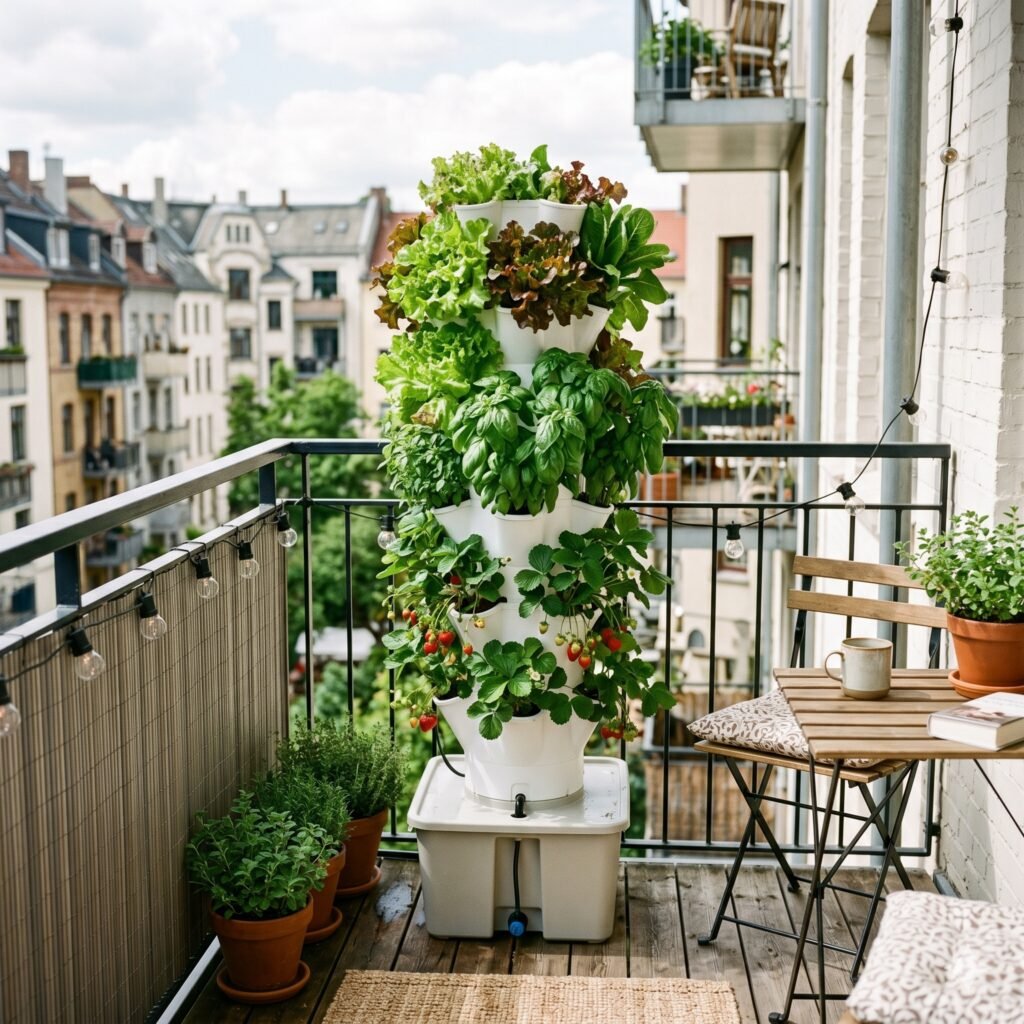
5. Vertical Tower Watering Systems (Best for Tiny Balconies)
Tiny balcony? Go vertical.
Tower systems stack planting pockets upward while circulating water from a shared reservoir. They maximize growing space without spreading containers across the floor.
This is one of the smartest balcony garden irrigation ideas for small apartments.
Leafy greens and herbs usually perform best because they don’t need deep root zones.
Best for:
- Very small balconies
- Urban apartments
- Decorative edible gardens
Pros:
- Excellent space efficiency
- Attractive design
- High yield in small areas
- Easier harvesting
Cons:
- Top-heavy when fully watered
- Not ideal for large vegetables
- Requires careful balancing
Best crops:
Lettuce, basil, spinach, strawberries, parsley
Check balcony weight limits before installing large vertical systems. Water adds more weight than many people realize.
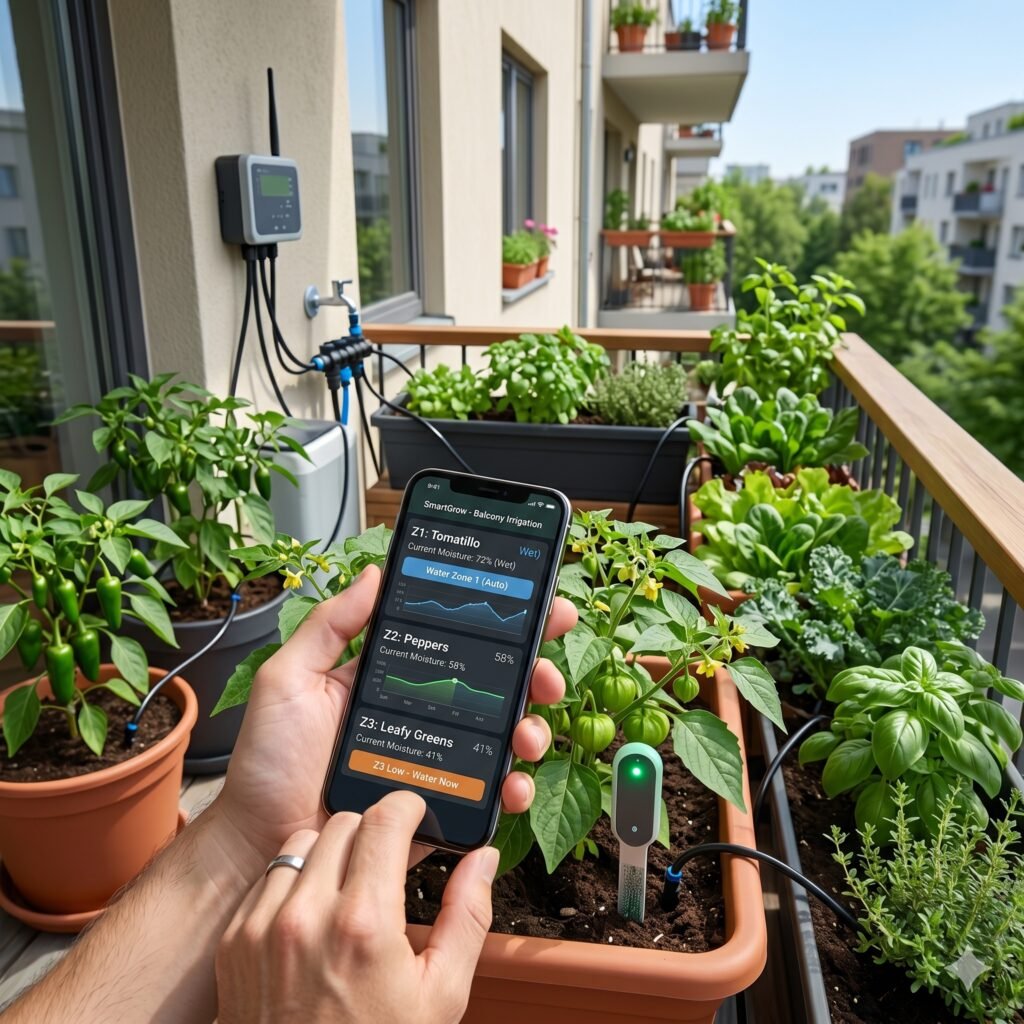
6. Smart WiFi Irrigation Systems (Best Premium Option)
Smart watering systems for plants are becoming much more reliable now.
Modern systems can monitor soil moisture, weather forecasts, and watering schedules directly through mobile apps. Some even skip watering automatically if rain is expected.
For travelers or tech-focused gardeners, this can make container gardening far easier.
Especially during summer.
Best for:
- Frequent travelers
- Tech-savvy gardeners
- Large balcony gardens
Pros:
- Precise watering control
- App monitoring
- Automation reduces mistakes
- Great for summer heat management
Cons:
- Higher cost
- More setup complexity
- WiFi or power issues can interrupt schedules
Ideal vegetables:
Tomatoes, cucumbers, peppers, herbs
Pairing smart irrigation with moisture sensors usually gives the best results.
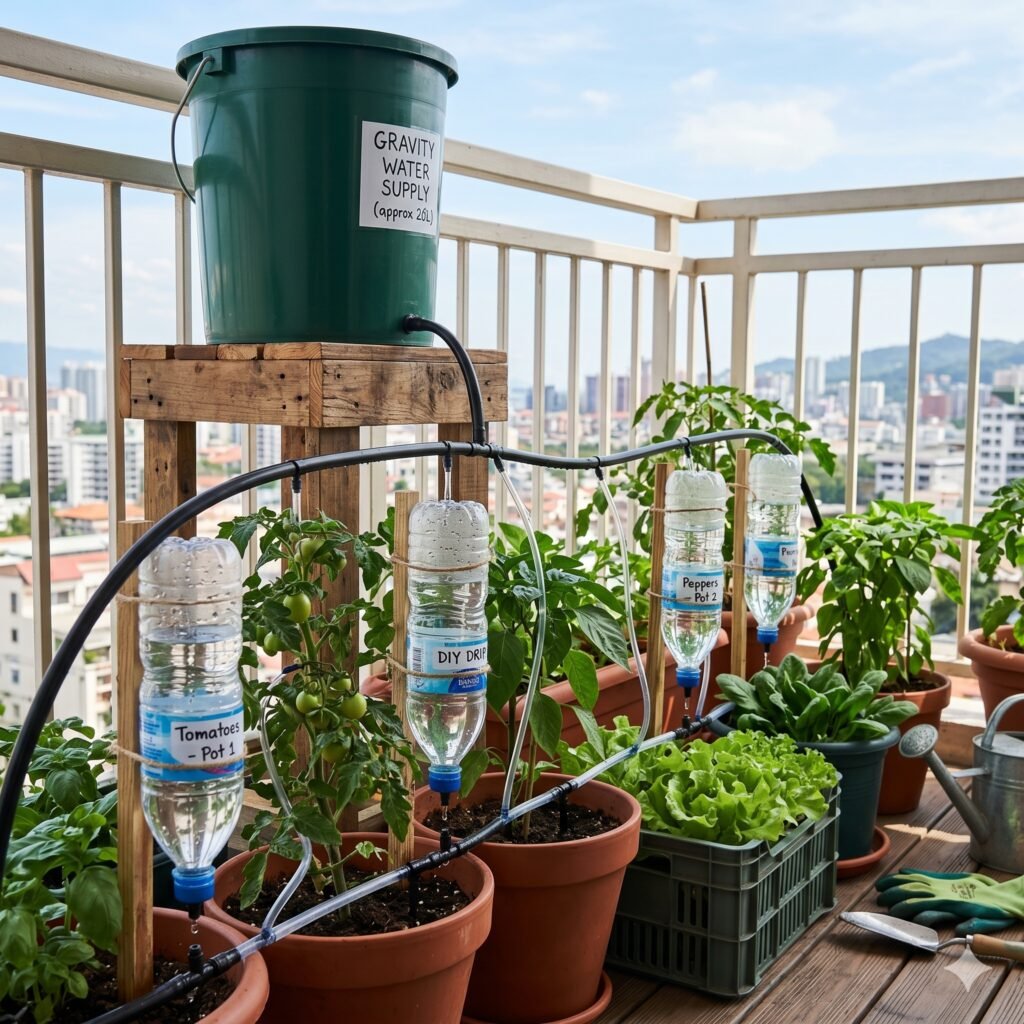
7. DIY Bottle & Bucket Self-Watering Systems (Best DIY Solution)
You don’t need expensive equipment to keep balcony vegetables alive.
Some DIY systems work surprisingly well.
A simple soda bottle with tiny drainage holes can slowly release water into the soil over time. Bucket reservoirs connected to gravity-fed tubing can also support multiple containers cheaply.
These setups aren’t always pretty, but they’re effective for testing balcony garden irrigation ideas before investing in larger systems.
Best for:
- Renters
- Experimenters
- Budget-conscious gardeners
Pros:
- Extremely cheap
- Easy to customize
- Beginner-friendly
- Good emergency backup option
Cons:
- Less polished appearance
- Inconsistent flow rates
- More manual adjustments needed
Best vegetables:
Herbs, peppers, lettuce, spinach
For short vacations or heat waves, even a simple gravity-fed bucket can make a huge difference.
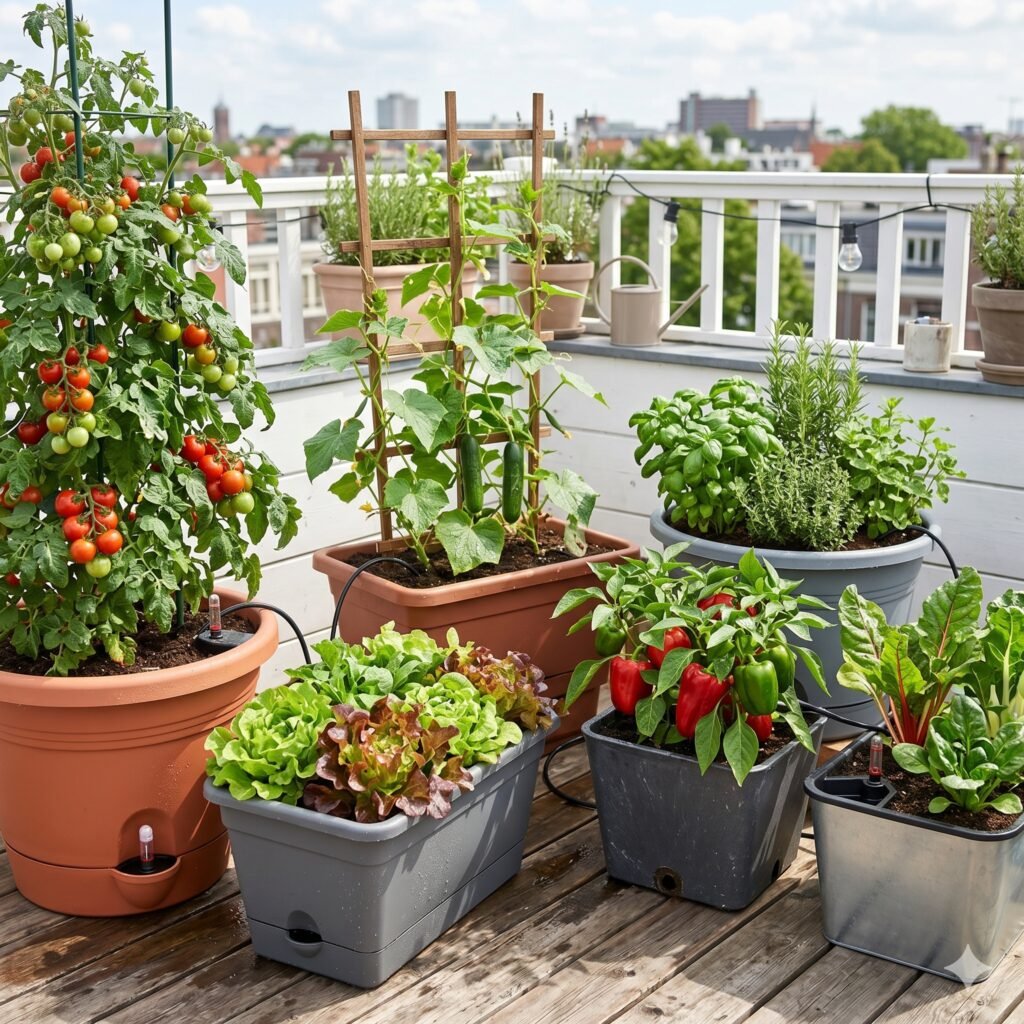
Which Self-Watering System Is Best for Different Vegetables?
Different vegetables drink water at very different rates.
Tomatoes
Tomatoes need deep containers and steady moisture. Large self-watering planter boxes or drip irrigation systems usually work best.
Avoid shallow reservoirs.
Lettuce & Greens
Leafy greens prefer consistently moist soil without dramatic drying cycles. Wicking beds and vertical towers perform very well here.
Cucumbers
Cucumbers are heavy drinkers. Drip irrigation systems or deep reservoir containers handle them better than small planters.
Herbs
Most herbs prefer moderate watering rather than constantly wet soil. Smaller self-watering containers work well for basil, parsley, mint, and cilantro.
Peppers
Peppers like balanced moisture with decent drainage. Grow bags and planter boxes both work nicely if the soil stays airy.
Common Mistakes That Ruin Self-Watering Systems
A self-watering system still needs maintenance.
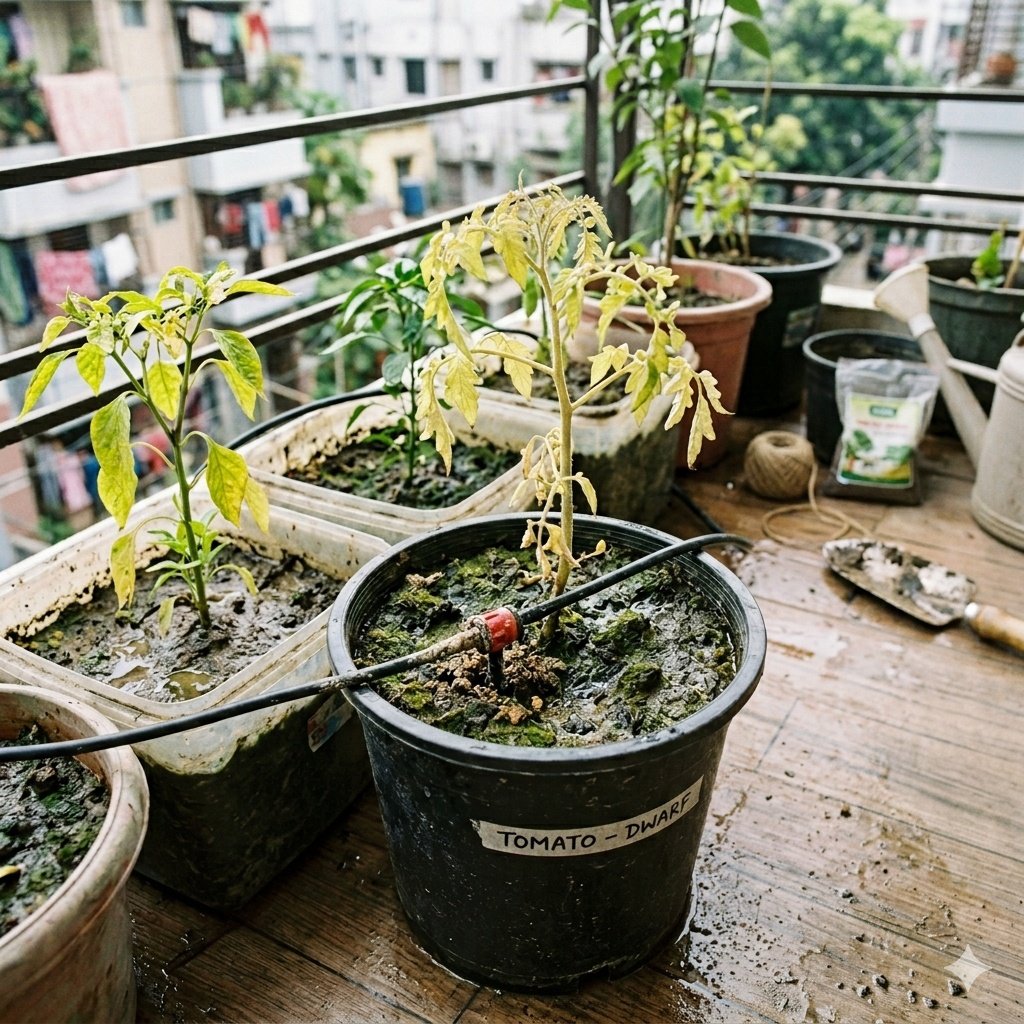
One of the biggest mistakes is using poor potting mix. Dense garden soil compacts inside containers and blocks airflow around roots. Always use lightweight container mix designed for vegetables.
Clogged drip emitters are another common issue. Mineral buildup and algae can slowly block irrigation lines if they aren’t cleaned regularly.
Overfilled reservoirs also create problems. Roots need oxygen. If the lower soil stays soaked constantly, plants can decline surprisingly fast.
Small containers are another issue. Tomatoes shoved into undersized pots dry out rapidly no matter how advanced the watering system looks.
And fertilizer still matters.
Self-watering systems help regulate moisture, but vegetables continue pulling nutrients from the soil as they grow. Regular feeding is still part of a healthy low maintenance balcony vegetable garden.
DIY vs Store-Bought Systems: Which Is Better?
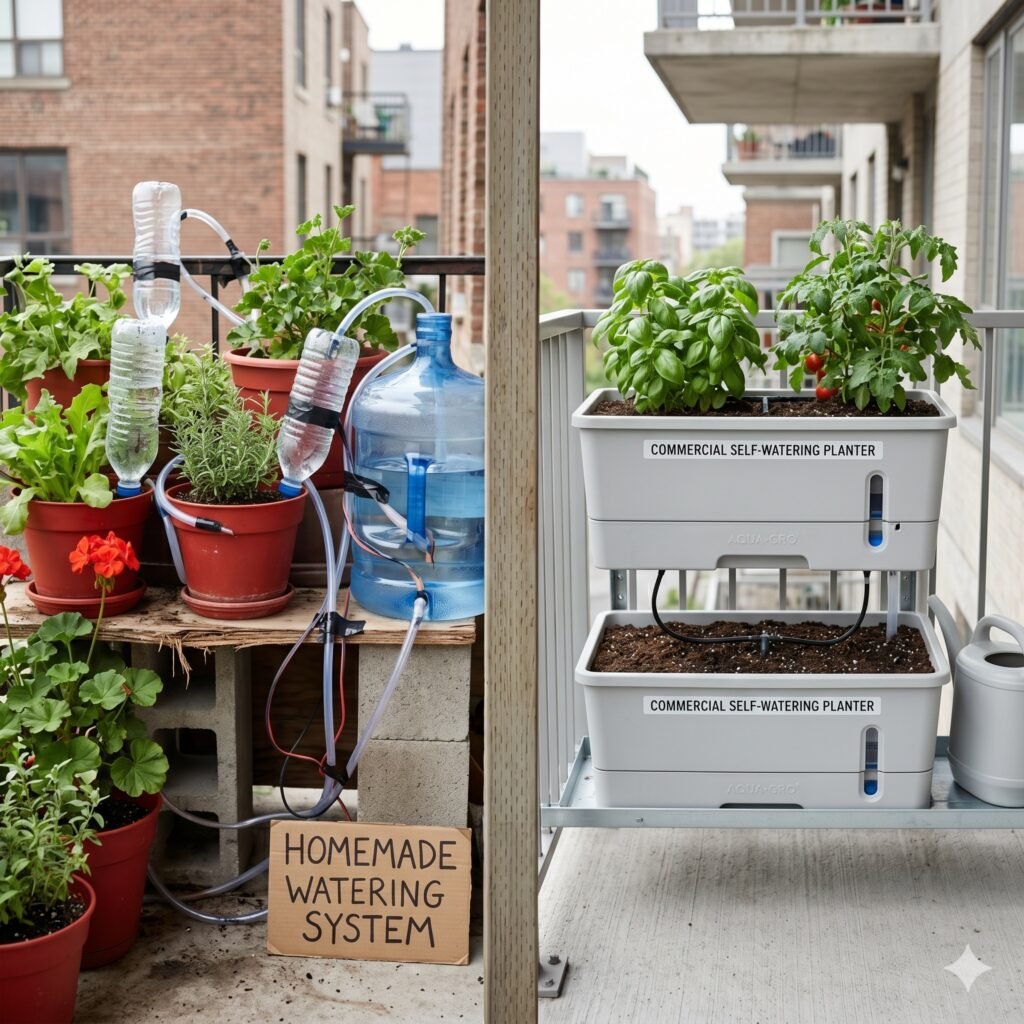
DIY systems cost less and allow more customization.
You can build bucket reservoirs, gravity-fed irrigation, or homemade wicking beds using inexpensive materials from hardware stores. That flexibility appeals to gardeners who enjoy experimenting.
Store-bought systems are usually cleaner-looking and easier to manage long term. Many include overflow protection, better drainage design, and stronger materials that survive several growing seasons.
DIY systems work well for:
- Budget gardeners
- Temporary setups
- Learning experimentation
Store-bought systems work well for:
- Busy schedules
- Long-term gardening
- Cleaner balcony aesthetics
A lot of gardeners eventually combine both approaches.
Related Reads
You might find these helpful as you keep going:
- Metal vs Wood Raised Garden Beds: Which Is Better?
- 17 Full Sun Plants to Grow in May
- 7 Best Fertilizers for Raised Beds (Top Picks + Feeding Guide)
FAQ
Are self-watering planters good for vegetables?
Yes. Many vegetables grow extremely well in self-watering planters because moisture stays more consistent around the roots.
How long do self-watering containers last?
Quality containers can last 5–10 years or longer depending on material quality and sun exposure.
What vegetables grow best in self-watering systems?
Tomatoes, peppers, lettuce, spinach, cucumbers, basil, parsley, and strawberries usually perform very well.
Do self-watering pots cause root rot?
Not when drainage and airflow are designed properly. Problems usually happen when reservoirs stay overfilled or soil becomes compacted.
Can I leave balcony plants unattended for a week?
Many self-watering systems can support plants for several days or longer depending on reservoir size, weather, and crop type.
Are drip irrigation kits worth it for small balconies?
Yes, especially if you have multiple containers or travel often. Even compact systems can save time and reduce plant stress.
What is the cheapest self-watering system for beginners?
DIY bottle watering and bucket reservoir systems are usually the cheapest starting point for beginners.
Readability: ~8 Gunning Fog score. Adjustments available on request.
Final Verdict: Which Self-Watering System Actually Works Best?
For most people, self-watering planter boxes offer the best balance between simplicity, reliability, and vegetable performance.
They’re easy to use, compact enough for balconies, and effective for common crops like tomatoes, herbs, peppers, and lettuce.
If budget matters most, self-watering grow bags and DIY bucket systems deliver strong results for far less money.
For tiny balconies, vertical towers make the smartest use of limited space.
And if convenience matters above all else, smart irrigation systems paired with timers and sensors create the most hands-off experience available today.
The best watering system for container vegetables isn’t necessarily the most expensive one. It’s the one you’ll actually maintain consistently through hot weather, travel, and busy weeks.
That consistency is what keeps balcony gardens productive.
With the right setup, even a small apartment balcony can grow a surprising amount of fresh food without demanding constant attention.

Pingback: 5 Best Self-Watering Planters for Vegetables and Herbs (Tested Picks for 2026)
Pingback: 5 Best Garden Tillers & Cultivators for Raised Beds & Vegetable Gardens
Pingback: 7 Best LED Grow Lights for Indoor Vegetables and Seed Starting
Pingback: 15 Secret Garden Ideas That Make Any Backyard Feel Magical
Pingback: 15 Beautiful Foodscaping Ideas That Turn Your Front Yard Into an Edible Paradise
Pingback: 15 Mid-Summer Garden Tasks That Can Double Your Harvest Before Fall
Pingback: 15 Essential Fall Garden Preparation Tasks for a Bigger Spring Harvest
Pingback: 11 Secrets to Getting Your Dragon Fruit Plant to Produce Fruit
Pingback: 9 Secrets to Getting Your Avocado Tree to Produce Fruit
Pingback: Organic Soil Amendments: 11 Things Soil Actually Needs
Pingback: 15 Tiny Backyard Vegetable Garden Ideas for Growing More in Less Space
Pingback: 15 Small Garden Layout Ideas for Awkward Spaces That Actually Work